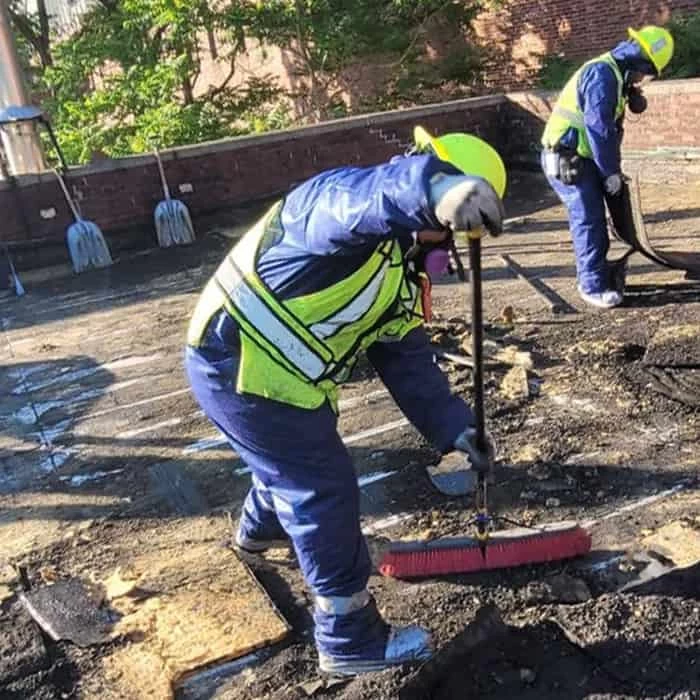
Most Huntington homeowners don’t realize they need an asbestos survey before demolition can even start and most demolition contractors can’t do it. We can.
I needed a professional consultation explanation of procedure for safe removal of Asbestos in my apartment complex. Without having an account yet, I was very impressed with the caring, knowledgeable and generous advice offered by Jessica, and will look forward to doing business in the future. Thank you so much! I feel much more informed about a sometimes scary endeavor. Peace. Nancy Silva Mineola, NY.
Mia Munoz
Used this company to clean up some water flood in my house. They were fast and easy to work with.very professional, Would recommend to anyone!
Nini Valle
Great company, had a flood and they responded quickly and efficiently. Billed my insurance company directly. I highly recommend this company!
joe colapietro, jr
I had pipe freeze in my basement right before a snow storm and they made to within an hour to help start the clean up process. They we by our side throughout the entire process and even helped with the insurance company. They did such a great job with the cleanup, repair, remidiation, I contracted them to perform the repairs and finishes in the basement. They came with enough manpower and material to get the job done. Leo and Jessica were nothing but a pleasure to deal with!!
Cristian Arredondo c
I had some water damage in my home and Green Island was able to take care of my issue quickly and effectively. I am very pleased with the work they did. They responded quickly and were very professional.
Michael M
Outstanding service! From the office to the field crew everyone was friendly, helpful and responsive. I highly recommend Green Island Group.
Here’s what usually happens when a homeowner in Huntington tries to demo a house: they hire a demolition contractor, the contractor shows up, finds asbestos in the floor tiles or pipe insulation, and suddenly the whole project is on hold while they scramble to find a separate environmental firm. That firm has its own schedule, its own mobilization timeline, and its own contract. Weeks go by. The builder is waiting. The permit clock is ticking.
That’s not how it works with us. We hold the NYS Department of Labor Asbestos Contractor License, the NYS DOL Mold Remediation License, and the EPA Lead RRP Certification alongside our demolition credentials. We handle the pre-demolition survey, the abatement if anything is found, and the full teardown under one contract. No coordination gap between firms, no finger-pointing if something comes up mid-project.
This matters especially in Huntington, where the bulk of the housing stock in neighborhoods like Huntington Station, Greenlawn, and East Northport was built between the late 1940s and mid-1970s the exact window when asbestos was used in nearly everything. Floor tiles, boiler wrap, roofing, joint compound, ceiling texture. It’s not a question of whether it’s there. It’s a question of who’s licensed to deal with it. And when your lot in Centerport or near Huntington Village is worth close to $900,000, you can’t afford a contractor who has to stop and call someone else.
We’re a full-service environmental and demolition contractor serving Long Island and the greater New York metro area. The reason homeowners and developers in Suffolk County keep coming back isn’t a tagline it’s a license stack that almost no competitor in this market holds all at once: NYS DOL Asbestos Contractor, NYS DOL Mold Remediation Contractor, EPA RRP Certification, Suffolk County Home Improvement Contractor, NYC BIC Trade Waste License, IICRC, and NADCA certifications. Every one of those is verifiable through a public database.
We’ve worked across the Town of Huntington from teardowns near Huntington Village to estate clearances in Cold Spring Harbor and we know this building department’s specific requirements inside and out. That includes the difference between pulling a permit from the Town’s Building & Housing Department at 100 Main Street versus going through one of the four incorporated village building departments in Asharoken, Huntington Bay, Lloyd Harbor, or Northport. That distinction alone has derailed projects for contractors who don’t know the area.
You’re not hiring a franchise. You’re hiring a team that has done this work in Huntington, knows what the permit checklist actually requires, and won’t hand your project off to a subcontractor the moment something complicated comes up.
What the Process Looks Like Before the First Swing
The first thing we do is a pre-demolition assessment. We walk the property, evaluate the structure, and determine what environmental testing is needed before anything else moves forward. Under updated NYS DOL guidance issued in September 2025, an asbestos survey is required for all demolitions regardless of when the structure was built even if your home was built after 1974. If you’re working with a contractor who isn’t aware of that, you’re already behind.
Once the survey is complete and any asbestos, mold, or lead hazards are identified and abated, we move into the permit phase. For most properties in Huntington, that means submitting Form 87-04 to the Town’s Building & Housing Department along with a property survey, utility disconnection letters including the specific letter required from PSEG Long Island a Certificate of Workers’ Compensation insurance, and your Suffolk County contractor license documentation. If your property falls within one of the incorporated villages, that permit goes to a different building department entirely. We handle all of it.
Once permits are in hand and utilities are confirmed disconnected, demolition begins. The structure comes down, debris is removed and disposed of at licensed facilities, and we provide full documentation manifests, clearance letters, permit closeout paperwork so there are no open permits or unresolved issues when you’re ready to build or sell. The site is left clean, graded, and ready for whatever comes next.
Our full house demolition service covers every phase: the licensed pre-demolition asbestos survey, mold and lead assessment where applicable, complete abatement of any hazardous materials found, structural teardown, debris hauling, and licensed disposal. We also manage the entire permit process with the Town of Huntington or with the relevant village building department if your property is in Northport, Lloyd Harbor, Huntington Bay, or Asharoken. Most homeowners don’t know that distinction exists until a permit gets rejected.
All debris including regulated materials like asbestos-containing waste is disposed of at licensed facilities, and we provide the full paper trail to prove it. That documentation matters more than most people realize. Open permits and improper disposal records create real problems at closing, during new construction permitting, and in estate settlements. In a market where homes are trading at $875,000 to over $950,000, those loose ends are not small issues.
We also offer financing, including 0% APR options, because demolition costs don’t always arrive at a convenient time. Estate settlements, storm damage to waterfront properties along Long Island Sound, and municipal orders don’t wait for the right moment. If the project needs to move and the timing isn’t ideal financially, that option is available to you. No other demolition contractor serving Huntington prominently offers that and we think it matters.
Does the Town of Huntington require an asbestos survey before demolition?
Yes and the requirement is broader than most people expect. The Town of Huntington’s demolition permit checklist (Form 87-04) has historically listed an exemption for structures built on or after January 1, 1974. But as of September 2025, updated NYS DOL guidance under 12 NYCRR 56-5.1 now requires a pre-demolition asbestos survey for all structures regardless of construction date. If no licensed survey has been conducted, the building must be assumed to contain asbestos-containing materials.
In practical terms, this means that even if your home in Greenlawn or East Northport was built in the late 1970s, you need a survey before demolition proceeds. We hold the NYS DOL Asbestos Contractor License, so we conduct the survey, perform any required abatement, and keep the project on schedule without you having to find a separate environmental firm and start the process over.
How much does house demolition cost in Huntington, NY?
Full house demolition in the New York metro area typically runs $15,000 to $50,000 or more, depending on the size of the structure, site conditions, and what environmental testing reveals. Long Island costs run higher than national averages because of local labor rates, disposal fees, and the regulatory requirements that come with demolishing older structures.
The variable that surprises most Huntington homeowners is asbestos abatement. Depending on what the pre-demolition survey finds, abatement can add anywhere from $1,500 to $30,000 or more to the project cost. Homes in Huntington Station, South Huntington, and Elwood that were built in the 1950s and 1960s often contain asbestos in multiple locations floor tiles, pipe insulation, boiler wrap, and roofing are the most common. Getting an honest estimate upfront, with a clear explanation of what could affect the final number, is the only way to budget accurately. We walk you through every variable before you commit to anything.
Who pulls the demolition permit in Huntington the homeowner or the contractor?
In most cases, the licensed contractor pulls the demolition permit on your behalf. In the Town of Huntington, that means submitting Form 87-04 to the Building & Housing Department at 100 Main Street, along with a property survey, utility disconnection letters, a Certificate of Workers’ Compensation insurance, and the contractor’s Suffolk County license documentation.
One thing that catches a lot of homeowners off guard: if your property is located within one of Huntington’s four incorporated villages Asharoken, Huntington Bay, Lloyd Harbor, or Northport the permit does not come from the Town’s building department. It comes from your village’s building department, which has its own process and its own timeline. Contractors who don’t regularly work in Huntington often miss this, and the resulting delay can push your project back by weeks. We know the distinction and handle it correctly from the start.
What happens if mold or lead paint is discovered during demolition in Huntington?
When mold or lead paint is found during a demolition project, the work cannot legally continue until those materials are properly addressed. In New York, mold remediation above 10 square feet requires a contractor licensed under Article 32 of the Labor Law a NYS DOL Mold Remediation Contractor License. Lead paint work in homes built before 1978 falls under the EPA’s RRP Rule and requires a certified contractor. Most demolition contractors in Huntington are not licensed for either.
We hold both the NYS DOL Mold Remediation Contractor License and the EPA RRP Certification. When mold or lead is identified which happens regularly in the older housing stock across Huntington’s postwar neighborhoods we handle the remediation in-house and keep the project moving. There’s no pause while you find a separate firm, no second contract negotiation, and no gap in the schedule. For homeowners working with a builder waiting to break ground, that continuity is the difference between a smooth project and a costly delay.
How long does house demolition take in Huntington, NY?
The physical teardown of a typical single-family home usually takes one to three days once everything is in place. But the full timeline from first call to clean site including the asbestos survey, any required abatement, permit approval, utility disconnections, and demolition typically runs four to eight weeks depending on the project’s complexity and the building department’s current workload.
The permit phase is often where projects stall. The Town of Huntington requires multiple documentation items before a demolition permit is issued, and utility disconnections particularly the PSEG Long Island disconnection letter need to be requested and confirmed in advance. Estate projects and waterfront properties in communities like Centerport or Huntington Bay that have sustained storm damage sometimes involve additional coordination with insurance carriers or municipal offices. We map out the full timeline at the start so you know exactly what to expect and when, and we don’t let administrative steps pile up and push your schedule back unnecessarily.
Do I need a demolition permit if my house is in Northport or Lloyd Harbor?
Yes, a demolition permit is required but it does not come from the Town of Huntington’s Building & Housing Department. Northport and Lloyd Harbor are incorporated villages within the Town of Huntington, and each has its own elected government and its own building department. Permits for demolition work within their boundaries must be obtained from the respective village building department, not from Town Hall at 100 Main Street.
This is one of the most common sources of project delays for homeowners in these communities. A contractor who submits to the town instead of the village will have their application rejected or simply ignored, and by the time the mistake is caught, you’ve lost days or weeks. The same applies to properties in Asharoken and Huntington Bay. We know which jurisdiction applies to your specific address before we submit a single piece of paperwork and we’ve navigated all four village processes, not just the town’s.