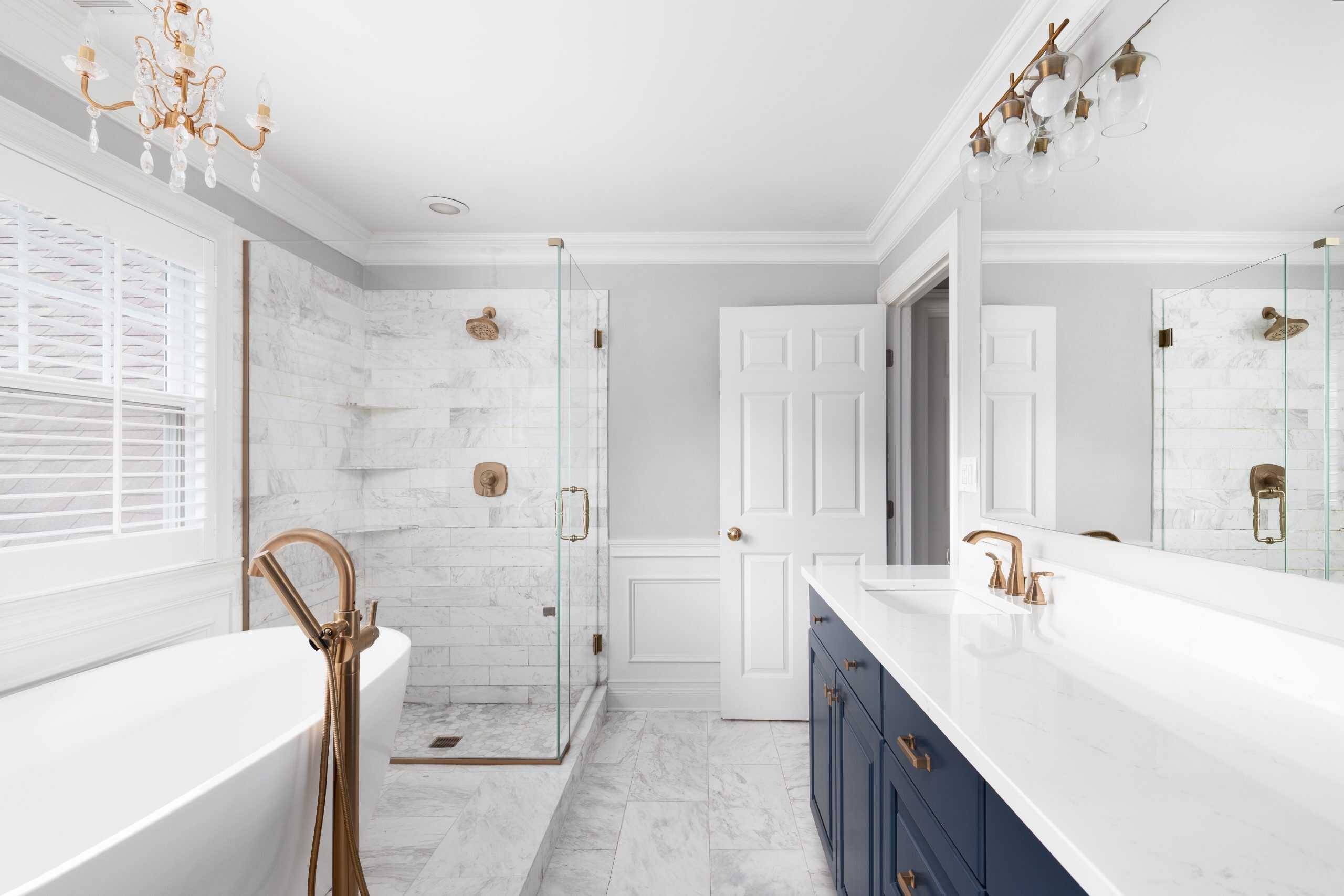
From pre-war co-op walls to Brooklyn brownstone plumbing, bathroom renovations in New York City are a different animal and we know exactly what that means.
I needed a professional consultation explanation of procedure for safe removal of Asbestos in my apartment complex. Without having an account yet, I was very impressed with the caring, knowledgeable and generous advice offered by Jessica, and will look forward to doing business in the future. Thank you so much! I feel much more informed about a sometimes scary endeavor. Peace. Nancy Silva Mineola, NY.
Mia Munoz
Used this company to clean up some water flood in my house. They were fast and easy to work with.very professional, Would recommend to anyone!
Nini Valle
Great company, had a flood and they responded quickly and efficiently. Billed my insurance company directly. I highly recommend this company!
joe colapietro, jr
I had pipe freeze in my basement right before a snow storm and they made to within an hour to help start the clean up process. They we by our side throughout the entire process and even helped with the insurance company. They did such a great job with the cleanup, repair, remidiation, I contracted them to perform the repairs and finishes in the basement. They came with enough manpower and material to get the job done. Leo and Jessica were nothing but a pleasure to deal with!!
Cristian Arredondo c
I had some water damage in my home and Green Island was able to take care of my issue quickly and effectively. I am very pleased with the work they did. They responded quickly and were very professional.
Michael M
Outstanding service! From the office to the field crew everyone was friendly, helpful and responsive. I highly recommend Green Island Group.
Renovating a bathroom in New York City isn’t just about picking tile and fixtures. Before a single wall opens up, there’s a board approval to navigate, an alteration agreement to prepare, a Certificate of Insurance that has to meet your building’s specific requirements, and a DOB filing that can take months if it’s not handled correctly from the start. Most contractors don’t know how to manage that process. When it stalls, you’re the one sitting in a half-demolished bathroom waiting for paperwork to clear.
What you actually want is a renovation that moves forward on schedule, without surprises, and without you having to become a permitting expert overnight. That’s what changes when the process is handled by a team that’s done this in Manhattan co-ops, Brooklyn brownstones, and Queens two-families, not just suburban split-levels.
There’s also what’s behind the walls to consider. NYC’s pre-war housing stock and there’s a lot of it regularly hides galvanized pipes, asbestos tile mastic, and outdated wiring that hasn’t been touched in decades. A contractor who isn’t equipped to handle those discoveries in-house will stop your project cold. We come from an environmental remediation background, which means when something unexpected turns up during demo, the project keeps moving.
We’re a full-service remodeling and restoration company serving all five boroughs Manhattan, Brooklyn, Queens, the Bronx, and Staten Island as well as Long Island City and the surrounding metro area. Our work spans demolition, plumbing, electrical, waterproofing, custom tile, fixture installation, and final cleanup, all coordinated under one roof with one point of contact from start to finish.
What makes that matter in New York City specifically is the environment you’re working in. Whether it’s a pre-war co-op on the Upper West Side, a brownstone in Carroll Gardens, or a two-family in Astoria, the regulatory and logistical demands here are unlike anywhere else. We’ve navigated DOB filings, co-op board alteration packages, and building management coordination across the city not as an occasional add-on, but as a standard part of how every NYC project gets done.
Our environmental remediation background is a real differentiator here. In a city where buildings constructed before 1940 are common and asbestos or mold discoveries during demo are not unusual, having a team that’s licensed to handle those materials in-house keeps your project on track instead of on hold.
No Guesswork Here's How a NYC Renovation Actually Runs
It starts with a consultation where the scope gets defined clearly what you want, what your building will allow, and what the existing plumbing and electrical conditions actually support. In most NYC co-ops and condos, that conversation includes a realistic look at the wet-over-dry rule, riser constraints, and whether any layout changes require board approval before architectural drawings are even prepared. Knowing that upfront saves weeks of back-and-forth later.
From there, the documentation phase begins. That means preparing the alteration agreement package, filing with the NYC Department of Buildings, and making sure the Certificate of Insurance meets your building’s specific coverage requirements naming the building as an additional insured, at the right liability thresholds. Board approval alone typically takes four to eight weeks depending on your building’s review schedule, so getting the paperwork right the first time matters.
Once approvals are in place, demolition starts and that’s when the building’s real condition becomes visible. In pre-war buildings across Manhattan, Brooklyn, and the Bronx, it’s not uncommon to find galvanized supply lines, asbestos floor mastic, or deteriorated waterproofing that never met modern standards. We handle those discoveries in-house without stopping the job. After rough-in work is complete, waterproofing is installed and flood-tested before any tile goes down a step NYC buildings require and one that protects your unit, your neighbors below, and your relationship with building management. Construction typically runs four to eight weeks from demo to final walkthrough.
Everything a NYC Bathroom Renovation Actually Involves
A bathroom renovation in New York City covers more ground than most people expect going in. On the construction side, that includes full demolition, plumbing system upgrades from fixtures to risers, electrical improvements to meet current code, advanced waterproofing membrane installation with flood testing, custom tile work, fixture and hardware installation, smart home integration where requested, and complete post-construction cleanup. Every trade is coordinated in-house no handoffs to subcontractors, no gaps in communication, no finger-pointing when a timeline slips.
On the regulatory side, we prepare the full alteration agreement package your building requires, handle DOB permit filing for ALT-2 and ALT-3 work, coordinate with your building’s management office on elevator scheduling and approved work hours, and provide Certificates of Insurance tailored to your building’s specific requirements. Soft costs permit fees, DOB filing fees, alteration agreement fees, and building security deposits typically add $7,000 to $25,000 on top of construction costs depending on the building, and those are factored into your estimate upfront so nothing catches you off guard later.
For a cosmetic refresh in the outer boroughs, full renovation costs typically run $35,000 to $75,000. High-end renovations in Manhattan with layout changes and premium finishes run $75,000 to $110,000 or more. Whatever the scope, the estimate is detailed and itemized because in a city where a bathroom remodel is an investment in a seven-figure asset, vague numbers aren’t good enough.
Do I need board approval to remodel my bathroom in a NYC co-op?
In most cases, yes and the process is more involved than most people expect. Co-op boards in New York City have broad authority over renovation work, and virtually any bathroom remodel that involves plumbing changes, electrical work, or wall alterations will require a signed alteration agreement, architectural drawings, proof of insurance meeting the building’s specific requirements, and often a security deposit or escrow ranging from $5,000 to $20,000 before work can begin.
The timeline for board approval typically runs four to eight weeks depending on when your building’s board meets and how complete your submission package is. Incomplete submissions missing insurance certificates, unsigned agreements, or drawings that don’t address the building’s specific concerns get kicked back and reset the clock. We prepare the full alteration package as part of the project, so the submission goes in complete the first time and the approval process moves as efficiently as your building allows.
What permits are required for a bathroom renovation in New York City?
Whether you need a permit depends on the scope of work. A straightforward cosmetic swap replacing tile, fixtures, and finishes in their existing locations without moving anything generally doesn’t require a DOB permit, though it may still require co-op or condo board approval. Once you start moving plumbing, changing electrical, or altering walls or partitions, a permit is required.
Most full bathroom renovations in NYC fall under an Alteration Type 2 (ALT-2) filing, which covers multiple trades plumbing and electrical together, for example. Single-trade work may qualify for an ALT-3, which is a simpler filing with faster approval. Both require a registered architect or professional engineer to file drawings and serve as the Applicant of Record with the NYC Department of Buildings. DOB permit approval can take anywhere from a few weeks for straightforward ALT-3 filings to several months for more complex ALT-2 submissions. We coordinate the architect, the DOB filing, and the permit timeline as part of the project you don’t need to manage that process separately.
How much does a bathroom renovation cost in NYC?
The honest answer is that it depends heavily on scope, building type, and borough but here are real numbers to work with. A cosmetic refresh in a Manhattan co-op, replacing tile and fixtures without touching plumbing or layout, typically runs $25,000 to $35,000. A full renovation with plumbing and electrical updates, new tile, and new fixtures but no major layout changes runs $35,000 to $75,000 across the five boroughs. High-end renovations in Manhattan with layout changes, custom finishes, and premium fixtures run $75,000 to $110,000 or more.
What catches people off guard are the soft costs that sit on top of construction: DOB permit and filing fees ($1,500 to $5,000), alteration agreement fees ($1,000 to $5,000), and building security deposits or escrows ($5,000 to $20,000) depending on the building. These aren’t optional they’re part of doing a renovation in New York City, and they should be in your budget from the start. We include a clear breakdown of both hard and soft costs in every estimate so you know the full number before anything is signed.
What is the wet-over-dry rule and does it affect my renovation in NYC?
The wet-over-dry rule is a restriction that most NYC co-op and condo boards enforce it prohibits placing a wet room like a bathroom or kitchen above a neighbor’s dry space like a bedroom or living room. The concern is water intrusion and noise: the sound of rushing water through waste lines travels through concrete and steel in ways that a downstairs neighbor will notice, and a leak in a wet room above a dry space can cause significant damage before it’s even detected.
If you’re thinking about reconfiguring your bathroom layout moving the toilet, expanding the shower, or relocating fixtures this rule needs to be assessed before demo begins. A contractor who doesn’t flag it upfront can trigger a board stop-work order after demolition has already started, which is a much more expensive problem than addressing it during the planning phase. We review wet-over-dry feasibility as part of the initial consultation, and if a layout change runs into this restriction, the design gets adjusted to work within what your building will actually approve.
How long does a bathroom renovation take in a NYC apartment?
The construction phase of a bathroom renovation from demolition to final walkthrough typically runs four to eight weeks depending on scope. But in New York City, that’s only part of the timeline. Before any construction begins, you’re looking at four to six weeks for design and documentation, followed by four to eight weeks for board approval depending on your building’s review schedule, plus DOB permit approval which can run anywhere from a few weeks to several months for more complex filings.
Realistically, from the day you start the process to the day construction begins, you should plan for two to four months in most cases. That’s not a reason to delay it’s a reason to start the process earlier than feels necessary. The homeowners who are frustrated by long timelines are usually the ones who didn’t account for the regulatory front end when they set their expectations. We walk through a realistic project calendar during the initial consultation so you know what to expect at every stage, not just the construction phase.
Does Green Island Group handle bathroom renovations across all five NYC boroughs?
Yes we serve Manhattan, Brooklyn, Queens, the Bronx, and Staten Island, as well as Long Island City and the broader NYC metro area. The scope of work and the regulatory process vary meaningfully across the boroughs. A pre-war co-op on the Upper East Side involves a different set of building rules, plumbing constraints, and board approval requirements than a two-family home in Bayside or a brownstone in Fort Greene. Staten Island, where the housing stock is predominantly one- and two-family homes, involves a more straightforward permit process than a Manhattan high-rise but the quality of work and the in-house coordination model is the same regardless of location.
Our dual presence across both New York City and Long Island means the team is genuinely familiar with how renovation logistics, building regulations, and construction conditions differ across this region not just within one borough. Whether the project is in a Riverdale apartment building, a Carroll Gardens brownstone, or a Whitestone single-family home, the approach adapts to what that building and that neighborhood actually require.