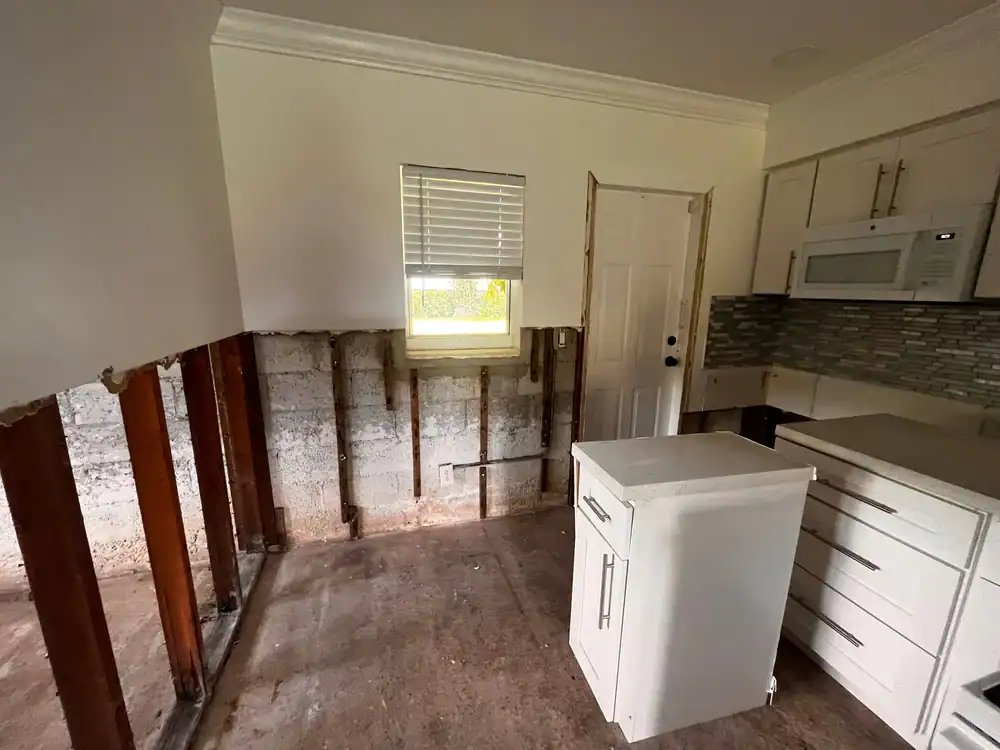
From flood-worn finishes to outdated layouts, kitchens throughout Freeport have specific needs — and we handle the full renovation from first sketch to final walkthrough. We manage everything: permits with the Village of Freeport Building Department, design, and construction all under one roof.
I needed a professional consultation explanation of procedure for safe removal of Asbestos in my apartment complex. Without having an account yet, I was very impressed with the caring, knowledgeable and generous advice offered by Jessica, and will look forward to doing business in the future. Thank you so much! I feel much more informed about a sometimes scary endeavor. Peace. Nancy Silva Mineola, NY.
Mia Munoz
Used this company to clean up some water flood in my house. They were fast and easy to work with.very professional, Would recommend to anyone!
Nini Valle
Great company, had a flood and they responded quickly and efficiently. Billed my insurance company directly. I highly recommend this company!
joe colapietro, jr
I had pipe freeze in my basement right before a snow storm and they made to within an hour to help start the clean up process. They we by our side throughout the entire process and even helped with the insurance company. They did such a great job with the cleanup, repair, remidiation, I contracted them to perform the repairs and finishes in the basement. They came with enough manpower and material to get the job done. Leo and Jessica were nothing but a pleasure to deal with!!
Cristian Arredondo c
I had some water damage in my home and Green Island was able to take care of my issue quickly and effectively. I am very pleased with the work they did. They responded quickly and were very professional.
Michael M
Outstanding service! From the office to the field crew everyone was friendly, helpful and responsive. I highly recommend Green Island Group.
A kitchen remodel isn’t just about looks. It’s about a space that actually fits the way you live — where everything has a place, the layout makes sense, and you’re not working around problems that have been there since the previous owner moved in.
For a lot of Freeport homeowners, that means dealing with a kitchen that’s been through some things. The South Shore’s tidal flooding isn’t abstract here — streets like South Long Beach Avenue have gone underwater, and if your kitchen is in or near the FEMA flood zone, there’s a good chance your cabinets, flooring, or drywall have absorbed more moisture than they should have. We fix that properly during renovation, not just patch it.
Beyond the flood reality, most of Freeport’s housing stock was built between the 1920s and 1960s. Those kitchens were designed for a different era of cooking and living — tight galley layouts, minimal storage, aging plumbing tucked behind walls that haven’t been touched in decades. When you renovate, you’re not just updating the finish. You’re getting a kitchen that was actually designed for the household using it today.
We’re a full-service renovation contractor based in New York, and we manage kitchen projects from design through completion under one roof. That means one contract, one point of contact, and one team that’s accountable for the whole thing — not a general contractor who sells the job and then disappears while a rotating crew figures it out.
We work throughout Nassau County’s South Shore, and Freeport is a community we know well. The Village has its own Building Department, its own permitting requirements, and its own codes that are separate from the county’s general system. We’ve navigated that process in Freeport before, and we handle all of it on your behalf — including the architectural drawing submissions the Village requires for structural work.
Freeport is also one of the most diverse communities on Long Island, and we work for all of it. Every homeowner, every neighborhood — from the canal streets in South Freeport to the older blocks near downtown — gets the same process, the same communication, and the same finished result.
From First Call to Final Walkthrough — No Guesswork
It starts with a consultation where we come to you. We look at the existing kitchen — the layout, the condition of the cabinets, the plumbing and electrical configuration, the floor system — and we listen to what you actually want out of the space. If there’s been water intrusion, we assess that too. A lot of Freeport kitchens in the flood zone have damage behind the walls that doesn’t show up until demo starts, and we’d rather find it in the planning stage than mid-project.
From there, we put together a detailed, line-item written proposal. Not a ballpark. A real scope of work with labor, materials, permit costs, and a clear payment schedule tied to project milestones — not our cash flow. You know what you’re committing to before anything starts.
Once the contract is signed, we handle the Village of Freeport permit application, submit the required architectural drawings to the Building Department, and schedule the project around your household. Demo, carpentry, plumbing, electrical, tile, and finishing are all managed by our team. When the final inspection clears, we do a walkthrough with you and address the punch list before we close anything out.
A full kitchen renovation with us covers the complete scope — cabinet removal and replacement, countertop installation, layout reconfiguration, plumbing relocation, electrical upgrades, flooring, tile, lighting, and finishing. If your home was built before 1978, which covers a significant portion of Freeport’s housing stock, we’re EPA Lead-Safe certified and follow all required federal practices to protect your family during the renovation process.
For Freeport homeowners in or near the FEMA Special Flood Hazard Area, we pay close attention to material selection. That means recommending moisture-resistant cabinet materials, tile flooring over hardwood in flood-exposed areas, and finishes that hold up to the humidity and water exposure that come with living on the South Shore. These aren’t upsells — they’re practical decisions that make a real difference when the next storm hits.
We also handle everything the Village of Freeport requires on the permit side. The Building Department here requires two sets of signed and sealed architectural drawings for structural work, full compliance with New York State Uniform Fire Protection and Building Code, and conformance with village-specific codes. Every project we do in Freeport is fully permitted and inspected. That matters at resale, it matters for your insurance, and it matters because unpermitted work in an incorporated village like Freeport carries real consequences that follow the property — not just the contractor.
Do I need a permit for a kitchen remodel in the Village of Freeport?
Yes — and the permitting process in Freeport is more involved than many homeowners expect. Because Freeport is an incorporated village, it runs its own Building Department with its own requirements, separate from Nassau County’s general permitting system. Any kitchen remodel that involves moving plumbing, upgrading electrical service, or making structural changes to the kitchen space requires a permit application that includes two sets of signed and sealed architectural drawings.
The Village recently launched an online permitting portal through OpenGov, which has streamlined some of the submission process, but the documentation requirements haven’t changed. Unpermitted work in Freeport creates real problems — fines, failed inspections, and complications when you go to sell the home. We handle the entire permit process for you, including the drawings, submissions, and inspection scheduling, so you’re not figuring that out on your own.
How much does a kitchen remodel typically cost in Freeport, NY?
Based on current data for the Freeport area, the average kitchen remodel runs around $25,000 to $30,000, with projects ranging from roughly $15,500 on the lower end to $60,000 or more for full gut renovations with higher-end finishes. Where your project falls depends on the scope — cabinet replacement versus refacing, whether plumbing or electrical needs to be relocated, countertop material, and the condition of what’s already there.
For Freeport homeowners, there’s also the flood factor to consider. If your kitchen has had water intrusion — which is common in the FEMA flood zone areas of South Freeport — there may be structural or moisture-related work that needs to happen before the cosmetic renovation begins. That can affect the budget, and it’s better to know upfront. When we do your initial consultation, we assess the existing conditions honestly and give you a line-item proposal so you know exactly what you’re looking at before you commit to anything.
How long does a kitchen renovation take from start to finish?
For a standard kitchen remodel — cabinet replacement, new countertops, updated plumbing and electrical, new flooring — most projects run between three and six weeks once work begins. The bigger variable is often the permitting timeline. In Freeport, the Village Building Department’s review and approval process adds time to the front end of any project, and that’s something we factor into the schedule from the start so it doesn’t catch you off guard.
If your kitchen has pre-existing damage — water-related deterioration in the walls or subfloor is common in Freeport homes near the canal neighborhoods and flood zone areas — discovery during demo can extend the timeline. We communicate every step of the way and document any changes to scope in writing before additional work begins.
My kitchen flooded last year. Can you renovate it or does it need restoration first?
This is one of the most common situations we see in Freeport, and the honest answer is: it depends on the current condition of the space. If there’s active mold growth or significant structural damage, that needs to be addressed before a renovation can begin. But in many cases — where a homeowner has already gone through the drying-out process and the space is stable — a renovation can pick up right where restoration leaves off.
The advantage of combining the two is real. When the walls are already open and the old cabinets are already out, the incremental cost of upgrading to better materials and a better layout is significantly lower than starting from scratch in an undamaged kitchen. We help Freeport homeowners make that call clearly: what needs to be fixed versus what’s an opportunity to upgrade. Many homeowners who came to us after a flooding event ended up with a kitchen that’s more functional, more resilient, and better suited to the South Shore environment than what they had before.
What kitchen materials hold up best in a Freeport home near the water?
Living near Freeport’s canals or in the FEMA flood zone changes the calculus on materials in a real way. For cabinets, plywood-box construction with a moisture-resistant finish outperforms particleboard significantly — particleboard swells and breaks down when it gets wet, and in Freeport’s humidity and flood-risk environment, that’s not a hypothetical. For countertops, quartz is the most popular choice right now for good reason: it’s non-porous, doesn’t absorb moisture, and holds up better than natural stone in high-humidity kitchens.
For flooring, tile is the most practical choice in flood-exposed kitchens. Hardwood and engineered wood can warp and buckle after water exposure, and refinishing or replacing them after a flood event adds cost and time. Large-format porcelain tile gives you a clean, modern look that also happens to be the most resilient option for a South Shore kitchen. We’ll walk you through the specific choices during the design phase and explain the trade-offs so you can make the decision that makes sense for your home and your budget.
Is a kitchen renovation worth it if I'm thinking about selling my Freeport home?
Freeport’s real estate market is genuinely active right now — homes are going pending in around 32 days, and average values are running between $634,000 and $715,000. In a market moving that fast, a dated kitchen is one of the most visible reasons a buyer mentally adjusts their offer downward. A well-executed kitchen renovation addresses that directly.
Minor kitchen remodels in the Northeast return approximately 85 to 96 cents on the dollar at resale, which makes the investment financially rational in a market like Freeport. On a $680,000 home, a $40,000 kitchen renovation that returns $34,000 to $38,000 at sale is a reasonable bet — and you get to live in a better kitchen for however long you stay before listing. The key is scope: you don’t need a $150,000 showroom kitchen to move a Freeport home. You need a clean, updated, functional space that photographs well and holds up to a buyer walkthrough. That’s exactly the kind of project we’re built for.