Mitchel Field Buildings Don't Hide Their Age — Neither Should Their Asbestos Risk
East Garden City’s commercial core was built on a former military base. If your building went up before 1980, asbestos abatement isn’t a maybe — it’s a conversation worth having now.
I needed a professional consultation explanation of procedure for safe removal of Asbestos in my apartment complex. Without having an account yet, I was very impressed with the caring, knowledgeable and generous advice offered by Jessica, and will look forward to doing business in the future. Thank you so much! I feel much more informed about a sometimes scary endeavor. Peace. Nancy Silva Mineola, NY.
Mia Munoz
Used this company to clean up some water flood in my house. They were fast and easy to work with.very professional, Would recommend to anyone!
Nini Valle
Great company, had a flood and they responded quickly and efficiently. Billed my insurance company directly. I highly recommend this company!
joe colapietro, jr
I had pipe freeze in my basement right before a snow storm and they made to within an hour to help start the clean up process. They we by our side throughout the entire process and even helped with the insurance company. They did such a great job with the cleanup, repair, remidiation, I contracted them to perform the repairs and finishes in the basement. They came with enough manpower and material to get the job done. Leo and Jessica were nothing but a pleasure to deal with!!
Cristian Arredondo c
I had some water damage in my home and Green Island was able to take care of my issue quickly and effectively. I am very pleased with the work they did. They responded quickly and were very professional.
Michael M
Outstanding service! From the office to the field crew everyone was friendly, helpful and responsive. I highly recommend Green Island Group.
You stop guessing. That’s the first thing. Whether you’re managing an office park off Stewart Avenue or renovating a ranch home in the Uniondale ZIP codes that border East Garden City, the moment a certified abatement is complete — with clearance air testing and full documentation in hand — the project can move forward without the regulatory question mark hanging over it.
For commercial property managers in the Nassau Hub area, that documentation isn’t just peace of mind. It’s a permit requirement. New York State’s Industrial Code Rule 56 mandates certified abatement before any renovation or demolition that disturbs asbestos-containing materials, and Nassau County’s own permitting process enforces it. A completed abatement with a clean clearance report keeps your project on schedule and your liability exposure where it belongs — at zero.
For homeowners in East Garden City and the surrounding residential neighborhoods, the outcome is simpler but just as real. The 9×9 vinyl floor tiles in your basement, the textured ceiling in the den, the pipe wrap in the utility room — these materials were standard in homes built between 1945 and 1975, exactly the housing stock that fills the residential streets throughout the area. Once they’re properly removed and disposed of, you’re not managing risk anymore. You’re done with it.
We’re based in Nassau County and we work in East Garden City regularly. That matters more than it sounds. When you call about a building in the Mitchel Field office corridor or a home in the Uniondale area, you’re not getting routed through a regional dispatch center. You’re talking to a team that works this area consistently and knows what the Town of Hempstead’s building department expects before a permit closes.
The regulatory framework here — ICR 56, Nassau County’s Environmental Health Review requirements, federal NESHAP notification timelines — isn’t something we look up before your project. It’s what we work inside every day. That familiarity is what keeps commercial clients on schedule and residential clients from getting caught off guard mid-renovation.
We handle the full scope: certified inspection, bulk sampling, project notification, abatement, and final clearance air testing. One contractor, one chain of accountability, start to finish.
No Surprises — Here's Exactly How the Work Gets Done
It starts with a certified asbestos inspection. We survey the property, collect bulk samples from suspect materials, and send them to an accredited lab. For buildings in East Garden City — particularly anything constructed during or shortly after the Mitchel Field redevelopment era of the 1960s and 70s — that survey often turns up materials in places owners didn’t expect: floor tile adhesive, ceiling tile grid systems, pipe elbow wrap, duct insulation.
Once results are confirmed, we file the required project notification with the New York State Department of Labor before any abatement work begins. ICR 56 mandates this step, and skipping it or rushing it is one of the most common ways renovation projects in Nassau County get delayed. We handle the notification, the timeline, and the documentation — so you don’t have to manage that layer on top of everything else.
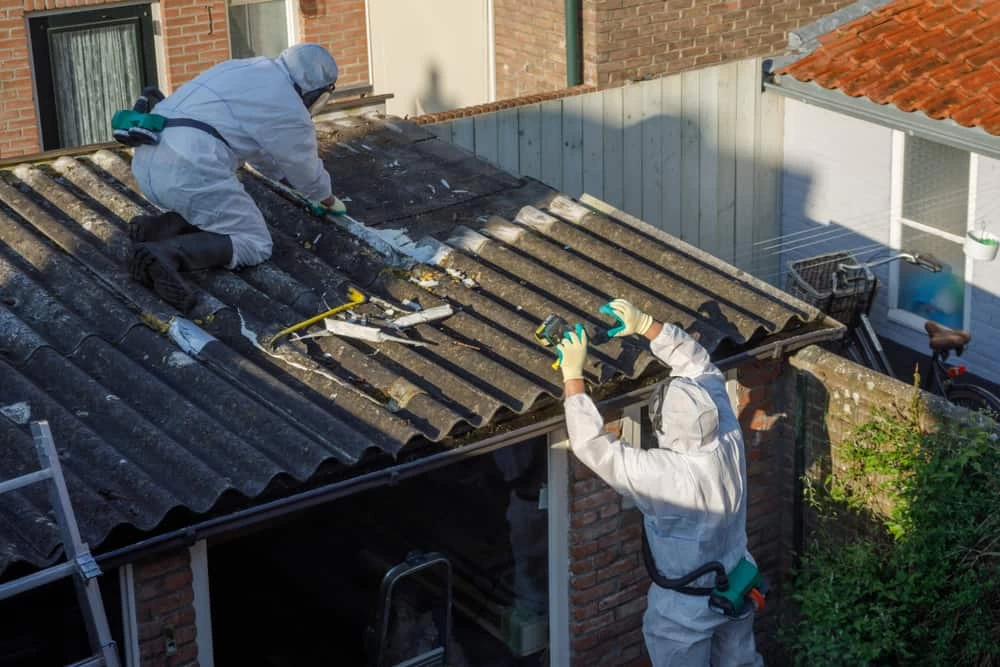
The abatement itself is performed under full containment: negative air pressure, HEPA filtration, and regulated waste disposal through a licensed facility. When the work is done, a third-party clearance air test confirms the space is clean before containment comes down. You receive the full project file — inspection report, waste manifests, clearance results — everything needed for permit closeout or a future property transaction.
Every Material Type Covered, Every Project Fully Documented
Asbestos shows up differently depending on the building. In East Garden City’s commercial and institutional properties — office parks near Charles Lindbergh Boulevard, campus buildings at Nassau Community College, older retail spaces throughout the Roosevelt Field corridor — it’s most commonly found in floor tile systems, ceiling tile and grid, pipe and duct insulation, and fireproofing materials applied to structural steel. These are large-format abatement scopes that require phased scheduling, coordination with building operations, and the kind of project management infrastructure that a residential-only contractor isn’t built for.
In the residential neighborhoods surrounding East Garden City, the materials are different but the process is just as thorough. Asbestos tile removal — specifically the 9×9 vinyl asbestos floor tiles that were standard in Long Island homes built through the mid-1970s — is one of the most common residential scopes we handle. Asbestos popcorn ceiling removal is the other. Textured ceilings applied before 1978 frequently contain chrysotile asbestos, and the only way to know for certain is bulk sampling before any scraping begins. We test first, every time.
Every project — residential or commercial — is completed with full ICR 56 compliance, written clearance documentation, and waste disposal records. That paper trail matters whether you’re pulling a renovation permit from the Town of Hempstead or preparing a property for sale.
Does my East Garden City commercial building actually need an asbestos survey before renovating?
If the building was constructed before 1980 — and a significant portion of the commercial stock in East Garden City’s Nassau Hub area was — then yes, a certified asbestos survey is required before any renovation or demolition work that could disturb building materials. This isn’t optional under New York State Industrial Code Rule 56. The law applies to commercial and multi-family properties regardless of the scope of the renovation. Even a tenant improvement project that involves cutting into walls, replacing flooring, or modifying HVAC systems can trigger the requirement if the building is of the relevant age.
The practical reason this matters in East Garden City specifically is the building history. Structures in and around the former Mitchel Air Force Base site — redeveloped into office parks, institutional campuses, and commercial facilities beginning in the early 1960s — were built during the peak era of asbestos use in American construction. Many have never had a formal ACM survey. If you’re planning any kind of renovation and you don’t have a survey on file, getting one done before you pull permits is the right first move.
How do I know if the floor tiles or ceiling in my home contain asbestos?
You can’t tell by looking. Asbestos fibers are microscopic, and asbestos-containing materials look identical to non-asbestos versions of the same product. The only way to confirm is bulk sampling — a small piece of the suspect material is collected by a certified inspector and sent to an accredited lab for analysis. Results typically come back within a few business days.
In the residential neighborhoods surrounding East Garden City, the most common materials that come back positive are 9×9 vinyl floor tiles (and the black mastic adhesive beneath them), textured popcorn ceilings applied before 1978, and pipe insulation in older utility rooms and basements. Homes built between 1945 and 1975 — the dominant housing stock in the Uniondale area and surrounding communities in East Garden City — are the ones where we find it most often. If your home falls in that range and you’re planning any renovation work, sampling before you start is the move that protects both your family and your project timeline.
What happens if asbestos is found during a renovation that's already started?
Work stops. That’s the honest answer. If a contractor discovers suspect materials mid-project — which happens more often than people expect during gut renovations of older Long Island homes — the responsible move is to halt work in that area, avoid disturbing the material further, and get a certified inspector on-site for sampling. Continuing to work around it or through it puts everyone on-site at risk and creates a serious liability problem for the property owner.
Once sampling confirms asbestos is present, the project shifts into a regulated abatement scope. New York State requires formal notification to the Department of Labor before abatement begins, which means there’s a mandatory lead time built into the timeline. The sooner you call a licensed contractor after discovery, the sooner that notification clock starts and the sooner work can legally resume. In Nassau County, where renovation permits are tied to inspection schedules, getting ahead of this quickly matters. Delays compound fast when a project is already mid-stream.
Is asbestos popcorn ceiling removal in East Garden City something I can do myself?
Not legally — and not safely — if the material tests positive for asbestos. In New York State, any disturbance of asbestos-containing materials in a way that could release fibers requires a licensed abatement contractor. Scraping a popcorn ceiling is exactly the kind of activity that releases fibers. If the ceiling was applied before 1978 and hasn’t been tested, treating it as asbestos-containing until proven otherwise is the conservative and correct approach.
The risk with DIY attempts isn’t just regulatory. Asbestos fibers released during scraping can become airborne and settle into carpets, furniture, and HVAC systems — contaminating areas well beyond the room where the work happened. Remediation after that kind of spread is significantly more expensive than doing the abatement properly the first time. For homeowners in East Garden City planning a ceiling update or full room renovation, a bulk sample test costs a fraction of what a secondary contamination cleanup runs. Start there.
How long does an asbestos abatement project typically take in Nassau County?
It depends on the scope, but the regulatory timeline is often the longer variable — not the physical work itself. Under New York State ICR 56, a formal project notification must be filed with the NYS Department of Labor before abatement begins. That notification period is part of the process and has to be factored into your project schedule. For commercial projects in East Garden City, where renovation timelines are often tied to tenant schedules or institutional calendars — like summer break windows at Nassau Community College — building that notification lead time into your planning from the start is essential.
For a typical residential scope — floor tile removal in one or two rooms, or a popcorn ceiling in a single area — the physical abatement work often takes one to two days once the notification period clears. Larger commercial scopes can run several weeks depending on the square footage and phasing requirements. The full project file, including clearance air testing results and waste disposal documentation, is typically ready within a few days of abatement completion. That documentation is what closes out your permit and moves the project forward.
Why does it matter if my asbestos contractor is locally based in Nassau County?
Because the regulatory environment here is specific, and familiarity with it directly affects your project timeline. Nassau County has its own Environmental Health Review and Permitting requirements that layer on top of New York State’s ICR 56 framework. The Town of Hempstead — which governs East Garden City as an unincorporated hamlet — has its own building department processes that intersect with asbestos survey requirements before certain permits are issued. We work in this area regularly and know how these layers interact. A contractor who doesn’t can create delays that we would have avoided entirely.
There’s also a practical advantage in response time. When something unexpected comes up mid-project — a material that wasn’t identified in the initial survey, a scheduling conflict with a third-party air monitor, a question from the building department — we can respond and adapt quickly. That’s not a small thing when you’re managing a renovation schedule at an office park off Stewart Avenue or trying to close on a home sale in the East Garden City area. Local presence means faster answers and fewer gaps between what needs to happen and when it actually does.