Most homes in Elmont were built in the 1950s — and the materials used back then weren’t built with your family’s safety in mind. If you’re renovating, replacing a boiler, or pulling up old floors, asbestos abatement in Elmont starts with knowing exactly what you’re dealing with.
I needed a professional consultation explanation of procedure for safe removal of Asbestos in my apartment complex. Without having an account yet, I was very impressed with the caring, knowledgeable and generous advice offered by Jessica, and will look forward to doing business in the future. Thank you so much! I feel much more informed about a sometimes scary endeavor. Peace. Nancy Silva Mineola, NY.
Mia Munoz
Used this company to clean up some water flood in my house. They were fast and easy to work with.very professional, Would recommend to anyone!
Nini Valle
Great company, had a flood and they responded quickly and efficiently. Billed my insurance company directly. I highly recommend this company!
joe colapietro, jr
I had pipe freeze in my basement right before a snow storm and they made to within an hour to help start the clean up process. They we by our side throughout the entire process and even helped with the insurance company. They did such a great job with the cleanup, repair, remidiation, I contracted them to perform the repairs and finishes in the basement. They came with enough manpower and material to get the job done. Leo and Jessica were nothing but a pleasure to deal with!!
Cristian Arredondo c
I had some water damage in my home and Green Island was able to take care of my issue quickly and effectively. I am very pleased with the work they did. They responded quickly and were very professional.
Michael M
Outstanding service! From the office to the field crew everyone was friendly, helpful and responsive. I highly recommend Green Island Group.
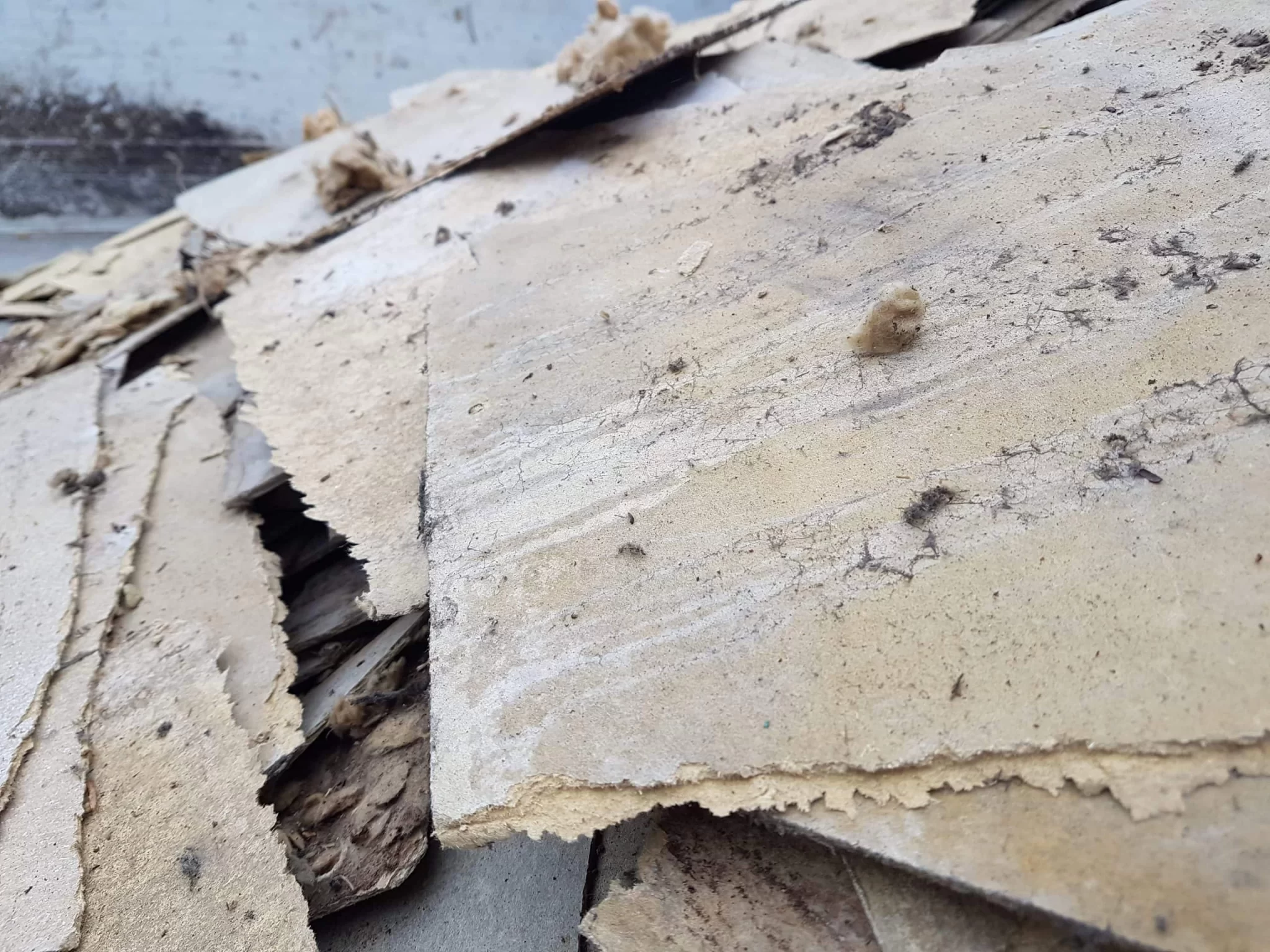
You stop guessing. That’s the biggest thing. When you’re living in a home built around 1952 — which describes most of Elmont — you’re living with materials that were standard at the time: pipe insulation wrapped around steam heating systems, 9×9 vinyl floor tiles with asbestos-containing adhesive underneath, popcorn ceilings that haven’t been touched since they were sprayed on. None of that is visible danger until something disturbs it. And in Elmont, something is always disturbing it — a bathroom gut, a boiler swap, a basement finishing project.
Once we complete a licensed abatement and air clearance testing confirms the space is clean, you can renovate without stopping mid-project to figure out what you just cut into. You can sell without a last-minute asbestos finding derailing the deal. With Elmont home values now sitting around $620,000, that kind of clean documentation isn’t just peace of mind — it protects real equity.
There’s also the family side of it. Elmont households run large — nearly four people per home on average, often multi-generational. When grandparents and kids are sharing the same space, the stakes of airborne fiber exposure aren’t abstract. Getting it handled properly means everyone in the house breathes easier, literally.
We’ve been doing asbestos abatement work throughout Nassau County long enough to know exactly what’s inside a 1952 Cape Cod in Elmont before we open a single wall. The post-war homes that line the streets between Hempstead Turnpike and the Cross Island Parkway — built to house racetrack workers and young families moving out of the city — are our bread and butter. We’ve seen the pipe insulation, the floor tile mastic, the textured ceilings. We’re not learning on your job.
We’re fully licensed under New York State Industrial Code Rule 56, which is the state law that governs every asbestos abatement project in New York. That means every project we touch is documented, inspected, and cleared — not just removed. When you need to submit paperwork to the Town of Hempstead Building Department for a renovation permit, we know exactly what that process requires and how to keep your project moving.
No Surprises — Here's What the Process Actually Looks Like
It starts with an inspection. A certified NYS Asbestos Inspector comes to your Elmont property, identifies any materials that may contain asbestos, and takes bulk samples for lab analysis. This step isn’t optional — under NYS Industrial Code Rule 56, it’s required before any renovation or demolition work can begin, and the results have to be submitted with your Town of Hempstead building permit application. We coordinate all of that. You don’t have to chase paperwork.
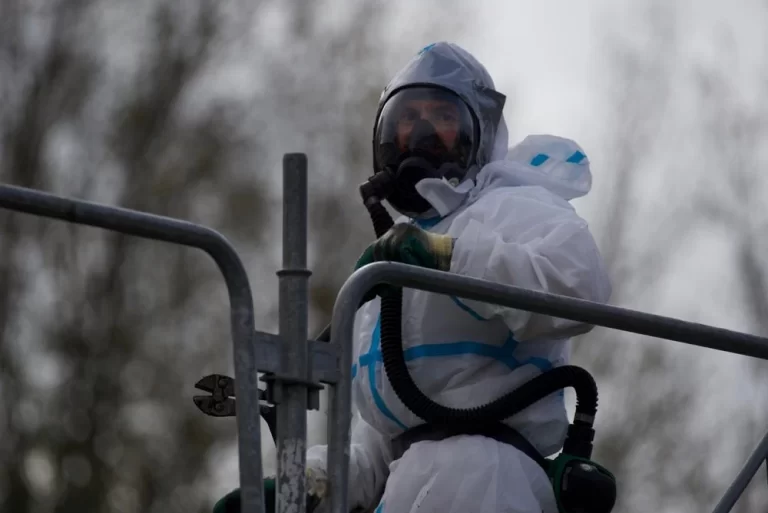
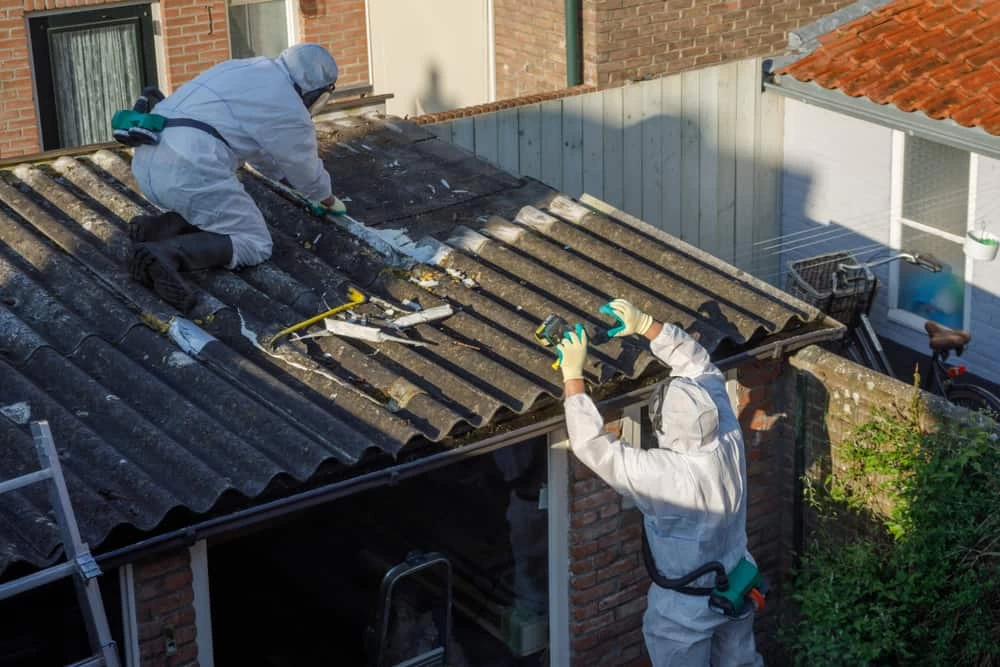
If asbestos-containing materials are confirmed, we set up proper containment — negative air pressure, sealed work areas, full protective protocol — before anything gets touched. Removal is done by our licensed workers following state-mandated procedures, and all waste is disposed of at NYS DEC-approved facilities. This isn’t a gray area in New York. The rules are specific, and we follow them exactly.
After removal, we run post-abatement air clearance testing. That’s the part most people don’t know to ask about — it’s the final confirmation that the space is actually clean, not just visually clear. You get written documentation of the clearance results, which matters whether you’re pulling a permit, closing a real estate deal, or simply need to know your home is safe for your family to be in again.
Every Material Type Found in Elmont Homes — Covered
The asbestos-containing materials we find most often in Elmont’s housing stock aren’t random. They’re predictable, because the homes here were built in a specific era with a specific set of materials. Steam pipe insulation is one of the most common — older heating systems in Elmont’s post-war homes were routinely wrapped with chrysotile asbestos insulation, and when that insulation starts to crumble, it becomes a real hazard. Nine-by-nine-inch vinyl floor tiles are another one. If your home still has the original flooring from the 1950s or 60s, there’s a reasonable chance the tiles and the adhesive underneath both contain asbestos.
Beyond that, we handle popcorn ceiling removal for homes with the original spray-applied texture, acoustic ceiling tile removal in finished basements, cement board siding, roofing materials, plaster, and joint compound. These aren’t edge cases in Elmont — they’re standard findings in a community where roughly 18 percent of homes were built before 1940 and the median construction year is 1952.
Every project we complete includes the full chain: certified inspection, licensed removal, approved disposal, and written air clearance documentation. If you’re in Alden Manor, Locustwood, or anywhere else in the 11003 zip code, the process is the same — thorough, compliant, and fully documented from start to finish.
Do I need an asbestos inspection before renovating my Elmont home?
Yes — and in New York, it’s not just a recommendation, it’s the law. Under NYS Industrial Code Rule 56, any renovation or demolition project that may disturb building materials requires a certified asbestos inspection before work begins. That inspection has to be conducted by a licensed NYS Asbestos Inspector, and the results need to be submitted to the Town of Hempstead Building Department as part of your permit application. Elmont is an unincorporated hamlet, so all permits run through the Town of Hempstead — not a village government — which means this requirement applies to every renovation project here, no exceptions.
If you skip the inspection and disturb asbestos-containing materials without proper abatement, you’re looking at potential fines, liability, and a project that gets shut down mid-renovation. Given that most Elmont homes were built in the early 1950s — squarely in the era when asbestos was standard in floor tiles, pipe insulation, and ceiling texture — the inspection isn’t a formality. It’s the step that tells you what you’re actually working with before your contractor opens a wall.
How much does asbestos removal typically cost in Nassau County?
It depends on what materials are involved and how much of them need to come out. For something like popcorn ceiling removal in a single room, you’re generally looking at $3 to $8 per square foot in the New York area. A more comprehensive project — say, pipe insulation removal on a steam heating system plus floor tile abatement in a 1,500 square foot Elmont home — can range from a few thousand dollars into the $10,000 range depending on scope and the number of material types involved.
What you want to watch out for is unlicensed contractors quoting unusually low prices. In New York, anyone performing asbestos abatement work is legally required to hold a NYS Department of Labor license. An unlicensed contractor can’t provide the clearance documentation you need for a Town of Hempstead permit, and if something goes wrong, you’re holding the liability. With Elmont home values around $620,000, a proper licensed abatement is a straightforward investment compared to the risk of doing it wrong.
What are the most common materials containing asbestos in 1950s Elmont homes?
The list is longer than most people expect. In homes built during Elmont’s post-war development era, the most frequently found asbestos-containing materials are steam pipe insulation — the white or gray wrapping around older heating pipes — and 9×9-inch vinyl floor tiles along with the black mastic adhesive used to install them. Both were industry standard in the 1940s through 1960s, and both are still present in a significant number of Elmont homes that haven’t had major renovations.
Beyond those two, spray-applied popcorn ceiling texture was widely used from the late 1950s through the mid-1980s, and acoustic ceiling tiles in finished basements were common through the 1970s. Plaster walls, joint compound, cement board siding, and even some roofing materials from this era can also test positive. The point isn’t to alarm you — most of these materials are fine when left undisturbed. The issue arises when renovation work disturbs them and fibers become airborne. That’s when a licensed asbestos abatement team needs to be involved before the work continues.
Can I stay in my home during asbestos abatement in Elmont?
It depends on the scope of the project and where in the home the work is happening. For smaller, contained jobs — like removing a section of pipe insulation in a basement utility room or abating floor tiles in a single bathroom — it’s sometimes possible to remain in the home if the work area is properly sealed and the rest of the living space is unaffected. That decision gets made based on the specific layout of your home and the materials being removed.
For larger projects, or any work that involves materials in main living areas, most families temporarily relocate during the active abatement phase. It’s typically a short window — a few days in most residential cases — and the post-abatement air clearance testing confirms when it’s safe to return. Given that Elmont households tend to run large, often with children and older family members under the same roof, erring on the side of caution during active removal is almost always the right call. We’ll give you a straight answer on what makes sense for your specific situation before any work begins.
Does asbestos abatement affect a home sale in Elmont, NY?
It can go either way, depending on whether the issue has been addressed or not. If a home inspection or pre-sale environmental assessment turns up asbestos-containing materials in poor condition, it can slow a deal down significantly — buyers get nervous, lenders may require remediation before closing, and negotiations can get complicated fast. In a market where Elmont home values have climbed to around $620,000, that kind of delay costs real money.
On the other hand, if you’ve already had a licensed abatement completed and you have the clearance documentation to show for it, that’s a selling advantage. It removes a major unknown from the buyer’s side and signals that the home has been properly maintained. Buyers coming in from New York City through the new LIRR Elmont–UBS Arena station — many of whom are first-time Long Island homeowners — are often less familiar with what older Nassau County homes contain, and having clean paperwork ready makes the process smoother for everyone involved.
How do I know if my Elmont home's popcorn ceiling contains asbestos?
You can’t tell by looking at it. Popcorn ceiling texture applied before the mid-1980s frequently contained asbestos, but there’s no visual difference between a ceiling that tests positive and one that doesn’t. The only way to know for certain is to have a bulk sample taken and sent to an accredited laboratory for analysis. That sampling has to be done by a certified NYS Asbestos Inspector — it’s not a DIY step, because disturbing the material to collect a sample without proper precautions can release fibers into the air.
In Elmont, where a significant share of homes still have their original ceilings from the 1950s, 60s, and 70s, this is one of the more common things we’re asked about. If you’re planning to scrape, paint over, or remove a textured ceiling as part of a renovation, get the sample done first. If it comes back positive, the ceiling needs to be abated by a licensed contractor before any other work in that area can proceed. If it comes back negative, you have documentation that clears the way for your contractor to move forward without interruption.