If your renovation just hit a wall — or your home inspection flagged something — you need a certified asbestos abatement contractor in Hewlett who knows Nassau County’s rules, not just the state ones.
I needed a professional consultation explanation of procedure for safe removal of Asbestos in my apartment complex. Without having an account yet, I was very impressed with the caring, knowledgeable and generous advice offered by Jessica, and will look forward to doing business in the future. Thank you so much! I feel much more informed about a sometimes scary endeavor. Peace. Nancy Silva Mineola, NY.
Mia Munoz
Used this company to clean up some water flood in my house. They were fast and easy to work with.very professional, Would recommend to anyone!
Nini Valle
Great company, had a flood and they responded quickly and efficiently. Billed my insurance company directly. I highly recommend this company!
joe colapietro, jr
I had pipe freeze in my basement right before a snow storm and they made to within an hour to help start the clean up process. They we by our side throughout the entire process and even helped with the insurance company. They did such a great job with the cleanup, repair, remidiation, I contracted them to perform the repairs and finishes in the basement. They came with enough manpower and material to get the job done. Leo and Jessica were nothing but a pleasure to deal with!!
Cristian Arredondo c
I had some water damage in my home and Green Island was able to take care of my issue quickly and effectively. I am very pleased with the work they did. They responded quickly and were very professional.
Michael M
Outstanding service! From the office to the field crew everyone was friendly, helpful and responsive. I highly recommend Green Island Group.
Your Home Gets Cleared. Your Project Moves Forward.
When asbestos shows up mid-renovation, everything stops. The contractor walks off the job, the timeline blows up, and suddenly you’re trying to figure out who’s licensed, what the county requires, and whether your family needs to leave. That’s a lot to sort out fast — especially when you’re dealing with a home you’ve invested serious money into.
Here’s what changes when the work gets done right: your space is safe, your documentation is clean, and your project gets back on track. For Hewlett homeowners, that documentation matters more than most people realize. Nassau County has its own Environmental Hazard Remediation Program requirements on top of New York State’s rules — and any abatement work that doesn’t satisfy both can create real problems when you go to sell or pull permits through the Town of Hempstead.
A lot of homes in the Five Towns were built during the postwar boom — the late 1940s through the 1960s — which is exactly when asbestos was used most heavily in floor tiles, pipe insulation, ceiling texture, and boiler wrap. If your Hewlett home was built before 1980, there’s a reasonable chance something in it contains asbestos. It’s just the reality of the housing stock here, and it’s why getting a certified assessment before any major renovation is the smarter move.
We Know Hewlett's Housing Stock — and Nassau County's Rules
We’re a Nassau County-based environmental remediation contractor with deep roots in the Five Towns. We hold the state certifications required under New York’s Industrial Code Rule 56, and we’re licensed under Nassau County’s Environmental Hazard Remediation Program — the EHRP contractor credential that’s specifically required for abatement work throughout the county, including Hewlett.
We’ve worked extensively in Hewlett and the surrounding Five Towns. We know what’s inside homes on streets like Fenimore Road and East Rockaway Road — the old floor tiles, the wrapped pipes in the basement, the textured ceilings that were standard in homes built in this era. That hands-on familiarity with the local housing stock is what makes the difference between a contractor who shows up prepared and one who’s figuring it out as they go.
When you call us, you’re getting a team that’s done this work in your neighborhood, understands the county’s regulatory requirements, and can give you a straight answer about what your property actually needs.
It starts with an assessment. We come to your Hewlett property, identify the materials in question, and collect samples for laboratory analysis. You’ll know what you’re dealing with before any decisions get made. No pressure, no upselling — just facts about what’s in your home.
If abatement is needed, we put together a written scope of work and a clear estimate before anything starts. That estimate covers everything: containment setup, removal, waste transport by a licensed hauler, and final clearance air monitoring. Nassau County’s EHRP requirements mean there’s a specific process that has to be followed for the documentation to hold up — and we handle all of it, so you don’t have to become an expert in county code to get your project moving.
Once the work is complete, you receive written clearance documentation. That’s the paperwork your general contractor needs to resume work, your real estate attorney needs for a clean closing, and the Town of Hempstead Building Department needs before issuing permits on affected areas. Most residential jobs — floor tile removal, popcorn ceiling abatement, pipe insulation — are completed within one to three days. We schedule with your renovation timeline in mind, because we know delays cost money.
The most common asbestos-containing materials we encounter in Hewlett homes are 9×9 vinyl floor tiles and the black mastic adhesive beneath them, pipe and boiler insulation in basement mechanical rooms, textured popcorn ceilings applied through the 1970s, and drywall joint compound. These aren’t rare findings — they’re standard in homes of this era, and they come up constantly in kitchen renovations, bathroom remodels, and basement finishing projects across the Five Towns.
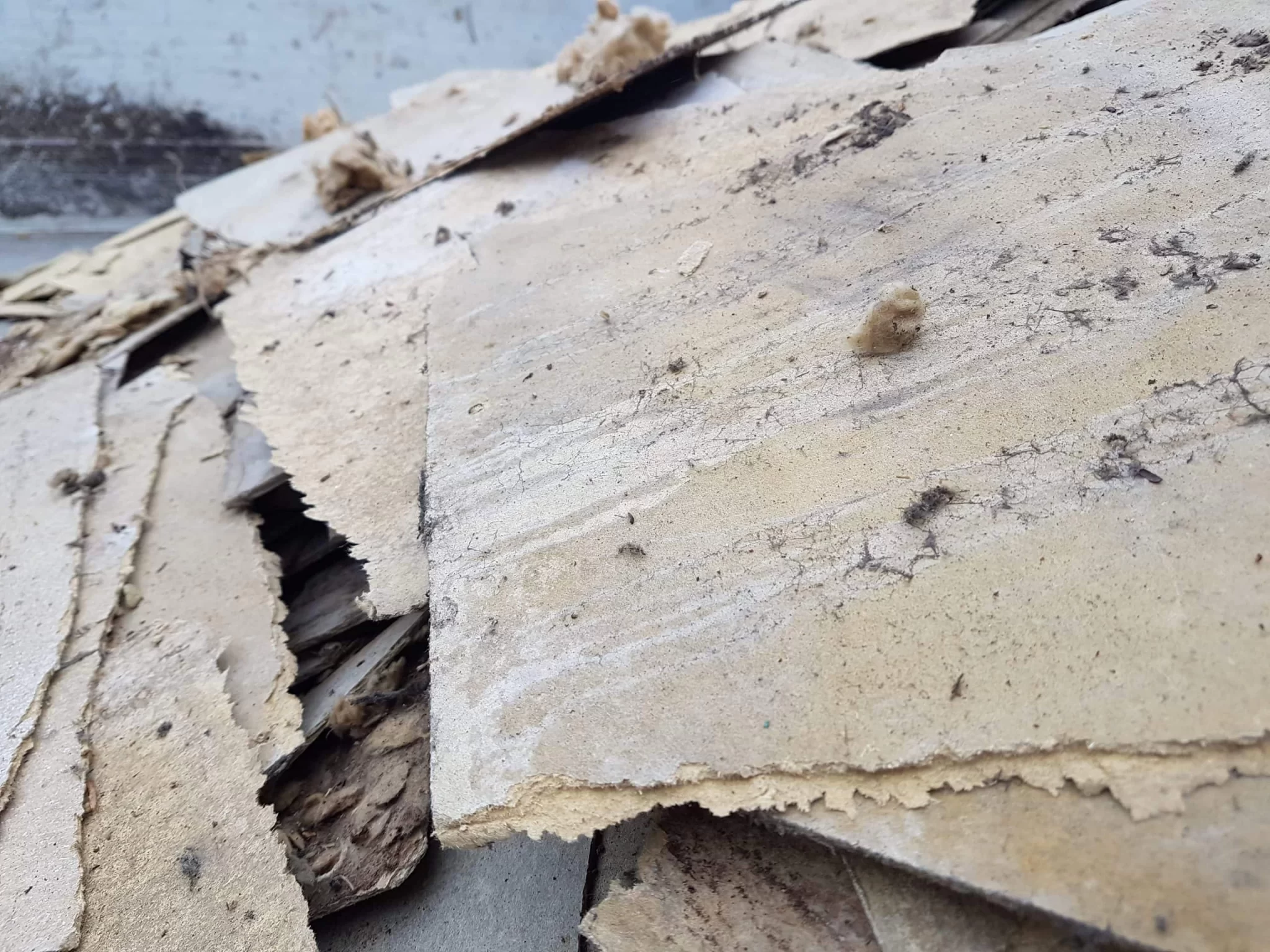
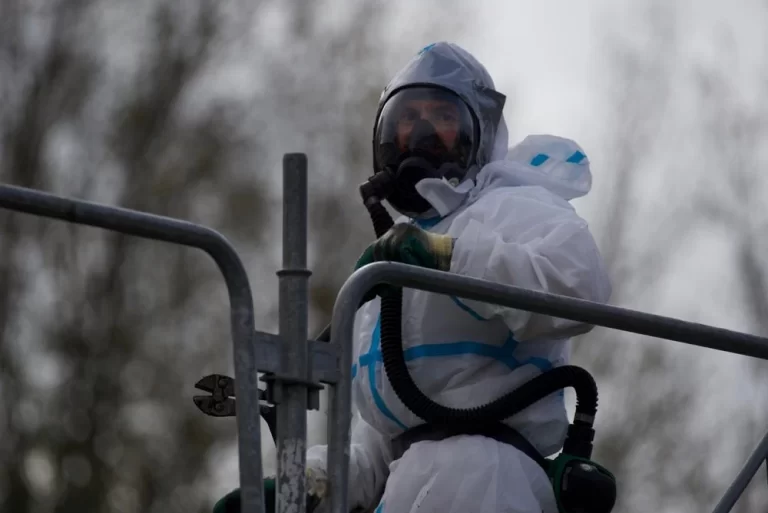
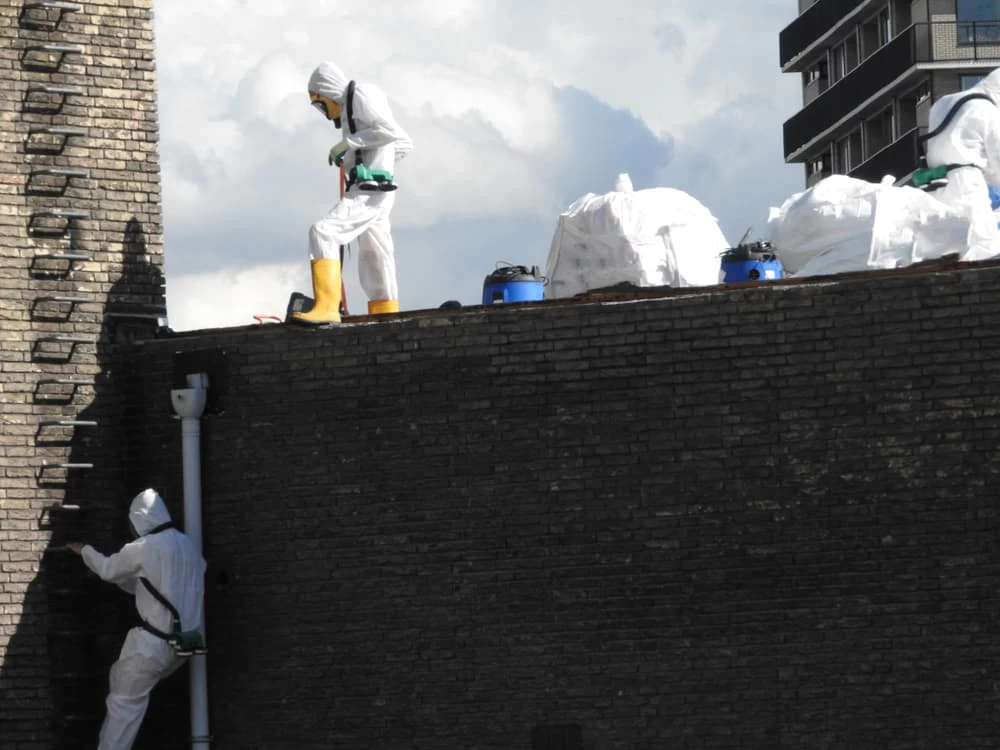
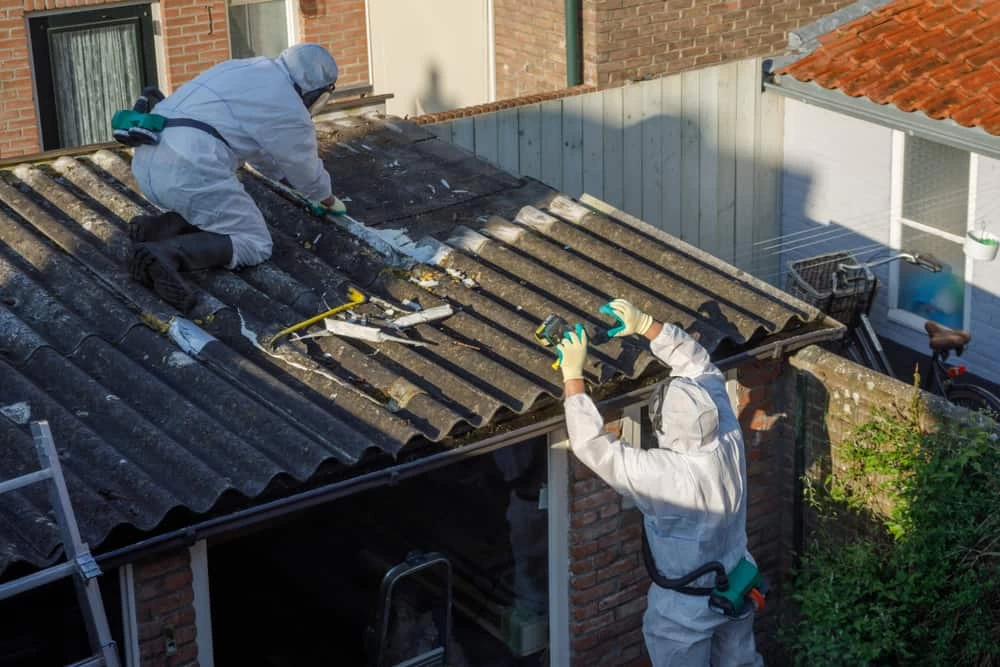
Asbestos tile removal is handled under full containment: plastic sheeting, negative air pressure, HEPA filtration, and proper bagging and labeling for transport. Popcorn ceiling abatement follows the same protocol — the ceiling material is wetted to minimize fiber release, carefully removed, and the area is cleared before re-occupancy. Every step follows NYS Rule 56 and Nassau County EHRP standards. The waste doesn’t go in a dumpster — it’s transported by a licensed hauler under NYS DEC regulations, with tracking documentation that becomes part of your project file.
If you’re selling your Hewlett home, that project file is your protection. The Five Towns real estate market has been moving fast, with median sale prices above $668,000 — and buyers at that price point come with thorough inspectors and attorneys who will ask for documentation. Having a complete, certified abatement record means no surprises at the closing table and no contingencies that drag out your timeline.
Does asbestos abatement in Hewlett require a Nassau County permit?
Nassau County has its own Environmental Hazard Remediation Program, which requires abatement contractors to hold an EHRP license and their technicians to hold an EHRT license. These are county-specific credentials that go beyond New York State’s baseline certification under Industrial Code Rule 56 — and both are required for any abatement work performed in Hewlett.
In addition to contractor licensing, there are advance notification requirements and waste transport protocols under NYS DEC regulations that apply to every project. On the building permit side, the Town of Hempstead Building Department requires documentation that asbestos abatement has been completed before issuing permits for renovation work in affected areas. That means if you’re pulling a permit for a kitchen or bathroom remodel in Hewlett, the abatement paperwork needs to be in order first. We handle all of this as part of our standard process — you don’t need to navigate the county’s requirements on your own.
How do I know if my Hewlett home actually contains asbestos?
The honest answer is: you can’t know for certain without testing. Visual inspection alone isn’t enough — asbestos-containing materials often look identical to non-asbestos versions of the same product. What you can do is consider the age of your home. If it was built before 1980, there’s a meaningful chance that some of the original materials contain asbestos.
In Hewlett, a large portion of the housing stock dates to the postwar decades — the late 1940s through the 1960s — which is the peak era for asbestos use in residential construction. The most common locations are 9×9 floor tiles and their adhesive, pipe wrap and boiler insulation in basements, textured ceiling coatings, and drywall joint compound. If your home falls in that construction window and you’re planning any renovation that disturbs these materials, testing before you start is the right call. We collect samples, send them to an accredited laboratory, and give you a clear answer — typically within a few days.
Do we have to leave our home during asbestos removal?
It depends on the scope and location of the work. For contained projects — a single room, a section of basement, or a specific ceiling area — it’s often possible for the rest of the home to remain occupied while work is underway, provided the containment is properly established and negative air pressure is maintained. We’ll always give you a straight assessment based on the actual scope of your project, not a blanket answer designed to make things easier for us.
For larger projects or work in high-traffic areas of the home, temporary relocation during active abatement is sometimes the safer and more practical choice. We factor in your household — including whether you have children at home, which matters in a community like Hewlett where families are the norm — and we give you an honest recommendation. Final clearance air monitoring confirms that fiber levels are within safe limits before anyone re-enters the work area, and that result is documented in writing.
What happens to the asbestos waste after it's removed from my property?
Asbestos waste can’t go in a standard dumpster or be hauled away by a general contractor. Under New York State Department of Environmental Conservation regulations, asbestos-containing waste must be properly sealed, labeled, and transported by a licensed hauler to an approved disposal facility. There’s a chain of documentation that follows the waste from your property to its final destination — and that paperwork becomes part of your project record.
This matters for Hewlett homeowners specifically because that documentation is what protects you downstream. If you sell your home, your attorney may need to produce it. If a future renovation uncovers something adjacent to the abated area, having a clean record of what was removed, when, and how it was disposed of gives you a defensible paper trail. We manage the entire waste chain — containment, transport, and disposal — so you’re not left trying to piece together documentation after the fact.
How long does asbestos abatement typically take for a Hewlett home?
Most residential abatement projects in Hewlett fall in the one-to-three-day range for common scopes — floor tile removal in a kitchen or basement, popcorn ceiling abatement in one or two rooms, or pipe insulation removal in a mechanical room. Larger projects that involve multiple materials across different areas of the home can run longer, but we’ll give you a realistic timeline in the written scope of work before anything starts.
Scheduling is something we take seriously, especially for renovation-triggered jobs. If your general contractor is waiting on clearance to resume work, every extra day costs you money. We prioritize scheduling for renovation-driven abatement calls and work to complete the job and deliver clearance documentation as efficiently as the scope allows. Spring and fall tend to be the busiest seasons for abatement work in the Five Towns, when renovation activity peaks — so if you know a project is coming up, earlier contact gives you more scheduling flexibility.
My home inspector flagged asbestos before my Hewlett closing — what now?
This is one of the most common situations we handle, and it’s more manageable than it feels in the moment. When a home inspector flags suspected asbestos-containing materials in Hewlett, the next step is confirmation — not abatement. Suspected material needs to be sampled and tested before any removal decision is made. If the lab results come back positive, abatement is scheduled, completed, and documented. That documentation goes to your attorney and the buyer’s attorney, and the transaction moves forward.
Hewlett’s real estate market moves at a pace where delays are costly. Homes here have been selling at median prices above $668,000, and buyers and their attorneys are thorough. The good news is that a properly documented abatement doesn’t kill a deal — it resolves the contingency cleanly. What creates problems is when sellers try to work around the issue or hire an unlicensed contractor whose paperwork doesn’t hold up to scrutiny. We provide the full documentation package — lab results, abatement records, waste transport logs, and clearance air monitoring results — so your closing has everything it needs to proceed without complications.