Gold Coast Homes Deserve More Than a Generic Abatement Crew
Lattingtown’s estate homes carry decades — sometimes centuries — of history. We handle asbestos abatement the right way: licensed, documented, and built around what your property actually requires.
I needed a professional consultation explanation of procedure for safe removal of Asbestos in my apartment complex. Without having an account yet, I was very impressed with the caring, knowledgeable and generous advice offered by Jessica, and will look forward to doing business in the future. Thank you so much! I feel much more informed about a sometimes scary endeavor. Peace. Nancy Silva Mineola, NY.
Mia Munoz
Used this company to clean up some water flood in my house. They were fast and easy to work with.very professional, Would recommend to anyone!
Nini Valle
Great company, had a flood and they responded quickly and efficiently. Billed my insurance company directly. I highly recommend this company!
joe colapietro, jr
I had pipe freeze in my basement right before a snow storm and they made to within an hour to help start the clean up process. They we by our side throughout the entire process and even helped with the insurance company. They did such a great job with the cleanup, repair, remidiation, I contracted them to perform the repairs and finishes in the basement. They came with enough manpower and material to get the job done. Leo and Jessica were nothing but a pleasure to deal with!!
Cristian Arredondo c
I had some water damage in my home and Green Island was able to take care of my issue quickly and effectively. I am very pleased with the work they did. They responded quickly and were very professional.
Michael M
Outstanding service! From the office to the field crew everyone was friendly, helpful and responsive. I highly recommend Green Island Group.
Renovation projects in Lattingtown don’t stall because homeowners are indecisive. They stall because someone discovered a material that can’t legally be touched until a licensed contractor clears it. When that’s handled correctly — tested, removed, documented, and cleared — your project moves forward on your timeline, not someone else’s regulatory backlog.
For homes in the Lattingtown Harbor enclave along Frost Creek Drive, that often means vinyl asbestos floor tiles from the 1950s or popcorn ceiling texture that’s been up since the Eisenhower administration. These aren’t abstract risks. They’re specific materials in specific rooms, and once they’re gone, you’re not just safer — you’re legally clear to renovate.
The older estate homes along Lattingtown Road carry a different profile entirely. Steam heating systems, original pipe insulation, and building materials from the early 1900s require a contractor who knows what they’re looking at. When the abatement is done right, you get air clearance documentation that satisfies your general contractor, your attorney, and Nassau County — and you get your home back.
We Know Lattingtown — Not Just Another Market We Cover
Green Island Group isn’t a national franchise that added asbestos to a menu of services. We’re a Nassau County operation, built specifically around the regulatory requirements, housing stock, and community standards of Long Island’s North Shore. The difference shows up in how we scope a job, how we handle permits, and how we execute the work on a property that matters to you.
Lattingtown sits in a part of Nassau County where homes range from Gilded Age estates to mid-century builds in Lattingtown Harbor — and each era comes with its own asbestos profile. Knowing that before we walk through the door changes the quality of the assessment and the accuracy of the scope.
Every project we handle operates under New York State’s Industrial Code Rule 56, with full NYS DOL licensing, certified technicians, and proper disposal documentation from start to finish. You’re not managing the compliance burden — we are.
No Surprises — Here's Exactly How the Process Runs
It starts with a certified inspection. Our licensed inspector walks the property, identifies suspect materials, and takes samples for laboratory analysis. In a Lattingtown home — especially one built before 1980 — that inspection covers more ground than most people expect: floor tiles, ceiling texture, pipe insulation, duct wrap, roofing materials, and sometimes exterior siding on older carriage houses or accessory structures.
Once the lab results are back, you get a clear picture of what’s present, where it is, and what the abatement scope looks like. Before any physical work begins, we file the required notifications with the New York State Department of Labor under ICR 56. This is a legal requirement, not a formality — and we handle it on your behalf so you’re not navigating state filings while trying to manage a renovation.
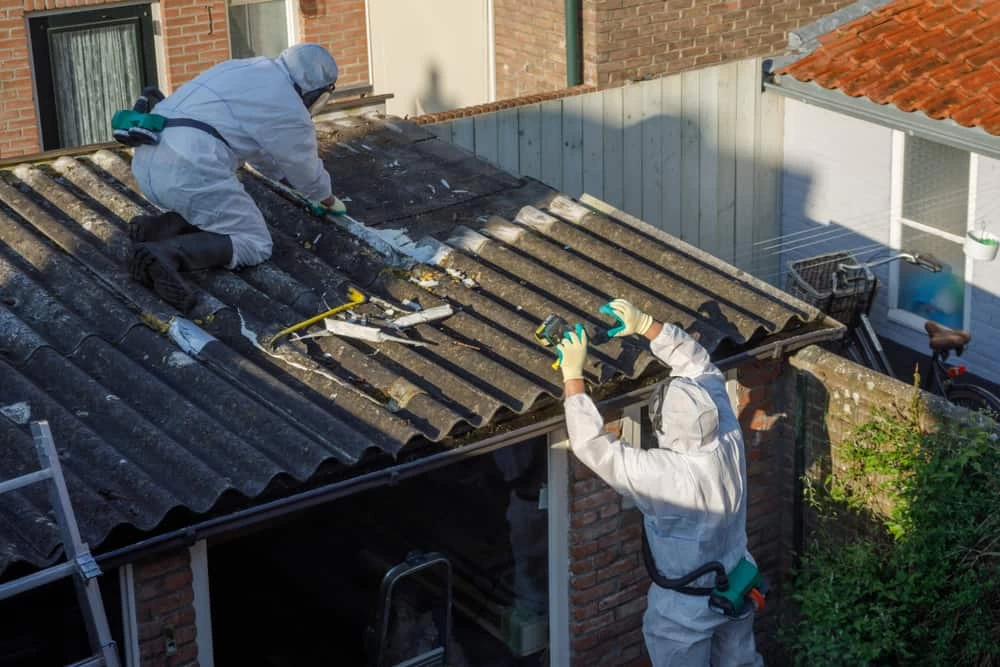
The abatement itself is done under full containment: negative air pressure, sealed work zones, and HEPA filtration. When the removal is complete, post-abatement air clearance testing confirms the space is clean. You receive a full documentation package — inspection report, waste disposal manifests, and clearance results — everything your contractor, lender, or attorney needs to move forward.
Asbestos Tile and Popcorn Ceiling Removal, Lattingtown
Every Material Type, Every Era of Lattingtown Construction
The asbestos abatement services we provide in Lattingtown cover the full range of materials found across the village’s distinct construction eras. For homes in the Lattingtown Harbor development — built primarily in the 1950s and 1960s — the most common requests involve asbestos tile removal from kitchens, basements, and utility rooms, along with asbestos popcorn ceiling removal ahead of interior renovations. These are the materials that show up most often when a 65-year-old ranch or split-level gets its first serious gut renovation.
For the older estate properties along Lattingtown Road and the waterfront parcels near Mill Neck Creek, the scope tends to be more complex: pipe and boiler insulation from early steam heating systems, transite siding panels, and original plaster or joint compound in pre-war construction. The Bailey Arboretum manor house and the historic character of the surrounding village are reminders that some of these structures predate modern building materials entirely — and require a contractor who understands what that means in practice.
Every service we deliver includes the full compliance package: pre-abatement inspection, licensed removal, approved disposal at a certified facility, and post-abatement air clearance testing. We handle Nassau County permit coordination as part of the process. You’re not piecing together multiple vendors — one team manages the project from the first sample to the final clearance report.
Does my Lattingtown home built before 1980 likely contain asbestos?
The honest answer is: probably yes, in some form. Homes built before 1980 — which covers a significant portion of Lattingtown’s housing stock, from the Gilded Age estates on Lattingtown Road to the mid-century builds in the Lattingtown Harbor enclave — were constructed during a period when asbestos was used widely and legally in dozens of building products. Floor tiles, ceiling texture, pipe insulation, roof shingles, duct wrap, window caulking, and joint compound all commonly contained asbestos during this era.
That doesn’t mean your home is a hazard right now. Asbestos-containing materials that are intact and undisturbed typically don’t pose an immediate risk. The risk increases when those materials are disturbed — during renovation, demolition, or when they deteriorate on their own due to age or moisture exposure. Given Lattingtown’s proximity to the Long Island Sound and the salt air and moisture conditions that come with it, deterioration of older building materials is a real and common factor. A certified inspection is the only way to know what you’re actually dealing with.
Is asbestos testing legally required before renovating a Nassau County home?
Yes — under New York State’s Industrial Code Rule 56, any renovation or demolition project that could disturb potential asbestos-containing materials requires a pre-renovation asbestos survey conducted by a certified inspector before work begins. This isn’t a recommendation. It’s a legal requirement, and it applies to residential properties in Nassau County, including Lattingtown.
In practical terms, this means your general contractor cannot legally begin demolition, gut work, or any scope that involves disturbing walls, floors, ceilings, or mechanical systems in a pre-1980 home without that survey on file. Some contractors will push forward anyway — but that exposes both the homeowner and the contractor to significant liability. Getting the survey done first protects your project timeline, your renovation budget, and your legal standing. We handle the inspection, the lab analysis, and the required state notifications so your contractor can start work without any regulatory gaps.
What does asbestos abatement actually cost for a Long Island estate home?
Cost varies based on the type of material, the quantity, the location within the structure, and the complexity of the containment required. A straightforward asbestos tile removal in a basement or utility room is a very different scope than abating pipe insulation throughout a multi-story estate home with original steam heating. For most residential projects in Nassau County, abatement costs typically range from a few hundred dollars for a limited scope to several thousand for more extensive work across multiple material types.
What matters more than the base removal cost — especially for a Lattingtown property — is the total project cost including inspection, lab fees, state notification filing, disposal at an approved facility, and post-abatement air clearance testing. Skipping any of those steps to save money upfront creates real exposure: regulatory liability, failed clearance tests, and documentation gaps that can complicate a real estate transaction or a building permit. A properly scoped and fully documented abatement project is the only version that actually closes the loop.
How long does asbestos abatement take in a typical Lattingtown renovation project?
For a focused scope — like asbestos tile removal in a single room or popcorn ceiling abatement in a defined area — the physical work often takes one to two days once containment is set up. The timeline that catches most Lattingtown homeowners off guard isn’t the abatement itself — it’s the required advance notification period under New York State’s ICR 56 regulations. Depending on the project type and quantity of material involved, state notification must be filed a minimum of 10 business days before work begins on certain project types.
For Lattingtown homeowners planning a spring renovation — which is the peak season for estate renovation projects on the North Shore — this means the process needs to start earlier than most people expect. If you’re targeting a March or April start date for a major renovation, the asbestos inspection and notification filing should ideally be initiated in January or February. We manage the notification process on your behalf, but the timeline is real and worth planning around.
What's the difference between asbestos removal and asbestos remediation?
These terms get used interchangeably, but they describe slightly different scopes. Asbestos removal refers specifically to the physical act of taking out asbestos-containing materials from a structure — cutting, bagging, and disposing of them under proper containment. Asbestos remediation is the broader process that includes removal but also encompasses containment setup, air monitoring, post-abatement clearance testing, and the documentation that confirms the space is safe and compliant.
In practice, what most homeowners in Lattingtown need is full remediation — not just removal. A contractor who pulls out the materials but doesn’t perform post-abatement air clearance testing hasn’t actually closed the loop. You need the clearance results to confirm that fiber levels are within safe limits, and you need the disposal manifests to prove the material was handled legally. Without that documentation, you have a gap that will surface in a real estate transaction, a building permit review, or an insurance claim. We deliver the complete remediation package, not just the physical removal.
Can asbestos in a Lattingtown home affect a real estate sale or closing?
It can — and it does, more often than sellers expect. When a home inspection flags potential asbestos-containing materials, buyers, lenders, and real estate attorneys all want documentation. In some cases, a lender will require abatement as a condition of financing. In others, the buyer’s attorney will request proof of proper removal and clearance before closing. For a Lattingtown property transacting at $1 million or more, an undocumented asbestos issue can delay or derail a closing entirely.
The good news is that properly handled abatement — with a full documentation package including the inspection report, disposal manifests, and air clearance results — actually strengthens a sale. It removes the uncertainty, satisfies the lender’s requirements, and gives the buyer confidence that the issue was addressed correctly by a licensed contractor. Many Lattingtown sellers initiate the abatement process proactively once they’ve decided to list, specifically to avoid the negotiation leverage an undocumented ACM gives a buyer. Getting ahead of it is almost always the better move.