Gold Coast Homes Deserve More Than a Generic Abatement Crew
Most homes in Locust Valley were built before asbestos was ever a concern — and that’s exactly why asbestos abatement here isn’t a one-size-fits-all job.
I needed a professional consultation explanation of procedure for safe removal of Asbestos in my apartment complex. Without having an account yet, I was very impressed with the caring, knowledgeable and generous advice offered by Jessica, and will look forward to doing business in the future. Thank you so much! I feel much more informed about a sometimes scary endeavor. Peace. Nancy Silva Mineola, NY.
Mia Munoz
Used this company to clean up some water flood in my house. They were fast and easy to work with.very professional, Would recommend to anyone!
Nini Valle
Great company, had a flood and they responded quickly and efficiently. Billed my insurance company directly. I highly recommend this company!
joe colapietro, jr
I had pipe freeze in my basement right before a snow storm and they made to within an hour to help start the clean up process. They we by our side throughout the entire process and even helped with the insurance company. They did such a great job with the cleanup, repair, remidiation, I contracted them to perform the repairs and finishes in the basement. They came with enough manpower and material to get the job done. Leo and Jessica were nothing but a pleasure to deal with!!
Cristian Arredondo c
I had some water damage in my home and Green Island was able to take care of my issue quickly and effectively. I am very pleased with the work they did. They responded quickly and were very professional.
Michael M
Outstanding service! From the office to the field crew everyone was friendly, helpful and responsive. I highly recommend Green Island Group.
You stop guessing. That’s the first thing. When a Locust Valley home has pipe insulation from the 1930s, floor tile from the 1950s, or ceiling texture that hasn’t been touched since a 1970s renovation, there’s always that background question — is this stuff safe? Once it’s been properly tested, removed, and cleared, that question goes away. You can renovate without stopping mid-project. You can sell without a buyer’s inspector flagging something in the basement. You can finish the basement, update the kitchen, or replace the boiler without anyone telling you to stop work.
In Locust Valley specifically, the age of the housing stock makes this more relevant than most people expect. The median home here was built around 1945, and a significant portion of the hamlet’s residences — plus the carriage houses, pool houses, and outbuildings in Matinecock, Lattingtown, and Mill Neck — date back to the Gold Coast era. These aren’t post-war ranch homes. They’re complex, layered structures where asbestos can show up in multiple places at once. Coastal humidity on the North Shore only accelerates deterioration in older insulation and tile, which is what turns a manageable situation into a friable one.
Getting proper asbestos remediation done also protects your investment in a real, documented way. With homes in this area selling at a median of over a million dollars, a clean abatement record with clearance air testing isn’t just peace of mind — it’s a paper trail that holds up in a real estate transaction.
Licensed Asbestos Contractors Serving Locust Valley
We Know North Shore Homes. That's Not an Accident.
Green Island Group is a Nassau County-based environmental services company. We do asbestos abatement, asbestos removal, and asbestos remediation — and we do it across Long Island, including the North Shore communities that use Locust Valley as their home base. That means Matinecock, Lattingtown, Mill Neck, Bayville, and the estate properties that don’t always fit neatly into a ZIP code but are absolutely part of this community.
What makes working with us different isn’t just the drive time. It’s knowing what a pre-war carriage house looks like from the inside. It’s understanding how the Town of Oyster Bay’s permitting process works and what documentation you’ll need before our crew can get back on site. It’s not having to explain what kind of home you have to someone reading from a script.
Every project we take on is handled by licensed, certified professionals operating under New York State Industrial Code Rule 56. We carry the credentials, manage the paperwork, and don’t cut corners on clearance — because in this market, the documentation matters as much as the work itself.
No Surprises — Here's What the Process Actually Looks Like
It starts with a certified asbestos inspection. Before anything gets removed, a licensed inspector surveys the materials in question — floor tile, pipe insulation, ceiling texture, boiler wrap, roofing underlayment, whatever is relevant to your project. Samples are collected and sent to an accredited lab. You get a written report that tells you exactly what you’re dealing with, where it is, and what needs to happen next. If nothing comes back positive, you have documentation that says so. If something does, you have a clear scope to work from.
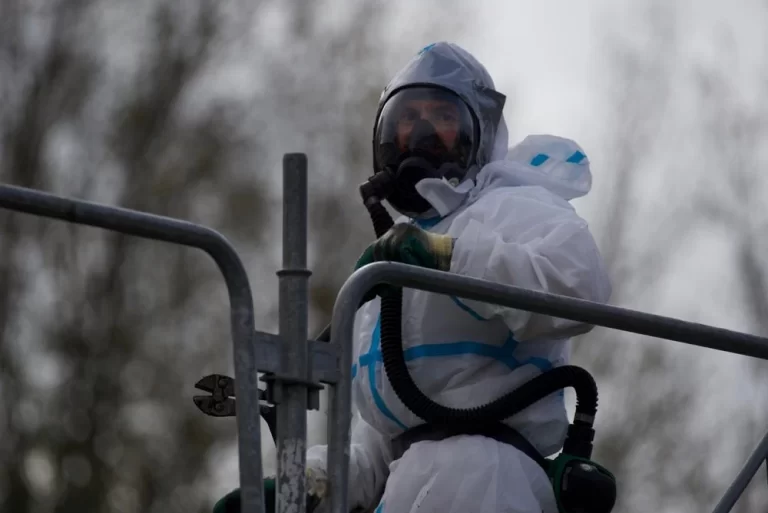
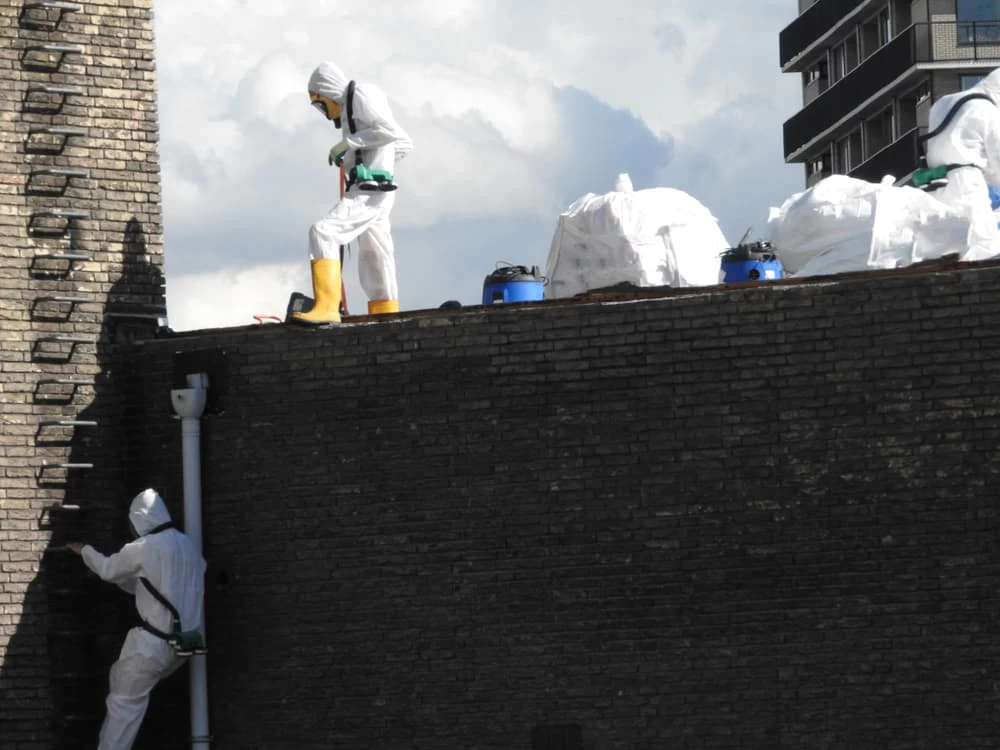
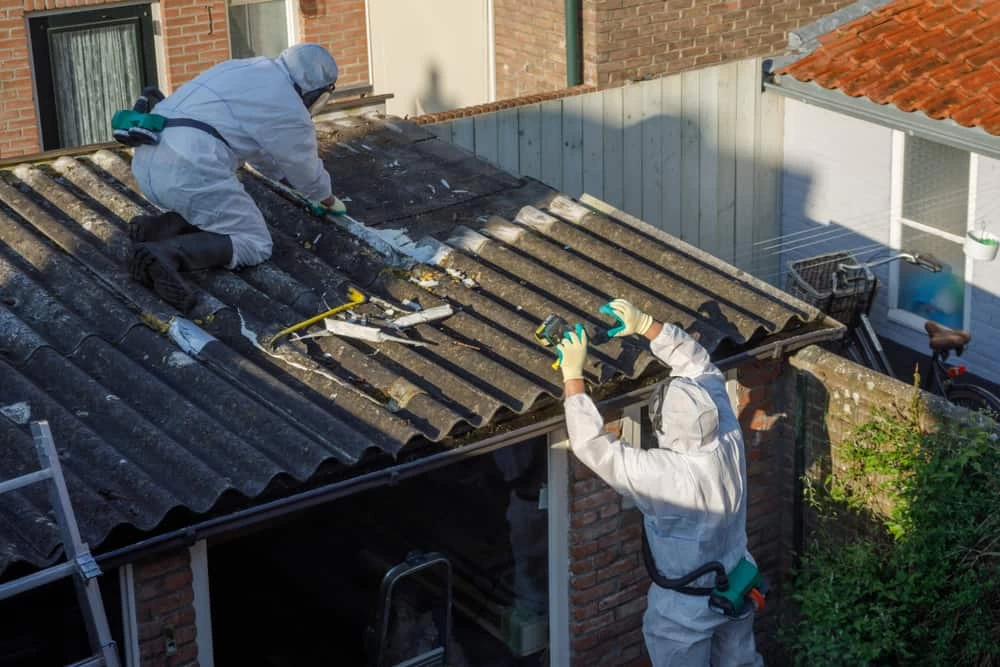
From there, we build out the abatement plan. For homes in Locust Valley — especially the older estate-era structures — that sometimes means coordinating across multiple material types in multiple areas of the home. Proper containment is set up, negative air pressure is established, and the work is done by certified asbestos handlers following Code Rule 56 requirements. Waste is double-bagged, labeled, and transported by a DEC-permitted hauler to an approved disposal facility. Nothing gets skipped.
Once abatement is complete, independent clearance air testing is conducted. This is the step that gives you — and your general contractor, and eventually your buyer — the documented proof that the space is clean. That clearance report, combined with the project records, is what satisfies the Town of Oyster Bay’s permitting requirements and protects you in any future transaction. Spring and fall tend to be the busiest seasons for this kind of work on the North Shore, so if you’re planning a renovation, earlier scheduling usually means fewer delays.
Asbestos Tile and Popcorn Ceiling Removal in Locust Valley
The Full Scope, Not Just the Easy Parts
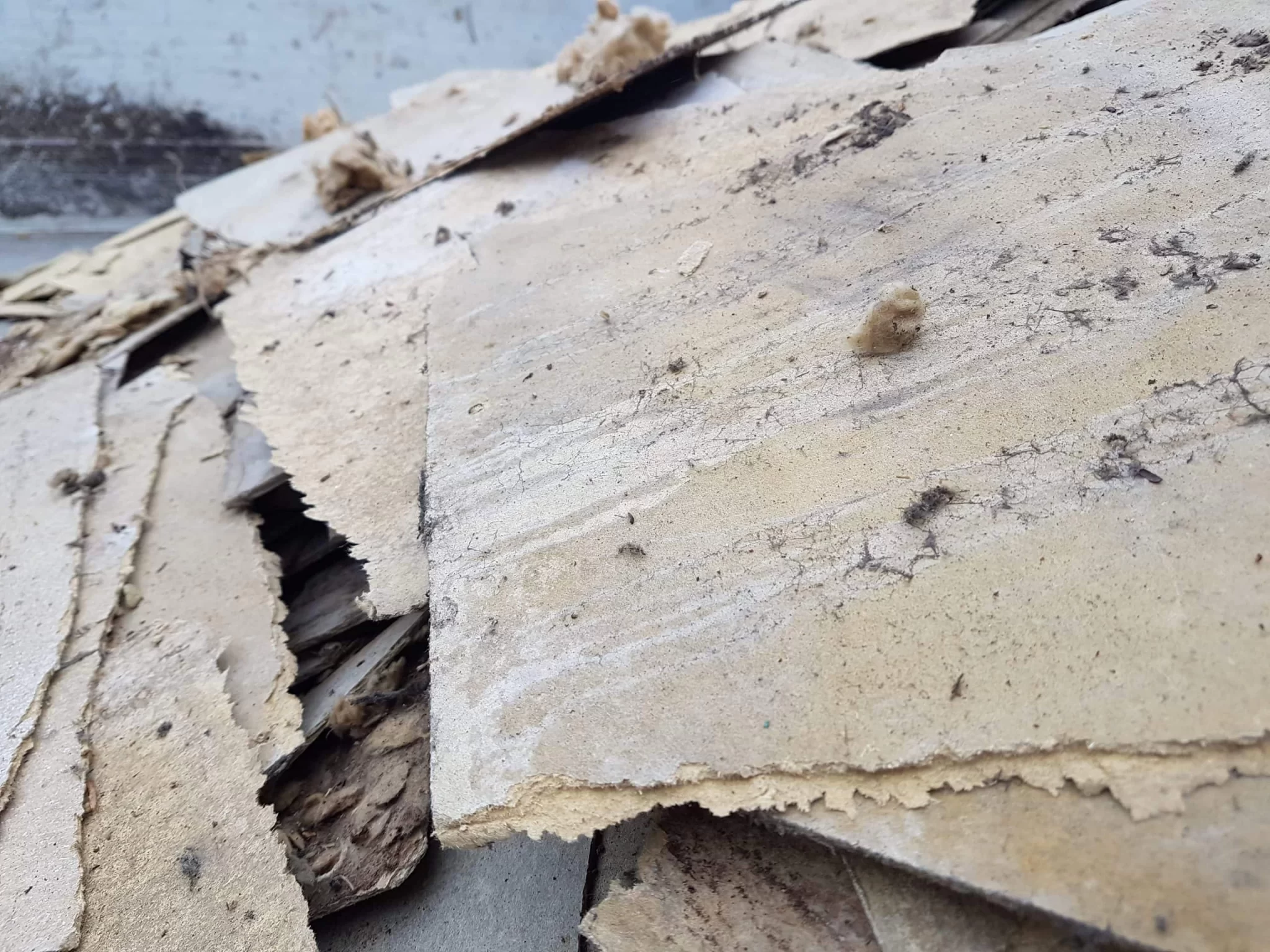
Asbestos abatement isn’t one thing — it’s a category. In Locust Valley homes, the most common materials we encounter are vinyl asbestos floor tile (the classic 9×9 and 12×12 formats installed widely from the 1930s through the mid-1970s), pipe and boiler insulation in basements and mechanical rooms, textured popcorn ceiling finishes applied during 1960s and 70s updates, and roofing underlayment in older structures. Each of these materials has its own handling requirements, and in a home with multiple affected systems, the abatement plan has to account for all of them together — not just the one your contractor happened to flag.
Asbestos tile removal is one of the more frequent requests we get from Locust Valley homeowners going through kitchen or basement renovations. The tile itself isn’t always the only concern — the mastic adhesive underneath it often contains asbestos too, and that gets missed when someone isn’t looking for it. Asbestos popcorn ceiling removal comes up regularly in homes that were updated in the 1960s and 70s, particularly in bedrooms and finished basements. Both require proper containment, certified removal, and clearance testing before any finishing work can resume.
If you’re in the middle of a renovation and your contractor has stopped work pending asbestos clearance, or if you’re preparing a Locust Valley property for sale and need documentation before closing, we can walk you through exactly what’s needed and turn it around without unnecessary delays.
Does my older Locust Valley home likely have asbestos, and where?
If your home was built before 1980, there’s a reasonable chance it contains asbestos-containing materials somewhere — and in Locust Valley, where the majority of homes were built before 1950, that probability is genuinely high. The most common locations are floor tile and the adhesive beneath it, pipe and boiler insulation in the basement, textured ceiling finishes (popcorn or spray-applied), roofing underlayment, and joint compound in walls and ceilings.
The estate-era homes and outbuildings in and around Locust Valley — including properties in Matinecock, Lattingtown, and Mill Neck — are particularly likely to have asbestos in multiple building systems, not just one. Older structures that have gone through multiple renovation cycles often have layers of materials from different eras, which means what looks like a simple floor tile job can involve materials from three different decades. A certified asbestos inspection is the only way to know for certain what you’re dealing with and where.
Do I need an asbestos inspection before starting a renovation in Locust Valley?
Under New York State Industrial Code Rule 56, any renovation or demolition project that will disturb materials suspected to contain asbestos requires a pre-project asbestos survey by a certified inspector. This isn’t optional — it’s a legal requirement, and it applies to residential projects as well as commercial ones. The Town of Oyster Bay’s building permit process also ties into this: if you’re pulling a permit for a renovation in Locust Valley that involves pre-1980 materials, you’ll need documented asbestos clearance before a certificate of occupancy can be issued.
In practical terms, this means that if you’re planning a kitchen remodel, bathroom renovation, basement finishing, or HVAC replacement in a Locust Valley home, getting an asbestos survey done before your contractor starts work is the right move — not just for compliance, but to avoid the much more disruptive scenario of stopping a job mid-project because something unexpected gets disturbed. Most experienced general contractors on the North Shore will ask for this documentation before they begin anyway.
What is asbestos abatement and how is it different from just removing the material?
Asbestos abatement is the full, regulated process of identifying, containing, removing, and disposing of asbestos-containing materials in a way that meets state and federal safety standards. It’s different from simply pulling out old tile or insulation because every step — containment setup, negative air pressure, certified handling, waste packaging, disposal, and final clearance air testing — has to follow specific protocols under New York State Industrial Code Rule 56 and EPA guidelines.
The reason this matters is that disturbing asbestos-containing materials without proper containment releases microscopic fibers into the air that can’t be seen and don’t settle quickly. Inhalation is the risk, and it’s cumulative. A contractor who removes old floor tile without knowing it contains asbestos, or without setting up proper containment, can spread fibers throughout a home — creating a much larger and more expensive problem than the original material. Proper abatement eliminates the material safely and gives you documented proof, through clearance air testing, that the space is clean before anyone moves back in or construction resumes.
How long does asbestos abatement take for a typical Locust Valley home?
The timeline depends on how much material is involved and how many areas of the home are affected. A single-room floor tile removal in a Locust Valley home — say, a kitchen or bathroom — can typically be completed in one to two days, with clearance air testing results returning within a day or two after that. A more complex project involving multiple material types across several areas of an older estate home, or a basement with pipe insulation and boiler wrap alongside floor tile, will take longer — often three to five days of active abatement work, plus the clearance testing period.
One thing worth planning for: the clearance air testing cannot be rushed. An independent industrial hygienist conducts the air sampling after the abatement is complete, and the results need to come back clean before the containment is removed and the space is released for construction. Building that window into your renovation timeline upfront — rather than treating it as an afterthought — is what prevents your contractor from sitting idle waiting on paperwork.
What does asbestos abatement cost for a home in Locust Valley, NY?
Cost varies based on the type of material, the quantity, the number of areas affected, and the complexity of the containment setup. For a single-room asbestos tile removal in a Locust Valley home, you’re generally looking at somewhere in the range of $1,500 to $3,500 depending on square footage and whether the mastic adhesive beneath the tile also tests positive. Pipe and boiler insulation removal in a basement tends to run higher given the labor involved in proper containment and handling. A larger, multi-system project in one of the area’s older estate homes can reach $8,000 to $15,000 or more depending on scope.
In a market where the median Locust Valley home sells for over a million dollars, the cost of proper abatement is relatively small compared to the risk of an undocumented asbestos finding derailing a sale or triggering a price reduction. The clearance documentation you receive at the end of the project is a real asset — one that protects you both during renovation and in any future transaction. We provide written estimates after the inspection so you know exactly what you’re looking at before any work begins.
How do I know if the asbestos contractor I hire is actually licensed in New York?
New York State requires asbestos abatement contractors to be licensed by the NYS Department of Labor, and every worker performing hands-on abatement must hold a valid asbestos handler certificate issued by the Commissioner under Industrial Code Rule 56. These aren’t internal certifications — they’re state-issued credentials that can be verified. Before hiring anyone to handle asbestos in your Locust Valley home, you can ask for their NYS DOL contractor license number and their workers’ handler certificate numbers and verify them directly through the Department of Labor.
This matters more than it might seem. In Nassau County, there are operators who advertise asbestos removal without holding the required state licensing — and the liability for work done by an unlicensed contractor falls back on the homeowner. If a future buyer’s inspector or attorney asks for documentation of the abatement and the contractor wasn’t properly licensed, the clearance paperwork may not hold up. Green Island Group holds the required NYS DOL licensing, and every crew member working on your project carries a valid handler certificate. We’ll show you both before we start.