When the East River Comes Knocking, You Need More Than a Shop Vac
Roosevelt Island sits in the middle of a tidal waterway. When water gets into your building’s lower levels, the clock starts immediately and who you call in the next hour matters more than anything else.
I needed a professional consultation explanation of procedure for safe removal of Asbestos in my apartment complex. Without having an account yet, I was very impressed with the caring, knowledgeable and generous advice offered by Jessica, and will look forward to doing business in the future. Thank you so much! I feel much more informed about a sometimes scary endeavor. Peace. Nancy Silva Mineola, NY.
Mia Munoz
Used this company to clean up some water flood in my house. They were fast and easy to work with.very professional, Would recommend to anyone!
Nini Valle
Great company, had a flood and they responded quickly and efficiently. Billed my insurance company directly. I highly recommend this company!
joe colapietro, jr
I had pipe freeze in my basement right before a snow storm and they made to within an hour to help start the clean up process. They we by our side throughout the entire process and even helped with the insurance company. They did such a great job with the cleanup, repair, remidiation, I contracted them to perform the repairs and finishes in the basement. They came with enough manpower and material to get the job done. Leo and Jessica were nothing but a pleasure to deal with!!
Cristian Arredondo c
I had some water damage in my home and Green Island was able to take care of my issue quickly and effectively. I am very pleased with the work they did. They responded quickly and were very professional.
Michael M
Outstanding service! From the office to the field crew everyone was friendly, helpful and responsive. I highly recommend Green Island Group.
Here’s the part most people don’t find out until it’s too late: water doesn’t stay where you can see it. It moves into wall cavities, under flooring, and into insulation quietly while the surface looks completely fine. By the time you smell something, mold has already been growing for days.
On Roosevelt Island, that risk is amplified. The island’s low-lying geography surrounded by the East River on all sides means that when a significant storm rolls through or tidal pressure builds, water intrusion into below-grade spaces isn’t a freak event. It’s a predictable outcome of where you live. RIOC’s own infrastructure documentation acknowledges the island’s flood vulnerability, which is why the drainage systems here were engineered specifically to manage it.
The buildings themselves add another layer. Eastwood, Westview, Island House, Rivercross, and Manhattan Park were all built in the 1970s and 1980s during an era when asbestos-containing materials were standard in residential construction. Pipe insulation, floor tiles, and ceiling materials in these buildings may contain asbestos. When flooding disturbs those materials, you’re no longer dealing with a water cleanup job. You’re dealing with a regulated hazardous materials situation and most water damage companies aren’t licensed to handle that. We are.
Licensed Basement Flooding Remediation Roosevelt Island
One License Covers What Most Companies Have to Refer Out
We’re a full-spectrum environmental remediation contractor serving New York City and the surrounding metro, including Roosevelt Island. That means water extraction, structural drying, mold remediation, asbestos abatement, lead abatement, and demolition all under one license, one contract, and one crew. When something unexpected turns up behind your walls, you don’t get handed off to a second company.
That matters everywhere. On Roosevelt Island, it matters more. With vehicle access limited to a single bridge from Queens and RIOC governing how work gets done on the island, coordinating multiple contractors isn’t just inconvenient it’s a logistical problem that delays your recovery and complicates your insurance claim. One call, one company, one resolution.
With over 5,000 completed jobs across the NYC metro including large multi-unit residential buildings with the same construction profile as the island’s original towers we’ve seen what’s behind those walls. We come prepared for it.
Flooded Basement Cleaning Process Roosevelt Island NY
What Actually Happens From the First Call to Final Clearance
When you call, the first thing that happens is a real conversation not a form submission and a callback window. You describe what you’re dealing with, and a crew gets dispatched. Roosevelt Island is accessible only via the Roosevelt Island Bridge from Queens, and we know that route. There’s no figuring out how to get there on the fly.
On arrival, our crew assesses the water source and contamination category before anything else. That step is more important than most people realize. Clean water from a burst pipe is handled one way. Groundwater or storm flooding which is what you’re often dealing with on a low-lying island surrounded by the East River is Category 3 water. It contains pathogens and requires a completely different protocol. Getting that classification wrong at the start creates health and liability problems down the line.
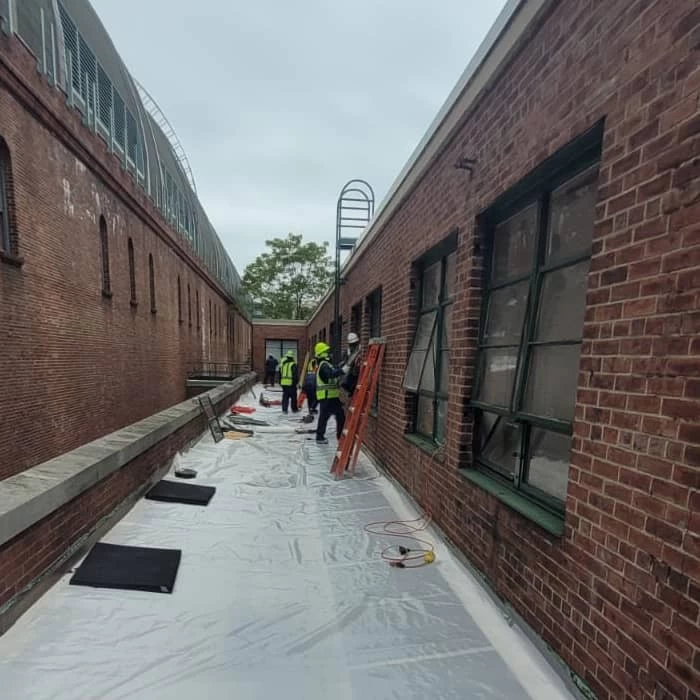
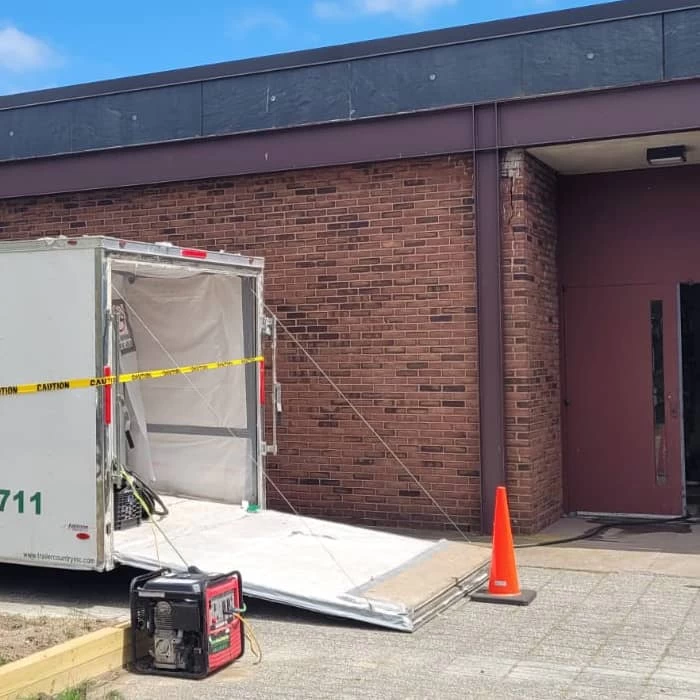
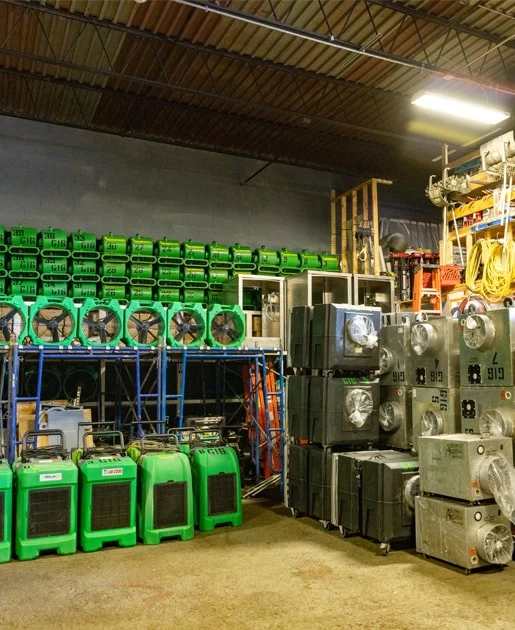
After extraction, the real work begins: moisture meters and thermal imaging to find water that has migrated inside walls and under floors, industrial drying equipment, daily moisture readings, and documentation at every stage. If our crew encounters materials in your building that require licensed abatement asbestos floor tiles, disturbed pipe insulation we handle it in-house without stopping the job. When the work is done, you receive written post-remediation clearance: air quality results, moisture readings at drying goals, and documentation you can hand to your building manager, RIOC, or your insurance adjuster with confidence.
Basement Water Damage Restoration Roosevelt Island NY
Built for Roosevelt Island's Buildings, Not a Generic Checklist
Flooded basement cleanup on Roosevelt Island isn’t the same job it is in a suburban house in Nassau County. The buildings here are large residential towers, many of them decades old, managed by building superintendents and property management companies who are accountable to RIOC, to building ownership, and to hundreds of residents. The scope of work has to match that reality.
Our response covers the full range of what a flooding event in this environment actually involves: emergency water extraction, structural drying with psychrometric monitoring, mold assessment and remediation under NYS DOL license, asbestos and lead abatement where required under the same regulatory framework RIOC references in its own environmental compliance documentation, and post-remediation clearance testing with written verification. Every step is documented not for your peace of mind in the abstract, but because building managers here need paperwork they can actually present to ownership and to RIOC.
We handle insurance billing directly. We work with your carrier whether that’s the building’s policy, your renter’s insurance, or both so you’re not fronting costs and waiting for reimbursement while your building sits wet. If you’re a renter in a lower-level unit at Manhattan Park or one of the Southtown towers and you’re not sure whether to call building management or your own insurer first, that’s exactly the kind of question we can help you sort out on the first call.
Does flooding in a Roosevelt Island apartment building involve asbestos or lead risks?
It depends on the building, but it’s a real and legitimate question especially in the island’s older residential towers. Eastwood, Westview, Island House, Rivercross, and Manhattan Park were all built between the mid-1970s and 1989. Asbestos-containing materials were standard in residential construction during that era: pipe insulation, 9×9 vinyl floor tiles, and certain ceiling materials are common sources. Lead paint on basement walls and framing is also a documented concern in pre-1978 buildings.
When flooding disturbs these materials, they become regulated hazardous substances under New York State law and the cleanup can no longer proceed as a standard water extraction job. A contractor without active NYS DOL asbestos abatement and lead abatement licenses is legally required to stop work at that point. We hold both licenses and handle abatement in-house, so the job doesn’t stop and you don’t end up coordinating a second contractor across the bridge.
How quickly can a water damage crew actually get to Roosevelt Island?
This is one of the most practical questions you can ask, and the honest answer is that it depends entirely on which company you call. Roosevelt Island is accessible by vehicle only via the Roosevelt Island Bridge from Queens there’s no direct vehicular connection to Manhattan. Emergency services on the island are dispatched from Queens, not from Manhattan, despite the island’s Manhattan administrative status. A contractor who has never worked on the island may not know that, and figuring out logistics in the middle of a flooding emergency costs you time you don’t have.
We serve New York City including Roosevelt Island, and the Queens-side bridge access is a known route. Response time is also why our 24/7 availability matters here specifically a flooding event at 2 a.m. in a lower-level unit or a building mechanical room doesn’t wait for business hours, and the 48-hour mold growth window starts the moment water enters the building regardless of when it happened.
What is Category 3 water damage, and does it apply to flooding on Roosevelt Island?
Category 3 sometimes called black water refers to water that carries pathogens, bacteria, or other contaminants. It includes groundwater, storm flooding, sewage backup, and any water that has been sitting long enough to become contaminated. It requires a significantly different cleanup protocol than clean water from a burst pipe, including protective equipment, antimicrobial treatment, and in most cases removal of porous materials that absorbed the water.
For Roosevelt Island specifically, Category 3 is a realistic outcome of any significant flooding event not a worst-case scenario. The island sits at low elevation surrounded by the East River, a tidal waterway. When storm surge, heavy rainfall, or high tide combines with drainage overflow, the water entering a building’s lower levels is not clean. It has been in contact with the river, storm drains, and potentially the building’s own waste infrastructure. Treating that as a standard water cleanup job is a health and liability problem. We assess water category on arrival and apply the appropriate protocol from the start.
If I'm a renter in a flooded unit, should I call building management or a contractor directly?
The short answer is: call building management first, then follow up immediately to make sure they’re taking action. In most Roosevelt Island apartment buildings whether you’re in one of the original WIRE towers or a newer Southtown building the building is responsible for the structure, the mechanical systems, and the common areas. If the water came from a building-wide source like a failed sump pump, a storm drain backup, or a mechanical room flood, the building’s insurance policy is typically the primary coverage.
That said, your renter’s insurance may cover your personal property and in some cases temporary relocation costs which the building’s policy likely won’t. The overlap between building insurance and renter’s insurance in a flooding event is genuinely confusing, and building management doesn’t always communicate clearly about what’s being covered and what isn’t. When we’re brought in, we work with both policies and can help clarify what’s being billed where so you’re not left guessing while the building dries out.
How long does it take to fully dry out a flooded basement in a large apartment building?
The honest answer is somewhere between three and five days for a straightforward water extraction and structural drying job but that timeline assumes the work starts immediately, the drying equipment is sized correctly for the space, and there are no hidden pockets of moisture inside walls or under flooring. In a large residential tower like the ones on Roosevelt Island, below-grade mechanical rooms and parking levels can be significantly larger than a typical residential basement, which affects both equipment requirements and drying time.
The more important number to keep in mind is 48 hours that’s the EPA’s documented window for mold growth to begin on wet building materials. If extraction and drying don’t start within that window, the question shifts from “how long to dry” to “how long to dry and remediate mold.” That second job costs significantly more, takes longer, and creates documentation and displacement issues that building managers and residents want to avoid. Speed at the start of the job determines the scope of the whole job.
Does Green Island Group handle the insurance claim, or is that left to the building manager?
We bill insurance carriers directly that’s not a minor convenience, it’s a meaningful operational difference. In a typical water damage scenario, the contractor does the work, hands you an invoice, and you submit it to your insurer and wait for reimbursement. In the meantime, you’ve fronted potentially thousands of dollars for a job that’s still being processed. We remove that step entirely by working directly with the adjuster and submitting documentation on your behalf.
For Roosevelt Island building managers specifically, this matters because flooding events in multi-unit residential buildings often involve multiple parties: the building owner’s policy, individual renter’s policies, and sometimes a separate flood insurance policy. Navigating that intersection while also managing resident communication, RIOC reporting, and building operations is a real burden. Having a contractor who handles the insurance side and who provides the kind of written post-remediation documentation that adjusters and property owners actually need takes a significant piece of that off your plate.