If your Sands Point home was built before 1980, there’s a real chance asbestos is somewhere inside it — and a renovation, permit, or inspection is about to make that your problem to solve. We handle asbestos abatement the right way, fully licensed for both New York State and Nassau County.
I needed a professional consultation explanation of procedure for safe removal of Asbestos in my apartment complex. Without having an account yet, I was very impressed with the caring, knowledgeable and generous advice offered by Jessica, and will look forward to doing business in the future. Thank you so much! I feel much more informed about a sometimes scary endeavor. Peace. Nancy Silva Mineola, NY.
Mia Munoz
Used this company to clean up some water flood in my house. They were fast and easy to work with.very professional, Would recommend to anyone!
Nini Valle
Great company, had a flood and they responded quickly and efficiently. Billed my insurance company directly. I highly recommend this company!
joe colapietro, jr
I had pipe freeze in my basement right before a snow storm and they made to within an hour to help start the clean up process. They we by our side throughout the entire process and even helped with the insurance company. They did such a great job with the cleanup, repair, remidiation, I contracted them to perform the repairs and finishes in the basement. They came with enough manpower and material to get the job done. Leo and Jessica were nothing but a pleasure to deal with!!
Cristian Arredondo c
I had some water damage in my home and Green Island was able to take care of my issue quickly and effectively. I am very pleased with the work they did. They responded quickly and were very professional.
Michael M
Outstanding service! From the office to the field crew everyone was friendly, helpful and responsive. I highly recommend Green Island Group.
Your Renovation Moves Forward. Your Family Stays Safe.
When asbestos gets flagged — during a home inspection, a permit application, or mid-renovation — everything stops. Your contractor is on hold, your timeline is in question, and you’re suddenly trying to understand a process you’ve never had to deal with before. What you actually need is someone who can step in, assess the situation clearly, and get the work done correctly so the rest of your project can keep moving.
Sands Point’s housing stock tells the story plainly. With a median construction year of 1961 and roughly 20% of homes built before 1950, a large share of the village’s properties were built during the decades when asbestos was standard in floor tiles, pipe insulation, ceiling texture, roofing materials, and joint compound. These aren’t abstract statistics — they’re the reality inside the walls of homes all along Cow Neck Road and throughout the peninsula.
The coastal conditions here add another layer. Sitting at the tip of the peninsula, surrounded by Long Island Sound, Manhasset Bay, and Hempstead Harbor, your home faces higher humidity, salt air, and temperature swings than most of Nassau County. That environment accelerates the breakdown of older building materials. Pipe insulation and boiler wrap that might hold up fine in a drier inland home can become friable — meaning fibers release into the air without any disturbance at all. Knowing what’s in your home before work starts isn’t just a regulatory requirement. It’s the only responsible move.
The Credentials That Actually Matter in Sands Point
Nassau County has its own licensing requirements for asbestos work — the Environmental Hazard Remediation Program (EHRP) contractor license and the EHRT technician certification — on top of what New York State already requires under Industrial Code Rule 56. Not every contractor operating on Long Island holds both. We do.
That matters when you’re filing permits with the Sands Point village building department or handing documentation to a buyer’s attorney at closing. The paperwork has to be clean, the credentials have to be verifiable, and the work has to meet both state and county standards. That’s not a differentiator we invented — it’s just what the job requires in Nassau County, and it’s what we deliver.
We’re a Nassau County-based environmental services company. We know the North Shore market, we know the building types common to the Port Washington peninsula, and we know what the Sands Point building department expects to see before a permit moves forward.
No Guesswork. Here's Exactly What the Process Looks Like.
It starts with a certified asbestos inspection. Before any abatement work can legally begin in New York State, a certified inspector surveys the property and identifies any suspect materials. In Sands Point, where homes range from early 1900s Gold Coast estates to 1960s colonials, that survey can turn up asbestos in places that aren’t always obvious — floor tile mastic, pipe elbows, boiler wrap, ceiling texture, even roofing underlayment. The inspection report tells you exactly what’s there, where it is, and what condition it’s in.
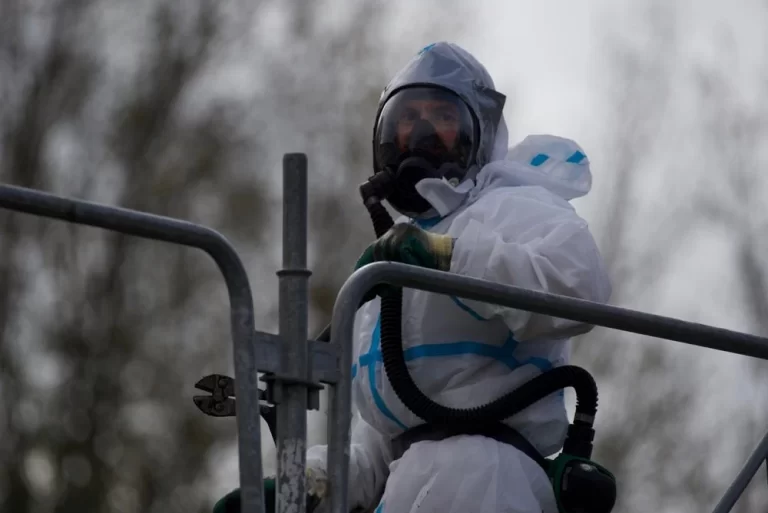
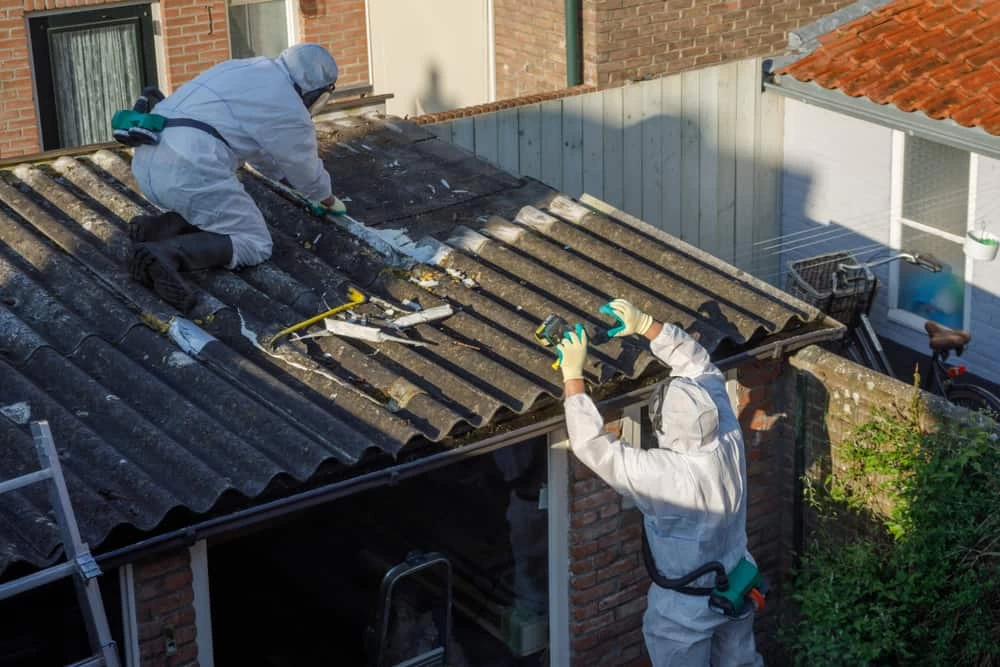
From there, the project gets registered with the NYS Department of Labor Asbestos Control Bureau — a mandatory step under ICR 56 that has to happen before removal begins. Once that’s in place, the work area gets fully contained using negative air pressure and HEPA filtration to prevent fibers from spreading to the rest of your home. Removal is done wet, which keeps fibers from becoming airborne during the process. All waste is bagged, labeled, and disposed of according to state and county regulations.
After removal is complete, the space gets a thorough HEPA vacuuming and wipe-down, followed by a third-party air clearance test. That test result is what certifies the space is safe for re-occupancy — and it’s the document your contractor, your building department, and any future buyer’s attorney will want to see. You walk away with a complete documentation package: survey results, project registration, air monitoring records, waste manifests, and the final clearance certificate.
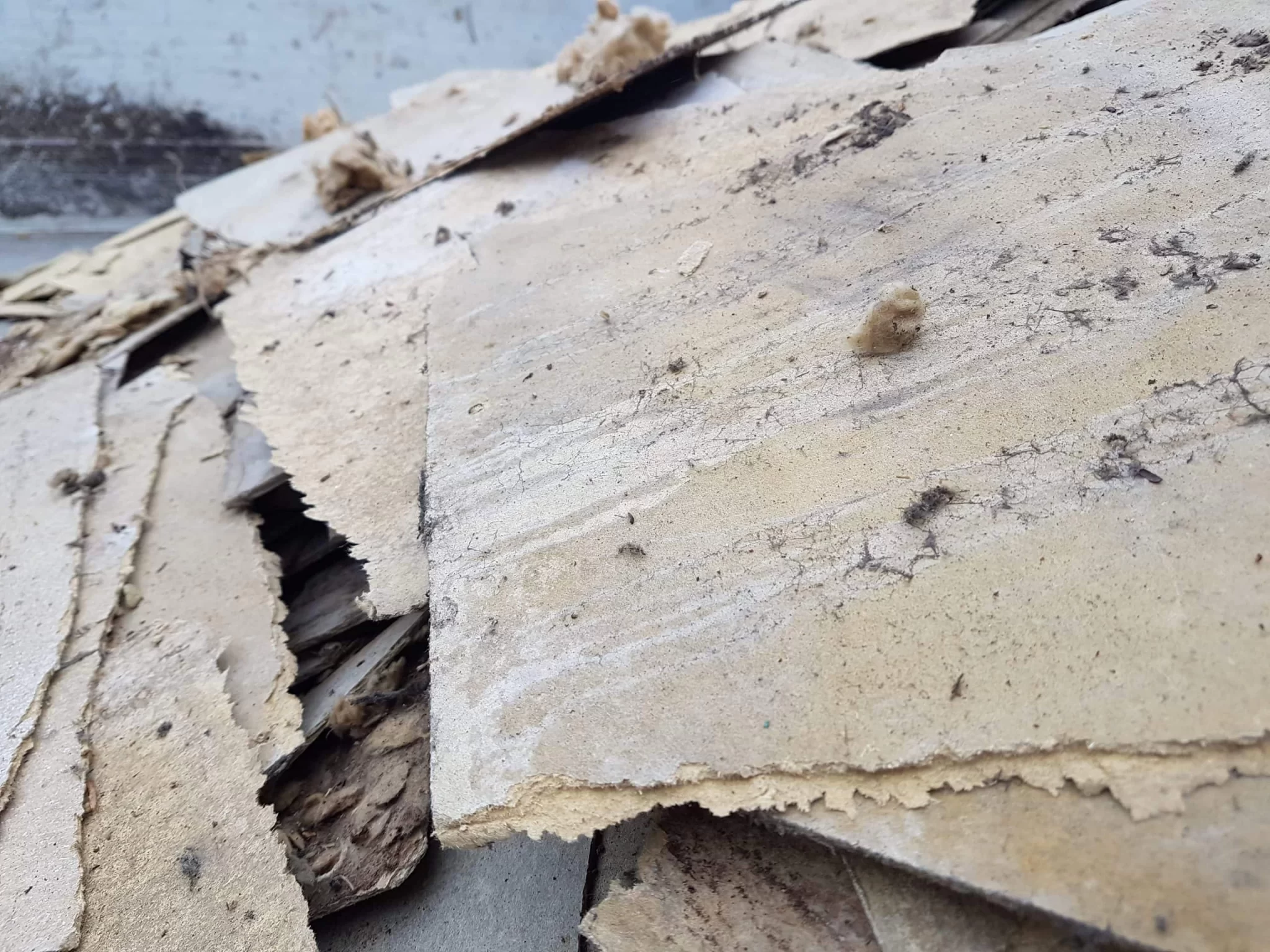
Asbestos abatement in a Sands Point home isn’t a one-size job. The scope depends on what the inspection finds, where the materials are located, and what your renovation or demolition plan involves. The most common scenarios we handle here involve asbestos floor tile removal — the 9×9 vinyl tiles used almost universally in homes built between 1950 and 1975 — along with the black mastic adhesive underneath them. Popcorn ceiling removal is another frequent trigger, particularly in homes from the late 1950s through the early 1980s where spray-applied acoustic texture was standard. Pipe insulation and boiler wrap removal comes up regularly in older homes, especially given the coastal humidity conditions that accelerate material degradation on the peninsula.
Every project we deliver includes the full scope: certified pre-abatement survey, NYS DOL project registration, full containment setup, wet removal using ICR 56-compliant methods, HEPA vacuuming, air monitoring throughout the process, and a third-party clearance test at completion. You don’t have to coordinate between an inspector, an abatement crew, and an air monitoring firm. We manage the entire process and hand you one complete documentation package when it’s done.
That documentation matters in Sands Point specifically. The village building department requires proper abatement records as part of the renovation permitting process, and if you’re selling a property in a market where homes trade at $3 million to $8 million or more, a clean environmental record is something buyers’ attorneys will look for. We make sure you have what you need.
Do I need an asbestos inspection before renovating my Sands Point home?
Under New York State Industrial Code Rule 56, a certified asbestos survey is required before any renovation, remodeling, or demolition that may disturb building materials in a structure built before 1980. In Sands Point, where the median construction year is 1961 and a significant portion of the housing stock predates 1950, the vast majority of renovation projects trigger this requirement. It’s not optional, and it’s not something you can skip and address later — the survey has to happen before your contractor touches anything.
This applies whether you’re doing a full gut renovation, updating a kitchen, replacing flooring, or demolishing a structure on the property. If the building materials being disturbed were installed before 1980, the law requires an inspection first. The Sands Point village building department also expects proper asbestos documentation as part of the permitting process, so getting this done upfront keeps your permits clean and your project on schedule.
What building materials in older Sands Point homes most commonly contain asbestos?
The most common sources in Sands Point’s housing stock are 9×9 vinyl floor tiles and the black mastic adhesive used to install them, spray-applied popcorn ceiling texture, pipe insulation and boiler wrap, roofing shingles and underlayment, and joint compound used in drywall finishing. These materials were standard in residential construction from roughly the 1920s through the late 1970s, which covers nearly the entire range of homes you’ll find on the Cow Neck Peninsula.
In older estate-era homes — some of which date to the early 1900s — asbestos was also used in plaster, floor leveling compounds, and duct insulation. The coastal conditions in Sands Point, with consistent salt air and humidity from Long Island Sound and Manhasset Bay, mean these materials are often in worse condition than similar materials in drier inland communities. Degraded or friable asbestos is the most hazardous form, because fibers can become airborne without any physical disturbance. A certified inspection will identify not just what’s there, but what condition it’s in.
What's the difference between asbestos encapsulation and full removal?
Encapsulation means sealing the asbestos-containing material in place so fibers can’t be released, rather than physically removing it. It’s a legitimate option in some situations — particularly when the material is in good condition, not being disturbed, and in a location where it can remain undisturbed long-term. Full removal, or abatement, involves physically extracting the material using containment, wet methods, and HEPA filtration, followed by air clearance testing to confirm the space is clean.
For most Sands Point homeowners who are renovating, encapsulation isn’t a practical solution because the renovation itself requires disturbing the material. If you’re replacing floors, opening walls, or demolishing any part of the structure, anything in the work zone has to come out. Encapsulation also creates a disclosure issue if you’re planning to sell — buyers in a market where homes trade at multi-million dollar prices will want to know whether asbestos was removed or simply covered. Full removal with a documented clearance certificate is almost always the cleaner path.
How long does asbestos abatement typically take in a Nassau County home?
Timeline depends on the scope of the project — how much material needs to be removed, where it’s located, and how complex the containment setup needs to be. A single-room floor tile removal in a mid-century ranch might take one to two days including setup and clearance testing. A larger project involving multiple material types across several rooms — common in Sands Point’s larger estate homes — could run several days to a week or more.
One thing that affects timing in Nassau County specifically is the NYS DOL project registration requirement. Under ICR 56, the project has to be registered with the Asbestos Control Bureau before work begins, and there are mandatory notification periods for certain project types. We handle that registration as part of our process, but it’s something to factor into your renovation planning timeline. If you’re working against a permit deadline or a contractor schedule, the earlier you bring us in, the more flexibility you have on timing.
Is asbestos popcorn ceiling removal something I can do myself in New York?
New York State law does include a limited exception that allows owner-occupants of single-family homes to perform their own asbestos abatement. But this exception is narrow and comes with significant conditions — you can’t hire anyone to help, you’re still subject to waste disposal requirements, and the exception does not apply if the work is part of a larger renovation or construction project where other contractors are involved. The moment you have a GC, a flooring installer, or any other trade on the job, the exception no longer applies.
Beyond the legal question, there’s a practical one. Popcorn ceiling texture that contains asbestos is a friable material — it releases fibers easily when disturbed. Doing this work without proper containment, wet methods, and HEPA filtration creates a real exposure risk for you and your family. In a home worth several million dollars, with a family living in it, the cost of professional abatement is a small line item compared to the risk of doing it wrong. Most Sands Point homeowners who look at the full picture choose professional removal.
What documentation will I receive after asbestos abatement is completed in Sands Point?
You’ll receive a complete project documentation package that includes the pre-abatement inspection report, the NYS DOL project registration confirmation, daily air monitoring records taken during the abatement work, waste disposal manifests showing how and where the material was disposed of, and the final third-party air clearance certificate confirming the space is safe for re-occupancy. Every document is dated, signed, and traceable to the licensed professionals who performed each part of the work.
This documentation package matters for several reasons specific to Sands Point. The village building department requires proper abatement records as part of the renovation permitting process — you won’t be able to close out your permit without it. If you’re selling the property, buyers’ attorneys in the North Shore luxury market routinely request environmental records during due diligence, and a clean, complete abatement file removes a potential obstacle at closing. It’s also your legal protection: proof that the work was done correctly, by licensed contractors, in full compliance with both New York State ICR 56 requirements and Nassau County’s EHRP standards.