Pre-War Buildings in Grand Central Demand More Than a Standard Demo Crew
When your building predates the 1940s and sits two blocks from Grand Central Terminal, a standard demo crew isn’t enough. We bring licensed demolition and asbestos abatement together so your project moves forward without the gaps, delays, or compliance surprises that stop most jobs cold in the Terminal City corridor.
I needed a professional consultation explanation of procedure for safe removal of Asbestos in my apartment complex. Without having an account yet, I was very impressed with the caring, knowledgeable and generous advice offered by Jessica, and will look forward to doing business in the future. Thank you so much! I feel much more informed about a sometimes scary endeavor. Peace. Nancy Silva Mineola, NY.
Mia Munoz
Used this company to clean up some water flood in my house. They were fast and easy to work with.very professional, Would recommend to anyone!
Nini Valle
Great company, had a flood and they responded quickly and efficiently. Billed my insurance company directly. I highly recommend this company!
joe colapietro, jr
I had pipe freeze in my basement right before a snow storm and they made to within an hour to help start the clean up process. They we by our side throughout the entire process and even helped with the insurance company. They did such a great job with the cleanup, repair, remidiation, I contracted them to perform the repairs and finishes in the basement. They came with enough manpower and material to get the job done. Leo and Jessica were nothing but a pleasure to deal with!!
Cristian Arredondo c
I had some water damage in my home and Green Island was able to take care of my issue quickly and effectively. I am very pleased with the work they did. They responded quickly and were very professional.
Michael M
Outstanding service! From the office to the field crew everyone was friendly, helpful and responsive. I highly recommend Green Island Group.
What Changes When Both Phases Are Handled by One Team
Most demolition projects in the Grand Central corridor don’t stall because of the demo work itself. They stall because the abatement crew wraps up, the demo crew shows up, and somewhere in between, a permit isn’t filed correctly or an ACP5 form gets missed. That gap costs real money especially in a market where a delayed lease commencement can mean tens of thousands of dollars in lost income per week.
When you work with a contractor who handles both phases in-house, that gap disappears. The asbestos survey gets done, the ACP5 gets filed with the NYC DEP, the DOB permit follows, and demolition begins on schedule all under one contract, one point of contact, and one team accountable from start to finish.
That matters even more in a district like Terminal City, where buildings from the 1920s and 1930s are the rule, not the exception. Pipe insulation, floor tiles, ceiling systems, fireproofing on structural steel these materials are in nearly every pre-war tower in the area. Having a contractor who already knows what to expect, and is certified to handle it, takes a significant amount of risk off your plate before the first wall comes down.
Commercial Demolition Contractors Grand Central NY
340+ Demolition Projects Across Manhattan. Zero Guesswork on Grand Central Compliance.
We’ve been operating across New York City for over 12 years, completing more than 5,000 projects statewide including 340+ demolition jobs across all five boroughs. That includes pre-war commercial buildings throughout the Grand Central subdistrict, high-rise office gut-outs, and occupied structures where the margin for error is essentially zero.
We’re EPA and OSHA certified, NYC DOB licensed, and MWBE certified through New York State which matters for any project tied to public funding, government-adjacent tenants, or city and state procurement requirements. Those aren’t credentials collected for a website. They’re what gets you through the DOB, the DEP, and the LPC without a stop-work order showing up on a Tuesday morning.
The Grand Central subdistrict has its own regulatory layer the Special Midtown District zoning, Landmarks Preservation Commission oversight, the East Midtown Rezoning framework. We’ve worked in environments exactly like this one, and we know how to navigate each agency’s requirements before they become your problem.
Demolition Service Process Grand Central Manhattan
From Permit Filing to Final Clearance Here's the Sequence
It starts with a site assessment. Before anything else, we evaluate the scope of work, identify any asbestos-containing materials present in the structure, and determine exactly which permits are required for your specific project. In the Grand Central area, that almost always includes an asbestos survey and ACP5 filing with the NYC DEP and if your building is landmarked or adjacent to one, an LPC review gets factored in from day one, not discovered later.
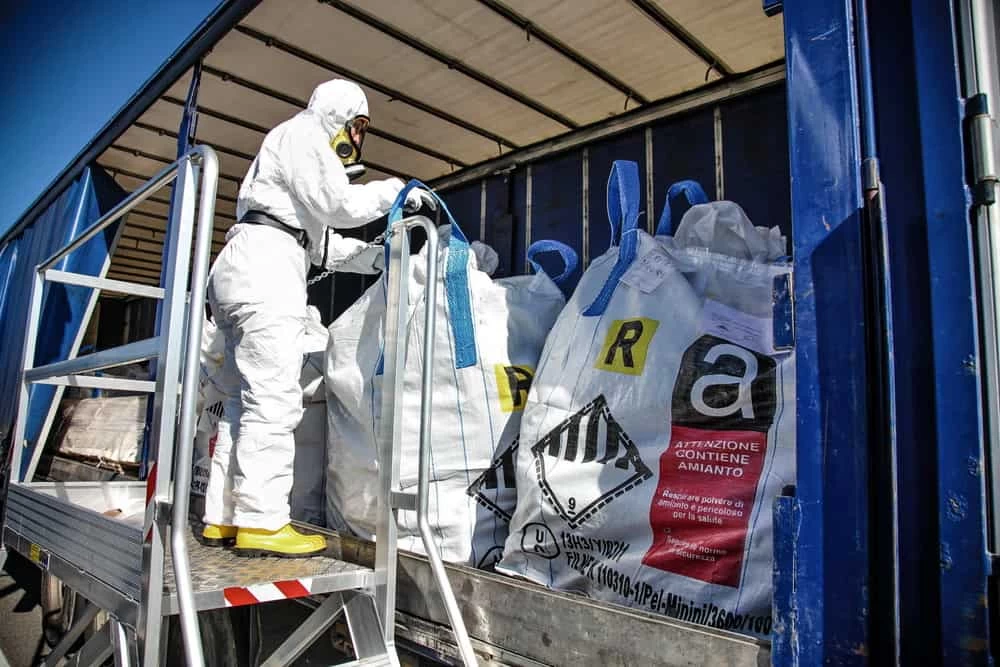
Once the permitting path is clear, abatement comes first. Asbestos-containing materials are removed by EPA-certified professionals under active DEP permits, with air monitoring and clearance documentation handled before demolition begins. This sequencing is not optional under NYC law it’s the required order of operations, and skipping or rushing it is exactly how projects get shut down.
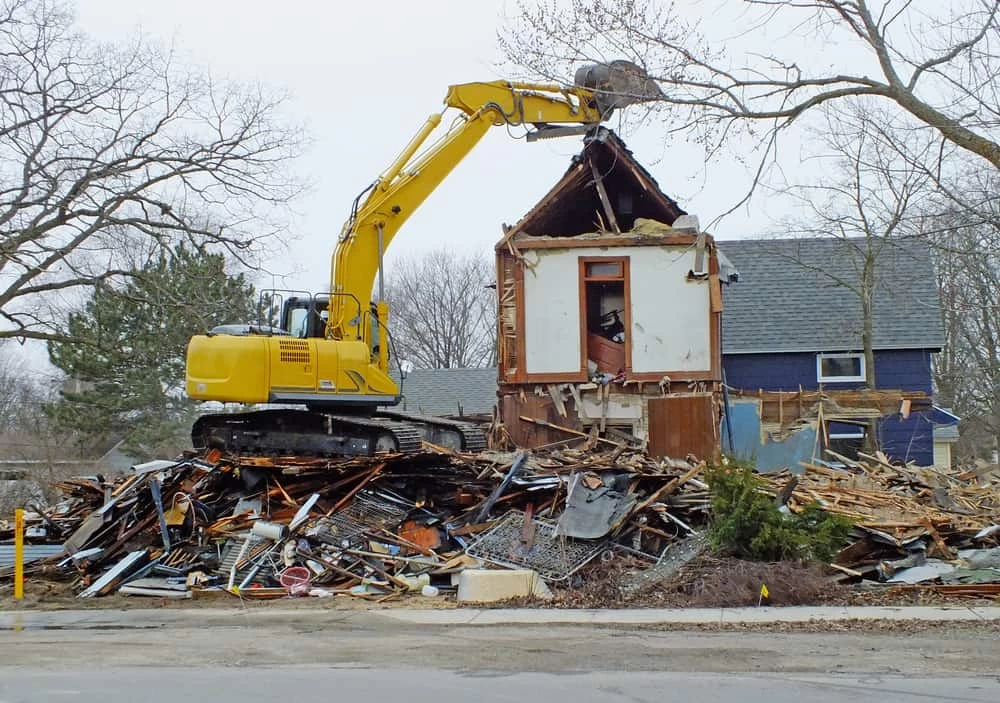
After abatement clearance is confirmed, demolition proceeds. Whether it’s a full floor gut-out in a Class A office tower, selective interior demolition during an active tenant improvement project, or a larger structural teardown, the work gets scheduled around the building’s operational needs. Evening and weekend scheduling is available because in a building with active tenants along Park or Lexington Avenue, daytime demolition often isn’t realistic. Site cleanup, debris removal, and final site preparation are included, so the space is ready for the next phase of construction when we leave.
Demolition in the Grand Central subdistrict isn’t a single-trade job. It involves coordinating with the NYC DOB, the DEP, and in many cases the Landmarks Preservation Commission and that’s before a single wall comes down. We manage all of it: permit applications, agency coordination, asbestos abatement, demolition execution, debris removal, and site preparation. You don’t have to manage multiple contractors or track down paperwork from three different agencies.
For commercial clients building owners, property managers, corporate tenants, and developers working within the East Midtown Rezoning framework the scope typically includes interior demolition for office fit-outs and floor gut-outs, selective structural demolition, removal of outdated mechanical systems, and full site clearance ahead of new construction. Every project includes proper NYC DOB permitting, DEP asbestos compliance documentation, and OSHA Local Law 196-compliant site safety management.
If your project falls within or adjacent to a designated landmark and in a district that includes the Chrysler Building, the Graybar Building, and Grand Central Terminal itself, that’s a real possibility we have the experience to work within LPC requirements without treating it as a surprise mid-project. We’re also an approved contractor for New York State agencies, which is relevant for any project with public-sector ties or MWBE participation requirements built into the contract.
Do I need an asbestos survey before starting demolition near Grand Central Terminal?
Yes and it’s not optional. Under NYC Local Law 76, any building constructed before April 1, 1987 requires a licensed asbestos investigator to survey the structure before a demolition or major renovation permit can be issued. In the Grand Central area, where virtually every significant building in Terminal City dates to the 1920s or 1930s, this step applies to nearly every project.
The survey results determine whether an ACP5 form needs to be filed with the NYC DEP. If asbestos-containing materials are present and will be disturbed which is almost always the case in pre-war towers with original pipe insulation, floor tiles, or fireproofing on structural steel a DEP abatement permit is required before the DOB will issue a demolition permit. Skipping or rushing this step is one of the most common reasons commercial demolition projects in Midtown get stopped cold. Getting it right the first time is the only approach that keeps your timeline intact.
How long does it take to get a demolition permit for a commercial project in Manhattan?
It depends on the project scope and whether all pre-permit requirements are in order before you apply. For a straightforward interior demolition a floor gut-out in a Midtown office building, for example the DOB permit process can move relatively quickly if the asbestos survey is complete, the ACP5 is filed, engineering drawings are submitted correctly, and a site safety plan is included. Missing any of those elements means the application gets kicked back, and the clock resets.
For larger projects or those involving landmarked buildings and in the Grand Central subdistrict, that includes any work on or directly adjacent to a designated NYC Landmark an LPC Certificate of Appropriateness may also be required before the DOB will move forward. That review adds time. The most reliable way to keep the permitting timeline from dragging is to have a contractor who manages the entire process, knows exactly what each agency needs, and doesn’t submit incomplete applications. That’s where most of the delay actually comes from.
Does the Landmarks Preservation Commission need to approve demolition work in the Grand Central area?
It depends on the specific building and the nature of the work. Grand Central Terminal has been a designated NYC Landmark since 1978 the legal battle to preserve it produced the landmark Supreme Court ruling in Penn Central Transportation Co. v. New York City, which established the framework for landmark preservation law in the United States. The Chrysler Building, the Graybar Building, and dozens of other structures in the immediate area are also designated landmarks.
If your project involves a designated landmark or a building within a historic district, any work that affects the exterior or in some cases the interior may require an LPC Certificate of Appropriateness before the DOB will issue a permit. Interior demolition in a non-landmarked building within the district typically does not require LPC review, but it’s worth confirming early. The cost of discovering an LPC requirement after demolition has already started is significantly higher than confirming it upfront. A contractor with experience in this specific subdistrict will know how to make that determination before the project kicks off.
What's the difference between interior demolition and full building demolition in NYC?
Interior demolition sometimes called a gut-out involves removing non-structural elements inside an existing building: partition walls, flooring, ceiling systems, mechanical and electrical infrastructure, and similar components. The building’s structural frame stays intact. This is the most common demolition service in the Grand Central corridor, where the dominant project type is office renovation, tenant improvement, and floor repositioning rather than full teardown.
Full building demolition involves taking down the entire structure, which requires a different set of permits, engineering documentation, and site safety requirements. In the Grand Central subdistrict, full teardowns are less common but do happen the demolition of JPMorgan Chase’s former 52-story headquarters at 270 Park Avenue, which made way for their new 70-story global headquarters, is the most prominent recent example. Both types of work require DOB permits, asbestos clearance, and proper site safety management. The permitting complexity and cost scale significantly with project scope, so it’s worth having a clear conversation about what your project actually requires before assuming one category or the other.
Can one contractor handle both asbestos abatement and demolition on the same project?
Yes and in most cases, that’s the better approach. When abatement and demolition are handled by two separate contractors, the project depends on clean handoffs between them: the abatement crew finishes, provides clearance documentation, and the demo crew takes over. If there’s any miscommunication, missing paperwork, or scheduling gap between those two phases, the project stalls. In a commercial real estate environment where lease commencement dates are contractually binding, that kind of delay is expensive.
A contractor who handles both phases in-house controls the entire sequence. The asbestos survey, the ACP5 filing, the DEP permit, the abatement work, the clearance documentation, and the demolition all happen under one contract with one team accountable for the timeline. There’s no finger-pointing between contractors if something goes wrong, and there’s no waiting on a second crew to mobilize before demolition can begin. For pre-war buildings in the Grand Central area where asbestos-containing materials are nearly universal this integrated approach is the most reliable way to keep the project on schedule.
How much does commercial interior demolition typically cost in the Grand Central area?
Commercial interior demolition in Midtown Manhattan generally runs between $4 and $25 per square foot, depending on project size, the complexity of what’s being removed, and whether hazardous materials like asbestos are present. For a full floor gut-out in a Class A office building near Grand Central, the total cost including permits, asbestos abatement, demolition, debris removal, and site preparation can range from $50,000 to well over $200,000 depending on square footage and scope.
The variables that move the number most significantly in this market are asbestos abatement requirements and permitting complexity. Pre-war buildings in the Terminal City corridor almost always contain asbestos-containing materials, which adds both cost and time to the project. Landmark-adjacent work that requires LPC coordination adds another layer. The most accurate way to understand what your specific project will cost is to get a detailed scope-of-work estimate that breaks out permits, abatement, demolition, and cleanup separately so you’re not comparing a low bid that excludes abatement against a complete bid that includes everything. That’s where most cost surprises come from, and it’s worth asking about upfront.