340+ New York City Projects. Zero Permit Surprises.
From pre-war co-ops on the Upper East Side to commercial gut-outs in Lower Manhattan, we’ve handled demolition across all five boroughs permits, asbestos, and all.
I needed a professional consultation explanation of procedure for safe removal of Asbestos in my apartment complex. Without having an account yet, I was very impressed with the caring, knowledgeable and generous advice offered by Jessica, and will look forward to doing business in the future. Thank you so much! I feel much more informed about a sometimes scary endeavor. Peace. Nancy Silva Mineola, NY.
Mia Munoz
Used this company to clean up some water flood in my house. They were fast and easy to work with.very professional, Would recommend to anyone!
Nini Valle
Great company, had a flood and they responded quickly and efficiently. Billed my insurance company directly. I highly recommend this company!
joe colapietro, jr
I had pipe freeze in my basement right before a snow storm and they made to within an hour to help start the clean up process. They we by our side throughout the entire process and even helped with the insurance company. They did such a great job with the cleanup, repair, remidiation, I contracted them to perform the repairs and finishes in the basement. They came with enough manpower and material to get the job done. Leo and Jessica were nothing but a pleasure to deal with!!
Cristian Arredondo c
I had some water damage in my home and Green Island was able to take care of my issue quickly and effectively. I am very pleased with the work they did. They responded quickly and were very professional.
Michael M
Outstanding service! From the office to the field crew everyone was friendly, helpful and responsive. I highly recommend Green Island Group.
Most demolition headaches in New York City don’t come from the work itself they come from what nobody told you before it started. The asbestos assessment your contractor forgot to file. The DOB stop-work order that shuts everything down. The subcontractor who shows up three weeks late because your demo company didn’t handle abatement in-house. That’s the version of this project you’re trying to avoid.
When you’re working in a city where nearly every building predates 1987 and where the NYC Department of Buildings won’t issue a single permit without an ACP-5 asbestos filing you need a contractor who already knows that before they pick up the phone. We do. Every project starts with a full assessment of what’s in the walls, what the DOB requires, and what has to happen before any physical work begins. No guessing. No surprises mid-demo.
The result is a project that moves. Your timeline stays intact, your building stays compliant, and you’re not the one chasing down paperwork or explaining to your co-op board why the job stalled in week two. Whether you’re in Park Slope, Astoria, the South Bronx, or anywhere in between that kind of accountability is what actually gets a demolition job done in New York.
We’ve been operating across New York City and Long Island for over 12 years. Based in Suffolk County, we run jobs throughout all five boroughs from tight street access in Hell’s Kitchen to full commercial teardowns in the Financial District. That’s not a claim built on a few scattered projects. It’s 340+ documented demolition jobs across New York City, backed by EPA and OSHA certifications, active NYC DOB licensure, and MWBE certification that qualifies us for public agency and city-funded work.
What sets us apart in a market this competitive isn’t a single credential it’s the combination. Asbestos abatement, lead paint removal, mold remediation, and full demolition all handled under one roof, by one team, on one contract. For New York City property owners who’ve dealt with the chaos of coordinating multiple contractors across a single project, that matters more than almost anything else on a bid sheet.
It starts with a site assessment not a sales visit. Before anything else, we walk the property, identify what materials are present, and determine exactly what the NYC DOB and DEP are going to require before a permit gets issued. In a city where pre-1987 buildings need an asbestos investigation report filed before any permit can move forward, skipping this step doesn’t just slow things down it stops the project cold.
Once the assessment is complete, we handle the permit filings through DOB NOW, coordinate any required asbestos abatement or lead paint remediation, and line up the utility disconnection letters your application requires. If the building is in a Landmarks-designated district like parts of Greenwich Village, Brooklyn Heights, or Harlem that review process gets factored in from the start, not discovered halfway through.
When the permits are approved and the site is cleared for work, the physical demolition begins. Our crew manages debris removal, keeps the site compliant with Local Law 196 safety requirements, and communicates progress directly with you not through a chain of subcontractors. By the time we leave, the space is ready for whatever comes next, whether that’s a full renovation, a new build, or a restoration.
Commercial and Residential Demolition Contractors NYC
Full-Scope Demo, Not Just a Wrecking Crew
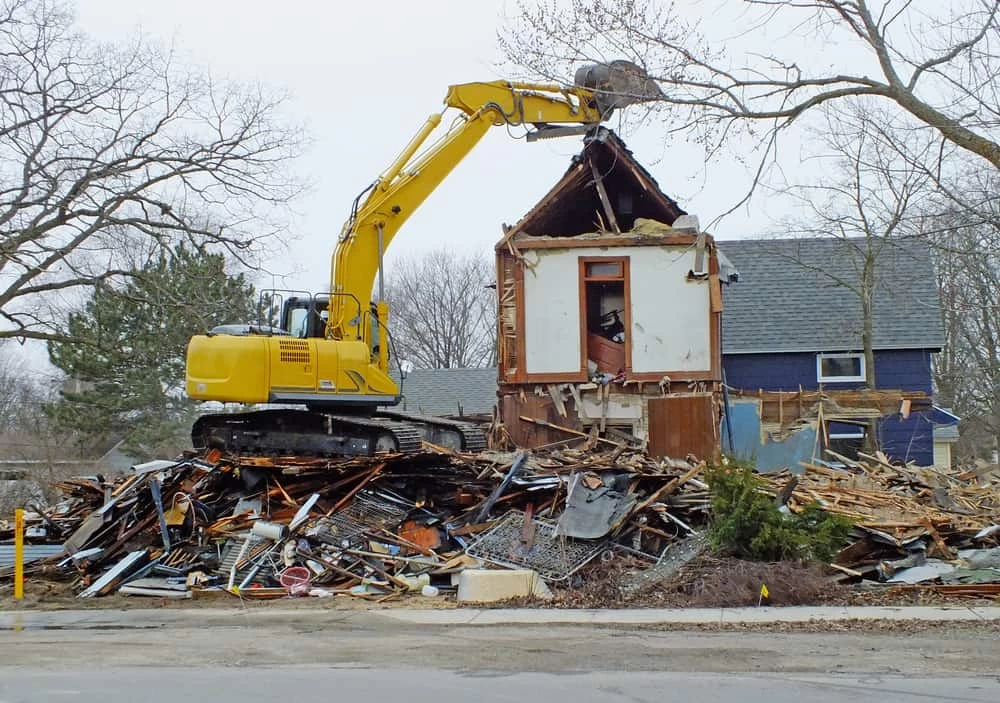
We handle the full range of demolition work across New York City residential interior demolition in pre-war apartments, gut renovations in co-op buildings, commercial office strip-outs for the wave of office-to-residential conversions happening across Manhattan right now, and full structural teardowns in the outer boroughs. Whatever the project type, the scope of what’s included goes well beyond swinging a hammer.
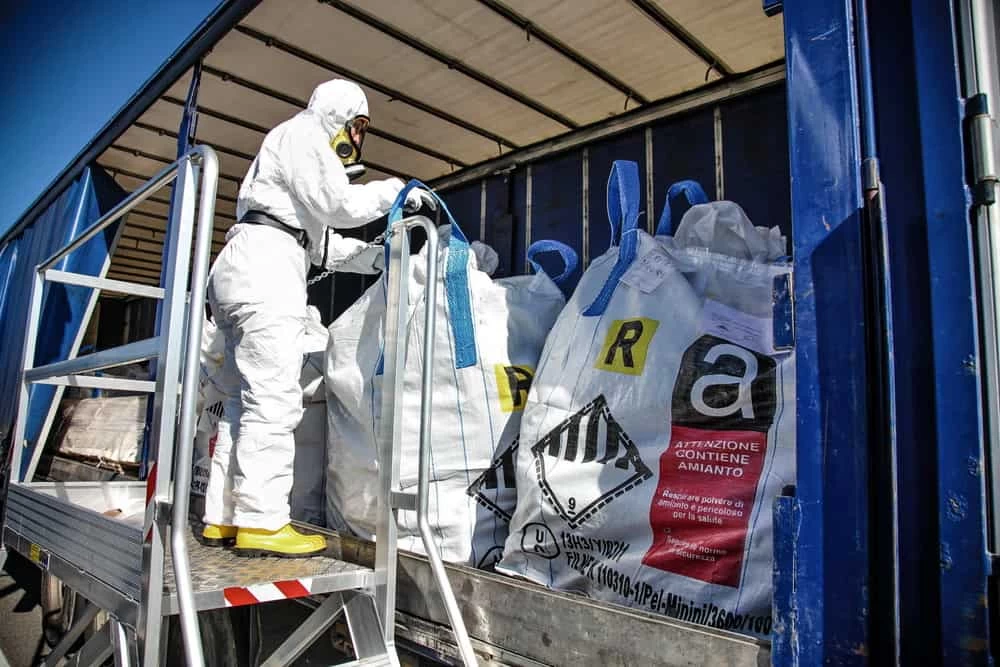
Every job includes a hazardous material assessment upfront. In a city where 80% of the housing stock predates 1978 and lead paint is essentially guaranteed in anything built before 1940, that’s not optional it’s the baseline. Asbestos abatement and lead paint removal are handled in-house, which means no third-party handoffs, no scheduling gaps, and no situations where the abatement company and the demo crew are pointing fingers at each other over a delay.
For damage-related demolition flood damage after a major storm, fire damage, or a pipe freeze in the middle of winter we’re available around the clock and have documented response times under an hour for emergency calls. If you’re dealing with an insurance claim, we work directly with your carrier to document the damage and keep the process moving. From Williamsburg to Washington Heights, our service is built around what New York City projects actually require not what works in a simpler market.
Do I need a permit for demolition work in New York City?
Yes almost always. The NYC Department of Buildings requires a demolition permit for any full or partial building demolition, and the application process is more involved than most people expect. You’ll need to file through DOB NOW, submit a site safety plan, provide utility disconnection letters from every utility provider, and for any building constructed before 1987 include an asbestos investigation report (the ACP-5 form) filed with the NYC DEP. Without that asbestos filing, the DOB won’t issue the permit, full stop.
For larger buildings, additional site safety personnel are required. A Construction Superintendent is mandatory for buildings nine stories and under. A Site Safety Manager is required for ten to fourteen stories. Anything fifteen stories or above or over 100,000 square feet requires a Site Safety Coordinator. If you’re working in a rent-regulated building, there’s also an additional HCR approval layer before the DOB will proceed. We manage this entire process, so you’re not navigating it alone.
What is an ACP-5 form and why does it matter for my New York demolition project?
The ACP-5 is an asbestos certification form required by the NYC Department of Environmental Protection before the DOB will issue a permit for any pre-1987 building in New York. It documents that a licensed asbestos inspector has assessed the property and either confirmed there are no asbestos-containing materials present, or that any ACMs have been properly abated. It’s a New York City-specific requirement not a federal form, not a state form and it’s one of the most common reasons demolition projects stall before they even begin.
In practice, this means your contractor needs to have a licensed asbestos inspector involved from the very start, not brought in after the permit application gets rejected. If asbestos is found and in New York City where pre-war buildings have roughly a 90% chance of containing it a licensed abatement contractor has to complete the removal before demolition proceeds, and the DEP filings documenting that abatement have to be submitted and accepted. We handle both sides of this in-house, which keeps the timeline intact instead of creating a gap between demo work and a separate abatement company.
How much does demolition typically cost in New York City?
Demolition costs in New York City run significantly higher than national averages, and that’s not just a contractor markup it reflects real local factors. Labor costs in New York are among the highest in the country. Disposal and debris removal fees are elevated because landfill tipping fees in the metro area are some of the highest anywhere. And the near-universal requirement for asbestos assessment and abatement in pre-1987 buildings adds a cost layer that simply doesn’t exist in most suburban markets.
For a residential interior demolition or gut renovation in a Manhattan co-op or Brooklyn brownstone, project costs typically range from several thousand dollars on the low end for a single-room scope to well into five figures for a full-floor gut. Commercial demolition in New York particularly for office-to-residential conversions, which are happening across Midtown and Lower Manhattan right now can range from $50,000 to well over $500,000 depending on square footage and scope. The best way to get an accurate number is a site assessment, because the variables in New York building age, material conditions, access logistics, permit requirements affect cost more here than almost anywhere else.
What is Local Law 196 and does it apply to my demolition project in New York?
Local Law 196 of 2017 is a New York City-specific requirement that mandates Site Safety Training for construction and demolition workers at most major worksites across the five boroughs. Workers are required to hold 40 hours of SST training and carry an SST Worker card. Supervisors need 62 hours of SST Supervisor training. If a permit holder can’t produce a log showing that every worker on site is properly certified, the fine is $2,500 per untrained worker and DOB enforcement is active.
This law applies to most covered demolition projects in New York City, and it’s one of those requirements that catches property owners off guard when they hire a contractor who isn’t fully compliant. Before any work begins, it’s worth asking your contractor directly whether their entire crew not just the foreman holds current SST credentials. Our workforce is fully Local Law 196 compliant across every New York City job site, and we can provide documentation before the first day of work.
Can a demolition contractor in New York City handle asbestos and lead paint removal too?
They can but not all of them do. Many demolition contractors in the five boroughs subcontract asbestos abatement and lead paint removal to a separate company, which creates a coordination problem. If the abatement scope changes mid-project, you’re suddenly managing a dispute between two contractors about who’s responsible for what. If the abatement company’s schedule slips, your demo crew is standing by on your dime. It’s a common source of delays and cost overruns on New York projects.
We handle asbestos abatement and lead paint removal with our own EPA-certified team not a subcontractor. In a city where lead paint is essentially a given in anything built before 1978, and where asbestos assessment is a DOB permit requirement for pre-1987 buildings, having that capability in-house isn’t a convenience it’s how the project stays on schedule and on budget. One team, one contract, one point of accountability from assessment through abatement through demolition.
Does my New York City co-op building require board approval before demolition can start?
Yes, in most cases. New York City has the largest concentration of co-operative apartment buildings in the country, and co-op boards typically require approval before any renovation or demolition work can begin and before a DOB permit application can even be filed. The documentation requirements vary by building, but most boards want to see the scope of work, contractor credentials, proof of insurance, and sometimes engineering drawings before they’ll sign off.
This is one of the layers of complexity that makes New York demolition genuinely different from any other market. A contractor who’s only worked in suburban or non-co-op environments won’t know to factor board approval timelines into the project schedule and that oversight can delay a project by weeks. We’ve navigated co-op board processes across the Upper East Side, the West Village, and buildings throughout Manhattan and Brooklyn. We know what boards typically ask for, how to present the project scope in a way that gets approved, and how to build that timeline into the overall plan from the beginning.