SoHo's Cast-Iron Buildings Demand More Than a Sledgehammer
When your building dates to the 1880s and sits inside a landmarked historic district, you need a licensed demolition contractor who already knows what’s behind those walls and exactly what it takes to get a permit pulled in Manhattan. We’ve completed over 340 demolition projects across New York City’s five boroughs, and we know the Prince Street corridor inside and out.
I needed a professional consultation explanation of procedure for safe removal of Asbestos in my apartment complex. Without having an account yet, I was very impressed with the caring, knowledgeable and generous advice offered by Jessica, and will look forward to doing business in the future. Thank you so much! I feel much more informed about a sometimes scary endeavor. Peace. Nancy Silva Mineola, NY.
Mia Munoz
Used this company to clean up some water flood in my house. They were fast and easy to work with.very professional, Would recommend to anyone!
Nini Valle
Great company, had a flood and they responded quickly and efficiently. Billed my insurance company directly. I highly recommend this company!
joe colapietro, jr
I had pipe freeze in my basement right before a snow storm and they made to within an hour to help start the clean up process. They we by our side throughout the entire process and even helped with the insurance company. They did such a great job with the cleanup, repair, remidiation, I contracted them to perform the repairs and finishes in the basement. They came with enough manpower and material to get the job done. Leo and Jessica were nothing but a pleasure to deal with!!
Cristian Arredondo c
I had some water damage in my home and Green Island was able to take care of my issue quickly and effectively. I am very pleased with the work they did. They responded quickly and were very professional.
Michael M
Outstanding service! From the office to the field crew everyone was friendly, helpful and responsive. I highly recommend Green Island Group.
No Permit Delays. No Hazmat Surprises. No Stopped Projects.
Interior demolition on or near Prince Street is not a straightforward job. Virtually every building in this corridor was built before 1940. Many date back to the 1860s and 1890s originally constructed as manufacturing warehouses, converted into artist lofts, and renovated again and again over the past 50 years. Each one of those layers left something behind. Asbestos in the floor tiles. Lead paint on the structural steel. Pipe insulation that hasn’t been touched since the 1970s. Before the NYC Department of Buildings will issue a single demolition permit, you need an asbestos investigation report filed, a site safety plan submitted, utility disconnection letters in hand, and neighbor notification documented. That’s before the first wall comes down.
What most building owners on Prince Street don’t realize until it’s too late is that their contractor also needs Landmarks Preservation Commission review before DOB permits can even be filed because most of SoHo falls within the SoHo-Cast Iron Historic District. A contractor who doesn’t know that process will cost you months. We’ve completed over 340 demolition projects across New York City’s five boroughs. We know this building stock, we know this regulatory environment, and we handle asbestos abatement in-house so when it’s found (and in a pre-war SoHo loft, it almost always is), your project keeps moving.
340+ NYC Projects. Every Permit. Every Hazmat Layer. Handled.
We are a full-service demolition and environmental remediation contractor with over 12 years of experience and more than 5,000 completed projects across New York State. We’re fully licensed by the NYC Department of Buildings, EPA and OSHA certified for asbestos abatement, and certified as a Minority and Woman-Owned Business Enterprise which means we’ve been vetted at a level most contractors never reach.
What sets us apart in a neighborhood like SoHo isn’t just the license. It’s the fact that we manage the entire process DOB filings, asbestos investigation coordination, LPC liaison work, site safety plans, and debris removal under one roof. You’re not calling three different contractors and hoping they coordinate. One team, one contract, one accountability chain from the first permit application to the final cleanout.
We’ve worked in the buildings that line Prince Street and Broadway. We know what the cast-iron columns look like, what the DOB inspector is going to ask for, and how to move a project through the LPC approval process without losing weeks to back-and-forth. That’s not something you can fake with a low bid.
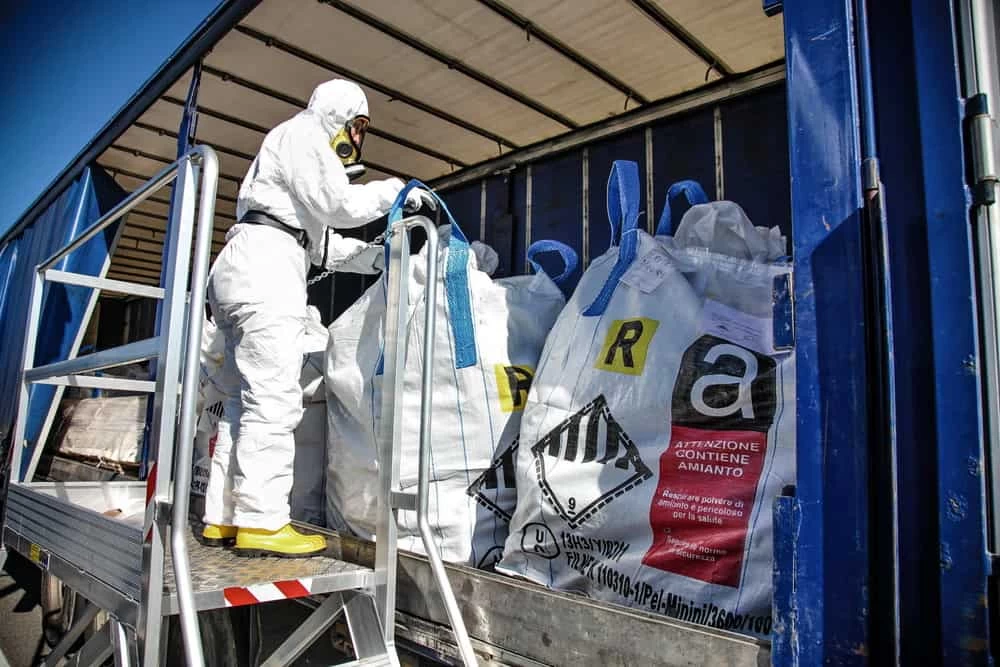
The first step isn’t demolition it’s documentation. In New York City, and especially in a SoHo building that predates 1940, the permit process starts with a mandatory asbestos investigation. A licensed investigator files the ACP5 form with the NYC DOB. That report determines what’s present, where it is, and what has to be abated before any physical work begins. We handle this in-house, which means you’re not waiting on a third-party vendor to schedule their own site visit before the real work can start.
Once the asbestos investigation is complete and abatement is underway, the DOB permit application is filed along with the site safety plan, utility disconnection letters, dust control documentation, and neighbor notification. If your building falls within the SoHo-Cast Iron Historic District, which most buildings on and near Prince Street do, an LPC review is also required before the DOB permit is issued. We coordinate that directly. Standard permit processing runs four to eight weeks from application to issuance, and we manage that timeline so nothing falls through.
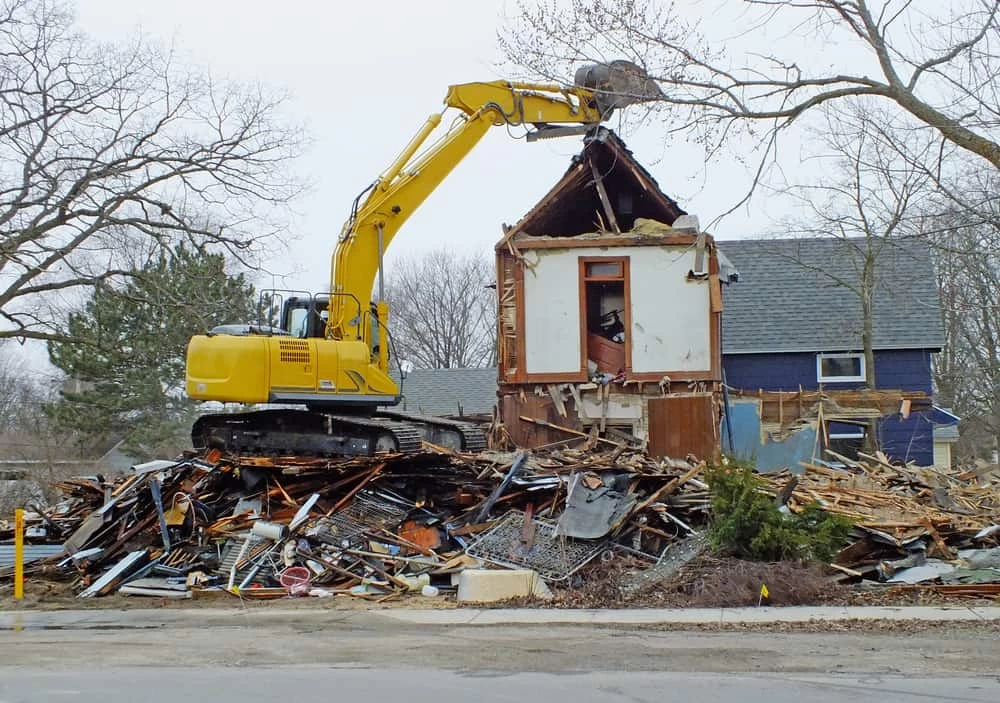
When physical demolition begins, the work is precision-first. SoHo’s cast-iron loft buildings have load-bearing columns that cannot be touched, shared walls with adjacent occupied units, and structural elements that are often landmarked in their own right. We take out exactly what the scope calls for nothing more, nothing less. Debris removal is scheduled in advance with proper NYC DOT permits for dumpster placement and, where needed, after-hours work variances are obtained so the schedule doesn’t get held up by noise restrictions or neighboring tenant concerns.
Commercial and Residential Demolition Contractors, Prince NY
Full-Scope Demolition Built for Manhattan's Most Regulated Corridor
Whether you’re stripping a retail space on Broadway for a new tenant fit-out, gutting a pre-war loft on Prince Street for a full renovation, or repositioning a mixed-use building in Nolita or Tribeca, the scope of what we deliver goes well beyond swinging a hammer. Every project includes hazardous material assessment upfront asbestos investigation, lead paint evaluation, and environmental review because in a neighborhood where 65% of buildings were constructed before 1940, those aren’t optional add-ons. They’re the baseline.
Interior demolition, selective structural demolition, commercial fit-out stripping, and full gut renovation teardowns are all within scope. We’re equipped for the logistical realities of working in a dense urban environment with no on-site staging, tight street access, and neighboring tenants in close proximity. NYC DOT permits for sidewalk scaffolding, dumpster placement, and lane closures are handled as part of the project not handed off to you to figure out. After-hours work variances from the NYC DOB are available when the schedule demands evening or weekend work, which is common in SoHo’s active commercial corridor.
We are also a certified MWBE contractor approved for New York State agency projects. For commercial building owners and developers working on publicly funded or institutionally connected projects in Manhattan, that certification opens procurement doors that most demolition contractors simply can’t access. If you’re managing a renovation in the Prince Street area and need a contractor who can document everything from the ACP5 filing to the final debris manifest, we’re the team that does exactly that.
Do I need Landmarks Preservation Commission approval for interior demolition on Prince Street?
In most cases, yes or at minimum, you need to confirm with the LPC before assuming you don’t. Most buildings on and immediately around Prince Street fall within or adjacent to the SoHo-Cast Iron Historic District, which was designated by the NYC Landmarks Preservation Commission in 1973 and declared a National Historic Landmark in 1978. That designation means any work requiring a DOB permit may also require LPC review before the DOB permit can be filed.
For interior-only demolition that doesn’t affect the exterior or any protected features, you may qualify for an expedited LPC review either a Certificate of No Effect or a Permit for Minor Work. But “may qualify” is not the same as “automatically qualifies,” and getting that wrong can result in a stop-work order that costs far more than the LPC review ever would. We handle LPC coordination as part of the permit management process, so you’re not navigating that on your own.
What is an ACP5 form and why does it matter for my SoHo demolition project?
The ACP5 is an asbestos assessment form required by the NYC Department of Buildings before a demolition permit is issued. It has to be filed by a licensed asbestos investigator, and it documents whether asbestos-containing materials are present in the building and what needs to be abated before physical demolition begins. Without it, you don’t get a permit. It’s not optional and it’s not a formality.
In SoHo and the Prince Street corridor, where the median building construction year is 1938 and many structures date to the 1860s through 1890s, asbestos is commonly found in floor tiles, pipe insulation, ceiling materials, and fireproofing often in multiple locations simultaneously. The investigation is the step that tells you what you’re actually dealing with before the walls come down. We manage the ACP5 filing in-house, which eliminates the delay of sourcing a separate investigator and keeps your project on a single, coordinated timeline.
How long does it take to get a demolition permit in New York City?
Standard processing time for a demolition permit through the NYC Department of Buildings runs approximately four to eight weeks from the time a complete application is submitted. That timeline assumes all required documentation is in order from the start the asbestos investigation report, site safety plan, utility disconnection letters, dust control plan, and neighbor notification. Missing any one of those items restarts the clock.
If your building requires LPC review before the DOB permit can be filed which applies to most properties in the SoHo-Cast Iron Historic District add that review process on top of the DOB timeline. LPC review for qualifying interior projects can be relatively quick if the application is complete and accurate, but contractors who are unfamiliar with the process often submit incomplete packages that trigger back-and-forth with the commission. We’ve been through this process hundreds of times in the five boroughs and know exactly what each application needs to move forward without unnecessary delays.
Does a demolition contractor in SoHo need to handle asbestos abatement, or can those be separate?
They can technically be separate but separating them almost always creates problems. When your demolition contractor and your asbestos abatement contractor are two different companies, you end up with scheduling gaps, accountability questions, and scope disputes the moment something unexpected turns up. In a pre-war SoHo loft building, something unexpected almost always turns up.
The cleaner approach is a contractor who handles both under one contract. We are EPA and OSHA certified for asbestos abatement and perform that work in-house alongside demolition. When asbestos is identified during the investigation phase which, in a building on or near Prince Street that predates 1940, is more likely than not abatement is already scoped into the project. There’s no pause while a separate vendor is sourced, no renegotiation of the demolition contract, and no gap in the compliance documentation chain. One team handles it start to finish.
How much does interior demolition typically cost in a Manhattan loft or commercial space?
Interior demolition costs in Manhattan vary significantly based on square footage, the complexity of what’s being removed, hazardous material findings, and the specific permit requirements for the building. For a gut demolition of a SoHo loft stripping everything down to the structural shell you’re generally looking at a project where the demolition phase alone can represent a meaningful portion of a total renovation budget that often runs $200 to $500 or more per square foot for high-end work in this market.
What drives cost in a Prince Street building specifically is the layered history of the structure. A building that was originally a manufacturing warehouse, converted to artist lofts in the 1970s, and renovated twice since then has multiple generations of materials to remove each potentially containing asbestos, lead paint, or other regulated substances that require licensed abatement rather than standard demolition labor. The best way to get an accurate number is a site visit and a written, itemized estimate that explicitly covers hazmat assessment, permit fees, debris removal, and any after-hours work requirements. We provide exactly that before any contract is signed.
Can demolition work be done after hours or on weekends in SoHo's residential and commercial buildings?
Yes, but it requires an after-hours work variance from the NYC Department of Buildings. Standard construction hours in New York City run from 7:00 a.m. to 6:00 p.m. on weekdays. Any work before or after those hours, or on weekends, requires a separate variance application and working without one in a neighborhood as active and densely occupied as SoHo is a fast way to get a stop-work order and a DOB violation.
After-hours work is actually common in SoHo’s commercial corridor, where retail tenants along Broadway and Prince Street can’t afford to have demolition happening during business hours, and where residential loft owners in adjacent units have legitimate noise concerns during the day. We are available around the clock and handle after-hours variance applications as part of project planning not as an afterthought when the schedule gets complicated. If your project requires evening or weekend work to stay on timeline or minimize disruption to neighboring tenants, that gets built into the scope from the beginning.