Williston Park's Century-Old Homes Deserve More Than a Guess
If your home was built in the 1920s or 1930s — and most in Williston Park were — there’s a real chance asbestos is somewhere inside it. Floors, ceilings, pipes. We handle asbestos abatement the right way, so you’re not left wondering.
I needed a professional consultation explanation of procedure for safe removal of Asbestos in my apartment complex. Without having an account yet, I was very impressed with the caring, knowledgeable and generous advice offered by Jessica, and will look forward to doing business in the future. Thank you so much! I feel much more informed about a sometimes scary endeavor. Peace. Nancy Silva Mineola, NY.
Mia Munoz
Used this company to clean up some water flood in my house. They were fast and easy to work with.very professional, Would recommend to anyone!
Nini Valle
Great company, had a flood and they responded quickly and efficiently. Billed my insurance company directly. I highly recommend this company!
joe colapietro, jr
I had pipe freeze in my basement right before a snow storm and they made to within an hour to help start the clean up process. They we by our side throughout the entire process and even helped with the insurance company. They did such a great job with the cleanup, repair, remidiation, I contracted them to perform the repairs and finishes in the basement. They came with enough manpower and material to get the job done. Leo and Jessica were nothing but a pleasure to deal with!!
Cristian Arredondo c
I had some water damage in my home and Green Island was able to take care of my issue quickly and effectively. I am very pleased with the work they did. They responded quickly and were very professional.
Michael M
Outstanding service! From the office to the field crew everyone was friendly, helpful and responsive. I highly recommend Green Island Group.
You stop guessing. That’s the biggest thing. When a contractor pulls up your kitchen floor or opens a wall in one of Williston Park’s original “Happiness Homes” and finds something suspicious, everything stops. The renovation stalls. The questions start. And suddenly you’re trying to figure out who to call, whether it’s serious, and what happens next. Proper asbestos removal clears that uncertainty — with documentation to prove it.
For homes in Williston Park, the stakes are specific. These aren’t newer builds. The housing stock here dates back to William Chatlos’s 1926 development, and the materials used then — floor tiles, pipe insulation, textured ceiling coatings — were standard for the era. That means asbestos isn’t a remote possibility. In many of these homes, it’s a near certainty somewhere. Getting it removed professionally means your renovation can move forward, your family isn’t breathing compromised air, and you have written clearance for any future sale.
With median home values sitting around $825,000, an unresolved asbestos issue doesn’t just create a health concern — it creates a transaction problem. Buyers walk, or they negotiate hard. Post-abatement clearance documentation protects what you’ve built here.
We Know Williston Park's Homes — And the Rules That Govern Them
We’re a Nassau County-based asbestos abatement company. Not a national franchise. Not a call center routing jobs to whoever’s available. The team operating in Williston Park is the same team working in Mineola, Herricks, Albertson, and East Williston — communities with nearly identical housing stock and the same regulatory requirements.
Every contractor on every job holds current NYS Department of Labor certification. Every project we run operates under full compliance with New York State Industrial Code Rule 56 — the governing standard for all asbestos work in the state. That’s not optional here, and it shouldn’t be.
What that means for you practically: you get a licensed crew that knows what pre-war Williston Park construction actually looks like, what materials were used in homes built during the village’s founding era, where ACMs tend to hide, and how to move through the process without cutting corners that could come back on you later.
It starts with an assessment. Before anything is touched, the suspected materials get tested. If asbestos is confirmed, we put together a project plan that outlines what’s being removed, how it’ll be contained, and what the timeline looks like. For projects above certain thresholds, a formal notification is filed with the NYS Department of Labor’s Asbestos Control Bureau — required by ICR 56, and something we handle for you, not the other way around.
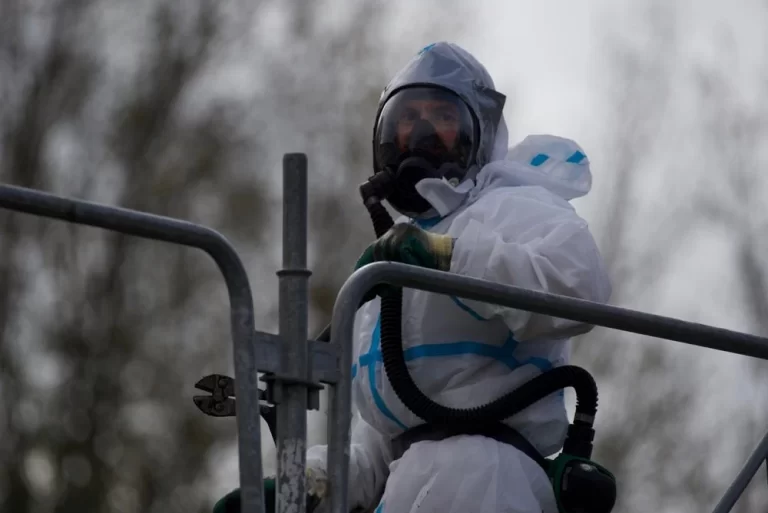
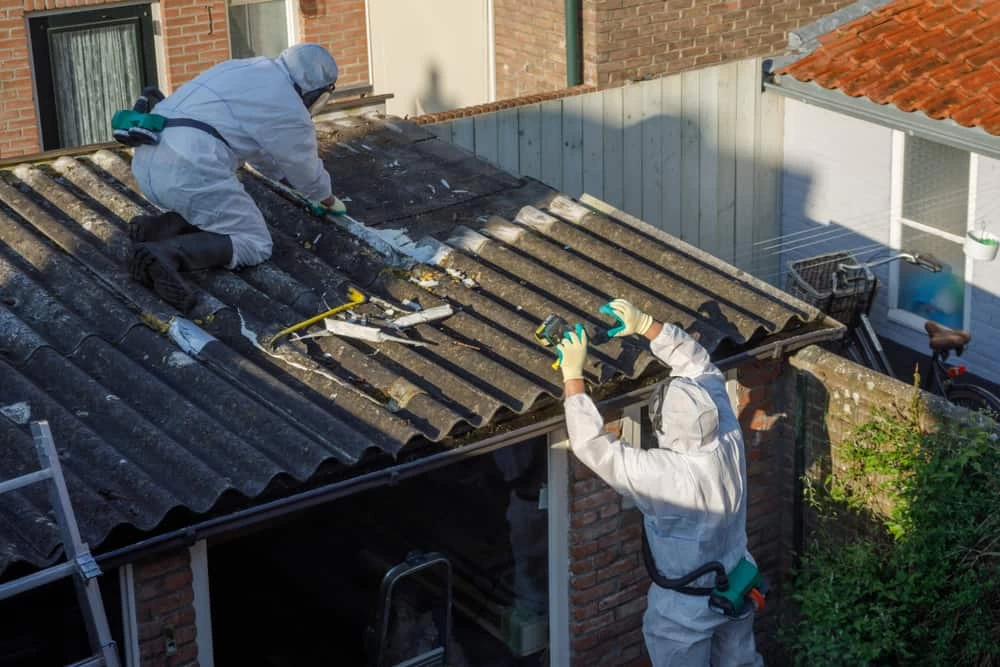
On the day of abatement, the work area is sealed under negative air pressure with HEPA filtration running throughout. We use wet suppression techniques during removal to keep fibers from becoming airborne. In a village as densely settled as Williston Park — where homes sit close together and neighbors are nearby — that containment isn’t just protocol, it’s the right way to work.
Once removal is complete, we conduct post-abatement air sampling through a certified industrial hygienist. You receive written clearance documentation when the space passes. That paperwork matters — for reoccupying the space, for satisfying any Nassau County or village building department requirements, and for protecting your position in any future real estate transaction.
Asbestos Tile and Popcorn Ceiling Removal, Williston Park
Every Material Type Found in These Homes, Covered
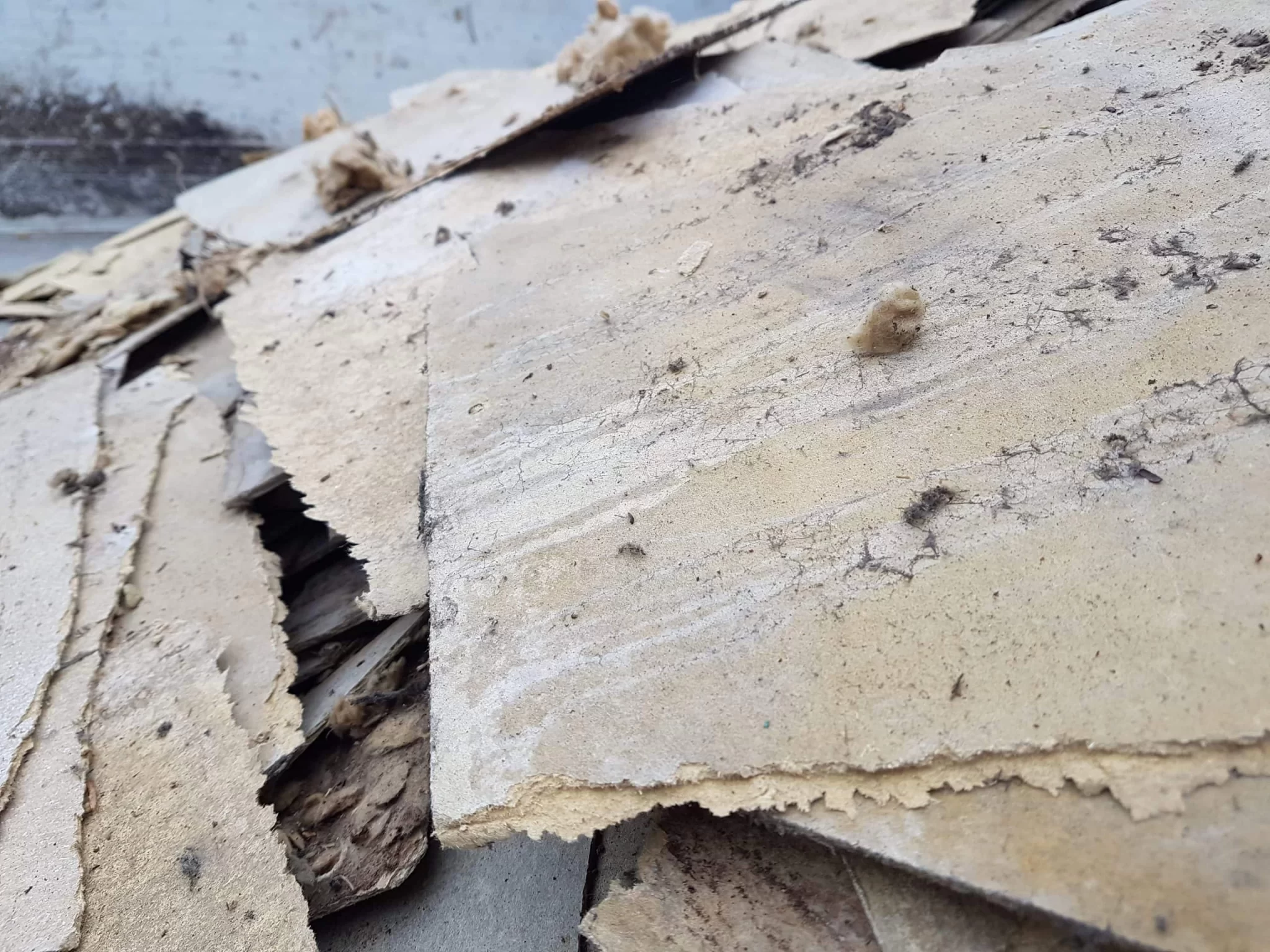
The asbestos-containing materials most commonly found in Williston Park homes fall into a predictable pattern. The 9×9 vinyl composition floor tiles in original kitchens, bathrooms, and basements are among the most frequent — and the adhesive beneath them often contains asbestos too, which is easy to miss if you’re not looking for it. Asbestos tile removal here isn’t just about pulling up the floor. It’s about treating the full assembly correctly.
Popcorn ceiling removal is the other major service request in this area. Many of Williston Park’s homes received mid-century updates in the 1950s and 1960s — textured ceiling coatings were popular, and a significant percentage of them contain asbestos. Scraping or sanding those ceilings without proper abatement can release fibers throughout the living space. The removal process we use includes full containment, HEPA air scrubbing during the work, and clearance sampling after.
Beyond tiles and ceilings, we also handle pipe and boiler insulation removal, plaster and joint compound abatement, and roofing or siding materials — all common in Williston Park’s pre-war construction. The full scope of asbestos removal services is available under one roof, with one licensed contractor accountable for the entire job from survey to clearance.
Does my 1920s Williston Park home definitely have asbestos in it?
Not every older home tests positive, but the odds are not in your favor when you’re talking about a home built in Williston Park’s founding era. The original development here dates to 1926, and the construction materials used during that period — through roughly the late 1970s — routinely included asbestos in floor tiles, pipe insulation, ceiling coatings, roofing, siding, and plaster. You can’t tell by looking. The only way to know is to test.
The practical trigger is usually a renovation. When a contractor starts pulling up floors, opening walls, or touching the ceiling, that’s when it becomes urgent. If your home hasn’t been fully gutted and rebuilt since it was originally constructed, there’s a reasonable chance original materials are still in place somewhere. A pre-renovation asbestos survey is the right first step — and in New York State, it’s required before demolition or significant renovation of any building constructed before 1974, which covers every original home in Williston Park.
What does asbestos abatement actually cost for a Williston Park home?
It depends on what’s there and how much of it needs to come out. A single room of asbestos floor tile removal typically runs in the range of $1,500 to $3,500. Popcorn ceiling abatement for a standard room can fall between $1,000 and $2,500. Larger projects — full basement pipe insulation removal, multi-room tile abatement, or whole-house surveys with remediation — will run higher, sometimes into the $5,000 to $15,000 range depending on scope.
What drives the cost isn’t the labor alone. It’s the licensed contractor requirement, the air monitoring, the proper disposal of asbestos waste under NYS DEC protocols, and the clearance documentation at the end. These aren’t add-ons — they’re legally required components of a compliant job in New York State. Any quote that seems unusually low is worth scrutinizing. In Williston Park’s real estate market, where homes are trading around $825,000, the cost of cutting corners on asbestos abatement can show up later in a failed inspection, a collapsed sale, or a liability issue you didn’t see coming.
Do I need a permit for asbestos removal in Williston Park, NY?
For projects that meet certain thresholds under NYS Industrial Code Rule 56, a formal notification must be filed with the NYS Department of Labor’s Asbestos Control Bureau at least 10 business days before work begins. This isn’t a permit in the traditional sense — it’s a regulatory notification, and we handle it for you, not the other way around. But it does mean there’s a required lead time before work can start, so planning ahead matters.
At the local level, the Village of Williston Park has its own building department operating within the Town of North Hempstead. If your renovation requires a building permit — and most significant interior work does — the building department may require documentation of asbestos survey results or clearance before issuing a certificate of occupancy. We’re familiar with Nassau County’s regulatory environment, which means these steps get handled correctly the first time, without delays from missing paperwork or overlooked filing requirements.
How long does asbestos abatement take in a typical Williston Park home?
For a contained, single-area project — one bathroom floor, one room of popcorn ceiling — the actual abatement work often takes one to two days. Larger projects involving multiple rooms, basement pipe insulation, or whole-house remediation can run three to five days or more. What extends the timeline isn’t usually the removal itself — it’s the air monitoring and clearance sampling that follows, which requires time for results to come back before the space can be reoccupied.
In Williston Park specifically, the compact size of most homes is worth factoring in. Many residents are living in the house during the project, which means containment and scheduling matter a lot. The work area is sealed off and kept under negative air pressure throughout, so the rest of the home remains accessible. We’ll walk you through what’s accessible and what isn’t at each stage, so you’re not caught off guard. A realistic timeline from first call to clearance documentation on a standard project is typically one to two weeks total, accounting for the pre-work notification period and post-abatement testing.
Can I sell my Williston Park home if asbestos hasn't been removed yet?
Technically, the presence of asbestos in a home doesn’t automatically prevent a sale — but it almost always complicates one. In New York, sellers are required to disclose known material defects, and asbestos qualifies. Once a buyer’s inspector flags suspected ACMs, you’re either negotiating a price reduction, agreeing to remediate before closing, or watching the deal fall apart. In Williston Park’s competitive market, where homes are trading at or above $825,000, that’s a significant financial exposure.
Pre-sale abatement removes that variable entirely. You go into the transaction with clearance documentation in hand, which tells buyers — and their inspectors — that the issue has been professionally resolved to NYS DOL standards. That’s a much stronger position than leaving it as an open question. Many sellers in Nassau County are choosing to handle abatement before listing precisely because it protects the asking price and keeps the transaction clean. It’s worth having a conversation about scope and cost before you list, not after a buyer’s inspector raises the flag.
Is asbestos popcorn ceiling removal something I can do myself in New York?
In New York State, asbestos abatement must be performed by a contractor licensed by the NYS Department of Labor, with certified workers on-site. That’s not a gray area — it’s the law under Industrial Code Rule 56. DIY removal of asbestos-containing materials is not a legal option here, and attempting it creates real risk: to your health, to your household, and to your legal standing if the work is ever scrutinized during a sale or inspection.
Beyond the legal piece, the practical risks are serious. Popcorn ceilings that contain asbestos release fibers when disturbed. Without proper containment, HEPA filtration, and wet suppression techniques, those fibers can spread through the entire home and linger in the air long after the work is done. In a compact Williston Park home where your family is living, that’s not a manageable risk. The right move is a professional test first — if the ceiling tests negative, the removal requirements are different. If it tests positive, you need a licensed contractor. Either way, you need to know what you’re dealing with before anything gets scraped.