Belle Terre’s older housing stock hides real asbestos risks and one wrong move during a renovation can cost you far more than the project itself. We handle asbestos abatement the right way, so your home, your family, and your investment stay protected.
I needed a professional consultation explanation of procedure for safe removal of Asbestos in my apartment complex. Without having an account yet, I was very impressed with the caring, knowledgeable and generous advice offered by Jessica, and will look forward to doing business in the future. Thank you so much! I feel much more informed about a sometimes scary endeavor. Peace. Nancy Silva Mineola, NY.
Mia Munoz
Used this company to clean up some water flood in my house. They were fast and easy to work with.very professional, Would recommend to anyone!
Nini Valle
Great company, had a flood and they responded quickly and efficiently. Billed my insurance company directly. I highly recommend this company!
joe colapietro, jr
I had pipe freeze in my basement right before a snow storm and they made to within an hour to help start the clean up process. They we by our side throughout the entire process and even helped with the insurance company. They did such a great job with the cleanup, repair, remidiation, I contracted them to perform the repairs and finishes in the basement. They came with enough manpower and material to get the job done. Leo and Jessica were nothing but a pleasure to deal with!!
Cristian Arredondo c
I had some water damage in my home and Green Island was able to take care of my issue quickly and effectively. I am very pleased with the work they did. They responded quickly and were very professional.
Michael M
Outstanding service! From the office to the field crew everyone was friendly, helpful and responsive. I highly recommend Green Island Group.
Most Belle Terre homeowners don’t think about asbestos until a contractor stops mid-job and says, “You need to get this checked.” At that point, the renovation is on hold, the timeline is blown, and suddenly you’re trying to figure out who to call, what the law requires, and whether the person you hire actually knows what they’re doing. That’s a stressful place to be and it’s exactly the situation proper abatement prevents.
When asbestos is identified, contained, and removed by our licensed team following New York State Industrial Code Rule 56, you get something most homeowners don’t realize they need until they’re selling: documentation. A clean paper trail showing certified inspection, licensed removal, and air clearance results. For Belle Terre properties, where median home values sit above $1 million, that documentation doesn’t just satisfy a legal requirement it removes a major contingency from any future sale and protects the investment you’ve made in the property.
Belle Terre’s coastal location on the Mt. Misery peninsula matters here too. Decades of salt air, humidity off Port Jefferson Harbor, and the occasional nor’easter don’t just age a home they accelerate the deterioration of older building materials. Insulation, floor adhesives, and ceiling coatings in pre-1980 homes that have absorbed years of coastal moisture are far more likely to be in a crumbling, friable state. That’s when asbestos fibers become airborne. That’s when exposure risk spikes. Getting ahead of it especially during a renovation or teardown is the right call.
We are a licensed asbestos abatement contractor serving Belle Terre and the broader Suffolk County North Shore. Our team holds full New York State Department of Labor licensing under Industrial Code Rule 56 which means every project is handled by certified workers, with proper containment, regulated waste disposal, and the documentation your Village Building Inspector and your real estate attorney will both want to see.
Belle Terre isn’t a typical service call. It’s a gated village with its own permitting process, its own Building Inspector, and a community that holds service providers to a high standard. We understand that from coordinating access through Port Jefferson to respecting the noise and vehicle policies the village enforces. Whether the home is one of the Tudor-era estates in the English Section or a 1960s ranch mid-renovation, our approach is the same: thorough, compliant, and done without disrupting the neighborhood.
It starts with a certified inspection. Before anything is touched, a qualified inspector surveys the home and collects samples from suspect materials floor tiles, ceiling coatings, pipe insulation, joint compound, roofing wherever the age of the home and the scope of the planned work suggest risk. For Belle Terre homes built between the 1940s and 1980s, that list is usually longer than homeowners expect. The inspection report gives you a clear picture of what’s present, where it is, and what needs to happen before your renovation or demolition can legally proceed under NYS ICR 56.
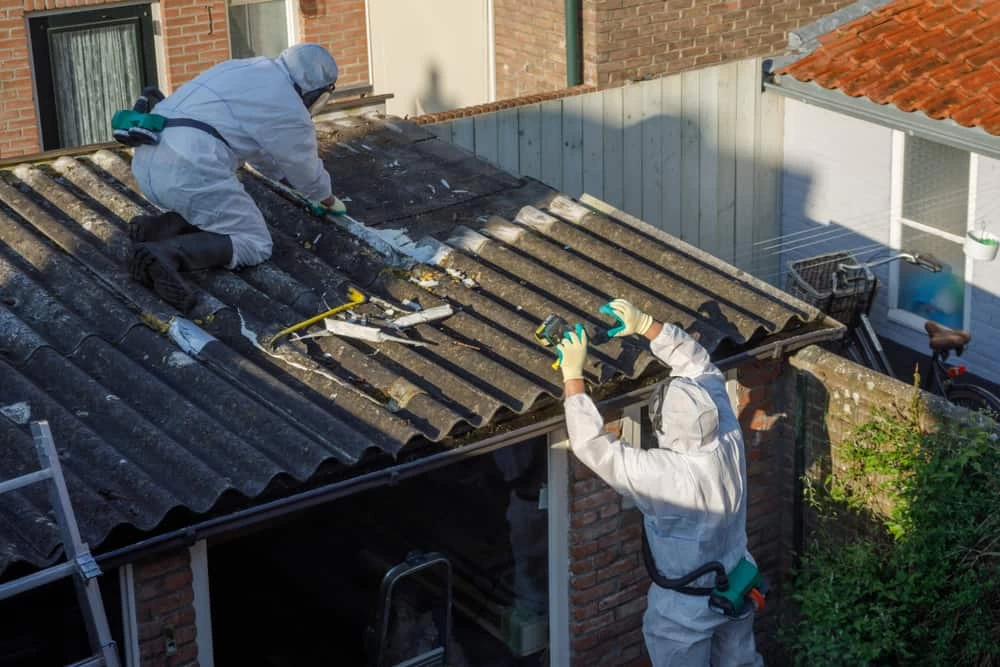
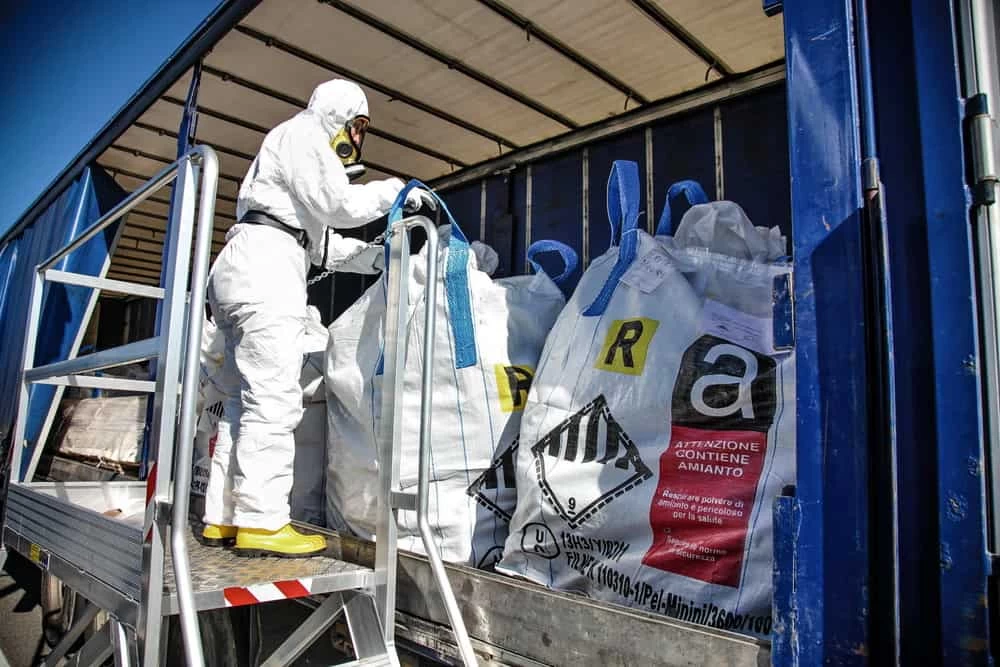
Once the scope is confirmed, the abatement work begins. The area is properly contained, negative air pressure is established, and certified workers remove the identified materials following state protocol. Waste is packaged and transported to an approved disposal facility there’s no gray area in how it leaves the property. Air clearance testing happens after removal, before containment comes down, to confirm the space is safe for re-occupancy. You receive the full documentation package at the end: inspection report, abatement records, waste manifests, and clearance results.
For Belle Terre homeowners in the middle of a renovation or a pre-sale process, this timeline matters. The goal is always to move through each phase efficiently so your contractor can get back on site, or your listing can move forward, without unnecessary delays. One team handles the entire process inspection through clearance so there’s no handoff gap and no confusion about who’s responsible for what.
The asbestos abatement services most requested in Belle Terre reflect the village’s specific housing history. The 1960s construction wave left behind a significant number of homes with 9″x9″ and 12″x12″ vinyl asbestos floor tiles especially in kitchens, bathrooms, and basements. Asbestos tile removal is one of the most common scopes we handle here, and it’s one that has to be done right before new flooring goes in. Cutting corners on this step doesn’t just create a health risk it creates a disclosure problem that follows the property.
Popcorn ceiling removal is another frequent trigger. The textured spray-on ceilings common in homes built before 1978 often contain asbestos, and Belle Terre’s mid-century housing stock has plenty of them still intact. When a homeowner wants to update interiors or a buyer’s inspector flags the ceiling during a pre-sale walkthrough, asbestos popcorn ceiling removal becomes an immediate priority. The process requires proper containment and air monitoring not a Saturday DIY project, regardless of what you read online.
Beyond tiles and ceilings, pre-demolition asbestos surveys are increasingly common as the teardown trend continues in Belle Terre. When an older home is being cleared to make way for a new build, state law requires a full survey before demolition begins. Pipe and boiler insulation, transite siding, and roofing materials in older structures all need to be assessed and addressed before a single wall comes down. We manage the survey, the abatement, and the documentation so the project doesn’t stall at the starting line.
Do I need an asbestos survey before renovating my Belle Terre home?
Under New York State Industrial Code Rule 56, a certified asbestos inspection is required before any renovation or demolition that could disturb suspect materials in a home that may contain asbestos-containing materials. This isn’t a recommendation it’s a legal requirement, and it applies to homeowners in Belle Terre just as it does anywhere else in Suffolk County.
What that means practically is this: if your home was built before 1980 and you’re planning a kitchen gut, a bathroom renovation, a ceiling removal, or a full teardown, you need a certified inspector to assess the property before work begins. Skipping that step doesn’t just create a health risk it can result in your contractor walking off the job, your Village Building Inspector withholding a Certificate of Occupancy, and potential liability if asbestos is later discovered to have been disturbed without proper protocol. Given how many Belle Terre homes date from the 1940s through the 1980s, this applies to a large share of the village’s housing stock.
How do I know if my Belle Terre home actually contains asbestos?
You can’t tell by looking. Asbestos-containing materials look identical to their non-asbestos counterparts the only way to confirm presence is laboratory testing of a collected sample. That’s why a certified inspection is the starting point for any project involving a pre-1980 home.
In Belle Terre specifically, the materials most commonly found to contain asbestos are vinyl floor tiles (particularly the 9″x9″ and 12″x12″ sizes common in 1960s construction), popcorn ceiling coatings, pipe and boiler insulation in older mechanical systems, joint compound used in drywall finishing, and certain roofing and siding materials. The English Section’s Tudor-era homes from the early 1900s carry their own risk profile pipe insulation and older plaster systems in those structures can also test positive. A certified inspector knows where to look based on the age and construction type of the home, and the lab results give you a definitive answer before any work begins.
What happens if asbestos is found during a renovation already in progress?
Work needs to stop. If a contractor discovers suspect material mid-renovation which happens more often than most homeowners expect, especially in older Belle Terre homes the area should be left undisturbed until a certified inspector can assess it. Continuing to work in the area risks disturbing the material further and spreading fibers through the home.
From there, the process moves quickly: inspection, sample collection, lab analysis, and if asbestos is confirmed an abatement scope and timeline. The goal is to get the area cleared and documented so your renovation contractor can return to work as soon as possible. The key is not panicking and not trying to remove anything yourself. New York State law is clear that asbestos abatement must be performed by a licensed contractor using certified workers. DIY removal is illegal, and it’s genuinely dangerous. The faster you get our certified team on site, the faster the project gets back on track.
Is asbestos abatement required before demolishing a home in Belle Terre, NY?
Yes and this is one of the most important compliance points for the teardown projects happening throughout Belle Terre right now. New York State Industrial Code Rule 56 mandates a full pre-demolition asbestos survey by a certified inspector before any structure is demolished. If asbestos-containing materials are identified, they must be abated by a licensed contractor before demolition proceeds. This applies regardless of the size of the project or the age of the structure.
For Belle Terre specifically, where the current trend toward teardowns and major rebuilds is well underway, this requirement is not theoretical it’s a real step in the permitting and construction process. Skipping it creates regulatory exposure for the property owner, potential liability for the demolition contractor, and the risk of contaminating the surrounding property with airborne asbestos fibers. Given the density of the village and the proximity of neighboring homes, that’s not a risk worth taking. The pre-demolition survey is straightforward when handled by a qualified team, and it protects everyone involved.
How long does the asbestos abatement process typically take for a North Shore home?
Timeline depends on the scope specifically, how many materials are affected and how large the abatement area is. A focused scope like asbestos floor tile removal in a single room or popcorn ceiling abatement in a few spaces can often be completed within one to three days, with air clearance testing and documentation to follow. A larger scope involving multiple material types, full-floor abatement, or pre-demolition work on an entire structure takes longer sometimes a week or more depending on the size of the home and the complexity of the containment setup.
For Belle Terre homeowners who are mid-renovation or working toward a sale closing, timeline is a real concern. The best way to minimize delays is to get the inspection done early before your renovation contractor is already on site and waiting. If you’re planning a project in a home built before 1980, scheduling the asbestos survey as part of your pre-construction planning, rather than as a reaction to a mid-project discovery, keeps everything moving. We handle the full process from inspection through clearance, which eliminates the scheduling gaps that come from using multiple vendors.
Will asbestos abatement affect the resale value of my Belle Terre property?
Done right, it protects it. A properly documented asbestos abatement project with a certified inspection report, licensed removal records, waste disposal manifests, and air clearance results is one of the cleaner disclosures a Belle Terre seller can make. It tells a buyer’s attorney and their inspector that the issue was identified, handled by a licensed contractor following state law, and verified through clearance testing. That removes a major unknown from the transaction.
The alternative undisclosed asbestos discovered during a buyer’s inspection is where deals fall apart or prices drop. In a market where Belle Terre homes regularly trade above $1 million, a late-stage asbestos discovery can trigger renegotiation, extended contingency periods, or a buyer walking away entirely. Homeowners who have already completed certified abatement and have the paperwork to show for it are in a significantly stronger position. The abatement cost is real, but it’s a fraction of what an unresolved asbestos issue can cost you at the closing table.