Brookhaven's Older Homes Deserve More Than a Guess
If your Brookhaven home was built between the 1950s and 1980s and most in this town were there’s a real chance asbestos is somewhere inside it. We provide certified asbestos abatement across Brookhaven, NY, so you can renovate, sell, or simply breathe easier without cutting corners on something this serious.
I needed a professional consultation explanation of procedure for safe removal of Asbestos in my apartment complex. Without having an account yet, I was very impressed with the caring, knowledgeable and generous advice offered by Jessica, and will look forward to doing business in the future. Thank you so much! I feel much more informed about a sometimes scary endeavor. Peace. Nancy Silva Mineola, NY.
Mia Munoz
Used this company to clean up some water flood in my house. They were fast and easy to work with.very professional, Would recommend to anyone!
Nini Valle
Great company, had a flood and they responded quickly and efficiently. Billed my insurance company directly. I highly recommend this company!
joe colapietro, jr
I had pipe freeze in my basement right before a snow storm and they made to within an hour to help start the clean up process. They we by our side throughout the entire process and even helped with the insurance company. They did such a great job with the cleanup, repair, remidiation, I contracted them to perform the repairs and finishes in the basement. They came with enough manpower and material to get the job done. Leo and Jessica were nothing but a pleasure to deal with!!
Cristian Arredondo c
I had some water damage in my home and Green Island was able to take care of my issue quickly and effectively. I am very pleased with the work they did. They responded quickly and were very professional.
Michael M
Outstanding service! From the office to the field crew everyone was friendly, helpful and responsive. I highly recommend Green Island Group.
The post-war building boom that turned Brookhaven into one of New York’s most populated towns happened fast. Ranches in Centereach, Cape Cods in Holbrook, split-levels in Medford most of them went up between 1950 and 1980, which is exactly when asbestos was used most heavily in residential construction. Floor tiles, pipe insulation, popcorn ceilings, boiler wrap it was standard practice, and it’s still sitting in thousands of homes across Brookhaven right now.
When asbestos is properly removed, your renovation can actually move forward. Contractors can work. Permits stay clean. You’re not holding up a kitchen remodel or a basement finishing project because something in the walls or under the floor hasn’t been dealt with. That’s a practical, immediate outcome not a theoretical one.
There’s also the longer view. Brookhaven’s South Shore communities Mastic Beach, Shirley, areas along the Great South Bay deal with moisture, flooding, and storm damage in ways that accelerate the deterioration of older building materials. When those materials contain asbestos, the risk isn’t just structural. Proper abatement removes that risk entirely, and the documentation that comes with it protects your home’s value when it’s time to sell.
Local Certification Backed by Real Field Experience in Brookhaven
We’re a Long Island–based environmental services company holding full New York State Department of Labor certification for asbestos abatement. That certification isn’t a formality it’s a legal requirement under NYS Industrial Code Rule 56, and it’s what separates work that holds up from work that creates liability.
Our team has worked across Suffolk County for years, including throughout the Town of Brookhaven from the historic North Shore communities around Stony Brook and Setauket to the South Shore neighborhoods near Patchogue and Bellport. That kind of familiarity matters. A 1960s ranch in Coram has different materials in different places than a 1970s colonial in Mount Sinai, and knowing where to look and what to expect is something you build from actually doing the work here.
When you call 631-613-8945, you’re reaching a local team, not a national call center. That means faster response, real accountability, and someone who already understands the housing stock in your part of Brookhaven.
No Surprises Here's Exactly How We Handle the Work
It starts with an assessment. Before anything is removed, the materials in question need to be identified and sampled. We handle this step directly no third-party hand-offs, no waiting on a separate testing company to schedule their own visit. Samples are collected properly, sent to a certified lab, and results are reviewed before any abatement work begins.
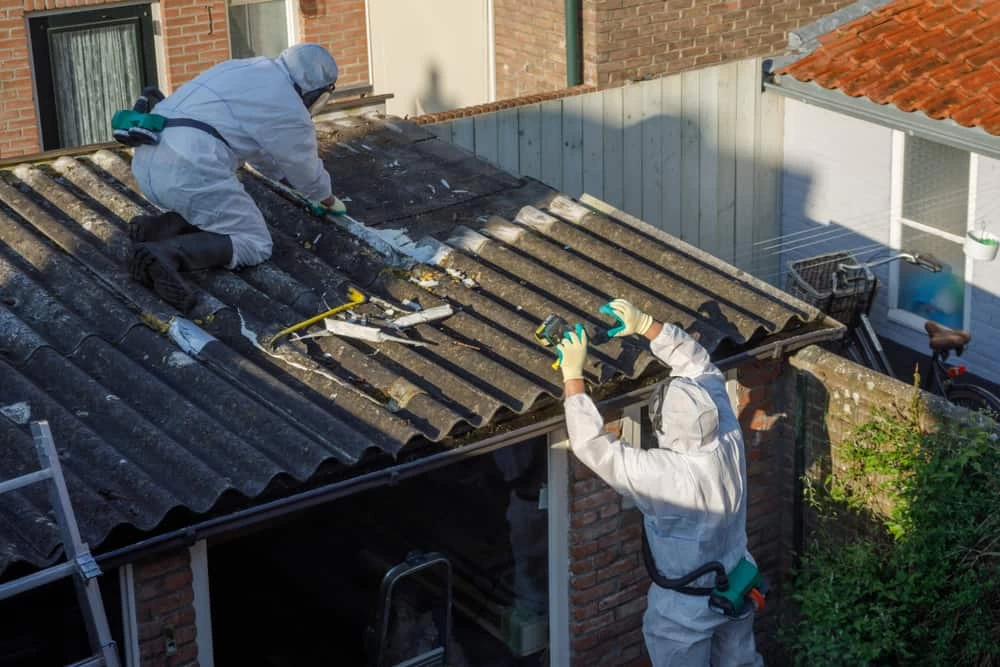
Once the scope is confirmed, the work area is fully contained. Negative air pressure is established, HEPA filtration runs throughout the job, and all workers follow the protective protocols required by the NYS DOL. For Brookhaven homeowners who have already pulled permits through the Town of Brookhaven Building Division, this is the step that keeps the project compliant and on schedule. Abatement work that isn’t done by a certified contractor can trigger stop-work orders and that’s a costly problem to undo.
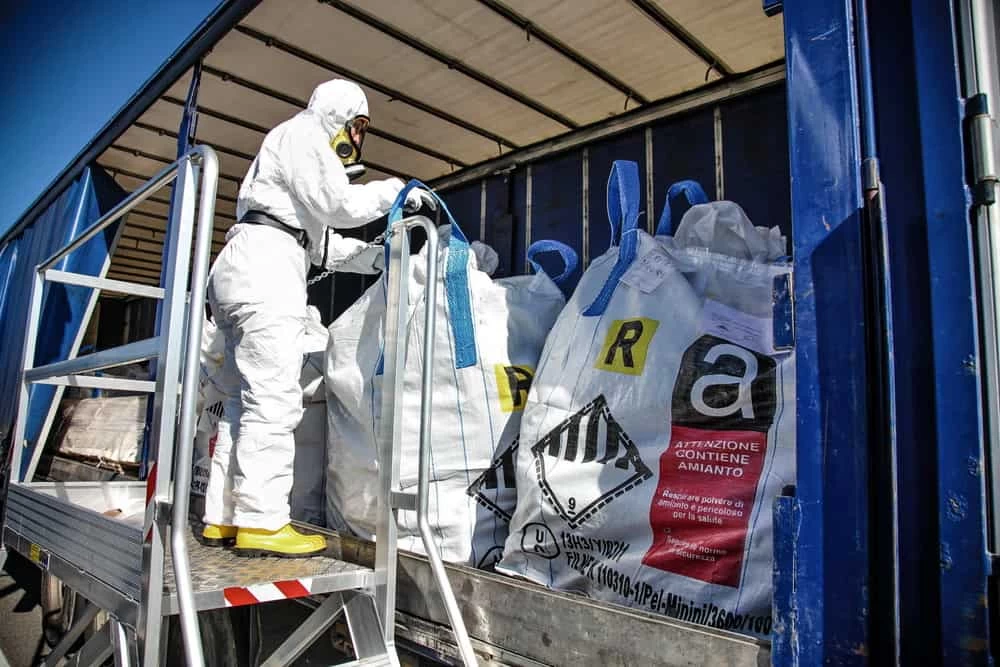
After removal, all asbestos waste is double-bagged, labeled, and transported to a licensed disposal facility in accordance with EPA and NYS DEC regulations. You receive documentation of the full chain of custody. Then comes clearance air testing a final check to confirm the space is safe before anyone re-enters. From first call to clearance, the process is managed in one place, by one team.
Asbestos Tile and Popcorn Ceiling Removal, Brookhaven
The Materials Most Brookhaven Homes Are Actually Hiding
The most common asbestos-containing materials found in Brookhaven’s mid-century housing stock aren’t hidden behind walls they’re right underfoot or overhead. Those 9×9 inch vinyl floor tiles found under carpet in thousands of Suffolk County homes from the 1950s and 60s frequently contain chrysotile asbestos, and so does the black mastic adhesive used to install them. Disturbing either one without proper abatement releases fibers you can’t see and can’t undo. Asbestos tile removal is one of the most routine jobs we handle on Long Island, and it’s done with full containment, wet methods, and HEPA filtration every time.
Popcorn and spray-textured ceilings are the other major exposure point. If your Brookhaven home has that rough, bumpy ceiling finish from the 1960s through the early 1980s, there’s a meaningful chance it contains asbestos. Scraping it without testing first isn’t just dangerous it’s illegal under New York State law. Asbestos popcorn ceiling removal requires certified contractors, proper wet application to suppress fiber release, and air monitoring throughout the process.
Beyond tiles and ceilings, we also handle pipe and boiler insulation, roofing materials, joint compound, and other asbestos-containing materials commonly found in Brookhaven’s older homes. If you’re not sure what you’re dealing with, that’s exactly what the assessment phase is for.
Do I legally need asbestos testing before renovating my Brookhaven home?
Yes in New York State, asbestos testing is legally required before demolition or significant renovation work on buildings that may contain asbestos-containing materials. This is governed by NYS Industrial Code Rule 56, enforced by the New York State Department of Labor’s Asbestos Control Bureau. It applies to residential properties, not just commercial ones.
For Brookhaven homeowners specifically, this matters because the Town of Brookhaven Building Division enforces the NYS Uniform Fire Prevention and Building Code as part of the permit process. If you pull a renovation or demolition permit and asbestos is later discovered to have been disturbed without proper abatement, you’re looking at potential stop-work orders, fines, and remediation costs that dwarf what the original abatement would have cost. Getting it done correctly upfront with a certified contractor and proper documentation keeps your project legal, on schedule, and protected.
How do I know if my older Brookhaven home actually contains asbestos?
You can’t tell by looking. Asbestos-containing materials don’t look any different from non-asbestos materials the only way to know is to have samples collected and tested by a certified professional. What you can do is use the age of your home as a starting point. If it was built or significantly renovated between roughly 1940 and 1980, the probability is high that asbestos was used somewhere in the construction.
In Brookhaven, the post-war housing boom produced tens of thousands of homes in that exact window ranches, Cape Cods, and split-levels throughout Centereach, Holbrook, Selden, Medford, Coram, and dozens of other hamlets. The most common locations to find asbestos in these homes are vinyl floor tiles (especially 9×9 tiles), the black adhesive beneath them, spray-textured or popcorn ceilings, pipe and boiler insulation in basements, and older roofing materials. If your home falls in this age range and you’re planning any work that disturbs these materials, an assessment before you start is the right move.
What happens to the asbestos waste after it's removed from my property?
Asbestos waste cannot go in your regular trash or a standard dumpster it’s a regulated hazardous material that must be handled through a specific chain of custody from the moment it leaves your home. After removal, all asbestos-containing materials are double-bagged in heavy-duty, labeled bags, sealed, and transported by a licensed carrier to a licensed disposal facility. Every step of this process is documented.
That documentation matters more than most homeowners realize. When you go to sell your Brookhaven home, buyers’ attorneys routinely ask about past environmental work. Having a clean paper trail showing that abatement was performed by a certified contractor and that waste was disposed of properly is a straightforward way to protect your sale. Without it, you may face delays, renegotiations, or demands for additional testing. We provide complete disposal documentation as part of every job it’s not an add-on, it’s standard.
My Brookhaven home had storm damage could that have disturbed asbestos materials?
It’s a real possibility, and it’s worth taking seriously. Asbestos-containing materials that have been stable for decades can be disturbed by structural damage, water intrusion, or the kind of impact that comes with a severe nor’easter or coastal storm. In Brookhaven’s South Shore communities Mastic Beach, Shirley, areas near the Great South Bay storm damage is not a rare event, and older homes in these neighborhoods have materials that are particularly vulnerable to moisture-driven deterioration.
If your home sustained damage and you’re planning repairs or reconstruction, an asbestos assessment should happen before the repair work begins not after. Contractors working in a damaged structure can unknowingly disturb asbestos-containing materials, which creates an exposure risk and a compliance problem. Getting a certified assessment first gives you a clear picture of what you’re dealing with, keeps your contractors safe, and ensures the repair work proceeds within the bounds of New York State law.
How long does the asbestos abatement process typically take for a residential job?
It depends on the scope, but most residential asbestos abatement jobs in Brookhaven a section of floor tile, a popcorn ceiling in one or two rooms, or pipe insulation in a basement are completed within one to three days. Larger projects, like a full gut renovation in an older home or work that involves multiple material types across multiple areas, will take longer and are scoped accordingly after the initial assessment.
The part of the timeline that surprises most homeowners is the clearance testing phase at the end. After abatement is complete, air samples are collected and sent to a lab to confirm that fiber levels are within safe limits before the space is re-occupied or handed back to other contractors. That lab turnaround adds time typically a day or two. If you have a general contractor scheduled and a renovation timeline to hit, it’s worth building that clearance window into your project schedule from the start. We can walk you through realistic timing during the initial consultation so there are no surprises when it matters most.
Is asbestos abatement expensive, and what affects the cost in Brookhaven?
Cost varies based on what needs to be removed, how much of it there is, and where it’s located in the home. A straightforward floor tile removal in a single room will cost significantly less than a full basement pipe insulation job or a whole-house popcorn ceiling removal. For most residential jobs in Brookhaven, you’re typically looking at a range somewhere between a few hundred dollars on the low end for a small, contained scope, up to several thousand for more extensive work. The assessment phase gives you a clear, specific number before any work begins there’s no obligation to proceed until you understand exactly what the job entails and what it costs.
What drives cost up in this area specifically is the combination of material type, access, and disposal requirements. Homes in Brookhaven’s older hamlets particularly those with unfinished basements full of original pipe insulation or large areas of intact floor tile tend to have broader scopes than newer construction. The NYS DOL certification requirements, proper containment setup, and licensed disposal are non-negotiable parts of any legal abatement job in New York, and they’re factored into every quote. Cutting those corners to save money creates legal and health exposure that costs far more to deal with down the road.