If your home was built before 1980 and in Jamaica, most were asbestos isn’t a maybe. It’s a real possibility hiding in your floors, ceilings, pipes, and walls. We handle asbestos abatement in Jamaica, NY with the NYC DEP compliance, licensed process, and documented clearance that actually protects you.
I needed a professional consultation explanation of procedure for safe removal of Asbestos in my apartment complex. Without having an account yet, I was very impressed with the caring, knowledgeable and generous advice offered by Jessica, and will look forward to doing business in the future. Thank you so much! I feel much more informed about a sometimes scary endeavor. Peace. Nancy Silva Mineola, NY.
Mia Munoz
Used this company to clean up some water flood in my house. They were fast and easy to work with.very professional, Would recommend to anyone!
Nini Valle
Great company, had a flood and they responded quickly and efficiently. Billed my insurance company directly. I highly recommend this company!
joe colapietro, jr
I had pipe freeze in my basement right before a snow storm and they made to within an hour to help start the clean up process. They we by our side throughout the entire process and even helped with the insurance company. They did such a great job with the cleanup, repair, remidiation, I contracted them to perform the repairs and finishes in the basement. They came with enough manpower and material to get the job done. Leo and Jessica were nothing but a pleasure to deal with!!
Cristian Arredondo c
I had some water damage in my home and Green Island was able to take care of my issue quickly and effectively. I am very pleased with the work they did. They responded quickly and were very professional.
Michael M
Outstanding service! From the office to the field crew everyone was friendly, helpful and responsive. I highly recommend Green Island Group.
When asbestos is found in a Jamaica home, the first thing most people feel is stuck. Renovation stops. A sale gets complicated. A water damage repair turns into something much bigger. What you actually need is someone who can move the situation forward not just remove material, but clear the regulatory path so your project, your sale, or your repair can keep going.
Jamaica’s housing stock was largely built in the 1940s through the 1960s. The average home here was built in 1957, which means vinyl floor tiles, pipe insulation, popcorn ceilings, and joint compound from that era are extremely common. These aren’t rare findings they’re the baseline. A proper asbestos removal job in a neighborhood like this means knowing exactly where to look, not just responding to what’s visible.
What you get on the other side of this process is documented proof a post-clearance air verification certificate that the space is safe to reoccupy, safe to renovate, and safe to sell. That piece of paper matters to your insurance company, your real estate agent, your building manager, and the NYC Department of Buildings. It’s not just peace of mind. It’s the thing that lets everything else move forward.
Every Credential the City of New York Requires We Have It
We’re a full-service environmental remediation contractor actively licensed and operating in New York City not a Long Island company trying to figure out NYC rules on your Jamaica project. That distinction matters more in Jamaica than almost anywhere else, because the regulatory framework here is layered: federal EPA requirements, NYS DOL licensing, and NYC DEP compliance rules that are entirely separate from what applies outside city limits.
We hold the NYS DOL Asbestos license, NYC General Contractor license, NYC BIC registration, and USEPA Lead/RRP certification the full stack required to legally perform and document asbestos abatement in New York City. We’re also NYS MBE, NYS WBE, and NYC MWBE certified, which matters for property owners and managers working on government-funded or institutionally-connected projects in Jamaica, including those tied to the Jamaica Neighborhood Plan’s ongoing development activity.
When you call us, you’re not the first Jamaica-area job we’ve done. You’re not a test case.
No Surprises Here's Exactly What the Process Looks Like
It starts with an assessment. A NYS-certified asbestos investigator inspects the property and collects samples from suspected materials floor tiles, pipe insulation, ceiling texture, drywall compound, roofing materials, whatever the scope calls for. This step isn’t optional in New York City. Before the NYC Department of Buildings will issue a renovation or demolition permit on any pre-1987 building, the asbestos assessment has to be completed and documented. In Jamaica, where virtually every residential and commercial building predates that threshold, this is the starting point for almost every project.
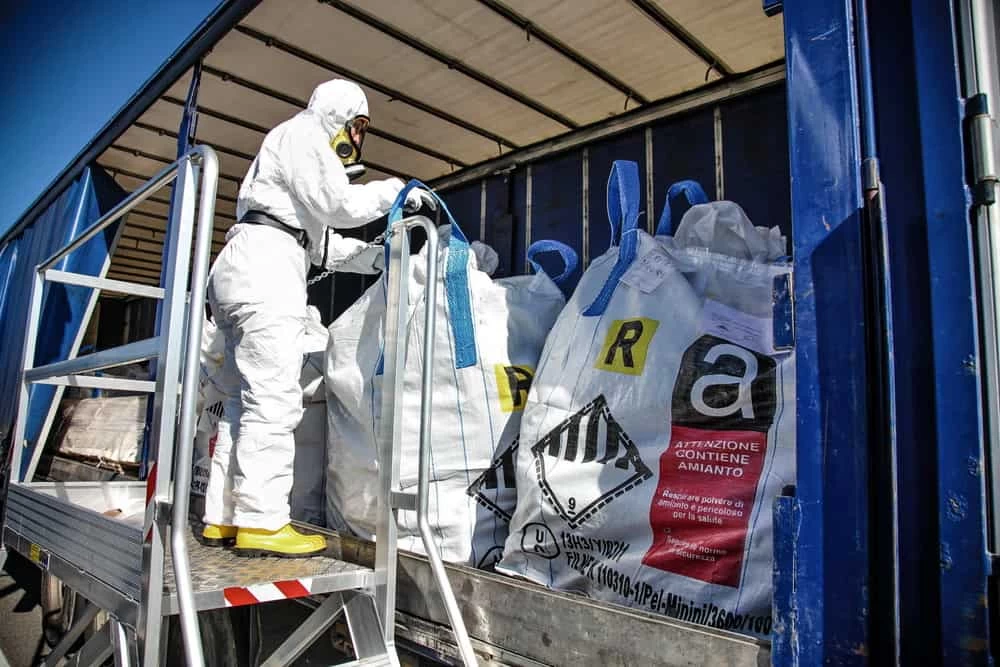
If abatement is required, we handle the NYC DEP permit process filing the notification, setting up proper containment, and deploying air scrubbers throughout the work area. The affected materials are removed, bagged, and disposed of according to state and federal guidelines. You don’t have to coordinate with a separate permit expediter or chase down paperwork. That’s our job.
Once the work is done, post-removal air clearance testing is conducted before anyone re-enters the space. You receive a clearance certificate that satisfies NYC DEP requirements and gives you the documentation you need whether that’s for your insurance claim, your building management board, or your real estate closing. That’s the finish line, and we don’t leave until you’re there.
One Contractor Handles the Whole Scope Not Just Part of It
Asbestos abatement in Jamaica isn’t a single-scenario service. It shows up differently depending on what you’re dealing with. Asbestos tile removal is one of the most common requests in this neighborhood 9-inch and 12-inch vinyl floor tiles were standard in the homes built throughout the 1950s and 1960s that make up most of South Jamaica, the Baisley Pond area, and the blocks surrounding Jamaica Center. Asbestos popcorn ceiling removal is another frequent scope, particularly in homes and apartments where textured ceilings were applied through the 1970s. Pipe and boiler insulation in basement mechanical rooms is a third common finding especially relevant in the attached and semi-detached row houses where mechanical systems are aging and often disturbed during repairs.
Beyond residential work, we handle commercial asbestos remediation for property managers, building owners, and developers operating in Jamaica’s active commercial corridor. With the Jamaica Neighborhood Plan driving demolition and renovation activity along Jamaica Avenue and surrounding blocks, every project in that footprint requires an asbestos assessment before a DOB permit is issued and we navigate that process start to finish.
We’re also USEPA Lead/RRP certified, which means if your renovation scope involves both asbestos and lead paint common in Jamaica’s pre-1978 housing stock we address both under one contract, one visit, and one set of documentation. No second contractor. No coordination gap.
Does NYC require an asbestos inspection before I renovate my Jamaica home?
Yes and this is one of the most important things to understand before starting any renovation project in Jamaica. New York City requires an asbestos assessment on any pre-1987 building before the NYC Department of Buildings will issue a renovation or demolition permit. Since virtually every residential and commercial building in Jamaica predates that threshold, this requirement applies to almost every project in the neighborhood, from a bathroom gut renovation to a full demolition.
The assessment must be conducted by a NYC DEP Certified Asbestos Investigator. If asbestos-containing materials are found and the project will disturb them, a formal abatement must be completed and documented before work can proceed. Skipping this step doesn’t just put you at health risk it puts your permit at risk and can expose you to significant fines. If you’re planning any renovation in Jamaica, the asbestos assessment is the first call you make, not an afterthought.
How much does asbestos removal typically cost for a home in Jamaica, NY?
Cost depends on what materials are involved, how much of it there is, and the scope of the project. For a standard residential abatement in Jamaica, you’re generally looking at a range of $450 to $6,000 for a full project, with most jobs falling somewhere in the middle of that range. Asbestos tile removal one of the most common scopes in Jamaica’s 1950s and 1960s homes typically runs $5 to $20 per square foot. Asbestos popcorn ceiling removal runs $9 to $20 per square foot depending on the area and condition.
NYC projects tend to run at the higher end of national cost ranges because of the regulatory compliance requirements: DEP permit fees, certified disposal, post-clearance air testing, and documentation. That said, if your asbestos issue is connected to a covered water damage or fire event, we bill insurance directly which removes the out-of-pocket burden entirely for many Jamaica homeowners. Getting a specific quote starts with the inspection, which gives you a clear picture of what you’re actually dealing with before any commitment is made.
What happens if asbestos is found during a renovation in New York City?
Work stops and that’s the right call. In New York City, disturbing asbestos-containing materials without proper abatement in place is a violation of NYC DEP regulations and federal EPA NESHAP rules. If asbestos is discovered mid-renovation, the contractor is required to stop work in the affected area and the property owner must bring in a licensed abatement contractor to assess and remediate before anything else continues.
This scenario happens more often than people expect in Jamaica, where older homes are frequently renovated without a prior asbestos assessment. A floor tile comes up and the adhesive beneath it is black mastic. A ceiling gets opened and the texture crumbles. A pipe gets cut and the insulation around it looks suspect. In each of these cases, the right move is to stop, get it tested, and if it comes back positive, get it properly abated. We handle emergency response situations like this we can assess, permit, and abate quickly so your project isn’t stalled longer than necessary.
Can I just encapsulate asbestos instead of removing it in my Queens property?
Sometimes, yes encapsulation is a legitimate and code-compliant option when the asbestos-containing material is in good condition, not friable, and won’t be disturbed by the planned work. It involves sealing the material with a penetrating or bridging encapsulant rather than physically removing it. Encapsulation typically costs 15 to 25 percent less than full removal and can be appropriate for floor tiles that are intact, pipe insulation that isn’t being touched, or ceiling materials in an area that won’t be renovated.
The key word is “undisturbed.” If the material will be cut, broken, sanded, or otherwise disturbed during your project, encapsulation isn’t the right answer removal is. A licensed asbestos investigator needs to assess the condition of the material and the scope of your project before recommending one approach over the other. In Jamaica, where many homeowners are renovating kitchens and bathrooms in post-WWII homes, the renovation scope usually determines whether encapsulation is even on the table. We’ll tell you honestly which approach fits your situation.
How long does asbestos abatement take, and do I have to leave my home?
For most residential projects in Jamaica a single room, a basement mechanical area, or a section of flooring abatement typically takes one to three days. Larger scopes, like a full floor tile removal across multiple rooms or a combination of pipe insulation and ceiling work, can take longer depending on the square footage and complexity. Commercial projects in multi-family buildings or along the Jamaica Avenue corridor tend to involve more coordination and may require phased scheduling.
Whether you need to vacate depends on the scope and the containment setup. For contained work in a specific area of the home, it’s often possible to remain in unaffected parts of the house. For larger projects, or any project where the HVAC system could spread fibers to other areas, temporary relocation is the safer and recommended choice. We walk through this with every client before work begins so there are no surprises on day one. You’ll know exactly what to expect, how long it will take, and when you can return before we start.
My Jamaica home had water damage could that have disturbed asbestos materials?
It’s a real possibility, and it’s one of the most common ways asbestos becomes an immediate concern in Jamaica’s older housing stock. When a pipe bursts or a basement floods in a pre-1960s home, the water doesn’t just damage drywall and flooring it can saturate and disturb pipe insulation, loosen floor tile adhesive, or compromise ceiling materials that contain asbestos. Once those materials are wet and breaking apart, fibers can become airborne, which is when the health risk becomes acute.
This matters especially in Jamaica because the neighborhood has a high concentration of aging attached homes and row houses with original plumbing and mechanical systems. Winter pipe freeze events are a recurring issue, and storm-related flooding near low-lying areas around Baisley Pond adds another layer of risk during heavy rain seasons. If you’ve had water damage in a home built before 1980, getting an asbestos assessment before any repair or restoration work begins is the right move not after. We handle both water damage restoration and asbestos abatement, and we bill insurance directly when the event is covered. One call, one contractor, one claim.