Your 1950s Kew Gardens Hills Home Deserves More Than a Guess
Most homes in Kew Gardens Hills were built in the 1950s right in the middle of peak asbestos use. We provide certified asbestos abatement so you can renovate, sell, or breathe easy without the regulatory guesswork.
I needed a professional consultation explanation of procedure for safe removal of Asbestos in my apartment complex. Without having an account yet, I was very impressed with the caring, knowledgeable and generous advice offered by Jessica, and will look forward to doing business in the future. Thank you so much! I feel much more informed about a sometimes scary endeavor. Peace. Nancy Silva Mineola, NY.
Mia Munoz
Used this company to clean up some water flood in my house. They were fast and easy to work with.very professional, Would recommend to anyone!
Nini Valle
Great company, had a flood and they responded quickly and efficiently. Billed my insurance company directly. I highly recommend this company!
joe colapietro, jr
I had pipe freeze in my basement right before a snow storm and they made to within an hour to help start the clean up process. They we by our side throughout the entire process and even helped with the insurance company. They did such a great job with the cleanup, repair, remidiation, I contracted them to perform the repairs and finishes in the basement. They came with enough manpower and material to get the job done. Leo and Jessica were nothing but a pleasure to deal with!!
Cristian Arredondo c
I had some water damage in my home and Green Island was able to take care of my issue quickly and effectively. I am very pleased with the work they did. They responded quickly and were very professional.
Michael M
Outstanding service! From the office to the field crew everyone was friendly, helpful and responsive. I highly recommend Green Island Group.
When asbestos is handled properly, your renovation doesn’t have to stop at the demo. You get clearance documentation, a clean bill of health from post-removal air testing, and the ability to move forward whether that’s finishing a kitchen remodel, listing your home, or getting your co-op board off your back.
In Kew Gardens Hills, the housing stock tells the whole story. The median construction year here is 1956, which means floor tiles, pipe wrap, ceiling textures, and boiler insulation in thousands of apartments and semi-detached homes were installed during the era when asbestos was standard practice. The 9-inch-by-9-inch vinyl floor tiles you’ll find in older kitchens and bathrooms throughout the neighborhood and the black mastic adhesive underneath them are among the most common sources we encounter. That’s just what the buildings here are made of.
For co-op shareholders and landlords managing pre-1987 buildings in Kew Gardens Hills, the stakes go beyond personal health. NYC DEP requires a Certified Asbestos Investigator assessment before any renovation permit is issued. Skipping that step doesn’t just put people at risk it puts your project at risk. We handle the full process, from initial assessment through post-clearance air verification, so you’re covered on every front.
Every License You Need. One Company That Holds Them.
We are a full-service environmental remediation and restoration contractor serving all five NYC boroughs, including Queens and Kew Gardens Hills specifically. We hold NYS DOL Asbestos licensure, NYC General Contractor licensure, NYC BIC registration, USEPA Lead/RRP certification, and IICRC certification the specific credentials that matter when you’re dealing with a pre-1987 building in a city with some of the strictest asbestos regulations in the country.
What sets us apart isn’t just the license stack. It’s the fact that we can handle asbestos abatement and the reconstruction that follows under one roof. For a Kew Gardens Hills homeowner mid-renovation or a co-op board managing a building near Jewel Avenue or Main Street that means no gap between the end of remediation and the resumption of your project. No second contractor to coordinate. No waiting.
We also hold NYS MBE, NYS WBE, and NYC MWBE certifications, making us eligible for institutional and government work including projects connected to Queens College or NYC Housing Authority properties in the area. And we’re available 24 hours a day, 7 days a week, because asbestos disturbances don’t follow a business schedule.
Asbestos Remediation Process in Kew Gardens Hills, NY
No Surprises Here's Exactly What the Process Looks Like
It starts with an assessment. Before any work begins, a DEP Certified Asbestos Investigator evaluates the affected areas to identify what materials are present and whether they’re regulated under NYC DEP rules. In Kew Gardens Hills, that typically means checking floor tiles, mastic adhesive, pipe and boiler insulation in basement mechanical rooms, ceiling textures, and HVAC duct wrap all common in the neighborhood’s postwar garden apartments and brick semi-detached homes. If asbestos-containing material is confirmed, an A-TRU permit is obtained from the NYC DEP before any abatement work begins. This is a legal requirement in New York City, not a formality, and it’s one of the steps that separates a compliant job from one that can shut your project down.
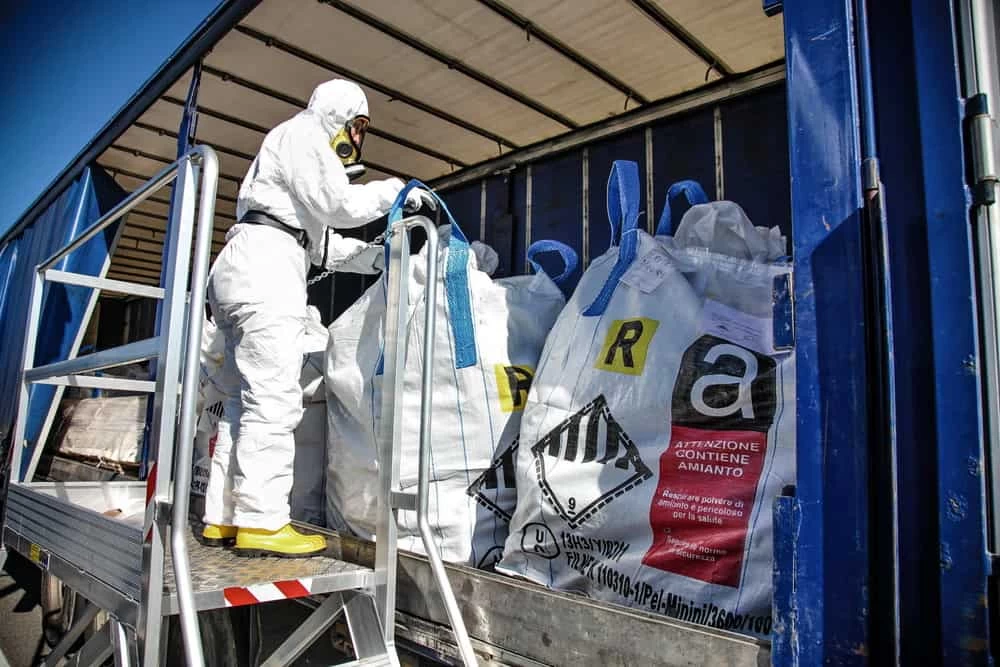
Once permitted, our abatement crew establishes full containment negative air pressure, sealed work zones, Microtrap air scrubbers running throughout. The material is removed, bagged, and disposed of in accordance with state and federal regulations. For full demolition projects, an ACP-5 form is filed with the NYC Department of Buildings before sign-off.
After removal, post-clearance air testing confirms that airborne fiber levels are back within safe limits. You receive written documentation of that result the clearance certificate your real estate attorney, co-op board, or insurance company will ask for. If reconstruction is needed, we can handle that too, so your project keeps moving without starting over from scratch.
Asbestos Abatement and Removal Services, Queens NY
Built for the Buildings That Actually Exist in Kew Gardens Hills
Our asbestos services cover the full range of what Kew Gardens Hills property owners actually encounter. Asbestos tile removal is one of the most common requests specifically the 9×9 vinyl floor tiles and black mastic adhesive found in kitchens and bathrooms throughout the neighborhood’s 1950s and 1960s co-op stock. Asbestos popcorn ceiling removal is another frequent need in apartments and homes built between the late 1950s and mid-1970s, where textured ceiling coatings were applied as standard finish work.
Beyond residential interiors, we handle pipe and boiler insulation abatement in shared mechanical spaces a particularly important service for co-op boards and property managers overseeing multi-unit buildings, where a single basement pipe chase can run asbestos-containing wrap through multiple floors. HVAC duct wrap, joint compound, and millboard around furnaces are also assessed and addressed as needed.
Because a large portion of Kew Gardens Hills’ housing stock predates 1978, lead paint and asbestos frequently show up in the same building. Our USEPA Lead/RRP certification means both hazards can be handled under one contract no second specialist, no duplicate site visits, no extra coordination. We also bill insurance companies directly, which matters when a water damage event or pipe failure has triggered the discovery in the first place.
Do I need an asbestos test before renovating my co-op in Kew Gardens Hills?
Yes and it’s not optional. Under NYC DEP rules, any renovation, alteration, or demolition of a pre-1987 building requires an assessment by a DEP Certified Asbestos Investigator before permits can be issued. In Kew Gardens Hills, where the median construction year is 1956, the overwhelming majority of co-op apartments and multi-family buildings fall under this requirement. That includes routine projects like kitchen remodels, bathroom gut jobs, and flooring replacements not just major demolitions.
If your co-op board is asking for documentation before approving your renovation, this is exactly why. The assessment determines whether asbestos-containing materials are present in the areas being disturbed. If they are, an A-TRU permit must be obtained before abatement begins. Skipping this step doesn’t just create a health risk it can result in project shutdowns, regulatory fines, and complications that are far more expensive and time-consuming than the abatement itself.
What does asbestos abatement typically cost for a Kew Gardens Hills apartment or home?
For a single-room project like floor tile removal in a Kew Gardens Hills kitchen or popcorn ceiling abatement in a bedroom costs typically fall in the range of $1,500 to $3,000. Larger scopes, like pipe insulation abatement in a shared basement mechanical room or multi-room tile removal in a co-op unit, will run higher depending on the square footage, material type, and disposal requirements.
In New York City, permitting adds a layer of cost that isn’t present in suburban markets. The A-TRU permit, post-clearance air testing, and required documentation are part of a compliant job not add-ons. Any quote that doesn’t account for these steps isn’t giving you the full picture. When comparing estimates, ask specifically whether the price includes permit fees, air clearance testing, and written documentation. Those items are what protect you legally and give you something to show your co-op board, your real estate attorney, or your insurance company when the job is done.
Is the black adhesive under old floor tiles in my Kew Gardens Hills apartment actually asbestos?
It might be. The black mastic adhesive used beneath 9-inch-by-9-inch vinyl floor tiles in postwar apartments exactly the type found throughout Kew Gardens Hills’ 1950s and 1960s housing stock frequently contains asbestos. The tiles themselves are also a common source. Neither can be confirmed or ruled out by appearance alone. The only way to know for certain is to have a sample tested by a certified laboratory.
This matters because disturbing asbestos-containing mastic by scraping, grinding, or sanding releases fibers into the air. Many homeowners and contractors have unknowingly done this during flooring replacements, assuming the black adhesive was just old glue. If you’re planning to replace flooring in a pre-1980 Kew Gardens Hills apartment or home, have the tiles and mastic tested before any demo work begins. It’s a straightforward process, and it’s far less disruptive than discovering the problem after the fact.
What NYC DEP permits are required for asbestos removal in Kew Gardens Hills?
For most residential and commercial abatement projects in Kew Gardens Hills, the primary permit required is the A-TRU permit Asbestos Abatement Treatment, Removal, or Underpinning issued by the NYC Department of Environmental Protection. This permit must be obtained before any abatement work begins, and it requires a prior assessment by a DEP Certified Asbestos Investigator confirming what materials are present and what scope of work is needed.
For full demolition projects, an ACP-5 form must also be filed with the NYC Department of Buildings. This form certifies that the building is either free of asbestos-containing materials or that all regulated ACM has been properly abated. Without it, the DOB will not issue demolition sign-off. In January 2025, the NYC DEP adopted updated amendments to its Asbestos Control Program Rules, effective February 14, 2025 including clarified definitions around on-site presence requirements for certified personnel. Working with a contractor who is current on these rules is important, because non-compliance doesn’t just affect the contractor it can affect your permit status and your project timeline.
A pipe burst in my basement disturbed insulation do I have an asbestos problem now?
Possibly, and it’s worth finding out quickly. In Kew Gardens Hills’ postwar apartment buildings and co-ops, pipe and boiler insulation installed before the mid-1970s frequently contains asbestos. When a pipe freezes and bursts which happens in older buildings throughout Queens during cold snaps the resulting water damage can disturb that insulation, potentially releasing asbestos fibers into the air. The water damage and the asbestos risk become the same problem at that point.
The right move is to stop any cleanup or repair work in the affected area until a certified assessment is completed. Do not vacuum, sweep, or handle the disturbed insulation. We handle exactly this kind of combined scenario water damage, asbestos disturbance, and the remediation and reconstruction that follows under one contract. We also bill insurance companies directly, which is relevant here because a pipe burst event is typically a covered claim. Having one contractor manage the entire situation, from assessment through restoration, is significantly less complicated than coordinating multiple specialists while your basement sits open.
How do I know if a contractor is actually licensed to do asbestos work in New York City?
In New York State, asbestos abatement contractors are required to hold a valid NYS Department of Labor asbestos license. There are nine distinct license types including handler, supervisor/contractor, inspector, air sampling technician, and project monitor and the contractor performing your job needs the appropriate license for the specific scope of work involved. You can verify a contractor’s NYS DOL asbestos license status through the New York State Department of Labor’s online license lookup. If a contractor can’t give you a license number to verify, that’s a serious red flag.
In New York City specifically, contractors also need to be compliant with NYC DEP asbestos control rules, which were updated in February 2025. For work in Kew Gardens Hills where co-op boards, property managers, and real estate attorneys routinely ask for documentation hiring an unlicensed or non-compliant contractor doesn’t just create a health risk. It creates a paper trail problem. The clearance certificate and post-abatement documentation that protect you legally can only come from a contractor operating within the full regulatory framework. We hold NYS DOL Asbestos licensure, NYC General Contractor licensure, NYC BIC registration, and USEPA Lead/RRP certification and can provide documentation of all of it before work begins.