When a Fire Hits a Financial District Building, the Rules Change
Fire damage in Lower Manhattan isn’t a suburban cleanup job. We handle fire damage restoration in Bowling Green, NY with the NYC permits, environmental licenses, and hands-on experience that buildings in this neighborhood actually demand.
I needed a professional consultation explanation of procedure for safe removal of Asbestos in my apartment complex. Without having an account yet, I was very impressed with the caring, knowledgeable and generous advice offered by Jessica, and will look forward to doing business in the future. Thank you so much! I feel much more informed about a sometimes scary endeavor. Peace. Nancy Silva Mineola, NY.
Mia Munoz
Used this company to clean up some water flood in my house. They were fast and easy to work with.very professional, Would recommend to anyone!
Nini Valle
Great company, had a flood and they responded quickly and efficiently. Billed my insurance company directly. I highly recommend this company!
joe colapietro, jr
I had pipe freeze in my basement right before a snow storm and they made to within an hour to help start the clean up process. They we by our side throughout the entire process and even helped with the insurance company. They did such a great job with the cleanup, repair, remidiation, I contracted them to perform the repairs and finishes in the basement. They came with enough manpower and material to get the job done. Leo and Jessica were nothing but a pleasure to deal with!!
Cristian Arredondo c
I had some water damage in my home and Green Island was able to take care of my issue quickly and effectively. I am very pleased with the work they did. They responded quickly and were very professional.
Michael M
Outstanding service! From the office to the field crew everyone was friendly, helpful and responsive. I highly recommend Green Island Group.
What Getting Your Property Back Actually Looks Like
A fire in a Bowling Green apartment or converted office tower doesn’t just damage the unit where it started. Smoke travels. It moves through shared HVAC ductwork, settles into neighboring units, and embeds itself in materials you can’t see plaster ceilings, original hardwood floors, masonry walls that have been standing since before your grandparents were born. If the remediation doesn’t account for how the building actually moves air, the odor comes back. So does the contamination.
The buildings in this part of Lower Manhattan many of them converted pre-war office towers within blocks of Bowling Green park carry another layer of complexity that most restoration companies aren’t equipped to handle. Asbestos insulation, lead paint, and other hazardous materials are common in structures built before 1980. Disturbing those materials during cleanup without proper licensing isn’t just a health risk it’s a legal one. You need a contractor who can handle the fire damage and the environmental concerns under one roof, without subcontracting the hard parts to someone else.
What you get on the other side of a proper restoration is simple: your property back, your building management satisfied, your insurance claim documented correctly, and no lingering surprises three months later. That’s the outcome worth paying for.
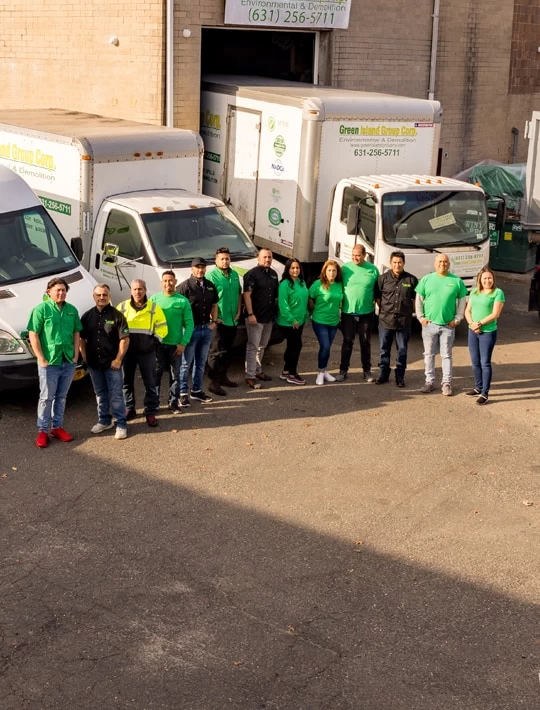
We are a New York-based environmental remediation and restoration company licensed to operate under NYS, NYC, and USEPA standards. That last part matters more than it might sound. New York City has its own construction codes, its own DOB permit requirements, its own Local Law asbestos survey mandates and they’re not the same as what applies in the rest of the state. Working in Bowling Green and the Financial District, steps from the Alexander Hamilton U.S. Custom House and some of the oldest standing commercial architecture in the country, requires a contractor who already knows the rules not one learning them on your job.
We handle everything: emergency board-up, smoke and soot remediation, water extraction from firefighting efforts, asbestos and lead abatement, structural repair, and full reconstruction. No hand-offs. No gaps. One point of contact from the first call to the final inspection and that phone gets answered, any time of day.
The first thing that happens after a fire in a Bowling Green building is securing the property. That means board-up and tarping to prevent weather intrusion and unauthorized access especially important in a dense urban environment where an unsecured unit in a shared high-rise creates liability for everyone in the building. From there, we conduct a full damage assessment before a single remediation step begins. In pre-1980 buildings, that assessment includes an asbestos survey, which NYC Local Law 76 requires before any demolition or significant structural work. Skipping that step isn’t an option and any contractor who suggests otherwise is creating a serious problem for you down the line.
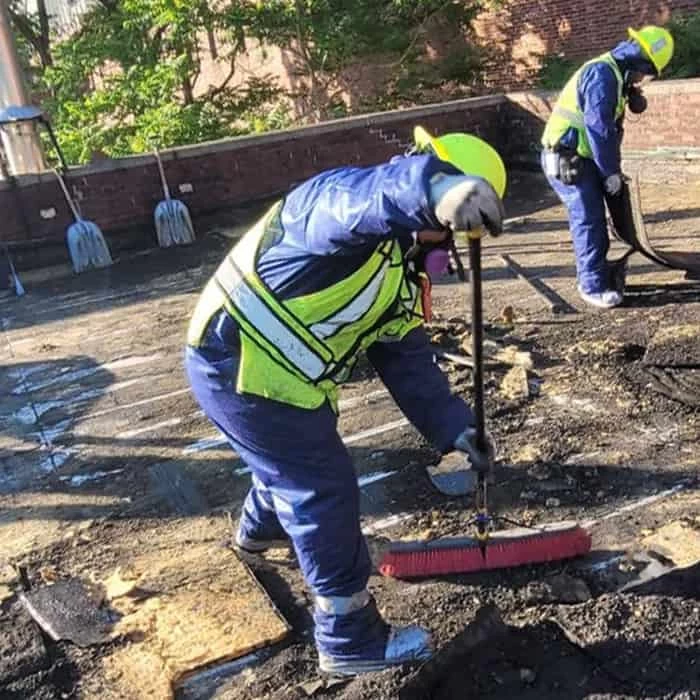
Once the scope is confirmed, smoke and soot remediation begins using air scrubbers, HEPA filtration, thermal fogging, and hydroxyl generators. The goal isn’t to mask odor it’s to eliminate the contamination at the molecular level, including in shared HVAC systems that may have distributed smoke to other floors. Water extraction and structural drying run in parallel to prevent mold growth, which can begin within 24 to 48 hours of water exposure.
After the environment is clean and dry, structural repairs and reconstruction follow. Throughout the entire process, we coordinate directly with your building management, handle DOB permit filings, and produce thorough documentation for your insurance adjuster. You don’t have to manage multiple contractors or chase down paperwork that’s already accounted for.
Built for Buildings That Other Contractors Turn Down
The fire damage restoration service we provide in Bowling Green covers the full scope not a portion of it. Emergency response and board-up. Smoke, soot, and odor remediation across affected units and shared building systems. Water damage extraction and drying from firefighting efforts. Asbestos abatement and lead abatement where required by NYC Local Law. Mold prevention and remediation. Structural repair. Full reconstruction to pre-fire condition.
For residents and property owners in Bowling Green and the Financial District whether you’re in a converted 1920s office tower on Broadway, a luxury condominium near the Stone Street Historic District, or a co-op building a few blocks from the Bowling Green subway station the process is designed to work within your building’s management protocols, not around them. That means coordinating with property managers, scheduling around building access requirements, and communicating with co-op or condo board representatives who need documentation before approving any work.
Insurance coordination is built into the process. We bill insurance directly and produce adjuster-ready documentation of all damage and all work performed. In a market where fire restoration in a Financial District building can represent a significant claim, the quality of that documentation matters and it’s not something that gets treated as an afterthought here.
Does fire damage restoration in Bowling Green require a NYC Department of Buildings permit?
Yes and this is one of the most important things to understand before any restoration work begins. In New York City, any structural repair, reconstruction, or significant alteration following fire damage requires a permit from the NYC Department of Buildings. This is not optional, and it applies regardless of whether the damage looks minor. The NYC Construction Codes that govern this process are distinct from the New York State Uniform Code that applies to the rest of the state they’re specifically written for the city’s density, high-rise construction, and unique building stock.
Beyond the DOB, the FDNY may place a vacate order on a building or specific units following a structural fire. Restoration cannot legally proceed until FDNY clears the property, which requires documented remediation of fire hazards. Contractors who are unfamiliar with this sequence or who try to skip permit filings to move faster create serious legal and financial exposure for property owners. Working with us means your restoration in Bowling Green moves through the system correctly, not around it.
My neighbor's fire caused smoke damage in my unit who is responsible for the restoration?
This is one of the most common and genuinely confusing situations that comes up in high-rise buildings throughout Lower Manhattan, including in Bowling Green. The short answer is: it depends on whether you own or rent, what your building’s governing documents say, and what insurance policies are in play. In a co-op or condo building, the building’s master policy typically covers damage to common areas and sometimes structural elements, while individual unit owners are responsible for their own interior finishes and contents. If the fire originated in a neighboring unit, that unit owner’s liability coverage may apply to your damage but getting that claim paid correctly requires solid documentation.
What matters most in this situation is acting quickly. Smoke contamination spreads and worsens the longer it sits, and insurance adjusters look at the timeline when evaluating claims. Getting a professional assessment of the scope of smoke damage in your unit documented thoroughly, with photographs and written reports puts you in a much stronger position whether you’re dealing with your own insurer, your neighbor’s insurer, or your building’s management company. We coordinate directly with adjusters and can help you build that documentation from the start.
How does smoke spread through a high-rise building, and does my whole building need remediation?
Smoke in a high-rise building doesn’t behave the way it does in a single-family home. In a large residential tower the kind that’s increasingly common in Bowling Green and the Financial District as former office buildings are converted to residential use HVAC systems can pull smoke from a localized fire and distribute it across multiple floors and dozens of units before the fire is even extinguished. Fine soot particles and smoke odor molecules are small enough to travel through shared ductwork, penetrate walls, and settle into porous materials in units that never saw a flame.
Whether your entire building needs remediation depends on the location of the fire, the building’s HVAC configuration, and how quickly the system was shut down after the fire started. A proper assessment not a visual inspection, but a technical evaluation of air quality and HVAC contamination is the only way to answer that question accurately. Skipping that step and only remediating the unit of origin is one of the most common mistakes in high-rise fire restoration, and it’s why odor and air quality complaints show up weeks later in units several floors away from where the fire started.
Do buildings near Bowling Green have asbestos, and how does that affect the restoration process?
Many of them do. The Financial District contains a significant concentration of buildings constructed between 1880 and 1970 the era when asbestos was routinely used in insulation, floor tiles, ceiling materials, pipe wrapping, and fireproofing. Under NYC Local Law 76, an asbestos survey is required before any demolition or significant renovation work in buildings constructed before 1987. That requirement applies to fire damage restoration work that involves structural disturbance which is almost always the case after a serious fire.
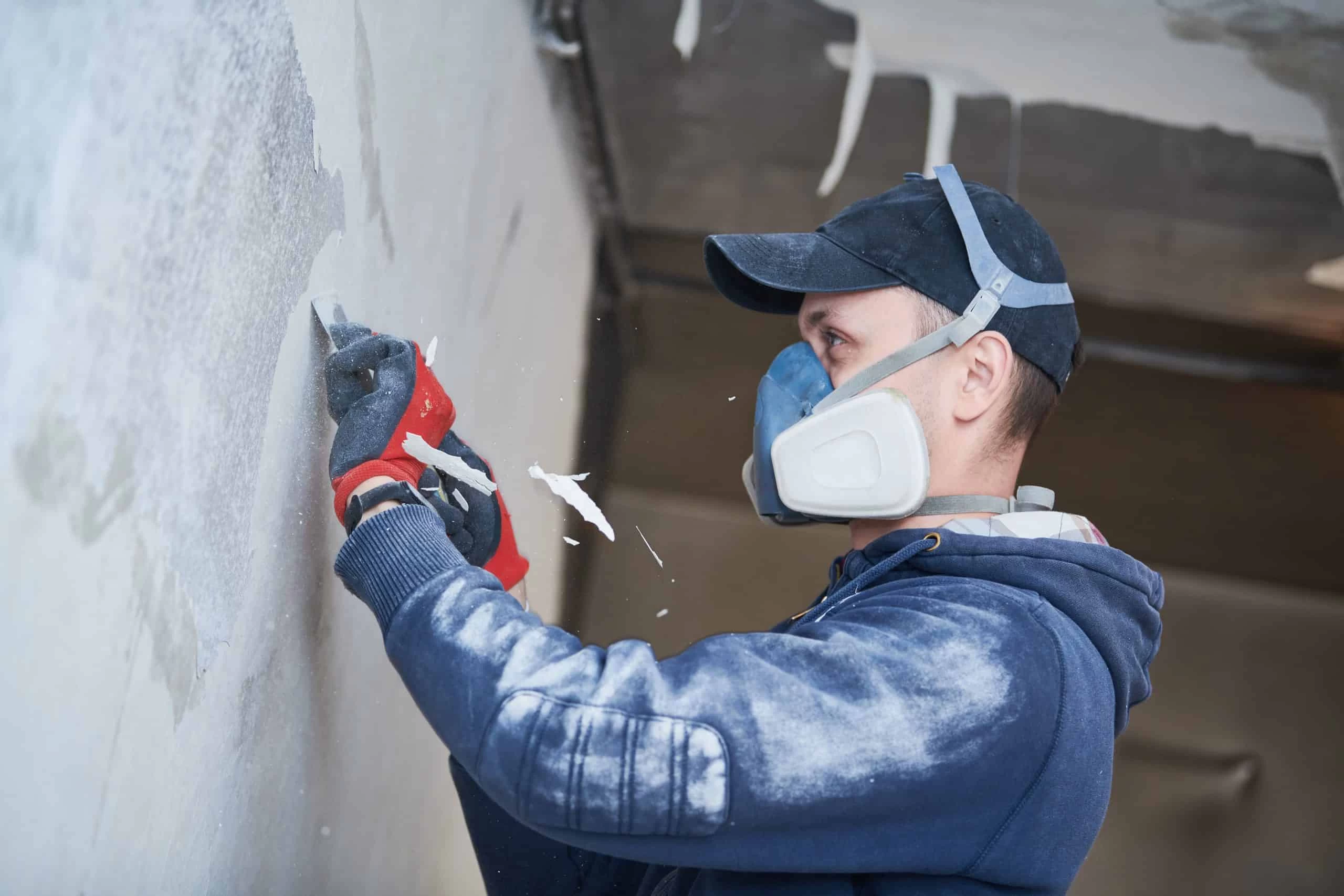
This is not a bureaucratic technicality. Asbestos fibers disturbed during cleanup without proper containment and removal procedures create a genuine health hazard for workers, residents, and neighboring units. Contractors who are not licensed for asbestos abatement cannot legally perform this work and if they do it anyway, the liability falls on the property owner. We are licensed for asbestos abatement in New York City, which means the survey, the abatement, and the restoration happen under one license without subcontracting the most critical environmental step to a third party.
How long does fire damage restoration typically take in a Manhattan apartment or condo?
The honest answer is that timeline depends heavily on the scope of damage, the age of the building, and how quickly the permitting process moves. For a contained fire with smoke and water damage limited to one or two rooms, remediation and repair might be completed in two to four weeks. For a more significant fire in a pre-war building that requires asbestos abatement, structural repair, and full reconstruction, the timeline can extend to several months particularly if DOB permit processing adds time at the front end.
What you can control is how quickly you get the process started. Every day after a fire, smoke odor embeds more deeply into porous materials, water damage progresses toward mold growth, and the scope of necessary work expands. In Bowling Green and the Financial District, where temporary housing during displacement is extraordinarily expensive, a faster start translates directly into a shorter total timeline and lower out-of-pocket costs. We respond to emergency calls around the clock and begin the assessment and board-up process immediately because in Manhattan, the cost of waiting is real and it compounds quickly.
Can Green Island Group work directly with my insurance company for a fire damage claim in Bowling Green?
Yes and this is one of the more practical reasons to choose a contractor who has experience with NYC fire claims specifically. We bill insurance companies directly and manage the documentation and coordination process with adjusters throughout the restoration. That means you’re not writing checks and waiting for reimbursement, and you’re not trying to compile damage documentation yourself while also managing displacement and everything else that comes with a fire.
In Bowling Green and the Financial District, where fire restoration in a converted high-rise or luxury condominium can represent a substantial insurance claim, the quality of the documentation submitted to your adjuster has a direct impact on what gets paid. A thorough, professionally prepared damage report with photographs, scope descriptions, and a complete accounting of all work performed gives your adjuster what they need to process the claim correctly. Vague or incomplete documentation is one of the primary reasons claims get underpaid, and it’s a problem that’s much harder to fix after the fact than it is to prevent at the start. We build that documentation from day one, so your claim reflects the full scope of what happened to your property.