When Smoke Fills a Chinatown Tenement, Every Hour Counts
Fire damage in Canal Street moves fast through stairwells, up pipe chases, into units floors above the fire itself. We respond 24/7 and bill your insurance directly so you can focus on what matters.
I needed a professional consultation explanation of procedure for safe removal of Asbestos in my apartment complex. Without having an account yet, I was very impressed with the caring, knowledgeable and generous advice offered by Jessica, and will look forward to doing business in the future. Thank you so much! I feel much more informed about a sometimes scary endeavor. Peace. Nancy Silva Mineola, NY.
Mia Munoz
Used this company to clean up some water flood in my house. They were fast and easy to work with.very professional, Would recommend to anyone!
Nini Valle
Great company, had a flood and they responded quickly and efficiently. Billed my insurance company directly. I highly recommend this company!
joe colapietro, jr
I had pipe freeze in my basement right before a snow storm and they made to within an hour to help start the clean up process. They we by our side throughout the entire process and even helped with the insurance company. They did such a great job with the cleanup, repair, remidiation, I contracted them to perform the repairs and finishes in the basement. They came with enough manpower and material to get the job done. Leo and Jessica were nothing but a pleasure to deal with!!
Cristian Arredondo c
I had some water damage in my home and Green Island was able to take care of my issue quickly and effectively. I am very pleased with the work they did. They responded quickly and were very professional.
Michael M
Outstanding service! From the office to the field crew everyone was friendly, helpful and responsive. I highly recommend Green Island Group.
The smoke smell that lingers after a fire isn’t just unpleasant it’s a sign that soot and residue have settled into surfaces throughout the building. In a Canal Street tenement or mixed-use structure, that contamination doesn’t stay on one floor. It travels. Elevator shafts, stairwells, shared HVAC ductwork smoke reaches units that never saw a single flame. Getting that under control requires more than surface cleaning.
For buildings along the Canal Street corridor, fire damage almost always comes with a secondary layer of complexity. Most of the residential and commercial stock here was built before 1940. That means there’s a real chance the fire disturbed asbestos in pipe insulation or ceiling tiles, or lead paint on walls and trim. Standard restoration crews aren’t licensed to handle that. We are and that distinction matters enormously when you’re dealing with a pre-war building in Chinatown or a converted loft on the Tribeca side of the corridor.
When the job is done right, you’re not just getting a cleaned-up space. You’re getting a property that’s been assessed for hidden hazards, treated with the correct protocols for the type of smoke damage present, and restored to a condition that’s actually safe to occupy. That’s the outcome worth focusing on.
Licensed for the Hazards Canal Street Buildings Actually Have
We are a New York-based environmental remediation and restoration company. We hold state licensing for asbestos abatement, lead abatement, mold remediation, and fire damage restoration which means when a fire in a pre-war Canal Street building turns into a hazmat situation, we don’t have to call someone else. That’s one point of contact, one accountable crew, and no gaps between the cleanup phase and the rebuild.
We serve New York County directly and understand what fire restoration actually looks like in this part of Manhattan from a ground-floor restaurant fire in Chinatown that sends grease smoke through a six-story building, to structural fire damage in a cast-iron loft on the SoHo side of the corridor. We also coordinate directly with insurance adjusters and handle NYC DOB permit requirements, so you’re not navigating that process alone while you’re already displaced.
No Guesswork Here's What Happens From the First Call
The first step is emergency stabilization. If the structure needs to be secured board-up, tarping, temporary weatherproofing that happens immediately. In a dense Canal Street building where an unsecured opening creates risk for neighboring units and the building’s other occupants, this step isn’t optional. It’s how you stop a bad situation from getting worse overnight.
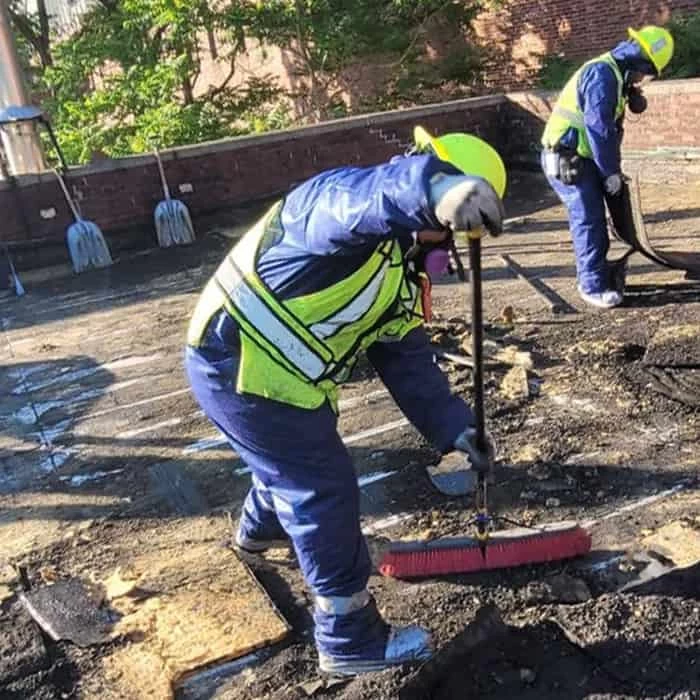
From there, the full assessment begins. That means evaluating not just the fire zone, but the entire path smoke traveled up stairwells, through shared systems, into adjacent units. In buildings with pre-war construction, this assessment also includes checking for disturbed asbestos-containing materials and lead paint, both of which require licensed abatement before restoration work can proceed. If those hazards are present, we handle them in-house, not subcontracted out to a third party that may not show up on your timeline.
Once the hazards are cleared and the scope is documented, the restoration work begins smoke and soot removal, odor neutralization, water damage remediation from firefighting efforts, structural repairs, and full reconstruction where needed. Throughout the process, we work directly with your insurance carrier, document everything for the claim, and coordinate with building management if the damage spans multiple units. The goal is simple: get you back into a safe, fully restored property as quickly as the job can be done correctly.
Fire damage restoration in Canal Street isn’t a one-trade job. A fire in a mixed-use building on this corridor can involve smoke contamination across multiple floors, water damage from suppression efforts, disturbed hazardous materials in pre-war construction, structural damage to cast-iron or wood-frame interiors, and a NYC DOB permit process that has to be navigated before reconstruction can begin. We handle all of it.
The full scope includes emergency board-up and stabilization, smoke and soot removal using appropriate protocols for the type of residue present dry smoke, wet smoke, or the protein residue that kitchen fires in Chinatown’s dense restaurant corridor produce odor neutralization, water damage drying and repair, asbestos and lead abatement where required, mold remediation if moisture has been sitting, structural repairs, and complete reconstruction. For properties in or near the SoHo–Cast Iron Historic District, where the NYC Landmarks Preservation Commission may have jurisdiction over exterior restoration, that regulatory layer is factored in from the start.
If your building is a co-op, condo, or multi-unit rental, the process also includes coordination across multiple insurance policies and building management contacts something that requires experience managing complexity, not just a single-family restoration background. Every phase is documented for your insurance claim, and billing goes directly to your carrier.
Does fire damage restoration in Canal Street require a NYC DOB permit?
In most cases, yes. Any structural repair or reconstruction following a fire in New York City requires permits from the NYC Department of Buildings. This isn’t a technicality you can skip unpermitted work after a fire can create problems with your insurance coverage and expose you to liability down the line. For properties in or adjacent to the SoHo–Cast Iron Historic District, which borders Canal Street directly to the north, there may also be NYC Landmarks Preservation Commission requirements that affect how exterior restoration work is done.
We handle the permit process as part of the restoration scope. You don’t need to become fluent in NYC DOB filing procedures while you’re already dealing with displacement, insurance, and the stress of a fire. That’s part of what full-service restoration actually means in this city not just the physical work, but the regulatory navigation that comes with it.
My building was built before 1940 does that change how fire restoration works?
It does, significantly. Pre-war buildings throughout the Canal Street corridor whether you’re in a Chinatown tenement, a SoHo cast-iron loft, or a Tribeca warehouse conversion commonly contain asbestos in pipe insulation, floor tiles, ceiling tiles, and fireproofing materials. They also frequently have lead paint on walls, trim, and window frames. When a fire damages or disturbs those materials, you’re no longer dealing with just smoke and soot. You’re dealing with a hazardous materials situation that requires licensed abatement before any restoration work can safely proceed.
Most general contractors and even some restoration companies aren’t licensed for asbestos or lead abatement in New York State. That means they either skip the testing phase which creates serious liability or they bring in a subcontractor, which adds time, coordination gaps, and another party to manage. We hold state licensing for both asbestos and lead abatement in addition to fire restoration, so the entire scope stays under one roof with one accountable team.
How does smoke damage spread through a Canal Street apartment building?
Smoke doesn’t respect floor boundaries in a multi-story building. In the older tenement and mixed-use structures that make up most of Canal Street’s residential inventory, smoke from a fire on one floor travels rapidly through elevator shafts, stairwells, pipe chases, and shared HVAC ductwork. A kitchen fire on the second floor of a six-story building can deposit soot and odor-causing residue in units on every floor including units where residents saw nothing and smelled only a faint odor at first.
This is why a thorough fire restoration assessment in a Canal Street building goes well beyond the room or unit where the fire originated. Every potential migration path needs to be evaluated, and affected areas need to be treated with the right protocols not just surface-wiped and aired out. Smoke that isn’t fully remediated continues to off-gas over time, which means the smell comes back and surfaces continue to degrade. Getting it right the first time, across the full scope of the building, is the only approach that actually holds.
Will my insurance cover fire damage restoration, and how does billing work?
Standard homeowners, renters, and commercial property insurance policies typically cover fire damage restoration, including smoke and soot cleanup, water damage from firefighting efforts, and structural repairs. In New York City, where property values are high and restoration scopes are often complex especially in multi-unit or mixed-use buildings the dollar amounts involved in these claims can be substantial, which makes it important to work with a contractor who documents the damage thoroughly and communicates directly with your adjuster.
We bill insurance companies directly. That means you’re not fronting the cost of a major restoration project and waiting for reimbursement a significant factor in a market where Manhattan hotel rates and business interruption costs add up fast. We also handle the documentation and adjuster coordination throughout the process, which reduces the risk of an underpaid or disputed claim. If you have questions about what your specific policy covers before work begins, we can walk through that with you on the initial call.
How long does fire damage restoration typically take in a Manhattan building?
The honest answer is that it depends on the scope and in Canal Street buildings, the scope is often larger than it initially appears. A contained fire in a single unit with limited smoke migration might be resolvable within one to two weeks. A fire that sent smoke through a shared HVAC system, disturbed asbestos-containing materials in a pre-war structure, created water damage across multiple floors, and requires NYC DOB permits for structural reconstruction could take six to ten weeks or longer.
The factors that tend to extend timelines in this area specifically are the hazardous materials abatement phase which has its own regulatory requirements and can’t be rushed the permit process with the NYC Department of Buildings, and the complexity of coordinating restoration across multiple units or occupancy types in a mixed-use building. We’ll give you a realistic timeline after the initial assessment, not an optimistic estimate designed to win the job. Knowing what you’re actually looking at helps you plan for displacement, manage your insurance claim, and make informed decisions.
Can a restaurant on Canal Street reopen faster if fire restoration starts immediately?
Starting immediately absolutely matters. In Chinatown’s restaurant corridor one of the densest concentrations of food service businesses in New York City a kitchen fire, grease fire, or exhaust hood fire can shut down a business that operates on tight margins and depends on daily revenue. Every day the doors stay closed is a real financial loss, and the longer smoke residue and water damage sit untreated, the more extensive the remediation becomes.
Kitchen fires produce what’s called protein smoke residue a nearly invisible film that standard cleaning won’t eliminate and that creates a persistent, foul odor if not treated with the correct protocols. If a restaurant reopens before that residue is fully addressed, the smell affects the dining experience and can drive customers away even after the visible damage is repaired. Our 24/7 response means the assessment and stabilization process can begin the same night as the fire, documentation for the insurance claim starts immediately, and the path to reopening is as short as the job can be done correctly not as short as someone can promise to win the contract.