Fire Damage Restoration near Washington Bridge, NY
Pre-War Buildings on Both Sides of the Bridge Need More Than a Cleanup Crew
When fire hits a Washington Heights or Morris Heights building near Washington Bridge, the damage runs deeper than what you can see and restoring it right means knowing exactly what’s inside those walls.
I needed a professional consultation explanation of procedure for safe removal of Asbestos in my apartment complex. Without having an account yet, I was very impressed with the caring, knowledgeable and generous advice offered by Jessica, and will look forward to doing business in the future. Thank you so much! I feel much more informed about a sometimes scary endeavor. Peace. Nancy Silva Mineola, NY.
Mia Munoz
Used this company to clean up some water flood in my house. They were fast and easy to work with.very professional, Would recommend to anyone!
Nini Valle
Great company, had a flood and they responded quickly and efficiently. Billed my insurance company directly. I highly recommend this company!
joe colapietro, jr
I had pipe freeze in my basement right before a snow storm and they made to within an hour to help start the clean up process. They we by our side throughout the entire process and even helped with the insurance company. They did such a great job with the cleanup, repair, remidiation, I contracted them to perform the repairs and finishes in the basement. They came with enough manpower and material to get the job done. Leo and Jessica were nothing but a pleasure to deal with!!
Cristian Arredondo c
I had some water damage in my home and Green Island was able to take care of my issue quickly and effectively. I am very pleased with the work they did. They responded quickly and were very professional.
Michael M
Outstanding service! From the office to the field crew everyone was friendly, helpful and responsive. I highly recommend Green Island Group.
Fire Smoke Damage Restoration near Washington Bridge
What Changes When the Restoration Is Done Right
The buildings on both sides of the Washington Bridge were built in a different era thick masonry walls, original plaster, steam heat, and construction materials that were standard in 1920 but are classified as hazardous today. When fire damages those materials, you’re not just dealing with charred walls and smoke smell. You’re dealing with disturbed asbestos, lead paint, and water that’s soaked through three floors below where the fire started. A restoration team that doesn’t understand that is going to leave you with a bigger problem than the one they were hired to fix.
When the job is done correctly, you get your space back actually livable, not just visually patched. The smoke odor is gone, not painted over. The water damage from firefighting is fully dried and treated so mold doesn’t show up six weeks later. Any hazardous materials that were disturbed are properly abated and documented, which matters enormously if you’re a building owner managing tenants or an insurance claim. In a neighborhood where the housing stock is this old and this dense, cutting corners on any one of those steps creates real liability.
For renters, it means getting back into your home without wondering what was left behind. For building owners managing a Washington Heights or Morris Heights property, it means your tenants are protected, your permits are filed, and your building is actually restored not just cleaned up enough to look okay on the surface.
Fire Damage Restoration Service near Washington Bridge NY
One Team. Every Layer of Damage Handled.
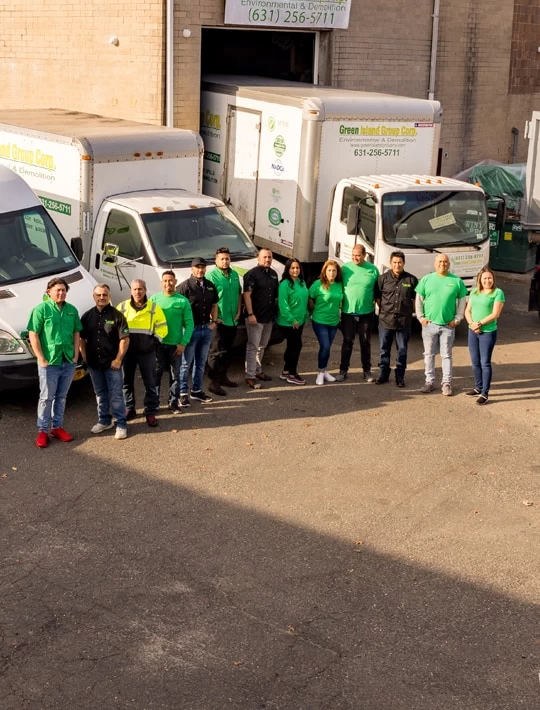
We’re Green Island Group, a locally owned environmental remediation, restoration, and demolition company serving New York State. We handle fire damage, water damage, mold, asbestos abatement, lead abatement, and full structural reconstruction all under one contractor relationship. In a market like Washington Bridge, where a single fire event can trigger all of those issues simultaneously, that matters more than it would almost anywhere else.
We operate under NYS, NYC, and USEPA regulatory frameworks, which means the compliance work NYC DOB permits, asbestos surveys, lead abatement documentation gets handled as part of the job, not as an afterthought you have to chase down separately. We bill insurance directly, we answer the phone at 3am, and we’ve worked in the kind of pre-war building stock that defines Washington Heights and Morris Heights. From the ridge above Fort Tryon Park to the tenement blocks near University Avenue in the Bronx, we know what these buildings look like on the inside and what it actually takes to restore them.
Fire Restoration Damage Process near Washington Bridge
From the First Call to the Final Walkthrough No Handoffs
The first step is emergency stabilization. That means boarding up compromised openings, tarping the structure if needed, and stopping any ongoing water intrusion from firefighting efforts. In a multi-unit Washington Heights building, this phase also involves assessing how far the smoke and water have traveled which in a pre-war structure with original ventilation shafts and plaster walls is almost always farther than it looks.
From there, we conduct a full damage assessment, including a mandatory asbestos survey. Because virtually every residential building in this corridor was built before 1940, asbestos-containing materials are a near-universal finding in fire damage work here. That survey has to happen before any demolition or structural work begins it’s not optional under NYC DEP regulations, and any contractor who skips it is putting you at legal and financial risk. Once the assessment is complete and the scope is documented, the insurance claim process moves in parallel. We handle that communication directly so you’re not stuck translating between an adjuster and a contractor.
The remediation phase covers smoke and soot removal, odor elimination using thermal fogging and HEPA air filtration, water extraction and drying, mold prevention treatment, and hazardous material abatement where required. After that comes structural repair and reconstruction with all required NYC DOB permits filed and managed. The final walkthrough isn’t a formality. It’s a real check that the job is complete, the air quality is clean, and the space is genuinely ready to be lived in again.
Fire Restoration Service near Washington Bridge NY
What's Included When Your Building Is This Old
Fire damage restoration near Washington Bridge isn’t a one-size-fits-all service. The combination of pre-war construction, multi-unit occupancy, and NYC’s regulatory requirements means the scope of work here is almost always more involved than a standard restoration job. Our fire damage restoration service covers the full range: emergency board-up and stabilization, smoke and soot remediation, water damage mitigation, structural drying, mold prevention, asbestos and lead abatement, structural repair, and complete reconstruction when needed. All of it under one team, one contract, and one point of contact.
Because so many buildings in Washington Heights and Morris Heights are occupied by multiple tenants some of whom may still be in residence during restoration we also manage the NYC Building Code 3303.10 Tenant Protection Plan requirements that apply to occupied buildings under construction. That’s not something most restoration contractors think about, but in a six-story pre-war apartment building on Amsterdam Avenue or University Avenue, it’s a legal requirement that protects both the tenants and the building owner.
Smoke odor treatment deserves a specific mention because it’s one of the most commonly underdone parts of fire restoration. In a building with original plaster walls and hardwood floors, smoke molecules penetrate deep into porous surfaces. Painting over it doesn’t work the smell comes back. We use thermal fogging and hydroxyl generators to eliminate the odor at the molecular level, not mask it. That’s the difference between a job that’s done and a job that’s actually finished.
Does fire damage restoration near Washington Bridge require an asbestos survey first?
Yes and this is one of the most important things to understand before any restoration work begins in this area. Under NYC DEP regulations, any building constructed before 1987 requires an asbestos survey before renovation or demolition work can start. In Washington Heights and Morris Heights, where the overwhelming majority of residential buildings were built between 1900 and 1940, that survey is effectively a universal requirement for fire damage restoration work.
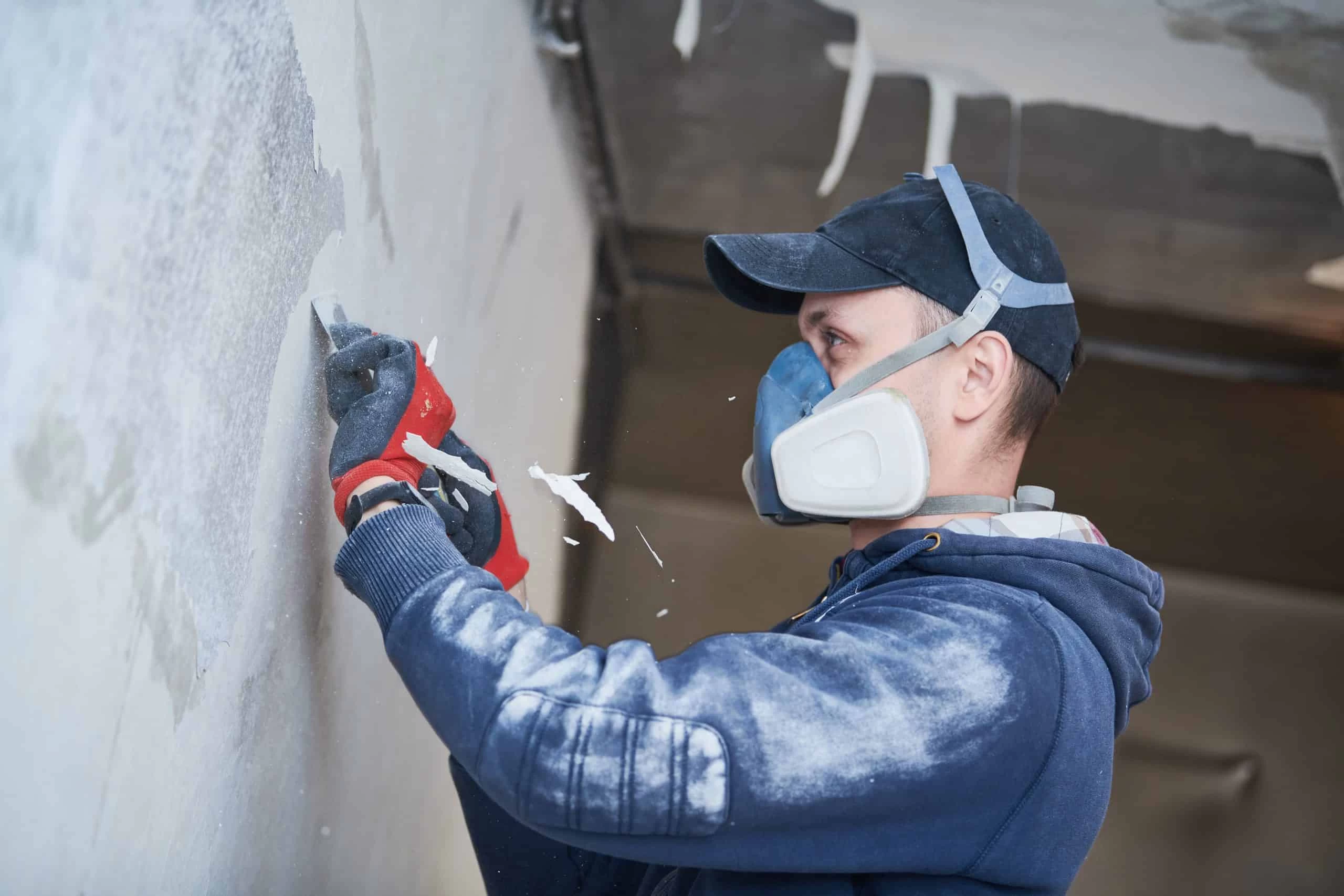
When fire damages walls, ceilings, flooring, or pipe insulation in a pre-war building, it disturbs materials that may contain asbestos. Those materials can’t just be torn out and thrown in a dumpster they have to be identified, abated by a licensed contractor, and disposed of following NYC DEP protocols. Skipping this step doesn’t just create a health hazard. It creates significant legal and financial liability for the property owner. We handle the asbestos survey and any required abatement as part of the restoration scope, so it’s documented, compliant, and not something you have to coordinate separately.
How much does fire damage restoration typically cost in New York City?
The honest answer is that it depends heavily on the scope but having real numbers helps. Nationally, the average fire damage restoration cost runs around $27,175. For a more significant fire event in a 1,500 square foot space, the average climbs to roughly $46,000, with a range of about $21,000 to $70,000 depending on what’s affected.
In New York City and especially in a pre-war building near Washington Bridge costs can run toward the higher end of that range. The reasons are specific: mandatory asbestos surveys and abatement add scope that doesn’t exist in newer construction. NYC DOB permits are required for structural restoration work and carry their own fees and timelines. Multi-floor water damage from firefighting efforts is common in buildings with original construction, adding water mitigation and mold prevention work to the fire restoration scope. The good news is that most of this is covered by homeowner’s or building owner’s insurance when properly documented. We handle insurance billing directly, which means the claim is documented thoroughly and you’re not leaving covered work on the table because of incomplete paperwork.
What happens to the smoke smell after a fire in a Washington Heights apartment?
Smoke odor is one of the most persistent problems after a fire, and it’s also one of the most commonly mishandled. In a pre-war Washington Heights apartment with original plaster walls, hardwood floors, and decades of layered paint smoke molecules don’t just sit on the surface. They penetrate deep into porous materials, and simply cleaning the visible soot or repainting doesn’t get rid of them. If you’ve ever moved back into a space after a fire and noticed the smell returning weeks later, that’s why.
Proper smoke odor elimination requires treating the source, not the surface. We use thermal fogging a process that disperses a deodorizing agent in a fog form that penetrates the same porous materials the smoke did combined with hydroxyl generators and HEPA air scrubbers that filter contaminants out of the air. This approach works at the molecular level, not just the cosmetic one. In a multi-unit building where neighboring tenants are still in residence, getting the odor fully eliminated also matters for their health and comfort, not just the affected unit.
I'm a renter, not the building owner what's my role after a fire in my apartment?
This is one of the most common and confusing situations in a neighborhood like Washington Heights or Morris Heights, where the vast majority of households are renter-occupied. The short answer is that the building owner is responsible for restoring the structure walls, ceilings, floors, building systems. Your renters insurance, if you have it, typically covers your personal belongings and may cover temporary housing costs while you’re displaced.
Where it gets complicated is when the fire originated in your unit versus a neighboring unit, or when the landlord is slow to act. In New York City, landlords are legally required to maintain habitable conditions, and a fire-damaged apartment that hasn’t been properly restored does not meet that standard. If you’re displaced and your landlord isn’t moving quickly, you have legal recourse and documenting the damage thoroughly from the start is critical to protecting your rights. We work with both building owners and tenants, and can help make sure the scope of damage is properly documented so nothing gets minimized or overlooked in the claims and restoration process.
How long does fire damage restoration take in a pre-war NYC building?
Timeline varies significantly based on the extent of the damage and the scope of work required. A contained fire affecting one room in a single unit, with limited smoke spread and no structural damage, might be fully restored in two to four weeks. A fire that traveled through a building’s original ventilation shafts, caused water damage across multiple floors, and disturbed asbestos-containing materials is a different project that can realistically take two to four months from initial assessment to final reconstruction.
In Washington Heights and Morris Heights specifically, a few factors consistently affect timeline. The mandatory asbestos survey and any required abatement add time before structural work can begin that’s non-negotiable under NYC DEP regulations. NYC DOB permit processing adds additional time for structural restoration work. And in a multi-unit building where other tenants are still in residence, the work often has to be sequenced more carefully to comply with the NYC Building Code Tenant Protection Plan requirements. We’ll give you a realistic timeline after the initial assessment not a number designed to get the job, but an honest estimate based on what the building actually needs.
Does Green Island Group handle fire damage restoration on both sides of Washington Bridge?
Yes. The Washington Bridge connects Washington Heights in Manhattan to Morris Heights in the Bronx, and we serve both sides of that corridor. Whether you’re in a pre-war apartment building near 181st Street and Amsterdam Avenue in Manhattan, or in one of the residential buildings along University Avenue in Morris Heights, our service area covers you.
This matters practically because the two sides of the bridge, while connected, have some differences that affect restoration work. The Bronx side of the corridor includes a significant number of NYCHA public housing developments Morris Heights alone has ten which adds additional compliance and coordination layers for restoration work in those buildings. The Manhattan side is defined by its concentration of pre-war mid-rise apartment buildings, many of which are rent-stabilized, adding tenant protection requirements to the restoration process. Our experience with NYC regulatory frameworks on both sides of the Harlem River means the compliance work gets handled correctly regardless of which borough the building is in. One call covers both.