I needed a professional consultation explanation of procedure for safe removal of Asbestos in my apartment complex. Without having an account yet, I was very impressed with the caring, knowledgeable and generous advice offered by Jessica, and will look forward to doing business in the future. Thank you so much! I feel much more informed about a sometimes scary endeavor. Peace. Nancy Silva Mineola, NY.
Mia Munoz
Used this company to clean up some water flood in my house. They were fast and easy to work with.very professional, Would recommend to anyone!
Nini Valle
Great company, had a flood and they responded quickly and efficiently. Billed my insurance company directly. I highly recommend this company!
joe colapietro, jr
I had pipe freeze in my basement right before a snow storm and they made to within an hour to help start the clean up process. They we by our side throughout the entire process and even helped with the insurance company. They did such a great job with the cleanup, repair, remidiation, I contracted them to perform the repairs and finishes in the basement. They came with enough manpower and material to get the job done. Leo and Jessica were nothing but a pleasure to deal with!!
Cristian Arredondo c
I had some water damage in my home and Green Island was able to take care of my issue quickly and effectively. I am very pleased with the work they did. They responded quickly and were very professional.
Michael M
Outstanding service! From the office to the field crew everyone was friendly, helpful and responsive. I highly recommend Green Island Group.
The majority of homes in Dix Hills were built between the 1940s and the 1990s right in the thick of the era when asbestos was standard in American construction. Floor tiles, popcorn ceilings, pipe insulation, roofing materials it was everywhere. If you’re planning a renovation, replacing flooring, or getting ready to list your home, what’s underneath those original finishes matters more than most people realize until it’s too late.
Once asbestos-containing materials are properly identified and removed, you can move forward without the legal exposure, the health concern, or the deal-killing inspection report. For a home in Dix Hills where median sale prices have crossed $1.4 million that clearance documentation isn’t just peace of mind. It’s a transaction-ready asset that your real estate attorney, buyer’s inspector, and title company will all want to see.
And if you’re not selling, you’re still protecting your family. Disturbed asbestos releases fibers into the air that don’t announce themselves. A licensed abatement with proper containment and post-clearance air testing means you know the job was done right not just done.
Long Island Work, Done by People Who Know Dix Hills
We are a fully licensed asbestos abatement contractor based on Long Island, serving Dix Hills and the surrounding Half Hollow Hills area. Every member of our crew holds New York State Department of Labor certification, and every project follows Industrial Code Rule 56 from start to finish the state’s governing framework for asbestos work, and the one the Town of Huntington’s building department expects to see documented before any renovation or demolition permit moves forward.
This isn’t a national franchise routing calls through a call center. The team that shows up knows the post-war housing stock common throughout Dix Hills, the building materials that were standard in homes built off Vanderbilt Parkway and Deer Park Avenue in the 1960s and 70s, and the specific expectations of buyers and sellers in one of New York’s most active luxury real estate markets.
When the job is done, you get full documentation not a verbal confirmation. That paperwork is what protects you.
It starts with a licensed inspection. Before any work begins, a certified NYS asbestos inspector surveys the property and identifies any suspect materials. In Dix Hills homes from the 1950s through the 1980s, that typically means checking vinyl floor tiles and the black mastic adhesive beneath them, spray-applied popcorn ceilings, pipe and boiler insulation, and sometimes roofing or siding materials. The inspection report drives everything that follows.
From there, the project is planned and where required submitted to the NYS Department of Labor’s Asbestos Control Bureau and the Town of Huntington’s building department. New York State’s ICR 56 regulations require specific notification thresholds depending on the scope of the project, and we handle that paperwork so you don’t have to navigate it yourself.
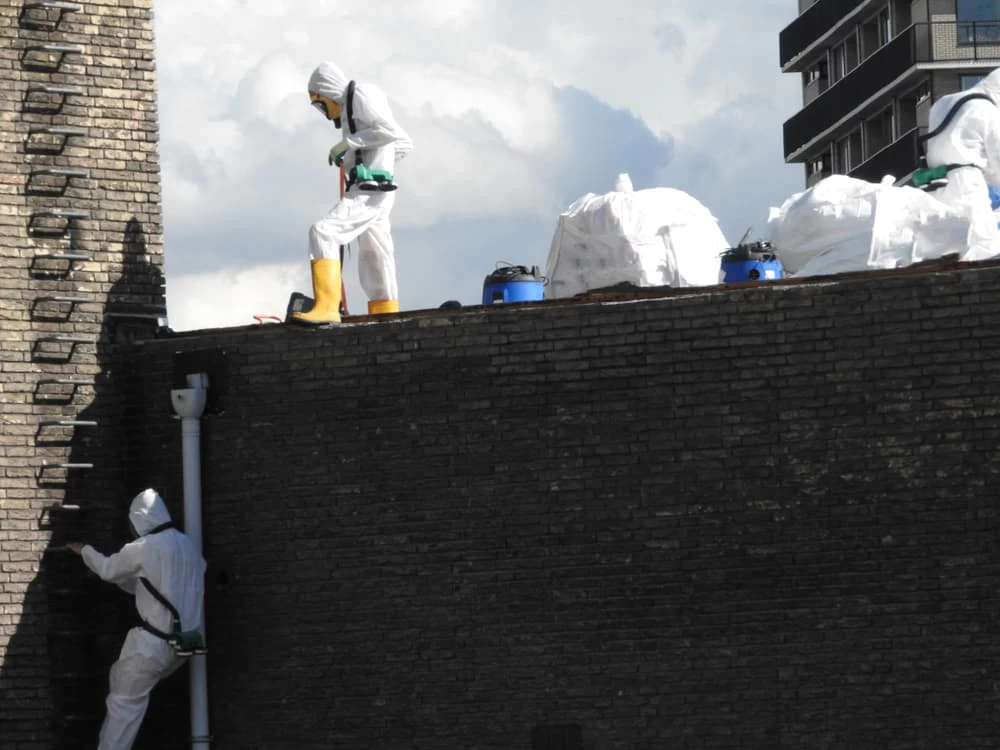
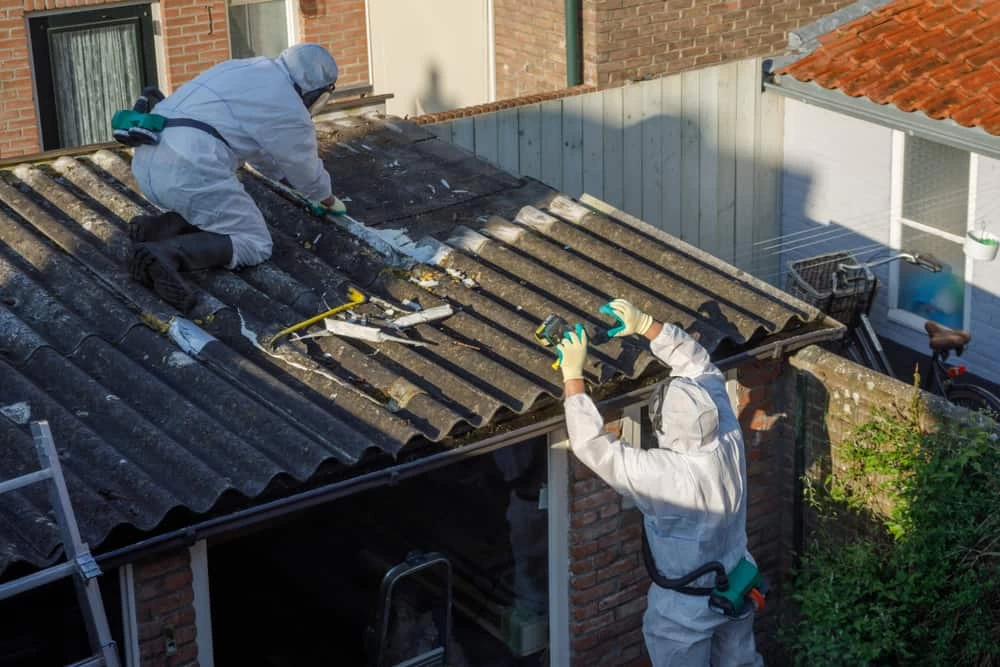
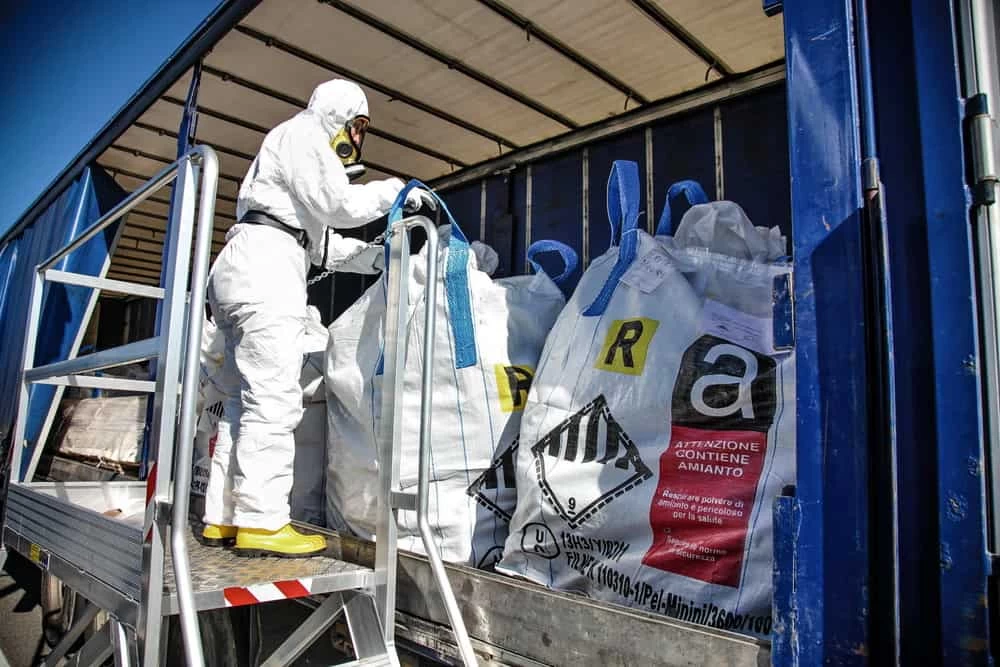
Abatement happens under full containment negative air pressure, HEPA filtration, and regulated barriers that prevent fiber migration to unaffected areas of your home. After removal, the space is cleaned, waste is packaged and transported to an approved disposal facility, and clearance air testing confirms fiber levels are back to background. You receive the full documentation package at the end. That’s the process, every time.
Two of the most frequent calls we get from Dix Hills homeowners involve asbestos tile removal and asbestos popcorn ceiling removal and both make complete sense given when most of these homes were built. The 9×9 and 12×12 vinyl floor tiles installed in kitchens, bathrooms, and basements throughout the 1950s, 60s, and 70s almost universally contain asbestos, and so does the black adhesive mastic underneath them. The same goes for the spray-applied textured ceilings that were standard in Long Island homes built between roughly 1958 and 1980. If your home has either and you’re planning any work that disturbs those surfaces, testing first isn’t optional it’s required under New York State law.
Beyond tile and ceiling work, we also handle pipe and duct insulation removal, boiler and furnace insulation, asbestos cement siding, joint compound, and roofing materials. Older homes in Dix Hills often have more than one type of ACM present, which is why a full survey before any renovation is worth doing rather than testing room by room as you go.
Every service includes the licensed inspection, full ICR 56-compliant abatement, post-clearance air testing, and complete project documentation the package that satisfies the Town of Huntington’s permitting requirements and gives you a clean record for any future sale or renovation.
Does my Dix Hills home actually need an asbestos inspection before renovating?
Under New York State Industrial Code Rule 56, any renovation, remodeling, or demolition work that may disturb asbestos-containing materials requires a licensed asbestos survey before work begins. This isn’t a recommendation it’s a legal requirement. If your home was built before 1980 and you’re pulling up floors, scraping ceilings, replacing insulation, or doing any structural work, the survey has to happen first.
In Dix Hills specifically, where most of the housing stock dates to the 1940s through the 1990s, this applies to a large portion of the homes in the area. The Town of Huntington’s building department also requires documentation of ICR 56 compliance before issuing certain renovation and demolition permits. Skipping the inspection doesn’t just create a health risk it can stop your project in its tracks or expose you to liability if ACMs are disturbed without proper handling.
How much does asbestos removal typically cost in Dix Hills, NY?
Cost depends on what’s being removed, how much of it there is, and where it’s located in your home. A single room of vinyl floor tile removal is a very different scope than a whole-home survey followed by popcorn ceiling abatement across multiple floors. For smaller, contained projects, you might be looking at a few hundred to a few thousand dollars. Larger or more complex abatements full basement tile and mastic, ceiling work across multiple rooms, or pipe insulation removal can run higher depending on square footage and material type.
What’s worth keeping in mind in Dix Hills is the context: you’re protecting a home that likely carries a market value well above $1 million. The cost of licensed, documented abatement is a fraction of what a failed inspection or a re-contamination issue could cost you in a real estate transaction. We provide clear, upfront estimates with no hidden fees you’ll know what the project involves and what it costs before any work begins.
What are the signs that my popcorn ceiling might contain asbestos?
There’s no visual way to confirm it. Asbestos fibers are microscopic a popcorn ceiling with asbestos looks exactly the same as one without it. The only way to know is to have a sample tested by a licensed inspector. What you can use as a rough guide is the age of your home: spray-applied textured ceilings were commonly used in American residential construction from the late 1950s through roughly 1980, and many of those products contained chrysotile asbestos as a binder and fire retardant.
In Dix Hills, where a significant portion of the single-family housing stock was built during that exact window, this is a real and common issue. If your home has the original textured ceiling and was built before 1980, the practical answer is to have it tested before you do anything to it including painting over it, which can disturb the surface and release fibers. Our inspectors can sample and test the material and give you a clear answer before any decisions are made.
Can I remove asbestos floor tiles myself in New York State?
New York State law is clear on this. Any asbestos abatement work that meets the thresholds defined under Industrial Code Rule 56 must be performed by a licensed contractor with NYS DOL-certified workers. DIY removal of asbestos-containing materials is not a legal option for regulated projects in New York, and attempting it without proper containment and disposal procedures creates serious health risks for you, your family, and anyone else in the home.
Even for smaller quantities that may fall below certain regulatory thresholds, the practical risks are significant. Vinyl floor tiles from the 1950s through the 1970s and the black mastic adhesive beneath them release fibers when cut, broken, or scraped. Without negative air containment and HEPA filtration, those fibers spread through the home. In a community like Dix Hills where homes are large, occupied, and often have children present, the risk isn’t theoretical. Licensed removal with clearance air testing is the only way to confirm the space is safe after the work is done.
How long does an asbestos abatement project take in a Dix Hills home?
Timeline depends on the scope of the project. A single-room floor tile removal with proper containment and clearance testing might be completed in one to two days. A larger project multiple rooms of popcorn ceiling removal, extensive pipe insulation, or a combination of material types could take several days to a week or more, depending on square footage and access.
For Dix Hills homeowners in the middle of a real estate transaction, timing matters a lot. The local market moves quickly homes here routinely go under contract within 30 days and when a buyer’s inspection flags asbestos, the seller often needs abatement completed and clearance documentation in hand before closing. We are familiar with that timeline pressure and build project scheduling around it. If you’re in a transaction and need a realistic turnaround, the best thing to do is call early and describe the scope so an accurate timeline can be set from the start.
Does asbestos abatement affect the sale of a home in Dix Hills?
It can in both directions. If asbestos-containing materials are identified during a buyer’s inspection and there’s no plan to address them, it can stall or derail a transaction entirely. Buyers in Dix Hills, where purchase prices regularly exceed $1 million, are not going to overlook an unresolved asbestos finding. Their attorneys won’t let them, and their lenders may have requirements of their own.
On the other hand, a completed abatement with full ICR 56 documentation including post-clearance air testing results actually strengthens your position as a seller. It removes the uncertainty, satisfies the buyer’s inspection requirements, and gives everyone involved a clean paper trail. We provide that complete documentation package at the end of every project: the survey, the abatement records, the clearance test results, and the waste disposal confirmation. That’s the file your real estate attorney needs, and it’s what makes the difference between a transaction that closes cleanly and one that doesn’t.