If your East Setauket home was built before 1975, there’s a real chance asbestos is somewhere inside it and the only way to know for sure is to have it properly tested and handled by someone who actually knows what they’re doing.
I needed a professional consultation explanation of procedure for safe removal of Asbestos in my apartment complex. Without having an account yet, I was very impressed with the caring, knowledgeable and generous advice offered by Jessica, and will look forward to doing business in the future. Thank you so much! I feel much more informed about a sometimes scary endeavor. Peace. Nancy Silva Mineola, NY.
Mia Munoz
Used this company to clean up some water flood in my house. They were fast and easy to work with.very professional, Would recommend to anyone!
Nini Valle
Great company, had a flood and they responded quickly and efficiently. Billed my insurance company directly. I highly recommend this company!
joe colapietro, jr
I had pipe freeze in my basement right before a snow storm and they made to within an hour to help start the clean up process. They we by our side throughout the entire process and even helped with the insurance company. They did such a great job with the cleanup, repair, remidiation, I contracted them to perform the repairs and finishes in the basement. They came with enough manpower and material to get the job done. Leo and Jessica were nothing but a pleasure to deal with!!
Cristian Arredondo c
I had some water damage in my home and Green Island was able to take care of my issue quickly and effectively. I am very pleased with the work they did. They responded quickly and were very professional.
Michael M
Outstanding service! From the office to the field crew everyone was friendly, helpful and responsive. I highly recommend Green Island Group.
You stop guessing. That’s the first thing. When asbestos-containing materials are properly identified, removed, and documented by a licensed contractor, you’re no longer living with an unknown risk sitting inside your walls, under your floors, or above your head. That clarity matters especially in a home you’ve invested heavily in.
In East Setauket, nearly half the housing stock was built between 1940 and 1969. That’s the exact window when vinyl asbestos tile, pipe insulation, popcorn ceiling texture, and roofing shingles were standard materials in American construction. If you’re renovating a kitchen, pulling up old flooring, or finally dealing with that textured ceiling in the den, you’re working in a home that almost certainly has some of these materials present.
The other thing that changes is your position on paper. East Setauket homes routinely sell for $700,000 to over a million dollars. Buyers ask questions, inspectors flag things, and undocumented asbestos can quietly kill a deal or create liability down the road. A certified abatement with proper clearance documentation doesn’t just protect your family’s health. It protects the asset you’ve spent years building equity in.
We’re a Long Island-based asbestos abatement company that works specifically in the communities we know best and East Setauket is one of them. We’re not a national franchise routing calls through a 1-800 number. We’re a local operation that understands the housing stock along the North Shore, the regulatory environment in the Town of Brookhaven, and what it actually takes to do this work correctly in Suffolk County.
The Three Village area has some of the most well-preserved mid-century homes on Long Island. That’s something to be proud of and it also means asbestos is a real consideration in nearly every major renovation project here. Our team has worked in homes like yours throughout East Setauket and the surrounding area, with the same vintage materials, the same construction quirks, and the same need for thorough, documented abatement that holds up to scrutiny.
Every technician we put on a job is certified through the New York State Department of Health. Every project we complete is done in full compliance with NYS Industrial Code Rule 56. That’s not a marketing claim it’s a legal requirement, and we take it seriously.
It starts with an assessment. Before anything is touched, we identify what materials are present, where they are, and whether they pose an active risk. In East Setauket homes from the 1950s and 1960s, we typically look at floor tiles, pipe and boiler insulation, ceiling texture, roofing shingles, and joint compound all common ACM locations in mid-century North Shore construction. Samples are collected and sent to a certified lab for analysis.
Once we know what we’re dealing with, we build a scope of work around your specific situation. Some materials need full removal. Others can be safely encapsulated depending on their condition and location. We’ll tell you what’s actually necessary not what generates the most billable hours. For projects that require it under New York State regulations, we handle the required notifications to the NYS Department of Labor before work begins.
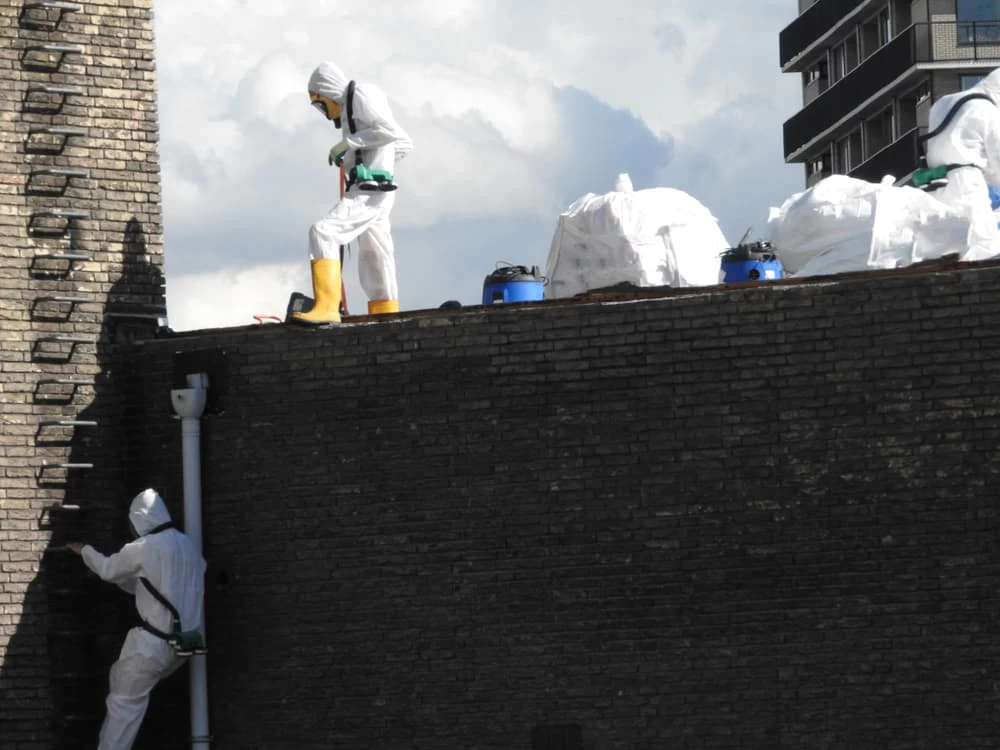
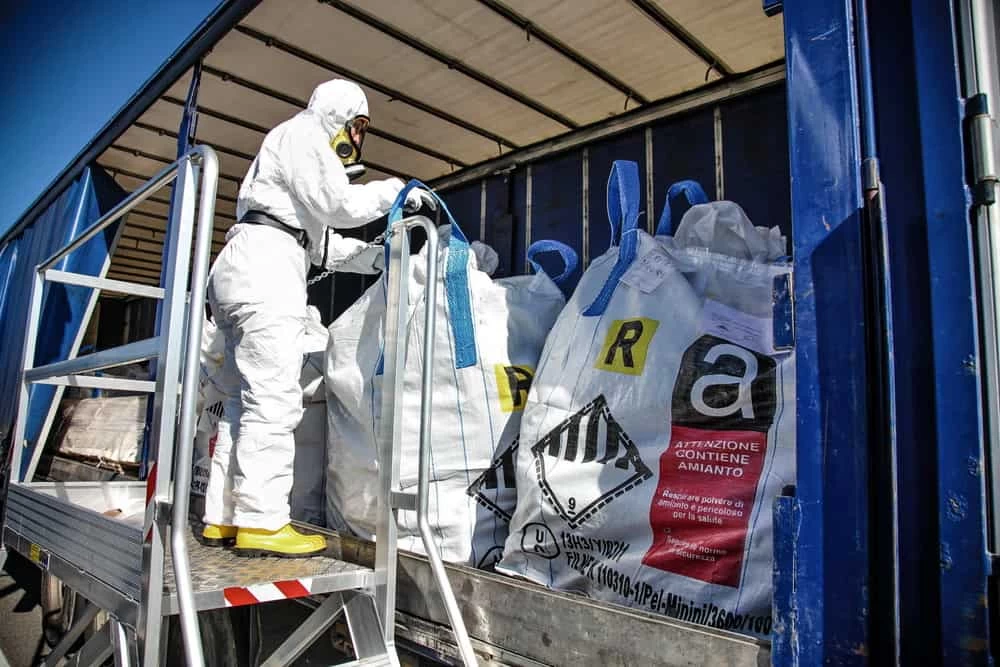
During abatement, the work area is fully contained and under negative air pressure to prevent fiber migration into the rest of your home. Waste is bagged, labeled, and transported to an approved disposal facility for most East Setauket projects, that’s the Brookhaven Landfill in nearby Yaphank, which is a designated asbestos monofill for the region. When the work is done, we conduct final air clearance testing. You get a complete documentation package: inspection reports, waste manifests, and a clearance certificate.
Asbestos abatement isn’t one-size-fits-all, and the scope of what you need depends on what’s in your home and what you’re planning to do with it. For most East Setauket homeowners, the most common scenarios we handle are asbestos tile removal particularly the 9×9 and 12×12 vinyl asbestos tiles found under linoleum or carpet in homes built in the 1950s and early 1960s and asbestos popcorn ceiling removal, which is common in homes built through the mid-1970s.
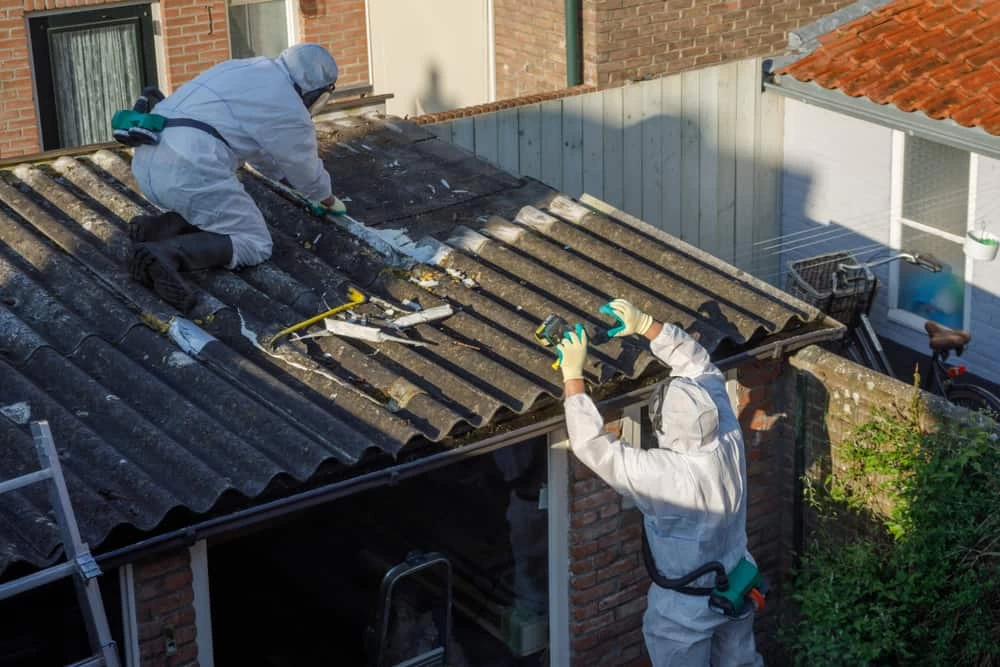
We also handle pipe and boiler insulation abatement, which is especially relevant in older East Setauket homes with original heating systems. Roofing and siding shingles, joint compound, and textured wall coatings round out the most frequent material types we encounter in this area. Whatever the material, the process is the same: proper containment, certified removal, documented disposal, and final air clearance.
If you’re preparing to sell your home, we can coordinate the abatement and clearance documentation in a way that aligns with your listing timeline. If you’re mid-renovation and just discovered something that looks like it could be a problem, we can assess quickly and give you a straight answer. Either way, you’ll have everything you need on paper and in practice to move forward with confidence.
How do I know if my East Setauket home actually contains asbestos?
The honest answer is: you can’t know without testing. Asbestos-containing materials look exactly like non-asbestos materials. The 9×9 floor tile in your basement, the textured ceiling in your living room, the gray wrap around your old pipes none of these announce themselves as hazardous. The only way to confirm is to collect a sample and have it analyzed by a certified laboratory.
In East Setauket, where a significant portion of the housing stock dates to the 1940s through 1960s, the probability of encountering asbestos-containing materials during any major renovation is genuinely high. If your home was built before 1980, it’s worth having a licensed inspector assess the materials before any work begins especially before flooring removal, ceiling work, or any project that disturbs insulation. The cost of testing is minimal compared to the cost of improper disturbance.
Is asbestos abatement legally required before I renovate or sell in New York?
In New York State, the rules depend on the scope and type of work. Under NYS Industrial Code Rule 56, any renovation or demolition project that disturbs a threshold amount of asbestos-containing material requires that the work be performed by a licensed abatement contractor with certified workers. This isn’t optional it’s enforceable, and the NYS Department of Labor’s Asbestos Control Bureau actively inspects worksites and investigates complaints.
For homeowners in East Setauket who are selling, there’s no statute that mandates abatement before a sale but buyers increasingly request it, and undisclosed asbestos can create real legal exposure after closing. If a buyer’s inspector flags suspected ACMs and you don’t have documentation showing the material is either safe or has been properly remediated, it can complicate or kill the transaction. Getting ahead of it before you list is almost always the smarter move in a market where homes are selling at this price point.
What types of asbestos materials are most common in Three Village area homes?
The most frequently encountered asbestos-containing materials in mid-century East Setauket and Three Village homes fall into a few consistent categories. Vinyl asbestos floor tiles typically 9×9 or 12×12 inch squares were the standard flooring choice for kitchens, bathrooms, and basements in homes built through the early 1960s. They’re often found under newer flooring that was installed on top rather than over them. Sprayed acoustic ceiling texture, commonly called popcorn ceiling, was widely used through the 1970s and frequently contained asbestos as a binder.
Pipe and boiler insulation is another common find in older homes, particularly those with original steam or hot water heating systems. Asbestos was used extensively to insulate pipes, boilers, and duct connections because of its heat resistance. Roofing shingles, exterior siding shingles, and joint compound used in drywall finishing also contained asbestos in this era. If your home on the North Shore was built before 1978, there’s a reasonable chance at least one of these materials is present somewhere.
How long does asbestos abatement take, and will I need to leave my home?
The timeline depends entirely on the scope of the project. A single-room floor tile removal might be completed in one to two days. A more involved project multiple rooms, ceiling texture, and pipe insulation could run four to seven days or longer. We give you a realistic timeline before work begins, not a number designed to win the bid.
Whether you need to vacate depends on what’s being abated and where. When we’re working in a contained area of your home a basement, a single room, or an attic it’s often possible to remain in other parts of the house. For larger projects or work that involves central HVAC systems, temporary relocation is the safer call. We’ll be upfront about this during the assessment so you can plan accordingly. If you’re coordinating abatement with a renovation timeline or a real estate closing in East Setauket, we’ll work with your schedule to make the sequencing as manageable as possible.
What does asbestos abatement cost for a typical East Setauket home?
Cost varies based on the type of material, the quantity involved, the accessibility of the work area, and the disposal requirements for the project. For a single room of asbestos floor tile removal, you’re generally looking at a range starting around $1,500 to $3,000. A full popcorn ceiling removal in a larger home can run $3,000 to $7,000 or more depending on square footage. Projects involving pipe insulation, multiple material types, or larger areas will be priced accordingly.
In East Setauket, where homes are typically larger and older than the Long Island average, it’s not uncommon for a comprehensive abatement project to run $5,000 to $15,000 when multiple material types are involved across several areas of the home. That’s a real number and it’s worth framing it against what’s at stake. You’re protecting a home worth $700,000 to over a million dollars, and you’re creating documentation that follows the property for the life of the building. The cost of doing it right is a fraction of the cost of doing it wrong.
How do I choose a licensed asbestos contractor in East Setauket, NY?
Start with licensing. In New York State, asbestos abatement contractors must hold a valid NYSDOL contractor license, and every worker on the job must be individually certified through the NYS Department of Health. You can verify both through the NYSDOL’s online lookup tool and you should, before you sign anything. A contractor who can’t provide their license number or who hesitates when you ask is a red flag.
Beyond credentials, look for someone who knows East Setauket specifically. Homes in this area have a particular character the vintage, the construction methods, the materials common to North Shore mid-century builds and a contractor who works regularly in the Three Village area will recognize these quickly. Ask whether we handle the required project notifications to the NYSDOL, whether we can provide a complete documentation package at the end of the job, and where your waste will be disposed. For projects in the Town of Brookhaven, the Brookhaven Landfill in Yaphank is the designated regional asbestos disposal site a contractor who knows that without being told knows this area. We handle every one of these details.