Most homes in Greenlawn were built right in the middle of the asbestos era and if yours is one of them, the last thing you want is someone treating it like a routine job. We understand the specific challenges that come with the housing stock here. The median construction year in Greenlawn is 1963, and the overwhelming majority of homes are detached single-family structures Cape Cods, ranch houses, split-levels built when asbestos was standard in floor tiles, popcorn ceilings, pipe wrap, duct insulation, and roofing materials.
I needed a professional consultation explanation of procedure for safe removal of Asbestos in my apartment complex. Without having an account yet, I was very impressed with the caring, knowledgeable and generous advice offered by Jessica, and will look forward to doing business in the future. Thank you so much! I feel much more informed about a sometimes scary endeavor. Peace. Nancy Silva Mineola, NY.
Mia Munoz
Used this company to clean up some water flood in my house. They were fast and easy to work with.very professional, Would recommend to anyone!
Nini Valle
Great company, had a flood and they responded quickly and efficiently. Billed my insurance company directly. I highly recommend this company!
joe colapietro, jr
I had pipe freeze in my basement right before a snow storm and they made to within an hour to help start the clean up process. They we by our side throughout the entire process and even helped with the insurance company. They did such a great job with the cleanup, repair, remidiation, I contracted them to perform the repairs and finishes in the basement. They came with enough manpower and material to get the job done. Leo and Jessica were nothing but a pleasure to deal with!!
Cristian Arredondo c
I had some water damage in my home and Green Island was able to take care of my issue quickly and effectively. I am very pleased with the work they did. They responded quickly and were very professional.
Michael M
Outstanding service! From the office to the field crew everyone was friendly, helpful and responsive. I highly recommend Green Island Group.
You stop wondering. That’s the biggest shift. Whether you found suspicious floor tiles during a kitchen demo, your contractor flagged pipe insulation in the basement, or you’re getting ready to list your home and need a clean report the uncertainty goes away when the work is done right and you have the documentation to prove it.
In a real estate market where Greenlawn home values rank among the highest in New York State, an undocumented asbestos issue can stall or kill a deal. Buyers’ attorneys and inspectors are thorough here. When abatement is handled properly with licensed removal, clearance air testing, and a complete paper trail you move forward with confidence, not contingencies.
We’re a licensed asbestos abatement contractor serving homeowners and property owners across Long Island, including the Town of Huntington and the communities along the North Shore. We’re not a national franchise routing calls through a 1-800 number. We’re a Long Island operation that understands the housing stock, the regulatory environment, and the specific expectations of homeowners in Greenlawn and surrounding communities.
We know the NYSDOL’s Long Island district office procedures, the Town of Huntington Building Department’s requirements, and the kinds of materials that show up in the postwar homes that line the streets from Greenlawn South to Little Plains. We’ve worked in homes just like yours original floor tiles in the kitchen, pipe wrap around the boiler, popcorn ceilings that haven’t been touched since the 1970s.
When you call us, you’re not getting a crew that’s never set foot in Suffolk County. You’re getting a team that works here, knows the rules here, and has handled these exact situations in this exact part of New York.
No Surprises Here's Exactly What the Process Looks Like
It starts with an inspection. Before anything is touched, a certified inspector collects samples from the suspected materials in your home floor tiles, ceiling texture, pipe insulation, duct wrap, whatever’s in question. Those samples go to an accredited lab. You get real answers, not assumptions.
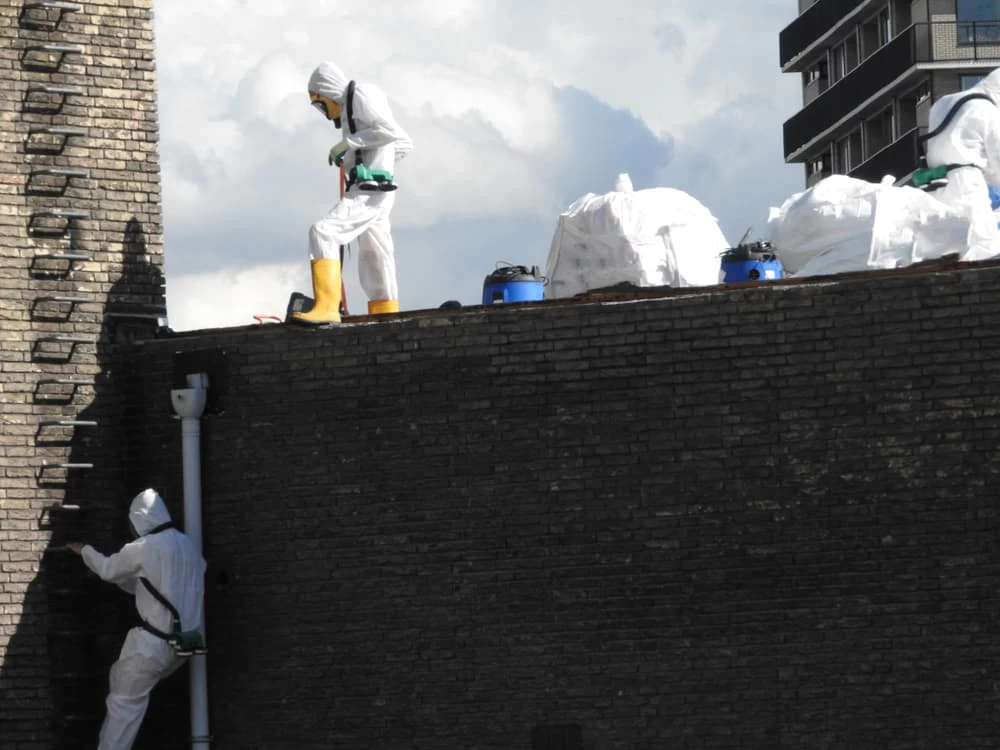
If asbestos is confirmed, we file the required notification with the New York State Department of Labor before work begins. That’s not optional in New York it’s the law under Code Rule 56, and any contractor who skips it is putting you at risk. Once the notification is in place, we set up full containment around the work area: plastic sheeting, negative air pressure systems, and HEPA filtration so fibers stay exactly where they’re supposed to inside the containment, not in the rest of your home.
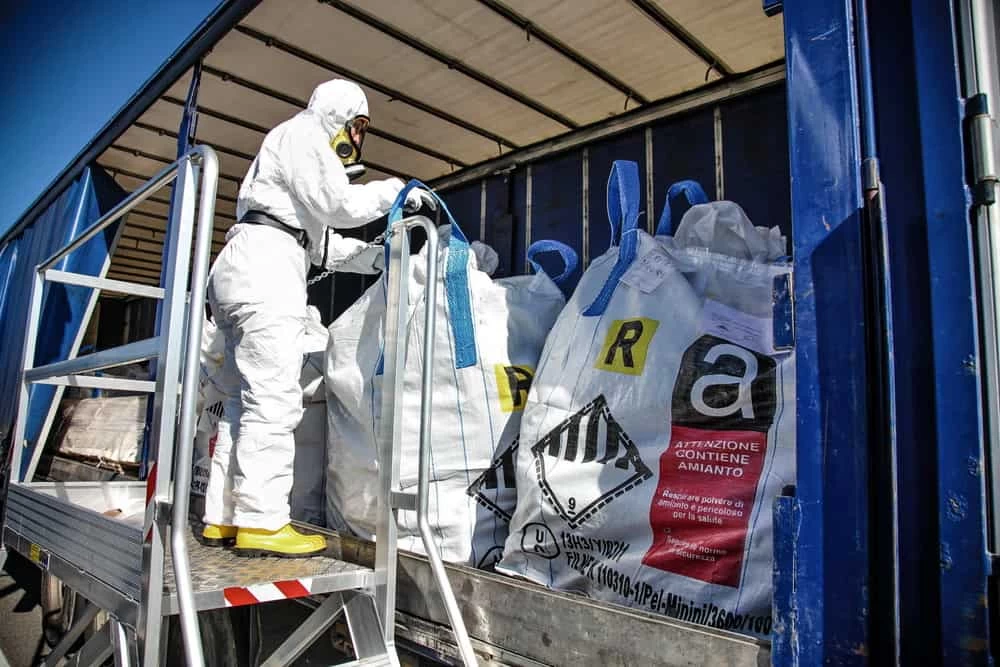
The removal itself is done wet, which keeps fibers from becoming airborne during the process. All waste is sealed, labeled, and transported by a licensed waste hauler to an approved disposal facility with a manifest documenting every step. When the work is complete, a third-party industrial hygienist conducts clearance air testing to confirm the area is clean. You get the full documentation package: inspection results, NYSDOL notification confirmation, clearance test results, and the waste manifest. For Greenlawn homeowners navigating a renovation or a real estate transaction, that paperwork is what makes everything move forward.
Greenlawn homes from the 1950s and 1960s tend to have asbestos showing up in predictable places and a few that catch homeowners off guard. The 9×9 inch vinyl floor tiles in kitchens and basements are one of the most common finds. So is the black mastic adhesive underneath them. Popcorn ceilings in living rooms and bedrooms from the same era frequently tested positive for asbestos. Pipe insulation wrapped around boilers and hot water lines in utility rooms is another. Transite siding on exterior walls, duct insulation in older HVAC systems, and even joint compound used in drywall finishing through the early 1980s can all contain it.
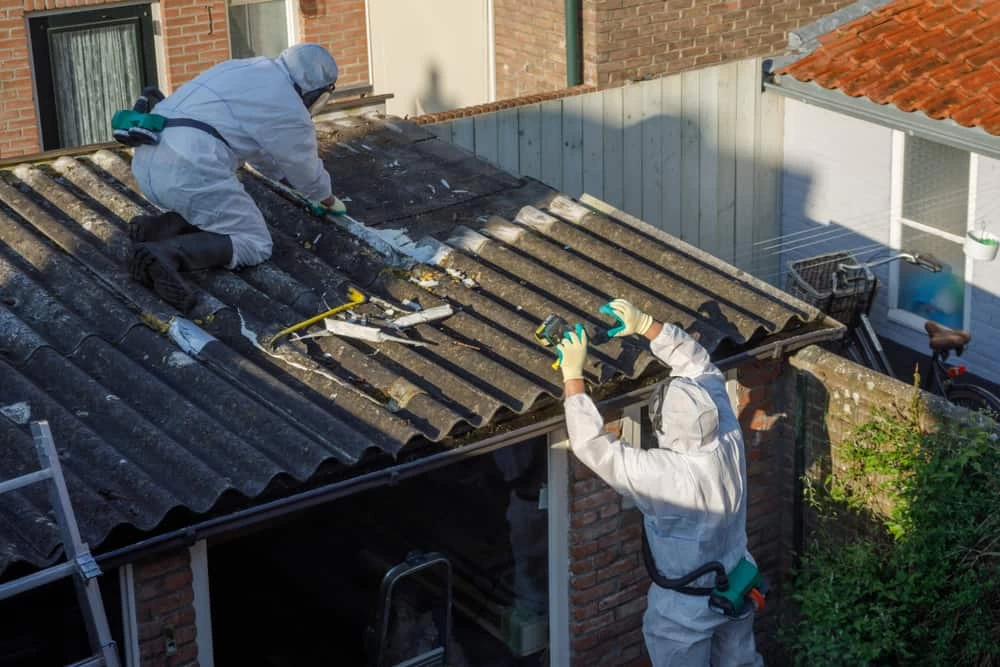
We handle asbestos removal across all of these material types floor tile removal, popcorn ceiling removal, pipe and duct insulation removal, siding abatement, and full interior remediation when multiple materials are involved. Every project includes pre-abatement inspection and sampling, NYSDOL notification, proper containment setup, licensed removal, certified waste disposal, and post-clearance air testing. Nothing gets handed off or left for you to figure out.
For homeowners in the Harborfields area preparing for a renovation or a sale, we also coordinate directly with your contractor or real estate attorney when needed, so the documentation lands exactly where it needs to go without delays on your end.
How do I know if my Greenlawn home actually contains asbestos?
The only way to know for certain is to have a sample tested by an accredited laboratory. Visual inspection alone isn’t reliable asbestos-containing materials often look identical to materials that don’t contain it. That’s true for floor tiles, ceiling texture, pipe insulation, and joint compound alike.
What you can do is use the age of your home as a starting point. If your Greenlawn home was built before 1980 and the median construction year here is 1963 there’s a meaningful chance that at least some of the original materials contain asbestos. The 9×9 inch vinyl tiles that were standard in postwar Long Island homes are one of the most common finds. So is the pipe wrap around oil-fired boilers, which were common in Suffolk County homes of that era. If you’re planning any renovation that involves disturbing those materials demo, flooring replacement, ceiling work get them tested before the work starts. It’s a straightforward process and it removes all the guesswork.
Does asbestos removal in New York require a licensed contractor or can I do it myself?
New York State law under Code Rule 56 requires that all asbestos abatement work be performed by a contractor licensed by the New York State Department of Labor. There is a limited exception that allows homeowners to perform their own asbestos removal in their primary residence, but it comes with significant caveats you’re still responsible for proper disposal under NYSDEC regulations, you cannot hire unlicensed help, and if anything goes wrong, the liability is entirely yours.
In practice, DIY asbestos removal in a Greenlawn home creates more problems than it solves. Improper removal can spread fibers throughout the house, contaminate HVAC systems, and create a disclosure issue that surfaces during a future sale. Licensed contractors are required to file pre-abatement notifications with the NYSDOL, use certified workers, and provide clearance air testing documentation at project completion. That documentation is what protects you legally, financially, and from a health standpoint. For most homeowners, the risk of going it alone simply isn’t worth it.
What does asbestos abatement typically cost for a home in Greenlawn, NY?
Cost depends heavily on what materials are involved, how much square footage needs to be addressed, and how accessible the work area is. As a general reference point, removing asbestos insulation from a single area in a typical home might run in the range of $2,500 to $4,000. A larger project multiple materials, multiple rooms, or a full basement remediation can reach $8,000 to $15,000 or more depending on scope.
In Greenlawn specifically, a few factors tend to influence cost. Homes here are predominantly detached single-family structures, which generally means more accessible work areas than multi-unit buildings that can work in your favor. On the other hand, many of these homes have original materials in multiple locations: floor tiles in the kitchen and basement, pipe wrap in the utility room, popcorn ceilings in the living areas. When multiple material types are involved, addressing them together in one project is almost always more cost-effective than separate mobilizations. The best way to get an accurate number is to have the materials sampled and assessed first the scope becomes much clearer once you know exactly what you’re dealing with.
Will asbestos abatement disrupt my family while the work is being done?
It depends on the scope and location of the work. For a contained area say, a basement utility room or a single section of flooring the rest of the home can often remain occupied during abatement, as long as proper containment is in place. For larger projects involving living areas, bedrooms, or HVAC systems, temporary relocation for the duration of the work is usually the safer and more practical choice.
Our containment protocols are designed to keep the work area completely isolated from the rest of your home. That means sealed plastic sheeting, negative air pressure systems that pull air through HEPA filters rather than letting it escape into adjacent rooms, and decontamination procedures for workers entering and exiting the containment zone. For Greenlawn families with children or elderly residents in the home and this is a community where both are common we take those protocols seriously. Post-clearance air testing at the end of the project gives you an objective, third-party confirmation that the air in your home is clean before you resume normal use of the space.
Do I need asbestos abatement before selling my home in Greenlawn?
New York State does not legally require sellers to disclose or remediate asbestos before listing a property. But that’s only part of the picture. In practice, Greenlawn’s real estate market is competitive and the buyers here are thorough. Buyers’ home inspectors frequently flag suspect materials especially in homes built in the 1950s and 1960s and buyers’ attorneys often request testing or remediation as a condition of closing.
If asbestos-containing materials are identified during a buyer’s inspection and you haven’t addressed them, you’re looking at renegotiation, price reductions, or a deal falling apart entirely. Pre-sale abatement, done before you list, removes that variable completely. It also gives you a documented clearance report to hand to any buyer’s attorney who asks which in a market like Greenlawn, where home values are among the highest in New York State, is a meaningful advantage. Sellers who handle it proactively tend to have smoother closings.
What happens to the asbestos waste after it's removed from my home?
Asbestos waste is classified as a hazardous material under New York State law, and its disposal is tightly regulated by the NYSDEC under 6 NYCRR Part 364. It cannot be placed in regular trash, taken to a standard transfer station, or disposed of in any unlicensed facility. All asbestos waste must be double-bagged in approved, labeled containers and transported by a licensed waste hauler to a permitted disposal facility.
As part of every project, we maintain a complete waste manifest a documented chain of custody that tracks the material from your home to its final disposal destination. That manifest becomes part of your project documentation package. For Greenlawn homeowners, this matters beyond just regulatory compliance. If you’re selling the property, refinancing, or dealing with an insurance claim, having a documented record of how the waste was handled is part of what makes your abatement project stand up to scrutiny. It’s not paperwork for its own sake it’s the proof that the job was done correctly from start to finish.