Hopewell Junction Homes Built Before 1980 Need More Than a Guess and a Mask
If your Hopewell Junction home was built before 1980, there’s a real chance asbestos is somewhere inside it and a renovation, a flood, or a routine inspection is all it takes to find out. We handle asbestos abatement the right way: licensed under NYS Industrial Code Rule 56, documented from start to finish, and available when you actually need us.
I needed a professional consultation explanation of procedure for safe removal of Asbestos in my apartment complex. Without having an account yet, I was very impressed with the caring, knowledgeable and generous advice offered by Jessica, and will look forward to doing business in the future. Thank you so much! I feel much more informed about a sometimes scary endeavor. Peace. Nancy Silva Mineola, NY.
Mia Munoz
Used this company to clean up some water flood in my house. They were fast and easy to work with.very professional, Would recommend to anyone!
Nini Valle
Great company, had a flood and they responded quickly and efficiently. Billed my insurance company directly. I highly recommend this company!
joe colapietro, jr
I had pipe freeze in my basement right before a snow storm and they made to within an hour to help start the clean up process. They we by our side throughout the entire process and even helped with the insurance company. They did such a great job with the cleanup, repair, remidiation, I contracted them to perform the repairs and finishes in the basement. They came with enough manpower and material to get the job done. Leo and Jessica were nothing but a pleasure to deal with!!
Cristian Arredondo c
I had some water damage in my home and Green Island was able to take care of my issue quickly and effectively. I am very pleased with the work they did. They responded quickly and were very professional.
Michael M
Outstanding service! From the office to the field crew everyone was friendly, helpful and responsive. I highly recommend Green Island Group.
Your Hopewell Junction Home Is Safe, Documented, and Ready to Move Forward
A lot of Hopewell Junction homes were built during the exact decades when asbestos was used in almost everything floor tiles, pipe insulation, popcorn ceilings, boiler wrap. Most of it has been sitting undisturbed for years. The problem starts when a renovation opens a wall, a basement floods, or a buyer’s inspector flags something during a pre-sale walkthrough. That’s when “we’ll deal with it later” stops being an option.
When the work is done correctly, you’re not just removing a material you’re removing a liability. Your home can move forward with a renovation, pass a real estate inspection, or simply stop being something you’re quietly worried about. For a community where homes are listing close to $659,000 and appreciation is strong, that documentation matters. A clean abatement report from a licensed contractor is part of what protects that value.
The older housing stock throughout Hopewell Junction and East Fishkill the mid-century ranches and split-levels off Route 82 and Route 376 tends to have multiple asbestos-containing materials present at once. That’s not unusual, and it’s not a crisis. It just means the assessment needs to be thorough, and the contractor needs to know what they’re looking at. That’s exactly where experience makes the difference.
12 Years In, 5,000 Projects Done We Know Hopewell Junction's Homes
Green Island Group is a New York State-licensed asbestos abatement contractor with over 12 years of experience and more than 5,000 completed projects across the state, including throughout Dutchess County and Hopewell Junction specifically. We’re also a certified Minority and Woman-Owned Business Enterprise approved by New York State agencies which means we’ve been vetted at a level most contractors in this area simply haven’t.
We serve Hopewell Junction, East Fishkill, Fishkill, Wappingers Falls, Lagrangeville, and the surrounding communities. We know Dutchess County’s regulatory environment, we work with NYS DEC-approved disposal facilities, and our technicians hold all required NYS DOL Asbestos Handler and Supervisor licenses. When the Asbestos Control Bureau shows up for an oversight inspection, we’re ready.
Beyond asbestos, we also handle mold remediation, water damage restoration, and fire damage recovery because in a 1960s ranch home near Fishkill Farms, these problems rarely come one at a time.
From the First Call to Your Clearance Report Here's Exactly How We Work in Hopewell Junction
It starts with a free assessment. You tell us what you’re dealing with a suspicious floor tile, a popcorn ceiling you’re about to renovate, a pipe wrapped in something that doesn’t look right and we come out, take a look, and tell you exactly what you have. No pressure, no upsell. Just a straight answer so you can make an informed decision.
If abatement is needed, we handle the regulatory side before anything is touched. In New York State, any project involving suspected asbestos-containing materials in a pre-1980 structure requires compliance with Industrial Code Rule 56 and, in most cases, notification to the NYS Department of Labor’s Asbestos Control Bureau. The Town of East Fishkill Building Department also requires asbestos documentation before issuing permits for renovation work on older homes. We handle all of that you don’t have to navigate it yourself.
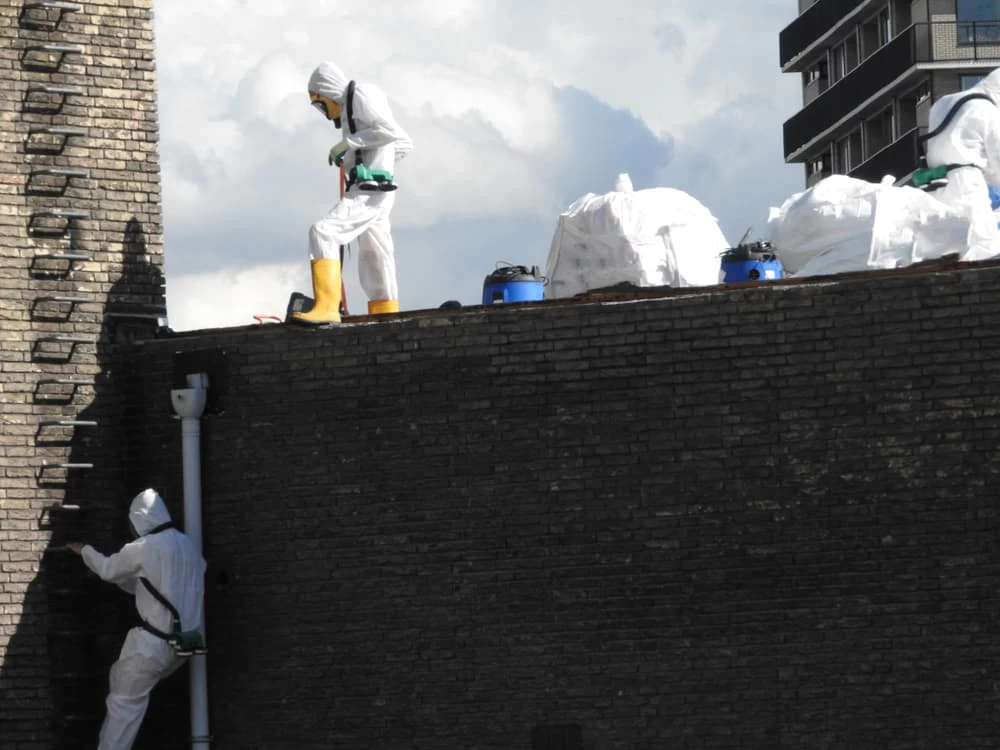
The removal itself is done under full containment, with negative air pressure, proper PPE, and compliant waste disposal through licensed haulers to NYS DEC-approved facilities. When the work is complete, we conduct post-abatement air clearance testing the final step that confirms the space is safe and gives you the written documentation you need, whether that’s for your own records, a real estate closing, or a building permit. That report is yours, and it means something.
Asbestos Tile and Popcorn Ceiling Removal, Hopewell Junction
What's Actually Included When You Call Us
The most common asbestos-containing materials we find in Hopewell Junction homes are 9×9 vinyl floor tiles and the mastic adhesive underneath them, pipe and boiler insulation in older heating systems, spray-applied popcorn ceiling texture from before 1978, and attic insulation particularly vermiculite. We also handle asbestos in joint compound, plaster, roofing materials, and siding on homes from the 1940s through the 1960s. If your home was built before 1980 and you’re planning any kind of renovation, there’s a reasonable chance at least one of these materials is somewhere in the project footprint.
Every job includes the initial assessment, full containment setup, licensed removal, compliant transport and disposal, and post-abatement air clearance testing with written documentation. We bill insurance directly when the abatement is part of a covered claim water damage that disturbs asbestos floor tiles, for example, is a situation we see regularly in Hopewell Junction homes during and after heavy rain seasons. You don’t have to manage that paperwork on top of everything else.
If asbestos removal surfaces a mold issue or water damage underneath which happens more often than people expect in homes with decades of deferred maintenance we can handle that in the same scope of work. One contractor, one call, one timeline. For Hopewell Junction homeowners trying to keep a renovation or a sale on schedule, that matters more than it might sound.
Do I need a permit for asbestos removal in Hopewell Junction, NY?
In most cases involving a pre-1980 home in Hopewell Junction, yes and the permit process is more involved than most homeowners expect. Under New York State Industrial Code Rule 56, asbestos abatement projects require notification to the NYS Department of Labor’s Asbestos Control Bureau before work begins. The ACB performs oversight inspections during rehabilitation, reconstruction, or demolition of buildings that were constructed with asbestos-containing materials, and Dutchess County falls squarely within their jurisdiction.
On top of that, the Town of East Fishkill Building Department requires asbestos survey documentation before issuing renovation permits for pre-1980 structures. That means if you’re planning a kitchen gut, a basement renovation, or any project that touches walls, floors, or ceilings in an older Hopewell Junction home, you need to address the asbestos question before the building permit is issued not after. We handle the notification, documentation, and compliance requirements as part of every job, so you’re not figuring that out on your own while your contractor is waiting to start.
How much does asbestos removal cost in Hopewell Junction, NY?
For most residential projects in Hopewell Junction and the Dutchess County area, asbestos removal runs somewhere between $1,300 and $3,100, with the average landing around $2,200. What drives the variation is the type of material, how much of it there is, and how accessible it is. Asbestos tile removal in a finished basement is a different scope than pipe insulation removal in a crawlspace, and both are different from a full popcorn ceiling removal on an upper floor.
In Hopewell Junction specifically, the mid-century homes that make up a large portion of the housing stock often have more than one asbestos-containing material present which means the initial assessment is genuinely important. A thorough walkthrough upfront prevents surprises mid-project. When you call us, we give you a clear, itemized estimate before anything starts. In a market where homes are listing close to $659,000, the cost of proper abatement is a small fraction of what a failed inspection or an undisclosed asbestos issue can cost you at the closing table.
Can I stay in my home during asbestos abatement in Hopewell Junction?
It depends on the scope and location of the work. For smaller, contained projects like asbestos tile removal in a single room or pipe insulation removal in a utility area it’s often possible to remain in the home with proper containment barriers in place. For larger projects involving multiple rooms, attic insulation, or anything that affects shared HVAC systems, temporary relocation is usually the safer and more practical choice.
The containment setup we use negative air pressure, sealed work zones, HEPA filtration is designed to prevent any fiber migration into areas of the home outside the work zone. But the honest answer is that the right call depends on your specific home’s layout, the location of the affected materials, and how the work is sequenced. We’ll tell you clearly during the assessment what we recommend for your situation, and we won’t push you toward a more disruptive approach than the job actually requires. Hopewell Junction homes vary a lot in layout and age, and a 1955 ranch off Route 82 needs a different plan than a 1970s colonial with a full basement.
What are the most common materials that contain asbestos in Hopewell Junction homes?
The materials we find most consistently in Hopewell Junction and East Fishkill homes are 9×9 vinyl floor tiles particularly in kitchens, basements, and utility rooms along with the black mastic adhesive used to install them. Pipe insulation wrapping older boilers and supply lines is another common one, especially in homes that still have original heating systems. Spray-applied popcorn ceiling texture, used extensively from the 1950s through 1978, is present in a significant portion of the homes we assess in this area.
Less obvious but equally common: joint compound and plaster in pre-drywall construction, vermiculite attic insulation, and asbestos-cement roofing and siding on homes built in the 1940s and 1950s. The post-war professional influx into Hopewell Junction brought a wave of home construction during exactly the decades when these materials were standard. If your home was built between 1940 and 1979 and hasn’t been fully renovated, there’s a reasonable chance more than one of these materials is present. The assessment is the only way to know for sure.
What happens if asbestos is found during a home renovation in Hopewell Junction?
Work stops legally, it has to. If a renovation contractor in New York State encounters suspected asbestos-containing material during a project, they are required to halt work in that area and bring in a licensed asbestos abatement contractor before proceeding. That’s not a suggestion; it’s a compliance requirement under NYS Industrial Code Rule 56. Continuing to disturb the material without proper abatement puts your contractor, your family, and the project itself at legal risk.
This is one of the most common scenarios we respond to in Hopewell Junction a homeowner is mid-renovation on a 1960s or 1970s home, the contractor pulls up floor tile or opens a wall, and suddenly the project is on hold. We respond to these situations around the clock, including weekends. The goal is to assess the situation quickly, get the abatement done under proper containment, pass air clearance testing, and hand the space back to your contractor as fast as possible so your project can continue. The faster the response, the less the delay costs you in time, in contractor standby fees, and in overall project momentum.
How do I know if my Hopewell Junction home's popcorn ceiling contains asbestos?
You can’t tell by looking at it. Popcorn ceiling texture applied before 1978 has a high likelihood of containing asbestos the EPA restricted its use in residential applications that year but even some texture applied after 1978 may contain it if contractors were working through existing material stock. The only way to know for certain is to have a sample collected and tested by a licensed professional.
In Hopewell Junction and throughout the area, we find asbestos-containing popcorn ceilings regularly in homes from the 1950s through the mid-1970s. If you’re planning to scrape, sand, or paint over a popcorn ceiling in a home built before 1980, get it tested first. Painting over it doesn’t encapsulate it safely if the texture is already deteriorating, and sanding it without proper containment releases fibers into the air throughout the home. The test itself is straightforward a licensed inspector collects a small sample and sends it to an accredited lab. If it comes back positive, we handle the removal under full containment with post-abatement air clearance testing before the space is reoccupied. If it comes back negative, you have documentation that confirms it’s safe to proceed.