Your 1970s Pecksville Home Deserves a Clean Bill of Health
If your Pecksville home was built between 1970 and 1985, there’s a real chance asbestos is hiding in it in the floor tiles, the ceiling texture, the pipe insulation. We handle asbestos abatement in Pecksville, NY the right way: licensed, documented, and done.
I needed a professional consultation explanation of procedure for safe removal of Asbestos in my apartment complex. Without having an account yet, I was very impressed with the caring, knowledgeable and generous advice offered by Jessica, and will look forward to doing business in the future. Thank you so much! I feel much more informed about a sometimes scary endeavor. Peace. Nancy Silva Mineola, NY.
Mia Munoz
Used this company to clean up some water flood in my house. They were fast and easy to work with.very professional, Would recommend to anyone!
Nini Valle
Great company, had a flood and they responded quickly and efficiently. Billed my insurance company directly. I highly recommend this company!
joe colapietro, jr
I had pipe freeze in my basement right before a snow storm and they made to within an hour to help start the clean up process. They we by our side throughout the entire process and even helped with the insurance company. They did such a great job with the cleanup, repair, remidiation, I contracted them to perform the repairs and finishes in the basement. They came with enough manpower and material to get the job done. Leo and Jessica were nothing but a pleasure to deal with!!
Cristian Arredondo c
I had some water damage in my home and Green Island was able to take care of my issue quickly and effectively. I am very pleased with the work they did. They responded quickly and were very professional.
Michael M
Outstanding service! From the office to the field crew everyone was friendly, helpful and responsive. I highly recommend Green Island Group.
You stop guessing. That’s the first thing. When asbestos has been properly removed and cleared by a licensed contractor not just covered up or ignored you have documentation that says your home is safe. That matters whether you’re raising a family in Pecksville or getting ready to sell.
Most homes in Pecksville were built in the 1970s and 1980s, which puts them squarely in the window when vinyl floor tiles, popcorn ceiling texture, and pipe insulation routinely contained asbestos. These aren’t rare edge cases. They’re standard features of the housing stock in this part of East Fishkill and they stay stable until someone starts a renovation, a pipe leaks, or a contractor starts cutting into a wall.
Dutchess County’s housing market is active right now, with median sale prices near $490,000. A home with unresolved asbestos questions loses buyers fast. A home with a completed, signed-off abatement air clearance results on file sells without that friction. Either way, getting this handled protects what you’ve built here in Pecksville.
Licensed Asbestos Contractor Serving Pecksville, NY
5,000 Projects In. Still Doing It Right.
We’ve been doing asbestos abatement, mold remediation, and environmental cleanup across New York State for over 12 years. More than 5,000 completed projects. NYS Department of Labor licensed. EPA AHERA accredited. MWBE certified which means the state has vetted our company at a level most contractors never reach.
Dutchess County is active service territory for us not a market we’re expanding into, but one we already know. The southeastern corner of East Fishkill where Pecksville sits, the border with Beekman, the older homes near Stormville this is familiar ground. When you call, you’re not explaining where Pecksville is to someone who’s never been here. We know the housing stock, the local building department, and the specific challenges that come with these 1970s and 1980s homes.
We also bill insurance directly. That detail shows up in customer reviews more than almost anything else, because it removes a real burden from homeowners who are already dealing with enough.
No Surprises Here's Exactly What the Process Looks Like
It starts with an assessment. Before anything is removed, a licensed inspector identifies the suspect materials, confirms what’s present, and determines whether it’s friable meaning it can release fibers or still stable. In a 1970s Pecksville home, that typically means checking the basement floor tiles, any acoustic ceiling texture, pipe insulation in mechanical rooms, and duct wrap around the HVAC system.
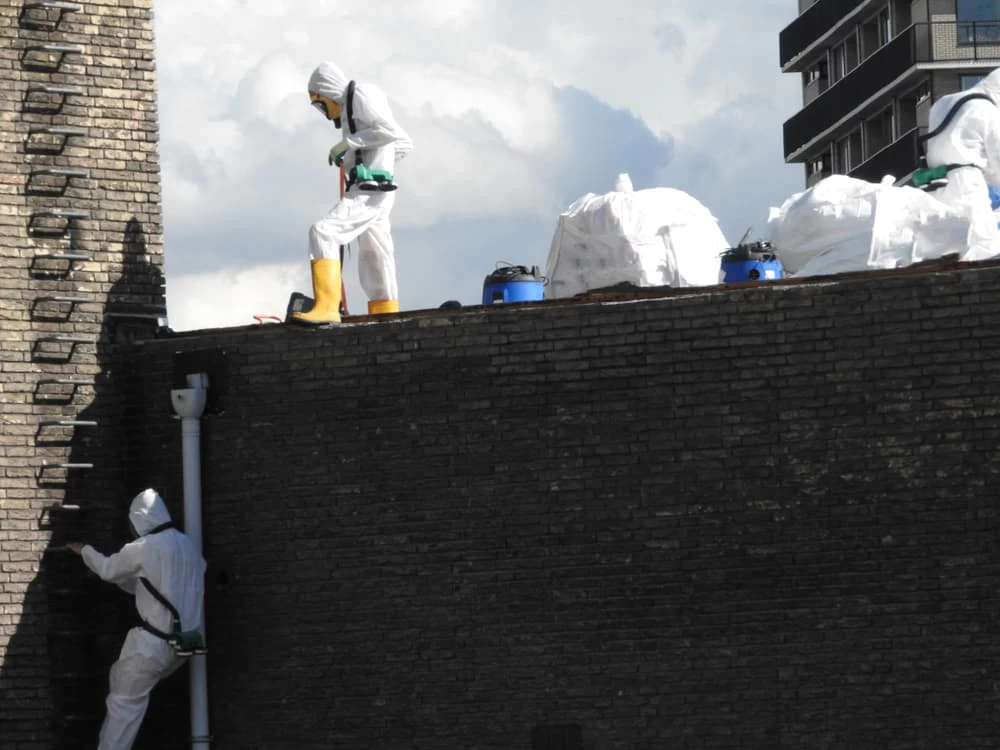
Once the scope is confirmed, the work area gets contained. Plastic sheeting, negative air pressure, HEPA filtration the goal is to keep fibers from migrating into parts of your home that aren’t being touched. All of this is required under New York State’s Industrial Code Rule 56, which governs every licensed abatement job in Dutchess County. Your project falls under the oversight of the NYS DOL’s Albany District Office, and we handle all the compliance documentation so you don’t have to track it yourself.
After removal, the space gets cleaned and then tested. Air clearance sampling confirms that fiber levels are below safe thresholds before the area is reopened. You get the results in writing. That’s not an add-on it’s how the job ends every time.
Asbestos Tile and Popcorn Ceiling Removal, Pecksville
Every Material, Every Application Handled Correctly
The most common asbestos materials in Pecksville’s housing stock follow a predictable pattern for homes built in the 1970s and early 1980s. Asbestos floor tile removal particularly the 9×9 inch vinyl tiles found in kitchens, bathrooms, and basements is one of the most frequent jobs in this area. Asbestos popcorn ceiling removal is another. That sprayed acoustic texture was applied heavily during this construction era, and it’s still on the ceilings of thousands of Dutchess County homes. Both materials are manageable when handled by a licensed crew. Both become a real problem when someone tries to sand, scrape, or demo without testing first.
Beyond tiles and ceilings, we also handle pipe insulation removal, duct wrap, joint compound, exterior siding, and roofing materials the full range of applications found in older East Fishkill homes. If your renovation project has hit a wall because an inspector flagged suspect materials, we’re the team that clears the path forward.
For homeowners dealing with overlapping issues water damage that disturbed pipe insulation, or storm damage that cracked an asbestos-containing exterior wall our full-service model covers asbestos, mold, water damage, and fire damage under one roof. One call, one team, one process from start to finish.
How do I know if my Pecksville home actually contains asbestos?
The only way to know for certain is to have suspect materials tested by a licensed inspector. Visual identification is not reliable asbestos-containing materials often look identical to non-asbestos versions of the same product. If your Pecksville home was built between 1970 and 1985, which covers most of the residential housing stock in this area, there’s a meaningful probability that some materials contain asbestos. The most common locations are vinyl floor tiles (especially 9×9 inch format), popcorn or acoustic ceiling texture, pipe insulation in basements and mechanical rooms, and duct wrap around HVAC systems.
The testing process involves taking small samples of suspect materials and sending them to an accredited laboratory for analysis. It’s non-invasive and relatively quick. If results come back positive, you’ll have a clear picture of what’s present, where it is, and whether it’s in a stable condition or actively posing a risk. That information is what drives the abatement plan and it’s the only responsible starting point before any renovation work begins.
Is asbestos removal in Pecksville, NY required before starting a renovation?
In New York State, any renovation or demolition project that will disturb asbestos-containing materials requires licensed abatement before that work can proceed. This is governed by NYS Industrial Code Rule 56, and it applies to residential properties as well as commercial ones. For Pecksville homeowners, this means that if you’re planning to gut a bathroom, refinish a basement, or knock down a wall in a home built before 1986, you need to test first and if asbestos is present, it needs to be properly removed before your contractor can continue.
The Town of East Fishkill’s building department will also expect asbestos compliance documentation before issuing permits for work that disturbs suspect materials. Skipping this step doesn’t make the problem go away it creates a liability that can surface during a home sale, a future inspection, or a contractor injury claim. Getting it done correctly upfront is the cleaner, cheaper path in the long run.
What does asbestos abatement actually cost for a home in Dutchess County?
For most residential abatement jobs in New York State, homeowners typically spend somewhere between $1,300 and $3,100, with the average landing around $2,200. The range depends on the type of material being removed, the square footage involved, and whether the project requires full containment with negative air pressure or can be handled with a more limited setup. Costs in the Hudson Valley have increased modestly in recent years due to updated NYS DOL licensing requirements and higher disposal fees for asbestos waste which must be transported by a licensed hauler and disposed of at an approved facility under NYSDEC regulations.
A small asbestos tile removal in a single room will sit at the lower end of that range. A larger project involving pipe insulation throughout a basement, or popcorn ceiling removal across multiple rooms, will cost more. The most useful thing you can do before budgeting is get a proper inspection so the scope is clearly defined estimates based on assumptions tend to shift once the actual materials are identified.
How long does asbestos removal take, and will my family need to leave?
For a contained, single-area project like asbestos tile removal in a basement or popcorn ceiling removal in one room the work itself typically takes one to three days. Larger projects involving multiple rooms or extensive pipe insulation can run longer. The timeline depends on the scope confirmed during the initial assessment, not a general estimate.
Whether your family needs to vacate depends on the location of the work and the containment setup. In most residential abatement projects, the affected area is isolated with plastic sheeting and negative air pressure, which keeps the rest of the home usable. If the work is in a heavily trafficked area or involves a larger portion of the home’s living space, temporary displacement may be the safer call. We’ll walk you through the specific situation for your home before work begins not after so you can plan accordingly.
Can asbestos materials become dangerous after winter in an older Pecksville home?
Yes, and it’s more common than most homeowners realize. East Fishkill experiences significant freeze-thaw cycling through the winter months temperatures in Pecksville have swung from over 100°F in summer to well below zero in January. That kind of thermal stress puts pressure on building envelopes, and materials that were previously stable can crack, shift, or become friable after repeated expansion and contraction cycles. Exterior asbestos-containing siding and roofing materials are particularly vulnerable to this kind of seasonal stress.
Spring is also when water infiltration tends to peak in older Dutchess County homes, and moisture is one of the main factors that destabilizes previously intact asbestos-containing materials especially around pipe insulation in basements and crawl spaces. If you’ve had any water intrusion over the winter, or if you noticed exterior damage after the last cold stretch, a post-winter inspection of suspect materials in your Pecksville home is a reasonable precaution. Catching a problem before a spring renovation starts is significantly easier than dealing with it mid-project.
What makes Green Island Group different from other asbestos contractors serving Pecksville?
A few things stand out. The first is credentials NYS DOL licensed, EPA AHERA accredited, OSHA compliant, and MWBE certified as a state-approved contractor. That last one matters because it means the state has reviewed our operations at a level most private contractors never go through. The second is scope we handle asbestos, mold, water damage, and fire damage, which means if your abatement project uncovers a secondary issue (a wet basement, mold behind a wall), you’re not starting over with a new contractor.
The third is the insurance billing. For homeowners in Pecksville who are already managing long commutes and busy households, having a contractor that handles the insurance paperwork directly not as a favor, but as a standard part of how we operate removes a real administrative burden at a stressful time. Customers have called this out specifically in reviews, not because it’s a headline feature, but because it made a difficult situation noticeably easier to get through. That’s the kind of thing that’s hard to fake across 5,000 completed projects.