If your home was built before 1980, asbestos isn’t a maybe it’s a real possibility. Green Island Group provides licensed asbestos abatement in Medford, NY, so you know exactly what you’re dealing with and what happens next.
I needed a professional consultation explanation of procedure for safe removal of Asbestos in my apartment complex. Without having an account yet, I was very impressed with the caring, knowledgeable and generous advice offered by Jessica, and will look forward to doing business in the future. Thank you so much! I feel much more informed about a sometimes scary endeavor. Peace. Nancy Silva Mineola, NY.
Mia Munoz
Used this company to clean up some water flood in my house. They were fast and easy to work with.very professional, Would recommend to anyone!
Nini Valle
Great company, had a flood and they responded quickly and efficiently. Billed my insurance company directly. I highly recommend this company!
joe colapietro, jr
I had pipe freeze in my basement right before a snow storm and they made to within an hour to help start the clean up process. They we by our side throughout the entire process and even helped with the insurance company. They did such a great job with the cleanup, repair, remidiation, I contracted them to perform the repairs and finishes in the basement. They came with enough manpower and material to get the job done. Leo and Jessica were nothing but a pleasure to deal with!!
Cristian Arredondo c
I had some water damage in my home and Green Island was able to take care of my issue quickly and effectively. I am very pleased with the work they did. They responded quickly and were very professional.
Michael M
Outstanding service! From the office to the field crew everyone was friendly, helpful and responsive. I highly recommend Green Island Group.
Most Medford homeowners don’t go looking for asbestos. They find it mid-renovation under the kitchen floor, behind a basement wall, wrapped around the old boiler pipes and suddenly a straightforward project turns into something they weren’t prepared for. That moment is stressful. But it doesn’t have to spiral.
When asbestos is handled correctly, you get your project back on track and your home back to normal. No lingering uncertainty about what’s in the air. No legal exposure from work that wasn’t done by a licensed contractor. Just a clean clearance report, proper documentation, and the ability to move forward whether that’s finishing a basement or closing a sale before your attorney’s deadline.
Medford’s housing stock is heavily post-war Cape Cods and ranches built in the 1950s through the 1970s that haven’t been touched in decades. That’s not a criticism of the neighborhood. It just means the original materials are often still in place, and when it’s time to renovate, they need to be addressed properly. We work in homes exactly like yours, all across central Suffolk County, and we know what to look for before a single tile gets pulled.
We are a fully licensed asbestos abatement contractor serving Medford and the broader Brookhaven Town area. Every crew member holds individual NYSDOL certification, and every project we complete is backed by the documentation your lender, attorney, or buyer will actually ask for clearance reports, disposal manifests, contractor credentials. It’s all included.
We’ve worked in the neighborhoods throughout Medford and the subdivisions that make up this community. We understand what a 1960s Medford ranch looks like from the inside the original floor tiles in the basement, the acoustic ceilings in the family room, the insulated pipes in the boiler room. That familiarity isn’t something you get from a national brand with a call center. It comes from actually doing this work here.
When you call us, you’re talking to people who know Brookhaven Town’s permitting process, know where asbestos waste gets legally disposed of in Suffolk County, and know how to keep your project moving without cutting corners.
No Surprises Here's What the Process Actually Looks Like
It starts with an assessment. We come to your Medford home, take a look at the materials in question, and collect samples for laboratory analysis. You don’t need to guess whether something contains asbestos that’s what the testing is for. Once results come back, we walk you through exactly what was found, where it is, and what the options are. Sometimes that means full removal. Sometimes encapsulation is appropriate. We tell you the truth either way.
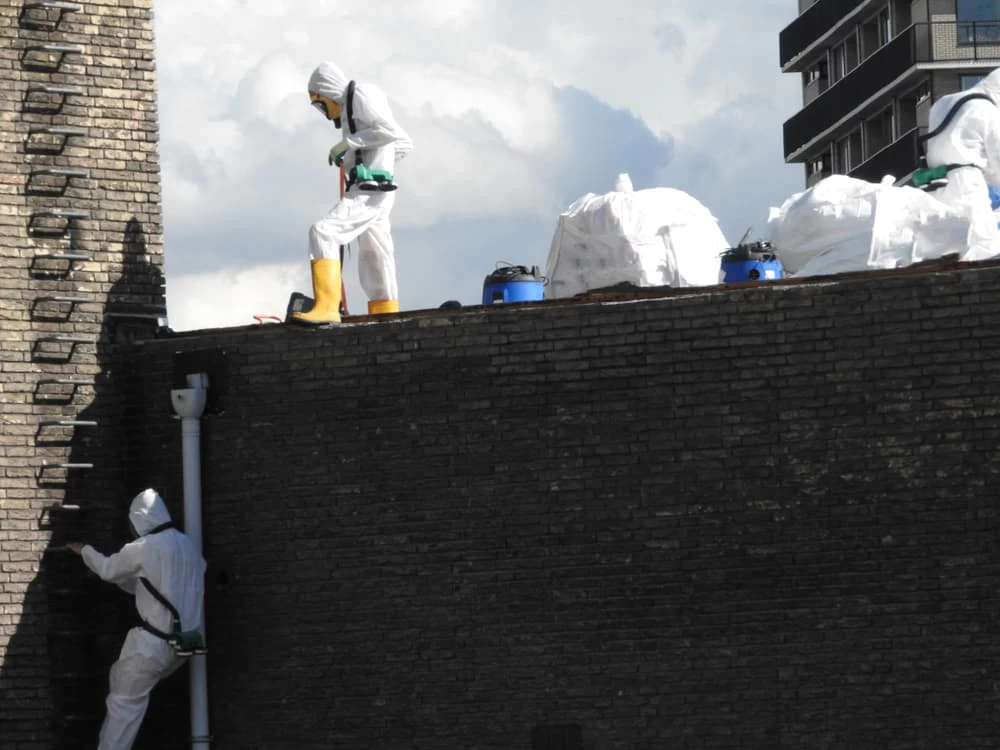
If abatement is the right call, we handle the NYSDOL notification requirements and any paperwork tied to the Town of Brookhaven before work begins. On the job, we set up full containment barriers to protect the rest of your living space, run negative air pressure units to prevent fiber migration, and remove the materials according to New York State regulations. Nothing gets bagged and tossed asbestos waste goes to a licensed disposal facility, and you get the manifest to prove it.
After removal, a certified air monitor clears the space before we leave. That clearance report is what makes everything official for your own peace of mind, for your contractor who’s waiting to come back in, and for any real estate transaction that’s riding on this getting done right.
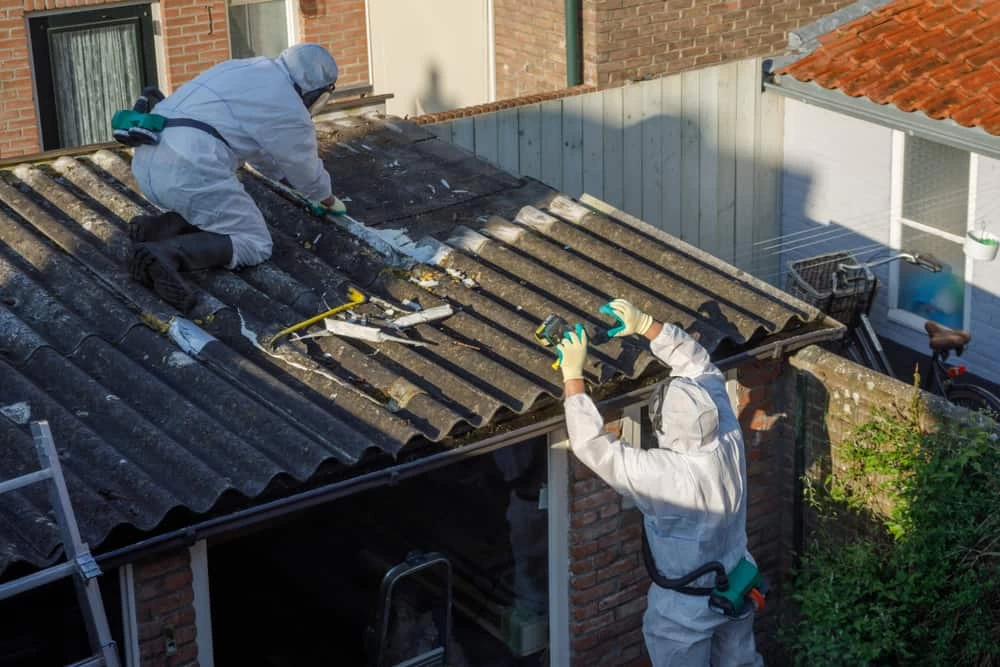
The most common asbestos calls we get from Medford involve three things: the 9×9 vinyl floor tiles in basements and kitchens, the acoustic popcorn ceilings in rooms that haven’t been updated since the 1970s, and the insulation wrapped around pipes and boilers in homes that are now switching from oil to gas heat. Suffolk County’s ongoing natural gas expansion has made that last one especially common if your home has an original oil-fired boiler installed before 1980, there’s a real chance the surrounding insulation contains asbestos and needs to come out before the new system goes in.
Asbestos tile removal, popcorn ceiling removal, pipe and boiler insulation removal these are the core of what we do here. Each one follows a specific abatement protocol under 12 NYCRR Part 56, New York State’s asbestos regulations. That means licensed contractors, certified handlers, proper containment, air monitoring, and legal disposal. No exceptions, and no shortcuts that come back to bite you later.
Every project includes the full documentation package: the lab results from initial sampling, the scope of work, our NYSDOL contractor license and handler certifications, the post-abatement air clearance report, and the disposal manifest. If you’re selling your home or working with a lender, this is exactly what they’ll ask for and we provide it as a standard part of every job, not an add-on.
Is asbestos actually common in older Medford, NY homes?
Yes, and more commonly than most homeowners expect. Medford’s residential development happened primarily between the 1950s and the 1970s which is exactly the period when asbestos was used most widely in home construction. Floor tiles, ceiling treatments, pipe insulation, joint compound, roofing materials, and boiler jacketing all contained asbestos during that era, and in many Medford homes, those original materials are still in place because the homes haven’t been significantly renovated.
The tricky part is that asbestos-containing materials aren’t always visible or obvious. The 9×9 floor tiles in your basement might be under two layers of newer flooring. The popcorn ceiling in the back bedroom might look totally intact. Undisturbed materials aren’t necessarily dangerous but the moment you start cutting, scraping, or demolishing, that changes. If your home was built before 1980 and you’re planning any kind of renovation, testing before you start is the right call.
Can I legally remove asbestos myself in New York State?
No. New York State law requires that all asbestos abatement work be performed by a contractor licensed by the New York State Department of Labor, using handlers who hold individual NYSDOL asbestos certifications. This applies to residential properties, not just commercial buildings. There is no homeowner exemption that allows you to legally perform your own asbestos removal in New York.
This matters for a few reasons beyond just legal compliance. If you do unlicensed abatement work and later sell your home, you may not be able to produce the documentation a buyer’s attorney or lender requires. If asbestos waste is improperly disposed of and traced back to your property, the liability is yours. And practically speaking, without proper containment and negative air pressure, you risk spreading fibers through the rest of your home. The regulations exist for good reason and working with a licensed contractor protects you on every front.
How long does asbestos abatement take for a typical Medford home?
It depends on the scope, but most residential asbestos abatement projects in Medford fall somewhere between one and three days for the actual removal work. A single area like a basement with floor tiles, or a room with a popcorn ceiling can often be completed in a day. Larger projects involving multiple materials or multiple areas of the home take longer.
What adds time to the overall timeline isn’t always the removal itself it’s the steps on either end. In New York State, certain projects require advance notification to the NYSDOL before work begins, which can add days to the schedule if not planned for. After removal, the space needs to pass air clearance testing before it can be re-occupied or opened back up to other contractors. If you’re working against a real estate closing deadline or a contractor schedule, the earlier you call us, the better. We can give you a realistic timeline during the initial assessment so nothing catches you off guard.
Do I need a permit for asbestos abatement in Brookhaven Town?
The permitting picture for asbestos abatement in Medford involves a few different layers. The primary regulatory requirement is through the New York State Department of Labor for most projects above a certain threshold, NYSDOL requires advance written notification before abatement begins. This is separate from a building permit and is handled at the state level.
Whether a Town of Brookhaven building permit is also required depends on the broader scope of your renovation project. If the asbestos abatement is part of a larger job finishing a basement, replacing a roof, doing a full kitchen gut the renovation work itself may require a Brookhaven Town building permit even if the abatement portion doesn’t trigger one independently. We handle the NYSDOL notification process as part of every project. If your project also requires coordination with the Brookhaven Town Building Division, we can walk you through what’s needed so you’re not navigating that process on your own.
What happens to the asbestos waste after it's removed from my home?
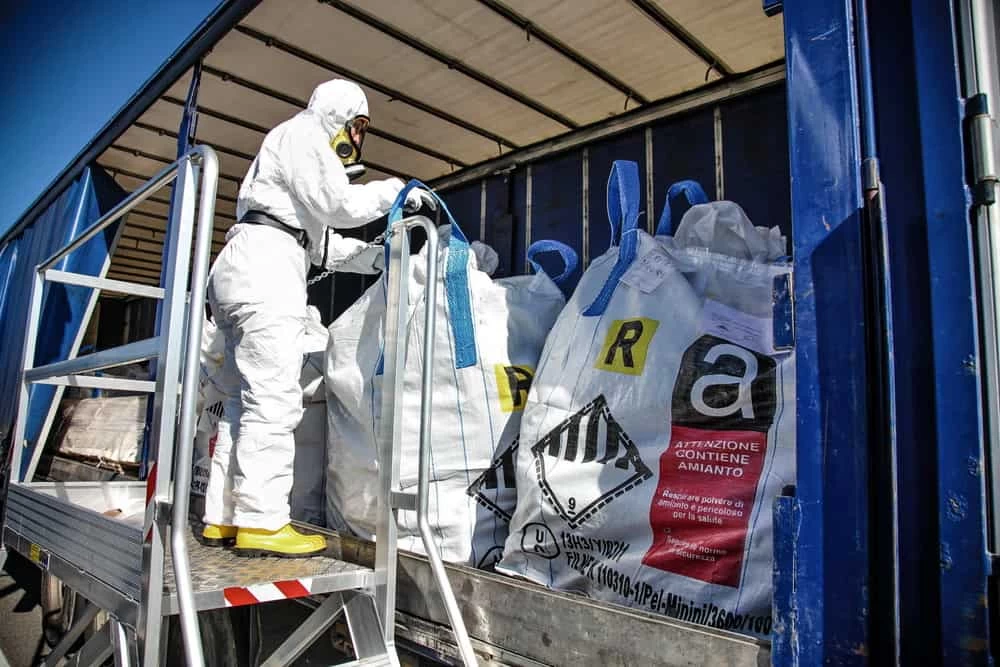
Asbestos waste is classified as hazardous material under New York State law and cannot go into regular trash, a standard dumpster, or a typical transfer station. It has to be properly packaged sealed in labeled, leak-tight containers and transported to a licensed asbestos waste disposal facility. The chain of custody matters, and it’s documented.
Every project we complete includes a disposal manifest a paper trail that shows exactly where your asbestos waste went from the moment it left your property to its final destination at a licensed facility. This isn’t just a legal formality. If you’re selling your home, your buyer’s attorney may ask for this documentation. If an insurance issue ever arises, it’s part of your record. Suffolk County has specific requirements around asbestos disposal that we follow on every job, and the manifest we provide is your proof that everything was handled correctly from start to finish.
My contractor found something suspicious during a renovation what should I do right now?
Stop work in that area. Seriously don’t let the contractor keep going, and don’t disturb the material yourself to get a closer look. If what they found turns out to be asbestos-containing, any further disturbance can release fibers into the air. The right move is to pause, keep the area closed off, and get a licensed contractor in to take a proper sample for lab analysis.
This situation comes up regularly in Medford, especially in homes where a renovation is uncovering original materials for the first time old floor tiles under newer flooring, insulation behind a wall that’s being opened up, ceiling material that’s being scraped. It’s not a reason to panic, but it is a reason to stop and handle it correctly. Call us and we’ll come assess the situation, collect samples, and give you a straight answer about what you’re dealing with. If it’s asbestos, we’ll tell you the scope and the options. If it’s not, we’ll tell you that too. Either way, you’ll know what you’re working with before anyone picks up a tool again.