If your Westbrookville home was built in the 1960s or 70s, there’s a real chance asbestos is somewhere inside it and we’re licensed under NYS Industrial Code Rule 56 to remove it safely.
I needed a professional consultation explanation of procedure for safe removal of Asbestos in my apartment complex. Without having an account yet, I was very impressed with the caring, knowledgeable and generous advice offered by Jessica, and will look forward to doing business in the future. Thank you so much! I feel much more informed about a sometimes scary endeavor. Peace. Nancy Silva Mineola, NY.
Mia Munoz
Used this company to clean up some water flood in my house. They were fast and easy to work with.very professional, Would recommend to anyone!
Nini Valle
Great company, had a flood and they responded quickly and efficiently. Billed my insurance company directly. I highly recommend this company!
joe colapietro, jr
I had pipe freeze in my basement right before a snow storm and they made to within an hour to help start the clean up process. They we by our side throughout the entire process and even helped with the insurance company. They did such a great job with the cleanup, repair, remidiation, I contracted them to perform the repairs and finishes in the basement. They came with enough manpower and material to get the job done. Leo and Jessica were nothing but a pleasure to deal with!!
Cristian Arredondo c
I had some water damage in my home and Green Island was able to take care of my issue quickly and effectively. I am very pleased with the work they did. They responded quickly and were very professional.
Michael M
Outstanding service! From the office to the field crew everyone was friendly, helpful and responsive. I highly recommend Green Island Group.
Most people don’t think about asbestos until a contractor pulls up old flooring or opens a wall and then the renovation stops cold. That’s one of the most common calls we get from Westbrookville homeowners. Someone’s mid-project, something suspicious shows up, and suddenly nobody wants to touch it until it’s handled properly. That’s exactly the situation licensed abatement exists for.
Homes in the 12785 ZIP code were primarily built during the 1960s and 70s the same era when vinyl floor tiles, pipe insulation, popcorn ceilings, and joint compound all routinely contained asbestos. When you’re renovating a kitchen, replacing HVAC, or finishing a basement in a Westbrookville home that age, you’re not just doing a home improvement project. You’re working inside a structure that was built when asbestos was standard practice.
There’s also something specific to this area worth knowing. Westbrookville sits near the Basha Kill wetlands and within the Neversink River drainage basin. Older homes here deal with moisture intrusion, and water damage doesn’t stay contained it disturbs pipe insulation, buckles old floor tiles, and creates conditions where asbestos and mold show up together. When that happens, you need one contractor who can handle both, not two separate crews trying to coordinate around each other.
Government Agencies Checked Our Work Before You Had To
We’ve been operating for over 12 years as an independently owned environmental remediation contractor not a franchise, not a directory listing that dispatches to whoever picks up. We hold a current NYS Department of Labor Asbestos Contractor License, the specific credential required to legally perform abatement anywhere in New York State, including Orange County and Westbrookville. We can show you the license number and tell you exactly how to verify it on the NYS DOL website.
We’ve completed contracts for the NYS Office of General Services, the Dormitory Authority of the State of New York, and county governments. Those institutions verify licensing, insurance, safety records, and compliance history before they hand over a public building. That same level of accountability is what you get when you call us for a 1960s ranch house on US-209 in Westbrookville.
We already serve Port Jervis, roughly 10 miles south of Westbrookville. This isn’t a service area we’re expanding into on paper we’re already working in your corridor.
No Guesswork Here's Exactly What the Job Looks Like
It starts with a confirmed assessment. Before any work begins, the materials in question need to be identified and sampled. If testing confirms asbestos-containing materials are present, we file the required notification with the NYS Department of Labor a mandatory step under Industrial Code Rule 56 that applies to all abatement work in Orange County. This is not the NYC DEP process. The ACP-5 and ACP-7 requirements that apply in the five boroughs don’t apply here. Westbrookville falls under the NYS DOL framework, and we know it well.
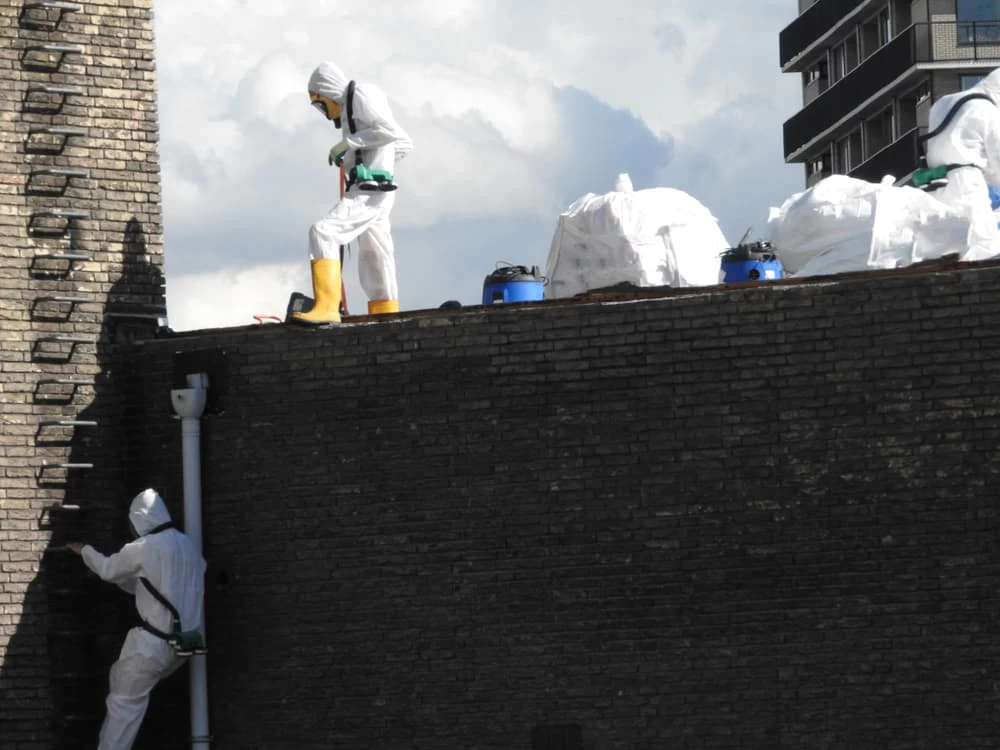
Once notifications are filed, we set up full containment negative air pressure, poly barriers, HEPA filtration before a single material is touched. Our workers hold current NYS Asbestos Handler Certification. Everything removed is wetted, double-bagged in 6-mil poly, labeled per OSHA requirements, and transported to a licensed Class II landfill. That’s not optional it’s the law, and it’s how we’ve operated every project for over a decade.
After removal, an independent licensed industrial hygienist completely separate from our crew conducts post-abatement air monitoring. You get a written clearance certificate before the space is reoccupied. If you’re selling your home, refinancing, or just want documented proof the work was done right, that certificate is your final deliverable. For homeowners in Westbrookville dealing with spring flooding from the Neversink corridor or winter pipe bursts at this area’s 900-plus-foot elevation, we’re available 24 hours a day, seven days a week because those situations don’t wait for Monday morning.
Every Material Type, Every Scenario in Older Westbrookville Homes
The homes throughout Westbrookville and the surrounding Deerpark hamlets Cuddebackville, Godeffroy, Port Orange share a common thread. They were built in an era when asbestos showed up in almost every material category. Asbestos tile removal is one of the most frequent jobs we handle in homes this age. The 9-inch-by-9-inch vinyl floor tiles common to 1960s construction have a very high probability of containing asbestos, and disturbing them without proper containment and licensing is a violation that can cost a property owner up to $10,000 per day in New York State.
Asbestos popcorn ceiling removal is another common request, particularly from the wave of remote workers who’ve relocated to this area and are renovating older Westbrookville homes to suit full-time occupancy. Textured ceilings applied before 1980 frequently tested positive for asbestos, and scraping them without testing first is exactly the kind of mistake that turns a weekend project into a regulatory problem. We also handle pipe insulation on older boiler and heating systems, roofing felt, joint compound, and transite siding panels the full range of materials common to pre-1980 construction in western Orange County.
If water damage is part of the picture which it often is in Westbrookville given the moisture conditions near the Basha Kill we handle mold remediation alongside asbestos abatement under one engagement. We also bill insurance directly and offer 0% APR financing up to $200,000 for qualifying projects, which matters in a market where median home values sit around $180,000 to $227,600 and an unplanned remediation project can represent real money.
Does my 1960s Westbrookville home likely have asbestos in it?
Statistically, yes and it’s worth taking seriously before any renovation work begins. Homes built in the 1960s and 70s were constructed during the peak period of asbestos use in residential building materials. In Westbrookville’s 12785 ZIP code, where census data shows the median home construction year is 1977, the majority of the housing stock falls directly within that window. That doesn’t mean every material in your home contains asbestos, but it does mean the probability is high enough that testing before renovation is the responsible move and in many cases, it’s required before permits are issued by the Town of Deerpark Building Department.
The materials most commonly found in Westbrookville homes of this era include vinyl floor tiles (especially the 9-inch-by-9-inch style), textured popcorn ceilings, pipe and boiler insulation, roofing felt, and drywall joint compound. Any one of these can contain asbestos, and you won’t know by looking at them. A licensed industrial hygienist can collect samples and have them analyzed, which is the only way to confirm presence or absence. Don’t assume it’s fine and don’t assume a general contractor’s opinion counts as a professional assessment.
What does asbestos abatement actually cost in Orange County, NY?
The cost varies depending on what materials are involved, how much square footage needs to be addressed, and the complexity of the containment required. For a single room with asbestos floor tile removal say, a kitchen or bathroom in a Westbrookville home you’re typically looking at a range starting around $1,500 to $3,000. Larger projects involving multiple material types, like pipe insulation plus ceiling texture plus flooring, can run $5,000 to $15,000 or more depending on scope. Whole-house abatement prior to a major renovation or demolition can go significantly higher.
What matters is getting a written estimate that breaks down exactly what’s included containment setup, material removal, waste disposal, and coordination with the independent hygienist for post-abatement air clearance. That clearance testing is a separate cost from abatement itself, but it’s required under New York State Industrial Code Rule 56, and it’s the documentation that proves the job was done correctly. We offer 0% APR financing up to $200,000 for qualifying projects, which is worth knowing if the estimate comes in higher than expected. No other contractor serving the Westbrookville area currently offers that.
Can I stay in my house while asbestos removal is happening?
It depends on the scope and location of the work. For a contained single-room abatement a bathroom floor, for example it’s sometimes possible to remain in other parts of the home if proper negative air pressure and poly containment barriers are in place and the work area is fully isolated. For larger projects involving multiple rooms, HVAC systems, or materials in shared living areas, vacating the home during active abatement is the safer and more practical approach.
Under New York State regulations, the abated space cannot be reoccupied until post-abatement air monitoring is completed by an independent licensed industrial hygienist and a written clearance certificate is issued. That’s not a formality it’s the legal standard, and it’s the only way to confirm the air is actually safe to breathe. For Westbrookville homeowners dealing with an abatement project triggered by water damage or a pipe burst which happens in older homes at this elevation during hard winters we can help coordinate the timeline to minimize displacement. Call us and we’ll walk through what makes sense for your specific situation.
Is asbestos removal in Westbrookville regulated differently than in New York City?
Yes, and this distinction matters. Asbestos abatement in Westbrookville and the broader Town of Deerpark is governed by New York State Industrial Code Rule 56, administered by the NYS Department of Labor. This is the statewide framework that applies to all asbestos work outside of New York City. The NYC DEP’s ACP-5 and ACP-7 processes which apply to properties within the five boroughs do not apply here. If a contractor quotes you a price and mentions ACP-5 paperwork for a Westbrookville property, that’s a red flag.
Under NYS DOL Code Rule 56, any contractor performing abatement must hold a current NYS DOL Asbestos Contractor License. Individual workers must hold NYS Asbestos Handler Certification. Prior to abatement above de minimis thresholds, a notification must be filed with the NYS DOL. Post-abatement air monitoring must be conducted by an independent licensed industrial hygienist, and a clearance certificate must be issued before reoccupancy. Asbestos waste must be properly packaged and transported to a licensed Class II landfill. Fines for unlicensed work can reach $10,000 per day per violation and that liability doesn’t fall only on the contractor. Property owners can face consequences too.
What happens if asbestos is discovered mid-renovation in my Westbrookville home?
Stop work. That’s the short answer, and it’s not an overreaction it’s the right call. If a contractor opens a wall, pulls up flooring, or disturbs ceiling material and finds something that looks like it could be asbestos-containing, work in that area needs to stop until the material is properly tested and, if confirmed, addressed by a licensed abatement contractor. Continuing to disturb suspected ACMs without proper containment and licensing exposes everyone on-site to potential fiber release and creates regulatory liability for the property owner.
This scenario is more common in Westbrookville than most people expect. The 1960s and 70s housing stock throughout the area was built with materials that routinely contained asbestos, and many renovation projects kitchen gut-rehabs, bathroom updates, HVAC replacements encounter them. The remote workers and newcomers who’ve moved into Westbrookville over the past few years and are renovating older homes are frequently the ones calling us mid-project. We can respond quickly, assess the situation, collect samples for testing, and get the abatement scheduled so your renovation can move forward. We’re available 24/7 and already serving the Port Jervis and Westbrookville corridor.
Does homeowners insurance cover asbestos removal in New York State?
Sometimes but it depends on how the claim is framed and what triggered the discovery. Standard homeowners insurance policies in New York typically do not cover asbestos removal as a standalone maintenance or renovation expense. However, if asbestos-containing materials are disturbed or damaged as a result of a covered event a pipe burst, water intrusion, or storm damage the remediation costs associated with that event may be covered under your policy’s dwelling or additional living expense provisions. This is a meaningful distinction for Westbrookville homeowners, where older homes near the Basha Kill wetlands and the Neversink River drainage basin deal with real moisture and flooding exposure.
The key is documentation. Insurance adjusters need to see a clear connection between the covered event and the asbestos disturbance. We bill insurance directly and can provide the written assessments, scope of work documentation, and post-abatement clearance certificates that adjusters require. If you’re unsure whether your situation qualifies, call us before you call your insurance company we can help you understand what documentation you’ll need and what the process looks like from the abatement side. Having that conversation early makes the claims process significantly smoother.