Your Lake Hill Home Was Built in the Perfect Era for Asbestos
Most homes in Lake Hill were built in the 1940s through the 1970s the exact era when asbestos was standard in floor tiles, pipe insulation, and ceilings. If you’re renovating, selling, or just found something suspicious, we handle licensed asbestos abatement the right way.
I needed a professional consultation explanation of procedure for safe removal of Asbestos in my apartment complex. Without having an account yet, I was very impressed with the caring, knowledgeable and generous advice offered by Jessica, and will look forward to doing business in the future. Thank you so much! I feel much more informed about a sometimes scary endeavor. Peace. Nancy Silva Mineola, NY.
Mia Munoz
Used this company to clean up some water flood in my house. They were fast and easy to work with.very professional, Would recommend to anyone!
Nini Valle
Great company, had a flood and they responded quickly and efficiently. Billed my insurance company directly. I highly recommend this company!
joe colapietro, jr
I had pipe freeze in my basement right before a snow storm and they made to within an hour to help start the clean up process. They we by our side throughout the entire process and even helped with the insurance company. They did such a great job with the cleanup, repair, remidiation, I contracted them to perform the repairs and finishes in the basement. They came with enough manpower and material to get the job done. Leo and Jessica were nothing but a pleasure to deal with!!
Cristian Arredondo c
I had some water damage in my home and Green Island was able to take care of my issue quickly and effectively. I am very pleased with the work they did. They responded quickly and were very professional.
Michael M
Outstanding service! From the office to the field crew everyone was friendly, helpful and responsive. I highly recommend Green Island Group.
You stop guessing. That’s the first thing. When asbestos-containing materials are properly identified, contained, and removed by a licensed contractor not just painted over or ignored you have documented proof that your home is safe. That matters whether you’re living in Lake Hill full-time, preparing to sell, or finally starting that renovation you’ve been putting off.
Lake Hill’s housing stock is overwhelmingly from the 1940s through the 1970s, and the homes here reflect it older boilers wrapped in pipe insulation, vinyl floor tiles in basements and kitchens, textured ceilings that haven’t been touched in decades. These aren’t hypothetical risks. They’re common in nearly every pre-1980 home on this side of Route 212, and they stay stable until something disturbs them a renovation, a flood, a storm that punches through a wall.
The Catskills climate adds another layer. Freeze-thaw cycles and the kind of moisture that comes with mountain winters accelerate the breakdown of older building materials. What was once stable asbestos can become friable meaning airborne faster than most homeowners realize. Getting ahead of it, with a licensed abatement contractor and post-removal air clearance documentation, means you’re not dealing with a much bigger problem later.
We hold the NYS Department of Labor Asbestos Handling License the specific credential required by New York State law to legally perform asbestos abatement. Not a general contractor’s license. Not an OSHA card. The actual license that legally authorizes this work under NYS Industrial Code Rule 56. In a rural market like Lake Hill, where homeowners are sometimes approached by handymen or general contractors offering to “handle” asbestos, that distinction matters more than most people realize.
We serve all of Ulster County, including Lake Hill and the surrounding Route 212 corridor Bearsville, Willow, Shady, and the broader Town of Woodstock. We’re not a Kingston-based operation that treats mountain calls as an inconvenience. We’re already in this market, familiar with the property types out here, and equipped to respond without the delays or travel premiums that come with contractors who don’t normally work this far into the Catskills.
Beyond asbestos, we handle mold remediation, water damage, fire damage, storm repair, and demolition. For older Catskills homes where problems rarely come alone, having one company that can handle the full picture is a real advantage.
No Surprises Here's Exactly What the Process Looks Like
It starts with an assessment. Before anything is removed, the materials in question need to be properly identified. If you’re renovating a pre-1974 home in the Town of Woodstock, NYS Industrial Code Rule 56 actually requires an asbestos survey before permits can be issued so this step isn’t optional, and we handle it as part of the process.
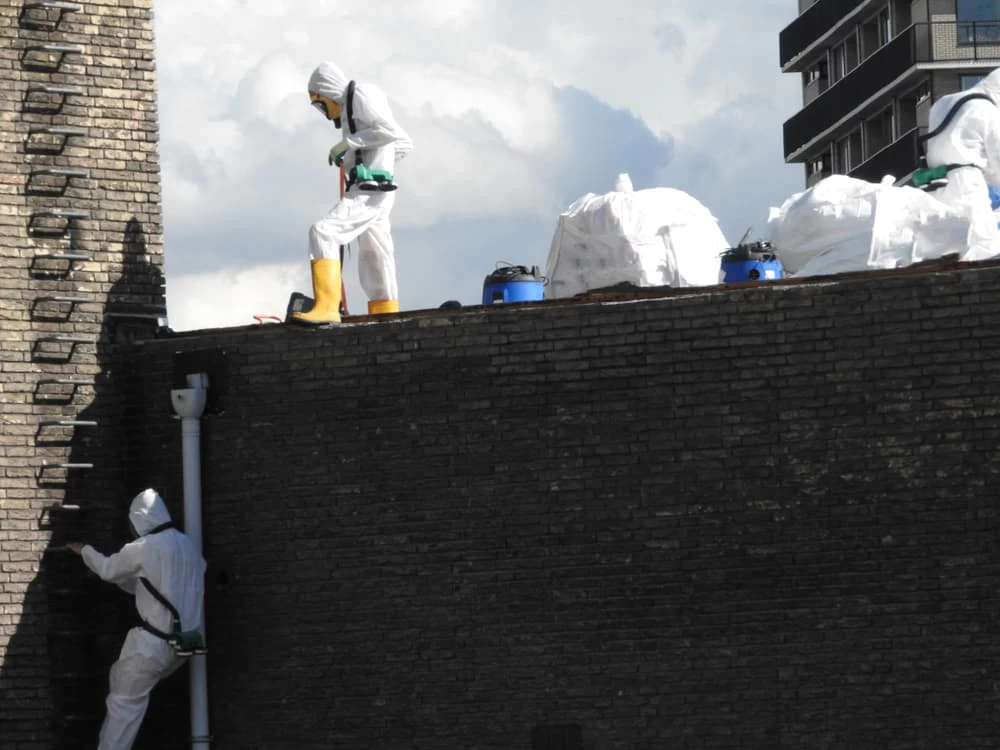
Once the scope is confirmed, the work area is contained using negative air pressure and proper barriers to prevent fibers from spreading to other parts of your home. The materials whether that’s floor tile and mastic, pipe insulation, popcorn ceiling, or something else are removed by certified workers following NYS DOL protocols. Nothing gets bagged and tossed in a dumpster. Asbestos waste is transported to a permitted disposal facility, with documentation maintained for 30 years as required by state law. Given Lake Hill’s proximity to Cooper Lake a protected reservoir serving Kingston and the Town of Ulster proper disposal here isn’t just a legal requirement, it’s genuinely important.
After removal, air clearance testing is conducted to confirm the space is clean. You get the results. That documentation is yours to keep for your own peace of mind, for a future sale, or for your insurance file.
The asbestos materials we remove most often in Lake Hill and the surrounding Woodstock area reflect exactly what you’d expect from homes built between the 1940s and 1970s. Nine-by-nine vinyl floor tiles especially in basements, kitchens, and utility rooms are among the most common finds, along with the black mastic adhesive underneath them. Asbestos tile removal requires careful handling because the adhesive is often more hazardous than the tile itself, and disturbing it without proper containment spreads fibers throughout the space.
Popcorn ceiling removal is another frequent call. Textured acoustic ceilings installed before 1980 have a high likelihood of containing asbestos, and sanding or scraping them without testing first is exactly the kind of disturbance that turns a manageable situation into an emergency. Pipe and boiler insulation common in the older heating systems found throughout Lake Hill homes is handled as well, along with joint compound, exterior cement-asbestos siding, and attic vermiculite insulation where present.
Every project includes proper containment setup, certified removal, compliant disposal with documentation, and post-abatement air clearance testing. We also manage permit coordination with the Town of Woodstock’s building department where required, so your renovation timeline doesn’t stall waiting on paperwork. If your project involves multiple hazards asbestos alongside mold or water damage that’s handled under the same roof.
Do I need an asbestos survey before renovating my Lake Hill home?
If your home was built before 1974, yes and it’s not optional. Under NYS Industrial Code Rule 56, any renovation, remodeling, repair, or demolition of a pre-1974 structure requires a pre-construction asbestos survey before work begins. The Town of Woodstock, like every municipality in New York State, enforces this requirement through its building permit process. If you pull a permit for a kitchen remodel, bathroom update, or basement renovation on an older Lake Hill home, the asbestos survey is part of what needs to happen before work can legally proceed.
The practical reason this matters in Lake Hill specifically is that most of the housing stock here falls squarely in the affected era. Homes built in the 1940s through the 1970s which describes a significant portion of what’s out here along the Route 212 corridor are the highest-risk category for asbestos-containing materials. Getting the survey done upfront protects you legally, keeps your project on schedule, and prevents the far more disruptive scenario of discovering asbestos mid-renovation when contractors have already opened walls or disturbed flooring.
How do I know if my floor tiles or popcorn ceiling contain asbestos?
You can’t tell by looking at them. Asbestos-containing materials don’t look different from non-asbestos materials the only way to know is to have a sample tested by a certified asbestos investigator. Nine-by-nine inch vinyl floor tiles and their black adhesive backing are among the most commonly tested materials in Catskills homes from the mid-20th century, and textured popcorn ceilings installed before 1980 have a statistically high rate of asbestos content. If your home was built or renovated between the 1940s and the late 1970s, both of those materials deserve testing before anyone touches them.
The important thing to understand is that intact, undisturbed asbestos-containing materials aren’t necessarily an immediate health risk. The risk comes from disturbance sanding, scraping, cutting, or demolishing materials that release fibers into the air. If you’re not planning any work and the materials are in good condition, the right call may be to leave them alone and monitor them. But if renovation is on the table, or if the materials are showing signs of deterioration which is more common in older mountain homes that have dealt with moisture and freeze-thaw cycles over the years testing first is always the right move.
What happens if a contractor who isn't licensed disturbs asbestos in my home?
It creates a serious problem for your health, your property, and legally. Under NYS Industrial Code Rule 56, any asbestos disturbance exceeding 10 square feet or 25 linear feet must be performed exclusively by a contractor holding the NYS Department of Labor Asbestos Handling License. A general contractor, plumber, electrician, or roofer who disturbs asbestos-containing materials without that license is operating illegally, regardless of how experienced they are in their own trade.
The practical consequence for you as a homeowner is that improperly disturbed asbestos can contaminate large areas of your home HVAC systems, adjacent rooms, and materials that were previously clean. Remediation after an unlicensed disturbance is significantly more expensive and complex than a planned abatement would have been. There’s also a liability issue: if asbestos contamination is later discovered during a home inspection, a sale, or a health investigation and it’s traced to unlicensed work, the legal and financial exposure falls on the property owner. In a high-value real estate market like Lake Hill, where homes are frequently selling in the $700K–$900K range, that’s not a risk worth taking to save a few hundred dollars upfront.
How long does asbestos abatement take, and will I need to leave my home?
It depends on the scope of the project, but most residential asbestos abatement jobs in the Lake Hill area fall somewhere between one and three days for a single material type floor tile in a basement, for example, or a popcorn ceiling in one or two rooms. Larger projects involving multiple materials or whole-home surveys before a renovation will take longer. We’ll give you a clear timeline during the assessment phase so you’re not guessing.
Whether you need to vacate depends on where the work is and how the containment is set up. For work in an occupied living area, temporary relocation during the active abatement phase is typically recommended not because the containment isn’t effective, but because it’s the conservative and responsible approach, especially in homes with older residents or anyone with respiratory sensitivities. For work confined to a basement or utility space with proper isolation, staying in other parts of the home is sometimes feasible. That’s a conversation worth having during the initial walkthrough, when the specific conditions of your home can be assessed directly.
Does homeowner's insurance cover asbestos removal in New York State?
It depends on how the asbestos situation came about. Standard homeowner’s insurance policies in New York generally do not cover asbestos removal as a routine maintenance or renovation cost if you’re simply updating an older home and discover asbestos in the process, that’s typically out-of-pocket. However, if the asbestos disturbance was caused by a covered event a storm that damaged your roof and disturbed insulation, flooding that buckled old floor tiles, or fire damage that compromised materials there’s a reasonable basis to file a claim, and many policies will cover the remediation as part of the broader damage restoration.
The Catskills region has seen significant storm and flood events in recent years, and Lake Hill is not immune. When storm damage triggers an asbestos situation, having a contractor who can document the connection between the covered event and the abatement need is important for getting the claim approved. We bill insurance companies directly and handle the documentation on our end, which removes a significant administrative burden when you’re already dealing with property damage. If you’re unsure whether your situation qualifies, the best first step is calling us we can help you understand what’s likely covered before you commit to anything.
Why should I choose a local Ulster County contractor over a larger regional company?
A contractor who regularly works in Ulster County and specifically in the Town of Woodstock understands things a larger regional operator may not. We know that Lake Hill homes are predominantly from the mid-20th century, that the mountain climate here accelerates material deterioration in ways that suburban homes don’t experience, and that the Town of Woodstock’s building department has specific permit requirements tied to pre-1974 construction. That familiarity translates into faster assessments, fewer surprises, and a process that doesn’t stall because a contractor is learning your local regulatory environment on your dime.
There’s also the practical reality of being a remote hamlet. Lake Hill sits at the end of Route 212 it’s not on the way to anything for a contractor based in Westchester or the Hudson Valley suburbs. Companies that don’t regularly work this far into the Catskills often add travel premiums, extend timelines, or deprioritize rural calls when their schedule gets busy. We already serve the Route 212 corridor as part of our established Ulster County territory. When something comes up whether it’s a planned renovation or an emergency situation at 10 PM on a winter night we’re not treating Lake Hill as an inconvenient detour.