When the Renovation Stops, Lincoln Park Calls Us First
Most Lincoln Park homeowners don’t go looking for asbestos abatement they find out they need it mid-project. We’re the NYS DOL-licensed team that picks up where your contractor had to stop.
I needed a professional consultation explanation of procedure for safe removal of Asbestos in my apartment complex. Without having an account yet, I was very impressed with the caring, knowledgeable and generous advice offered by Jessica, and will look forward to doing business in the future. Thank you so much! I feel much more informed about a sometimes scary endeavor. Peace. Nancy Silva Mineola, NY.
Mia Munoz
Used this company to clean up some water flood in my house. They were fast and easy to work with.very professional, Would recommend to anyone!
Nini Valle
Great company, had a flood and they responded quickly and efficiently. Billed my insurance company directly. I highly recommend this company!
joe colapietro, jr
I had pipe freeze in my basement right before a snow storm and they made to within an hour to help start the clean up process. They we by our side throughout the entire process and even helped with the insurance company. They did such a great job with the cleanup, repair, remidiation, I contracted them to perform the repairs and finishes in the basement. They came with enough manpower and material to get the job done. Leo and Jessica were nothing but a pleasure to deal with!!
Cristian Arredondo c
I had some water damage in my home and Green Island was able to take care of my issue quickly and effectively. I am very pleased with the work they did. They responded quickly and were very professional.
Michael M
Outstanding service! From the office to the field crew everyone was friendly, helpful and responsive. I highly recommend Green Island Group.
Lincoln Park’s housing stock tells a pretty clear story. The majority of homes here were built between 1940 and 1969 the exact window when asbestos was used in nearly everything: floor tiles, pipe insulation, joint compound, roofing felt, popcorn ceilings. If you’re renovating a ranch home or Cape Cod off Ulster Avenue, there’s a real chance you’re going to encounter it. That’s just what the data shows for this neighborhood.
What you get on the other side of proper abatement is simple: a cleared space, documented air monitoring results, and a project that can actually move forward. No guessing. No assumptions about safety. You get paperwork that proves the space is safe and that matters whether you’re a homeowner with kids in the house, a landlord turning over a rental unit, or a seller trying to close on time.
The freeze-thaw cycles Ulster County sees every winter also accelerate wear on older building materials. Pipe insulation in basements, roofing materials, exterior siding these don’t hold up forever, and when they start to break down, the urgency goes up. Getting ahead of it before a renovation or after a storm keeps the situation manageable instead of critical.
We hold a NYS Department of Labor Asbestos Handling License the specific credential New York State legally requires before any abatement work can begin. Not a general contractor license. Not a home improvement license. The actual one. You can verify it through the NYS DOL’s public contractor database, and we’d encourage you to do exactly that before hiring anyone for this work.
We serve Lincoln Park and the broader Town of Ulster because we know this area. We know what the housing stock looks like on the residential streets east of Green Acres Golf Club. We know the Town of Ulster’s building department process, and we handle the NYS DOL notification filings as part of the job not as an add-on you have to figure out yourself.
Beyond asbestos, we’re also IICRC certified for water and fire damage, USEPA Lead and RRP certified, and hold NYS MBE, WBE, and MWBE designations. When your project involves more than one problem and in mid-century homes, it often does you’re not calling three different contractors to sort it out.
No Surprises Here's Exactly What the Process Looks Like
It starts with an assessment. Before anything is touched, we identify what materials are present, where they are, and what condition they’re in. In Lincoln Park homes from the 1950s and 1960s, that typically means checking the basement for pipe insulation wrap, looking at original floor tiles and the black mastic adhesive underneath them, and evaluating any textured ceilings or original drywall. We’re not guessing we’re looking in the places where asbestos actually shows up in homes of this era.
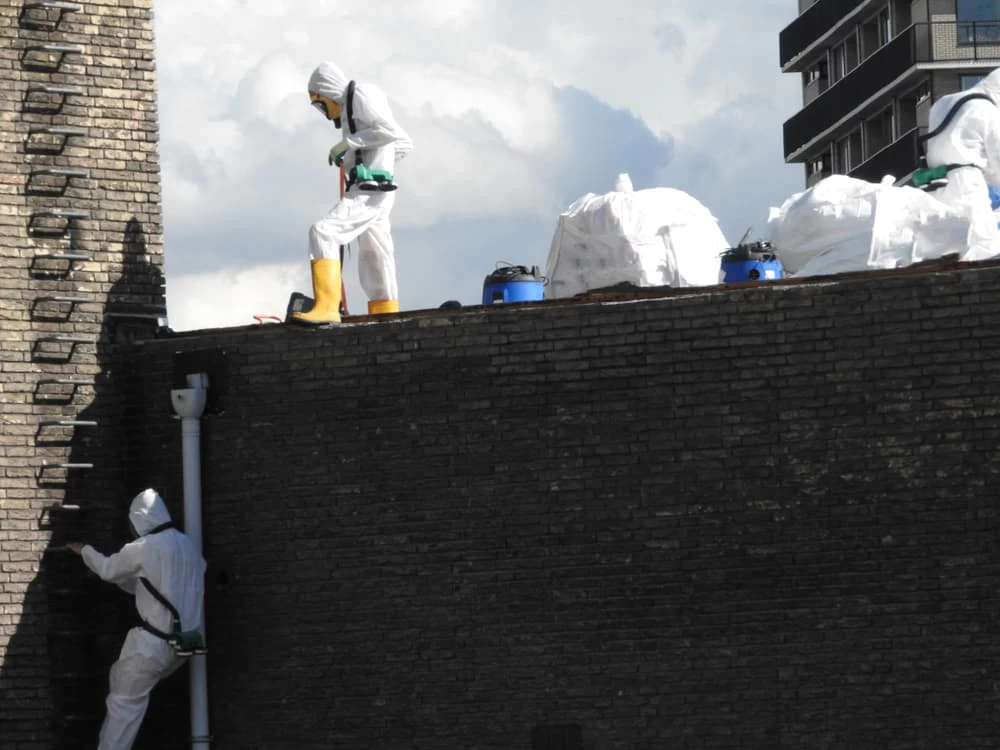
Once we know what we’re dealing with, we handle the NYS DOL Asbestos Control Bureau notification before work begins. That’s a legal requirement under NYS Industrial Code Rule 56, and it’s something many property owners don’t realize they’re responsible for. We take that off your plate entirely. Then the actual abatement work happens in a contained, controlled environment negative air pressure, proper PPE, regulated containment barriers following state protocol from start to finish.
After removal, we conduct post-clearance air monitoring. You get documented results showing fiber levels are within safe limits. That documentation matters for your contractor, your insurance company, your real estate agent, and frankly, your own peace of mind. Waste is disposed of at approved facilities with a proper manifest and those records are maintained for 30 years as required by law. When we hand the space back to you, the job is actually done.
What's Included When Lincoln Park Homeowners Call Us
The most common materials we remove in Lincoln Park are 9×9 vinyl floor tiles with black mastic adhesive an almost universal feature in kitchens and bathrooms of homes built in the 1950s and 1960s and pipe insulation on basement boilers and hot water systems. Textured popcorn ceiling removal is another frequent request, especially from homeowners updating living rooms and bedrooms in mid-century ranch homes before listing or refinishing. These aren’t exotic edge cases. They’re the standard profile of a Lincoln Park renovation.
Every job includes the regulatory filings, containment setup, licensed removal, and post-abatement air monitoring with documented clearance results. We also bill insurance directly when asbestos abatement is connected to a covered loss storm damage, water intrusion, or a contractor stop-work situation. That’s not something most abatement contractors offer, and it makes a real difference when you’re already managing a stressful situation.
For commercial property owners along the Route 9W corridor, we handle asbestos surveys and abatement for retail, office, and light commercial spaces ahead of renovation or tenant buildout. Our NYS MBE, WBE, and MWBE certifications also make us a qualifying vendor for municipal and institutional procurement in Ulster County something no generic out-of-area contractor can match. Whatever the scope, the process is the same: licensed, documented, and done right.
Does my Lincoln Park home actually have asbestos if it was built before 1970?
There’s no way to know for certain without testing, but the probability is high for homes in Lincoln Park. Houses built here between 1940 and 1969 which represent the majority of the hamlet’s housing stock were constructed during the peak years of asbestos use in American residential building. Manufacturers put it in floor tile adhesives, pipe and boiler insulation, textured ceiling coatings, roofing felt, and joint compound. The material was cheap, fire-resistant, and widely available. Builders used it everywhere.
The only way to confirm whether a specific material contains asbestos is to have it sampled and tested by a qualified professional. If you’re planning any renovation that will disturb original flooring, ceilings, walls, or mechanical systems in a pre-1970 Lincoln Park home, get the assessment done before your contractor starts. Discovering asbestos mid-project costs more in delays and emergency scheduling than addressing it upfront ever would.
How much does asbestos abatement typically cost for a home in Lincoln Park, NY?
Cost depends heavily on the scope how much material is present, what type it is, and how accessible it is. For a single room of 9×9 floor tile removal in a Lincoln Park ranch home, you might be looking at a few hundred to a couple thousand dollars. A full basement pipe insulation removal on a mid-century boiler system is a larger job and priced accordingly. Projects involving multiple material types across several areas of the home can run several thousand dollars or more.
What’s worth understanding is that the cost of licensed abatement is almost always lower than the cost of the problems that come from skipping it a failed home inspection, a delayed closing, a liability issue if a future owner discovers improperly handled asbestos, or a health situation you can’t undo. We give you a clear scope and price before any work begins. No surprises mid-job.
Do I need a permit for asbestos removal in the Town of Ulster?
Yes and the requirements go beyond a standard building permit. Under New York State Industrial Code Rule 56, any asbestos disturbance that meets or exceeds 10 square feet or 25 linear feet requires notification to the NYS Department of Labor Asbestos Control Bureau before work begins. That threshold is easy to hit. Removing a single bathroom floor, a section of pipe insulation, or a portion of a textured ceiling can get you there quickly.
The Town of Ulster Building Department enforces NYS Uniform Code requirements for renovation and demolition projects, and those projects must comply with state asbestos regulations as well. Only a NYS DOL-licensed asbestos contractor can legally perform the work. We handle the notification filings and permit coordination as part of our standard process so you’re not left trying to figure out the regulatory side while also managing a renovation timeline.
What's the difference between asbestos encapsulation and full removal which one do I need?
Encapsulation means sealing the asbestos-containing material in place so it can’t release fibers. Full abatement means removing it entirely. Which approach is appropriate depends on the condition of the material and what you’re planning to do with the space. If the material is intact, undisturbed, and not in an area that will be renovated, encapsulation may be a reasonable short-term option. If you’re renovating, selling, or the material is deteriorating, removal is typically the right call.
In Lincoln Park’s mid-century housing stock, we frequently see pipe insulation that has already started to crumble and floor tile adhesive that’s been partially disturbed by previous flooring work. In those cases, encapsulation isn’t a viable option the material is already releasing or at risk of releasing fibers, and removal is the only responsible path. We’ll tell you honestly which approach fits your situation after the assessment.
Can I stay in my home during asbestos abatement in Lincoln Park?
It depends on the scope and location of the work. For a contained job say, floor tile removal in a single room with proper negative air pressure and containment barriers many homeowners can remain in other parts of the house. For larger projects involving multiple areas, basement mechanical systems, or materials that are already friable and actively releasing fibers, temporary relocation during the active abatement phase is the safer choice.
We’ll give you a straight answer on this after we assess the job. We’re not going to tell you to leave for a week if a single afternoon of contained work would be sufficient, and we’re not going to tell you it’s fine to stay if the scope genuinely warrants otherwise. The post-abatement air monitoring results are what ultimately confirm the space is safe for full re-occupancy and you’ll have that documentation in hand before we consider the job complete.
What happens if my contractor already disturbed asbestos before we knew it was there?
This is one of the most common calls we get, and it’s a stressful situation but it’s also a manageable one if you act quickly. If work has already disturbed a material that turns out to contain asbestos, the first step is to stop all activity in that area immediately. Don’t try to clean it up, don’t run HVAC systems that circulate air through the space, and don’t let other workers back into the area until a licensed contractor has assessed the situation.
In Lincoln Park, this scenario comes up regularly during kitchen and bathroom renovations in 1950s and 1960s homes, when a contractor pulls up old flooring and hits the original tile layer underneath often without realizing what the black adhesive beneath it contains. We respond to these situations quickly, assess the extent of disturbance, handle the required regulatory notifications, and get the space properly remediated so your project can continue. The sooner you call after a disturbance, the more straightforward the resolution tends to be.