When Your Mapledale Renovation Uncovers What the Previous Owner Left Behind
Older Catskill Mountain homes hide things. If your renovation just uncovered something suspicious, we provide fully licensed asbestos abatement in Mapledale permits, air testing, and disposal handled start to finish.
I needed a professional consultation explanation of procedure for safe removal of Asbestos in my apartment complex. Without having an account yet, I was very impressed with the caring, knowledgeable and generous advice offered by Jessica, and will look forward to doing business in the future. Thank you so much! I feel much more informed about a sometimes scary endeavor. Peace. Nancy Silva Mineola, NY.
Mia Munoz
Used this company to clean up some water flood in my house. They were fast and easy to work with.very professional, Would recommend to anyone!
Nini Valle
Great company, had a flood and they responded quickly and efficiently. Billed my insurance company directly. I highly recommend this company!
joe colapietro, jr
I had pipe freeze in my basement right before a snow storm and they made to within an hour to help start the clean up process. They we by our side throughout the entire process and even helped with the insurance company. They did such a great job with the cleanup, repair, remidiation, I contracted them to perform the repairs and finishes in the basement. They came with enough manpower and material to get the job done. Leo and Jessica were nothing but a pleasure to deal with!!
Cristian Arredondo c
I had some water damage in my home and Green Island was able to take care of my issue quickly and effectively. I am very pleased with the work they did. They responded quickly and were very professional.
Michael M
Outstanding service! From the office to the field crew everyone was friendly, helpful and responsive. I highly recommend Green Island Group.
You get your renovation back. That’s the most immediate thing. Whether you’re gutting a mid-century cabin or finally updating the floors in a Mapledale home that hasn’t been touched in decades, a confirmed asbestos discovery brings everything to a halt and it stays halted until a licensed contractor handles it properly. Once it’s done right, you move forward.
The older housing stock in Mapledale and the surrounding Town of Hardenburgh tells a specific story. Homes built in the 1940s through 1970s which make up a significant portion of what’s standing in this part of the Catskills were constructed during the era when asbestos was standard in floor tiles, pipe insulation, boiler wrap, joint compound, and roofing materials. Many of these properties sat largely undisturbed for years. When renovation work starts, or when a hard Catskill winter damages a crawl space or mechanical room, those materials don’t stay stable forever.
Beyond clearing the way for your project, proper abatement gives you documented proof that the work was done. Air clearance testing after removal confirms what you can’t see. That documentation matters when you’re selling a property, closing out a renovation, or simply trying to know that your home in Mapledale is actually safe to be in.
Most contractors working in Mapledale and the surrounding area are skilled at what they do but asbestos abatement requires a separate credential that general contractors don’t carry. We hold a NYS Department of Labor Asbestos Handling License, which is the specific state-issued certification legally required for any qualifying asbestos disturbance in New York. That’s not a general contractor license with asbestos added on. It’s a distinct, regulated credential and in a rural market like Mapledale, it’s genuinely uncommon.
We also hold IICRC certification, USEPA Lead and RRP credentials, NYC BIC Trade Waste licensing, and NYS MBE/WBE/MWBE/SBE designations. These aren’t credentials collected for a website. They’re what makes it possible to work in the most regulated environments in the state and bring that same standard to a property in Mapledale.
We serve Mapledale directly, not as an afterthought to a broader service area. If you’re managing a property in the Catskill Park and need a contractor who will actually show up, handle the paperwork, and do the job to a documented standard, that’s exactly what we do.
It starts with an assessment. Before any work begins, we evaluate the suspected materials, confirm what you’re dealing with, and give you a clear picture of the scope. If you’re not sure whether you have a problem, that initial conversation is still worth having knowing what’s there (or isn’t) is always better than guessing mid-renovation.
Once the scope is confirmed, we handle the NYS Department of Labor notification required under Industrial Code Rule 56 before abatement begins. This is a mandatory step for qualifying projects in New York, and it involves specific forms, timelines, and documentation. You don’t need to navigate that process yourself it’s handled. For properties in Mapledale, where the Town’s building permit process runs locally and all vehicular access routes run through Delaware County, having one contractor coordinate the full regulatory side of the job is a practical necessity, not a luxury.
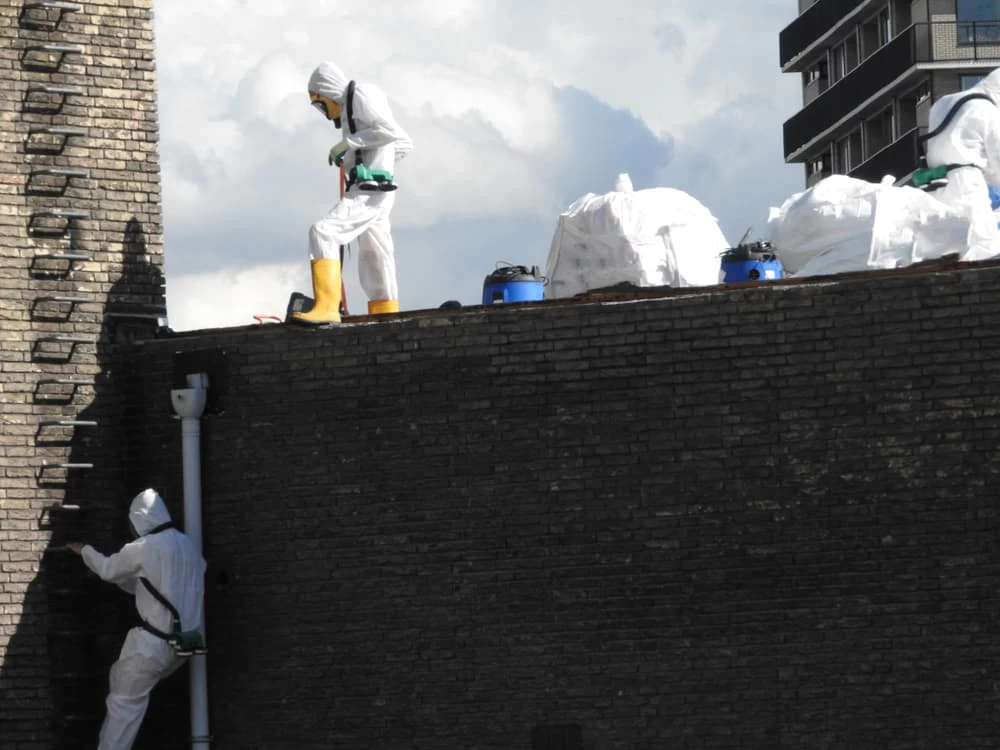
The removal itself follows strict containment and safety protocols. After the work is complete, post-abatement air monitoring is conducted to confirm clearance and you receive the documentation. That report is your proof: for your own peace of mind, for your insurance carrier, or for a buyer’s inspection if the property is going to market. The job isn’t finished when the material is gone. It’s finished when the air test confirms it.
Asbestos shows up in more places than most people expect in older Catskills homes. The 9×9-inch floor tiles common in mid-century construction are one of the most frequent discoveries during renovations. Pipe insulation and boiler wrap in basements and mechanical rooms are another especially in homes where the heating system hasn’t been updated in years. Popcorn ceilings, joint compound, roofing materials, and exterior siding installed before 1980 all carry real risk. We handle asbestos tile removal, popcorn ceiling removal, pipe and boiler insulation abatement, and full-structure assessments for properties throughout Mapledale and the surrounding area.
Every project includes proper containment, licensed removal, and NYS DEC-compliant disposal. Asbestos waste doesn’t get dropped at the nearest facility it gets bagged, manifested, transported, and disposed of at an approved site, in full compliance with state and federal requirements. In the Catskill Park, where the DEC actively oversees environmental compliance and the surrounding land is a protected public resource, that distinction matters. Cutting corners on disposal here carries consequences that go beyond a fine.
We also handle mold remediation, water damage restoration, lead abatement, and related environmental services. If your renovation project in Mapledale turns up more than one problem which happens more often than not in homes this age you’re not coordinating three separate contractors across mountain roads. You’re making one call.
Does asbestos abatement in Mapledale, NY require a permit or state notification?
Yes and this is one of the most commonly misunderstood parts of the process. Under NYS Industrial Code Rule 56, any asbestos disturbance of 10 square feet or more of material (or 25 linear feet of pipe insulation) requires formal notification to the NYS Department of Labor’s Asbestos Control Bureau before work begins. The Albany District Office has jurisdiction over Ulster County, which includes Mapledale and the Town of Hardenburgh. This isn’t optional, and it isn’t something a general contractor can handle on your behalf it requires a licensed abatement contractor to file.
The notification involves specific forms, required timelines, and project documentation. On top of that, the Town of Hardenburgh issues building permits for renovation work locally, and those two processes need to be coordinated. We manage the DOL notification and work alongside the local permit process so you’re not left trying to figure out state bureaucracy from a hamlet with limited local resources.
How do I know if the old floor tiles or popcorn ceiling in my Mapledale home contain asbestos?
You can’t tell by looking. That’s the honest answer. The 9×9-inch floor tiles that were standard in mid-century residential construction common in older Mapledale cabins and homes throughout the area frequently contain asbestos, but there’s no visual indicator that distinguishes them from tiles that don’t. The same is true for popcorn ceilings applied before 1980, pipe insulation, joint compound, and certain roofing materials. The only way to know for certain is testing by a qualified professional.
If your Mapledale home was built before 1980 and hasn’t had a documented asbestos assessment, it’s worth getting one before any renovation work disturbs those materials. In a community where many homes have had limited renovation history and the housing stock dates to the mid-20th century, the probability of encountering asbestos-containing materials during a gut renovation or system upgrade is real. A pre-project assessment is a straightforward step that either clears the way or tells you exactly what you’re dealing with before work begins.
What happens if asbestos is discovered in the middle of a renovation project?
Stop the work. That’s the first and most important step. If a contractor uncovers suspected asbestos mid-project during floor demo, while opening walls, or when removing old insulation work in that area needs to pause until a licensed abatement contractor assesses and addresses the material. Continuing to disturb asbestos-containing materials without proper containment and licensing creates both a health hazard and a legal liability.
This scenario is more common than most homeowners expect, particularly in older Catskills properties where the renovation history is thin and the original building materials were never documented. A general contractor working on your home cannot legally perform the abatement themselves they need to refer that scope to a licensed abatement contractor. We can step in at that point, assess what’s there, handle the DOL notification, complete the removal under proper containment, and get your project back on track. The goal is to close the gap as quickly as possible so the broader renovation isn’t stalled any longer than it has to be.
Can winter weather or storm damage in the Catskills cause an asbestos emergency?
It can, and it does. The Catskill Mountains experience significant freeze-thaw cycles, heavy snowfall, and high moisture levels that accelerate the deterioration of older building materials. Pipe insulation in unheated spaces is particularly vulnerable when a pipe bursts in a Mapledale cabin during a hard February freeze, the insulation around it can be disturbed or become friable, meaning it crumbles and releases fibers into the air. A tree coming through a roof during an ice storm can do the same to roofing materials or ceiling assemblies.
These aren’t slow-moving renovation scenarios they’re emergency situations that need a licensed response. We operate 24/7, including emergency response for exactly these cases. In a community where the nearest city is over an hour away and there’s no local asbestos contractor on call, having a licensed team that will actually respond at any hour is not a minor detail. If you’re dealing with storm damage to an older structure in Mapledale, don’t wait to make the call.
Does asbestos abatement need to be completed before selling a home in Hardenburgh, NY?
Not always required by law, but frequently necessary in practice. Asbestos discovered during a buyer’s inspection can kill a deal, trigger renegotiation, or result in a closing contingency that puts the timeline entirely in the buyer’s hands. In the current Catskills real estate market which has seen significant activity from buyers relocating from New York City and the broader metro area buyers and their inspectors are increasingly thorough about environmental hazards in older properties.
If you’re selling a home in Mapledale or the surrounding area and you know or suspect asbestos-containing materials are present, addressing it before listing gives you control over the process. You choose the contractor, the timeline, and the documentation. You go to closing with a clearance report in hand rather than negotiating under pressure. We provide pre-sale consultations that help you understand exactly what’s there and what needs to be done without pressure to expand the scope beyond what’s actually necessary.
How far will we travel to serve properties in Mapledale and the Catskills?
Mapledale is on our service area not as a footnote, but as a named location we actively serve. The Town of Hardenburgh is one of the most geographically isolated municipalities in Ulster County. All vehicular access routes run through Delaware or Sullivan County, and most contractors who cover the region have never driven the roads into Mapledale. That access gap is real, and it’s one of the main reasons property owners in this area struggle to find licensed abatement contractors who will actually show up.
We make the trip. We’re equipped to handle the logistics of reaching properties in Mapledale, coordinate with owners who aren’t on-site full-time, and work around the schedules of seasonal and second-home property owners who may be managing a Catskills renovation from a distance. If you’ve been told by other contractors that you’re too far out, that’s not the answer you’ll get here. Call for a free estimate and find out what the process looks like for your specific property.