If your Potterville home was built or renovated before 1980, there’s a real chance asbestos is somewhere inside it and the only way to know for sure is to have a licensed contractor look. We serve Potterville with full NYS DOL-licensed asbestos abatement, so you’re not guessing, and you’re not cutting corners in a watershed zone where the stakes are higher than most.
I needed a professional consultation explanation of procedure for safe removal of Asbestos in my apartment complex. Without having an account yet, I was very impressed with the caring, knowledgeable and generous advice offered by Jessica, and will look forward to doing business in the future. Thank you so much! I feel much more informed about a sometimes scary endeavor. Peace. Nancy Silva Mineola, NY.
Mia Munoz
Used this company to clean up some water flood in my house. They were fast and easy to work with.very professional, Would recommend to anyone!
Nini Valle
Great company, had a flood and they responded quickly and efficiently. Billed my insurance company directly. I highly recommend this company!
joe colapietro, jr
I had pipe freeze in my basement right before a snow storm and they made to within an hour to help start the clean up process. They we by our side throughout the entire process and even helped with the insurance company. They did such a great job with the cleanup, repair, remidiation, I contracted them to perform the repairs and finishes in the basement. They came with enough manpower and material to get the job done. Leo and Jessica were nothing but a pleasure to deal with!!
Cristian Arredondo c
I had some water damage in my home and Green Island was able to take care of my issue quickly and effectively. I am very pleased with the work they did. They responded quickly and were very professional.
Michael M
Outstanding service! From the office to the field crew everyone was friendly, helpful and responsive. I highly recommend Green Island Group.
You stop wondering. That’s the most honest way to put it. Whether you’re mid-renovation, preparing to sell, or you just found something during a repair job, the anxiety of not knowing what’s in your walls or your floors, or your pipe insulation doesn’t go away on its own. It goes away when a licensed team removes it, documents it, and hands you a clearance certificate that proves the air is clean.
For homes in Potterville and the surrounding area, that outcome matters more than it does in a lot of other places. The Town of Rochester has the largest concentration of continuously inhabited old stone houses in New York State some dating back to the 17th century. These structures were built and rebuilt over generations, and a lot of that mid-century renovation work used asbestos-containing materials: pipe wrap, floor tile adhesive, joint compound, acoustic ceilings, furnace insulation. The bones of the house may be 200 years old, but the hazards are often hiding in the 1960s updates.
There’s also the watershed factor. Potterville sits near the Rondout Reservoir, which supplies roughly half of New York City’s daily water. That proximity adds an environmental compliance layer that doesn’t exist in most parts of the state. Improper asbestos disposal here isn’t just a NYS DOL violation it can intersect with NYC DEP watershed protection rules. Working with a licensed contractor who understands that context isn’t optional. It’s just the right call.
We’re a fully licensed environmental remediation company serving Ulster County, including Potterville and the remote hamlets inside Catskill Park that most contractors won’t bother quoting. If you’ve ever called around and heard “we don’t service that area” that’s not something you’ll hear from us. Potterville is on our service area list for a reason.
We hold the NYS DOL Asbestos Handling License required by law under Industrial Code Rule 56 the specific credential that separates legal abatement work from contractors who are winging it under a general license. We’re also USEPA Lead and RRP certified, NYS DOL Mold certified, and IICRC certified for water and fire damage. In a hamlet like Potterville where older homes routinely turn up multiple hazards at once, having one company that can handle all of it matters.
We bill insurance directly, we handle permit applications on your behalf, and we’re available around the clock including emergencies. For property owners in Potterville managing projects near the Rondout Reservoir watershed, that combination of credentials and availability isn’t just convenient. It’s protection.
It starts with an assessment. Before anything is touched, we identify what materials are present, where they are, and what condition they’re in. For pre-1980 homes in Potterville and the Town of Rochester especially those with multiple rounds of renovation layered over historic construction this step is thorough because it has to be. You can’t abate what you haven’t found.
From there, we file the required project notification with the Albany District Office of the NYS DOL Asbestos Control Bureau, which has jurisdiction over Ulster County. If your renovation requires a local building permit, we handle that paperwork too. This matters because no permitted renovation on a pre-1980 structure in New York State can move forward until asbestos has been properly addressed. We keep your project timeline intact instead of letting it stall at the permit stage.
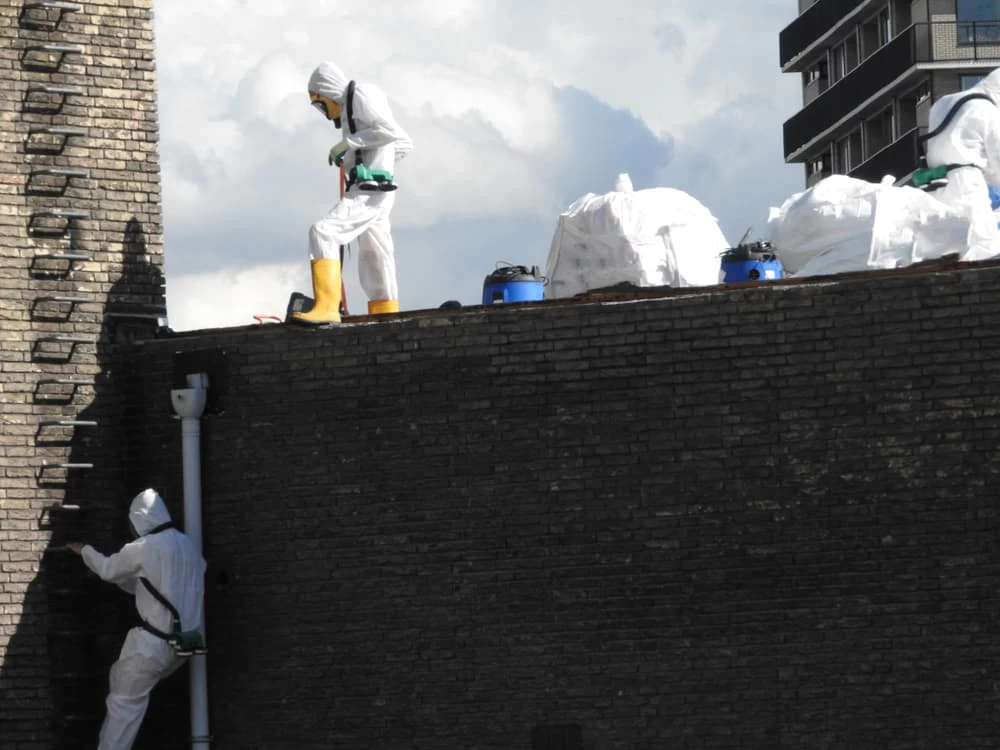
The abatement itself is done under full containment negative air pressure, sealed work zones, certified workers. Nothing leaves the site improperly. Waste disposal follows NYS DOL and, where applicable, NYC DEP watershed compliance requirements. When the work is done, we conduct post-abatement air monitoring. You get a clearance certificate you can hold onto, show a buyer, or file with your permit. That document is how you know the job was done right not just our word for it.
Asbestos abatement is the core of what we do in older homes like those throughout Potterville and the Town of Rochester, but it’s rarely the only thing that needs attention. Pipe insulation, floor tiles and their adhesive backing, joint compound, popcorn ceilings, roofing shingles, and boiler wrap are the most common materials we find and in a hamlet like Potterville, where homes have been standing and evolving for generations, it’s not unusual to find more than one type in the same building.
Beyond asbestos removal and remediation, we’re equipped to handle lead paint under our USEPA RRP certification, mold under our NYS DOL Mold certification, water and fire damage under our IICRC credentials, HVAC cleaning under NADCA standards, and selective or full demolition. If your renovation uncovers a combination of issues which is common in the western Ulster County hamlets inside Catskill Park you don’t have to coordinate four different contractors in a remote area. You make one call.
For commercial property owners, municipalities, or institutional clients in the region, our NYS MBE, WBE, and MWBE certifications open procurement channels that most environmental contractors in this market can’t access. Whether it’s a residential renovation near the Rondout Reservoir or a larger commercial project, the process is the same: licensed, documented, and cleared before we leave.
Do I legally need a licensed contractor for asbestos removal in Potterville, NY?
Yes and the requirement is specific. Under NYS Industrial Code Rule 56, any disturbance of 10 square feet or more, or 25 linear feet or more, of asbestos-containing material requires a contractor holding a NYS DOL Asbestos Handling License. A general contractor license doesn’t cover it. An OSHA certification doesn’t cover it. The license has to be the specific one issued by the New York State Department of Labor, and you can verify any contractor’s credentials through the NYS DOL lookup tool before signing anything.
This matters especially in Potterville and the Town of Rochester area, where older homes frequently contain asbestos in multiple locations pipe insulation, floor tile adhesive, joint compound, acoustic ceilings and where a single renovation project can easily disturb materials across several rooms. The Albany District Office of the NYS DOL Asbestos Control Bureau has jurisdiction over Ulster County and enforces these requirements. If you’re unsure whether your project crosses the threshold, the safest move is a professional assessment before any demolition or renovation work begins.
How much does asbestos removal typically cost for homes in Ulster County?
The honest range is wide: asbestos removal in New York State typically runs anywhere from $1,500 to $30,000 or more, depending on how much material is present, what type it is, and how accessible it is. Pipe insulation in a basement mechanical room is a different job than asbestos floor tile across an entire first floor, and both are different from a full popcorn ceiling removal throughout a multi-story home. Prices across the industry have also increased 8 to 12 percent in recent years, so quotes from a few years ago aren’t reliable benchmarks.
For homes in Potterville, the scope question is particularly important because older properties in the area often contain multiple types of asbestos-containing materials from different renovation eras. A proper assessment before you get a quote isn’t an upsell it’s how you avoid being surprised mid-project when additional materials are discovered. We’ll give you a clear picture of what’s there before any work begins, so the number you agree to is the number you can plan around.
What happens if asbestos is found during a renovation on my older Potterville property?
Work stops until it’s addressed that’s the short answer. Under New York State law, once asbestos-containing materials are identified in a renovation or demolition project, a licensed abatement contractor must handle the removal before any other trades can continue. Your general contractor, your plumber, your electrician none of them can legally proceed in an area where asbestos has been confirmed until clearance is documented.
In practical terms, this means the sooner you get an assessment, the better. Many homeowners in Potterville and the Town of Rochester area particularly those who purchased older properties for renovation find it far less disruptive to schedule an asbestos survey before permits are pulled rather than discovering ACM after framing has already started. The Town of Rochester building department, consistent with NYS DOL guidance, expects an asbestos survey before demolition or renovation permits are acted upon on pre-1980 structures. Getting ahead of that requirement keeps your project timeline intact and avoids the kind of stop-work situation that can cost more than the abatement itself.
Does living near the Rondout Reservoir affect asbestos abatement rules in this area?
It adds a layer that most contractors in this market have never thought about. The Rondout Reservoir sits near Potterville and supplies approximately half of New York City’s daily water through the Delaware Aqueduct. The NYC Department of Environmental Protection actively enforces watershed protection rules in this area and while those rules primarily govern surface water runoff and land use, they create an environmental compliance context that affects how waste materials, including asbestos-containing debris, should be handled and disposed of in this zone.
Improper asbestos disposal near the Rondout Reservoir watershed isn’t just a NYS DOL violation it can trigger separate enforcement consequences under NYC DEP oversight. A licensed contractor who understands this and follows documented disposal protocols protects you from liability that goes well beyond a standard asbestos fine. It’s one of the reasons that hiring a fully licensed, properly insured contractor in Potterville carries more weight than it might in a community farther from the watershed. The stakes here are just higher, and the paperwork trail matters more.
Can asbestos be found in a stone house or historic home in the Town of Rochester?
Absolutely and it’s more common than most people expect. The structural shell of a 17th or 18th century stone house may be original, but the interior finishes, mechanical systems, and insulation were almost certainly updated at some point during the 20th century. Those updates particularly anything done between the 1940s and late 1970s are where asbestos shows up. Pipe insulation on heating systems, floor tile and its black mastic adhesive, joint compound on interior walls, acoustic ceiling texture, and roofing materials are all common finds in homes that were modernized during the asbestos era.
The Town of Rochester has the largest concentration of continuously inhabited old stone houses in New York State, some dating back to the 17th century. That heritage is one of the things that makes this area and Potterville specifically remarkable. The structural age of the building doesn’t tell you much about the hazards inside. What matters is what was added, and when. An assessment that accounts for the full renovation history of the property is the only reliable way to know what you’re dealing with.
What does a post-abatement air clearance certificate actually prove, and do I need one?
It proves the air inside the work area meets the safety threshold required by NYS DOL standards measured by an independent air monitoring professional after containment is removed and before the space is re-occupied. It’s not a formality. It’s the only objective confirmation that the abatement was done correctly and completely. Without it, you’re taking the contractor’s word for it, which isn’t a position you want to be in when the material involved is a known carcinogen.
For homeowners in Potterville, the clearance certificate has practical value beyond peace of mind. If you’re selling the property, it’s documentation a buyer’s attorney will want to see. If the renovation continues after abatement, it’s what allows other trades to return to the space legally. And given the complexity of older homes in the area where multiple materials from multiple renovation eras can be present in the same structure having a documented, third-party-verified clearance is the only way to close the loop with confidence. We include post-abatement air monitoring as a standard part of every job, not something you have to ask for separately.