Northwest Harbor Renovations Done Right No Compliance Gaps
If you’re renovating a home in Northwest Harbor, asbestos abatement isn’t optional it’s the step that keeps your project legal, your timeline intact, and your property protected.
I needed a professional consultation explanation of procedure for safe removal of Asbestos in my apartment complex. Without having an account yet, I was very impressed with the caring, knowledgeable and generous advice offered by Jessica, and will look forward to doing business in the future. Thank you so much! I feel much more informed about a sometimes scary endeavor. Peace. Nancy Silva Mineola, NY.
Mia Munoz
Used this company to clean up some water flood in my house. They were fast and easy to work with.very professional, Would recommend to anyone!
Nini Valle
Great company, had a flood and they responded quickly and efficiently. Billed my insurance company directly. I highly recommend this company!
joe colapietro, jr
I had pipe freeze in my basement right before a snow storm and they made to within an hour to help start the clean up process. They we by our side throughout the entire process and even helped with the insurance company. They did such a great job with the cleanup, repair, remidiation, I contracted them to perform the repairs and finishes in the basement. They came with enough manpower and material to get the job done. Leo and Jessica were nothing but a pleasure to deal with!!
Cristian Arredondo c
I had some water damage in my home and Green Island was able to take care of my issue quickly and effectively. I am very pleased with the work they did. They responded quickly and were very professional.
Michael M
Outstanding service! From the office to the field crew everyone was friendly, helpful and responsive. I highly recommend Green Island Group.
Your Renovation Stays on Schedule and on the Right Side of the Law
Most renovation projects in Northwest Harbor hit a wall the moment a contractor opens up a floor, ceiling, or wall in a home built before 1980. Vinyl floor tiles, popcorn ceilings, pipe insulation, asbestos-cement siding these materials are common in the post-war and mid-century homes that define this community. When they show up, the project stops until a licensed abatement contractor handles it properly. That’s exactly where we come in.
Northwest Harbor sits on a peninsula surrounded by Gardiners Bay, Three Mile Harbor, and Northwest Harbor bay. The coastal exposure salt air, humidity, moisture cycling through older structures accelerates the breakdown of asbestos-containing materials over time. A floor tile that looked intact last season can be crumbling by the time your crew arrives in the fall. Friable asbestos is a different situation than intact material, and it requires specialized handling.
For a property in this market where median home values exceed $2.2 million and real estate transactions involve serious legal scrutiny the documentation matters just as much as the removal itself. Air clearance certificates, NYS Department of Labor notifications, proper waste disposal records: these aren’t formalities. They’re what protect your investment when it’s time to sell, rent, or hand the keys to your general contractor.
We Know Northwest Harbor Homes and What's Hidden Inside Them
We’re a Suffolk County-based asbestos abatement and environmental remediation company. We work with homeowners, property managers, general contractors, and renovation teams across Long Island including the East Hampton corridor that runs from Northwest Harbor through Sag Harbor and out toward Amagansett. We know the building stock here. We know which eras to watch for, which materials show up most often, and what the Town of East Hampton’s Building Department expects when it comes to permitting and project documentation.
Many property owners in Northwest Harbor are managing renovations from New York City, coordinating through a contractor or property manager and trusting that the environmental piece gets handled correctly. That trust means something to us. We communicate clearly, show up when we say we will, and deliver the paperwork your attorney, your contractor, and your buyer’s inspector will need clean and complete, every time.
We’re fully licensed under New York State Industrial Code Rule 56, carry full liability insurance, and employ certified asbestos handlers and supervisors on every job. No shortcuts, no workarounds.
From First Call to Final Clearance Here's What to Expect
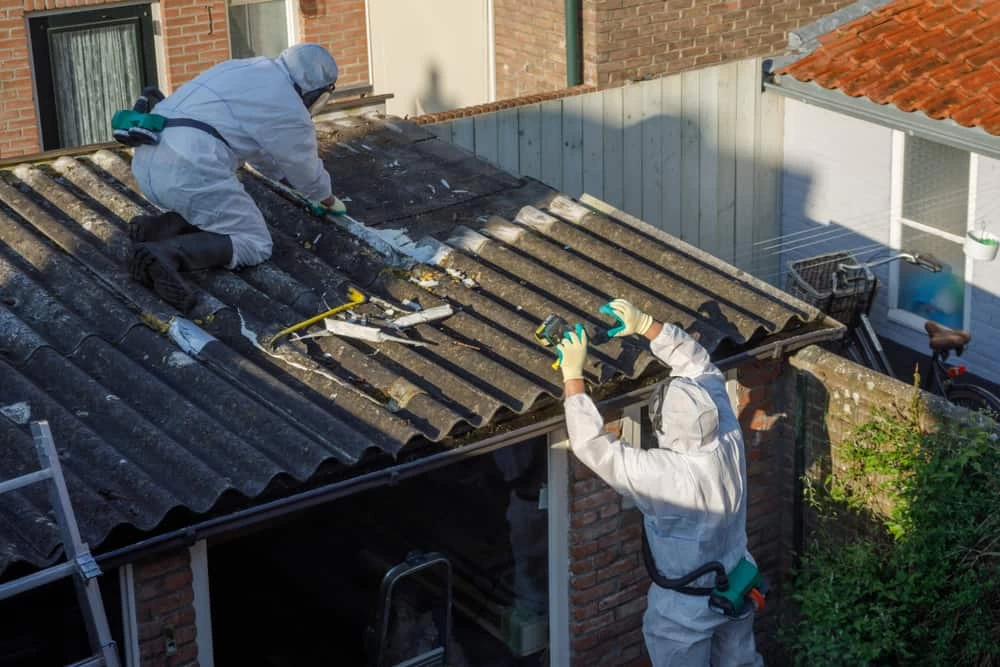
It starts with an inspection. A licensed asbestos inspector walks the property, identifies suspect materials, and collects samples for laboratory analysis. In a Northwest Harbor home especially one built between the late 1940s and 1979, when most of the area first developed that means checking floors, ceilings, pipe insulation, siding, roofing, and joint compound. The lab results tell us exactly what we’re dealing with and where.
From there, we design the abatement scope, file the required notification with the NYS Department of Labor Asbestos Control Bureau, and pull any permits required by the Town of East Hampton Building Department. This step is non-negotiable under NYS Industrial Code Rule 56, and it’s one that some contractors skip or mishandle. We don’t. The notification and permit process is built into every project we run, not added as an afterthought.
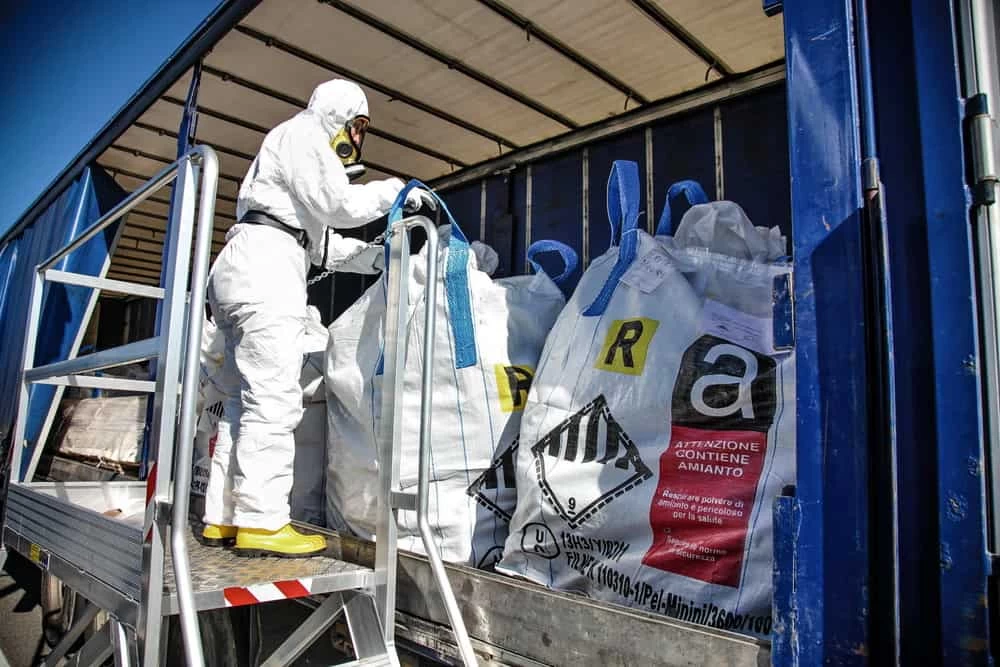
Once the site is prepped and properly contained, our certified crew removes the materials, packages and transports the waste according to NYSDEC regulations, and clears the containment area. Then comes air monitoring independent testing that confirms the space is safe for re-occupancy and gives your general contractor a clean bill of health to get back to work. That final air clearance certificate closes the loop. It’s what your contractor needs to proceed, what your attorney needs for the transaction file, and what gives you confidence that the job was done right.
What We Handle and Why It Matters in Northwest Harbor Specifically
Asbestos abatement isn’t one-size-fits-all, and in Northwest Harbor, the range of materials we encounter reflects the area’s specific development history. The earliest homes in the area date to the late 1940s and 1950s prime asbestos-use era. That means vinyl asbestos floor tile is one of the most common materials we find, often buried under layers of newer flooring that were installed decades later without anyone checking what was underneath. Asbestos popcorn ceiling removal is another frequent scope item, particularly in homes renovated through the 1970s. Pipe and boiler insulation, asbestos-cement siding on mid-century exteriors, and asbestos-containing joint compound in older drywall round out what we typically encounter in Northwest Harbor.
We handle the full scope: inspection and sampling, lab analysis, abatement project design, licensed removal with proper containment, waste transport and disposal, and final air clearance certification. You don’t need to manage multiple vendors or wonder whether the testing company and the removal crew are on the same page we handle it as one integrated process. For property owners in the Landfall community, Grassy Hollow Estates, or anywhere throughout Northwest Harbor who are coordinating a renovation from off-site, that single point of contact is worth a lot.
Every project we complete in East Hampton Town is fully compliant with NYS ICR-56, EPA NESHAP regulations, and NYSDEC waste disposal requirements. The documentation we produce is built to hold up under real estate due diligence because in this market, it has to.
Does my Northwest Harbor home actually need asbestos testing before renovation?
If your home was built before 1980 and a significant portion of Northwest Harbor homes were, given that development in the area began in the late 1940s and continued through the 1970s then yes, testing before any demolition or disturbance work is legally required under New York State Industrial Code Rule 56. This isn’t a recommendation. It’s a regulatory requirement that applies to any renovation or demolition project that could disturb asbestos-containing materials.
The practical reason matters too. Contractors working in East Hampton regularly encounter asbestos in floors, ceilings, and insulation during gut renovations of older homes. If your crew breaks open a wall or pulls up flooring without a prior inspection and ACMs are found, the project stops and now you’re dealing with an emergency scope instead of a planned one. Testing upfront is faster, cheaper, and far less disruptive than discovering the problem mid-demo. A licensed inspector can walk the property, collect samples, and have lab results back to you quickly so your renovation timeline stays intact.
How long does asbestos abatement take for a typical home renovation project?
The timeline depends on what’s found, where it is, and how much of it there is. For a targeted scope say, asbestos tile removal in a single room or popcorn ceiling abatement in a few areas the removal work itself might take one to three days. Larger scopes involving multiple materials throughout a whole-house renovation can take longer. What people often underestimate is the time on either side of the removal: the inspection and lab turnaround at the front end, and the air monitoring and clearance certification at the back end.
For Northwest Harbor property owners working with a general contractor on a fall or winter renovation trying to have the property ready before the spring season planning the asbestos abatement phase early in the project schedule is the move that keeps everything else on track. We’ve seen projects get delayed not because the removal took long, but because the abatement wasn’t scoped and scheduled until the demo crew was already on-site. Reach out before your contractor mobilizes, not after.
What materials in an older East Hampton home are most likely to contain asbestos?
In homes built throughout Northwest Harbor from the late 1940s through the late 1970s, the most commonly found asbestos-containing materials are vinyl floor tiles often called VAT and the black mastic adhesive used to install them. These are frequently found under newer flooring that was installed on top without the original tiles being removed. Acoustic spray texture on ceilings, commonly called popcorn ceiling, is another material we find regularly in homes from this era.
Beyond those two, pipe and boiler insulation in older heating systems is a significant source especially in homes that haven’t had their mechanical systems updated. Asbestos-cement siding, sometimes called Transite, was used on the exterior of many mid-century homes and is still present on properties throughout the East End. Joint compound used in drywall finishing through the late 1970s can also contain asbestos. Without testing, you don’t know and in a home of this age and value, guessing isn’t a reasonable approach.
Is asbestos abatement in Northwest Harbor required to be permitted through the town?
Yes. Asbestos abatement projects in Northwest Harbor fall under the jurisdiction of the Town of East Hampton Building Department, and depending on the scope of the renovation, permits may be required at the local level in addition to the state-level notification required under NYS Industrial Code Rule 56. The ICR-56 notification filed with the NYS Department of Labor Asbestos Control Bureau is required for virtually all abatement projects and must be submitted before work begins. This is a separate requirement from any local building permit.
We handle both. We file the NYS DOL notification, coordinate with the Town of East Hampton Building Department as needed, and make sure the project is properly documented from start to finish. For property owners managing a renovation remotely which is common in a community where many homes are seasonal second properties having a contractor who manages the permitting process without needing to be hand-held through it is a significant practical advantage. You shouldn’t have to become an expert in New York State asbestos regulations to renovate your home.
Can asbestos in my Northwest Harbor home become more dangerous over time if left alone?
It can, and the conditions in Northwest Harbor make this a more relevant concern than it might be in a drier inland location. Asbestos-containing materials that are in good condition and left undisturbed are generally considered lower risk the fibers aren’t released into the air when the material is intact. But materials that are deteriorating, crumbling, or water-damaged are a different story. When asbestos-containing materials become friable meaning they can be crumbled or reduced to powder by hand pressure they release fibers more readily, and that’s where the health risk becomes real.
Northwest Harbor’s coastal position, surrounded by Gardiners Bay and Three Mile Harbor, means homes here are exposed to elevated humidity, salt air, and moisture infiltration year-round. Properties that sit vacant for extended periods which is common given the area’s high seasonal occupancy rate can develop moisture issues in attics, crawl spaces, and basements that accelerate the breakdown of older insulation, floor tiles, and ceiling materials. If a property has been sitting unoccupied and you’re opening it up for a renovation, an inspection before anything else is touched is the right first step.
How much does asbestos abatement typically cost for a home in Northwest Harbor?
Cost varies based on the type of material, the quantity, the location within the structure, and the complexity of the containment required. For a targeted scope removing asbestos floor tile in a single room or addressing popcorn ceiling in a defined area you might be looking at a few hundred to several thousand dollars. Larger whole-house scopes involving multiple material types, significant square footage, or difficult access areas will run higher. The inspection and lab analysis, the abatement itself, waste disposal, and final air clearance monitoring are all components of the total cost.
In Northwest Harbor specifically, the value of doing this correctly the first time is hard to overstate. Homes in this market regularly trade at $2 million and above, and real estate transactions here involve attorneys and inspectors who will look closely at the environmental documentation. Non-compliant or undocumented abatement or work done by an unlicensed contractor can create liability that surfaces at the worst possible moment: during a sale. The cost of professional, licensed abatement is a small fraction of what a compliance problem could cost you in a delayed or collapsed transaction. We provide written estimates before any work begins so you know exactly what you’re looking at.