If you’re renovating a home along Route 212 and something doesn’t look right under the floor or above the ceiling, don’t guess asbestos abatement in Shady starts with knowing what you’re actually dealing with.
I needed a professional consultation explanation of procedure for safe removal of Asbestos in my apartment complex. Without having an account yet, I was very impressed with the caring, knowledgeable and generous advice offered by Jessica, and will look forward to doing business in the future. Thank you so much! I feel much more informed about a sometimes scary endeavor. Peace. Nancy Silva Mineola, NY.
Mia Munoz
Used this company to clean up some water flood in my house. They were fast and easy to work with.very professional, Would recommend to anyone!
Nini Valle
Great company, had a flood and they responded quickly and efficiently. Billed my insurance company directly. I highly recommend this company!
joe colapietro, jr
I had pipe freeze in my basement right before a snow storm and they made to within an hour to help start the clean up process. They we by our side throughout the entire process and even helped with the insurance company. They did such a great job with the cleanup, repair, remidiation, I contracted them to perform the repairs and finishes in the basement. They came with enough manpower and material to get the job done. Leo and Jessica were nothing but a pleasure to deal with!!
Cristian Arredondo c
I had some water damage in my home and Green Island was able to take care of my issue quickly and effectively. I am very pleased with the work they did. They responded quickly and were very professional.
Michael M
Outstanding service! From the office to the field crew everyone was friendly, helpful and responsive. I highly recommend Green Island Group.
Most people in Shady don’t go looking for asbestos. They find it mid-renovation pulling up old flooring, tearing out a ceiling, replacing a boiler and suddenly the project stops. What was supposed to be a two-week job becomes a question mark. That’s the moment where having the right contractor matters more than anything else.
When asbestos is handled correctly, your project gets back on track with documentation that protects you now and when you eventually sell. In a market where Woodstock-area homes are valued at a median of $675,600, a properly remediated and documented property is a different asset than one with a question hanging over it.
The homes along this corridor many of them built decades before asbestos was phased out sit in a mountain environment that accelerates material deterioration. The ridges surrounding Shady block direct sunlight and hold moisture. Freeze-thaw cycles hit hard up here. Pipe insulation, floor tiles, and ceiling materials in these older structures don’t age the same way they do in a drier climate, and that matters when you’re assessing whether something is friable and actively dangerous or still contained. You need someone who understands that not a generalist who treats every job the same regardless of where it is.
We Hold the License and We Know How Shady Properties Work
We hold the NYS DOL Asbestos Handling License the specific state credential required by law to perform asbestos abatement in New York. Not a general contractor license. Not a private certification course. The actual license issued by the New York State Department of Labor under Industrial Code Rule 56. Ask us for that license number and verify it yourself on the NYS DOL website.
Beyond licensure, we carry IICRC certification, USEPA Lead and RRP credentials, and NYS MBE, WBE, and MWBE certifications a portfolio that reflects a company built for compliance-heavy work, not just basic handyman remediation.
Shady and the broader Woodstock area including Bearsville, Lake Hill, and the surrounding Ulster County hamlets are part of our established service territory. We’ve worked in the older farmhouses, bungalows, and converted cottages that define this part of the Catskills. We know the building types, the permit process through the Town of Woodstock, and what the NYS DOL Albany District Office expects for properly notified abatement projects in this jurisdiction.
It starts with an inspection. A certified asbestos investigator assesses the materials in question whether that’s floor tiles, pipe insulation, popcorn ceilings, joint compound, or roofing and determines what’s present, what condition it’s in, and what the regulatory requirements are for your specific project. In Shady, because the overwhelming majority of the housing stock predates 1974, NYS Industrial Code Rule 56 almost certainly applies to your renovation. That’s not a formality it’s a legal requirement with real consequences if ignored.
Once the scope is confirmed, we handle the permit application and notification to the NYS DOL Albany District Office, which oversees asbestos compliance for Ulster County. You don’t file paperwork. You don’t call state agencies. That’s handled.
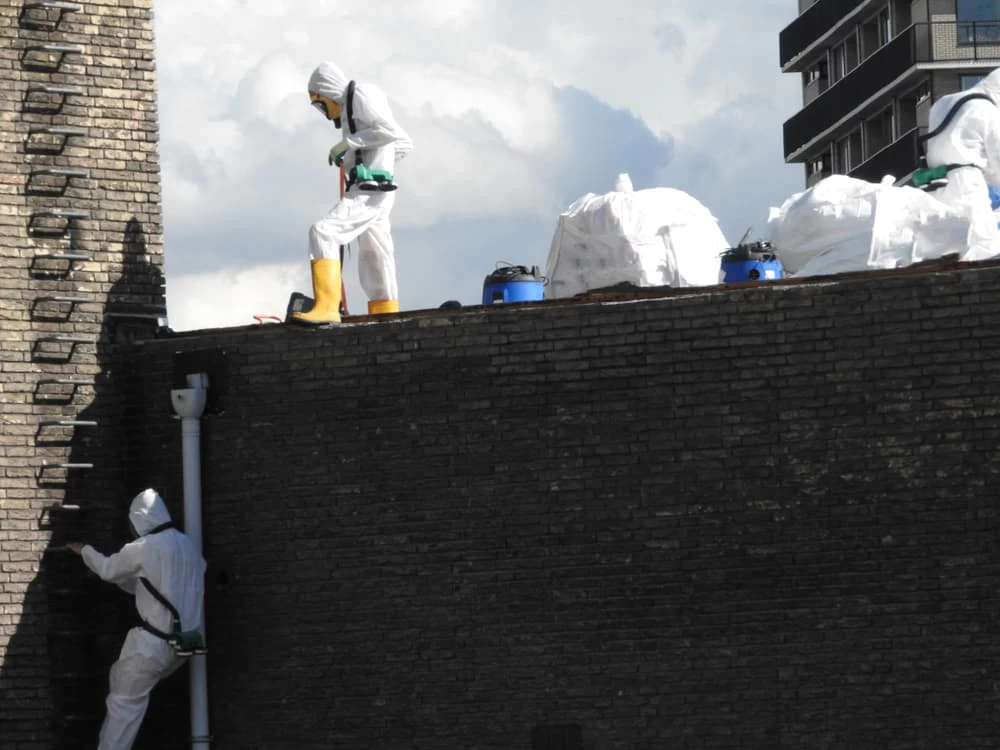
The abatement itself is performed under full containment negative air pressure, HEPA filtration, protective barriers so the rest of your home or job site stays clean while the work is done. After removal, post-abatement air clearance testing confirms that fiber levels have returned to safe thresholds. You get those results in writing. That document matters whether you’re moving back in, handing the space back to your renovation crew, or preparing to list the property. Spring is typically the busiest window for this work in the Catskills, when renovation season kicks off after winter and homeowners are assessing what the cold months left behind so if that’s your timeline, earlier contact means less waiting.
Asbestos abatement isn’t just the physical removal it’s everything that makes the removal legally valid and verifiably safe. For Shady homeowners, that means a pre-disturbance survey, licensed removal under full containment protocol, proper waste disposal through approved channels, permit handling with the Town of Woodstock and NYS DOL, and post-abatement air clearance testing with written documentation.
The most common materials we address in this area are the ones most likely to be disturbed during renovation: 9×9 vinyl floor tiles and their black mastic adhesive, popcorn and acoustic ceilings from the 1960s and 70s, pipe and boiler insulation in older basements, and drywall joint compound in pre-ban construction. These aren’t rare findings in Shady they’re standard in a hamlet where the housing stock spans the full era of asbestos use. Asbestos tile removal and asbestos popcorn ceiling removal are among the most frequent project types in homes like these.
If your project involves more than one hazardous material which is common in pre-war Catskills properties we also hold USEPA Lead and RRP certification, so lead paint and asbestos can be addressed under one contractor, one insurance policy, and one project timeline. For projects connected to a water damage or storm event, direct insurance billing is available, which removes the reimbursement back-and-forth entirely.
Does my Shady home actually require an asbestos survey before I renovate?
If your home was built before 1974 which describes the majority of properties in Shady and the surrounding Woodstock area then yes, New York State Industrial Code Rule 56 requires a pre-disturbance asbestos survey before any renovation, demolition, or repair work that could disturb building materials. This isn’t a guideline or a best practice. It’s state law, and it applies regardless of the size of the project.
The survey needs to be conducted by a certified asbestos investigator, and if asbestos-containing materials are found in the work area, a licensed abatement contractor must complete the removal before any other trades can access that space. Skipping this step doesn’t just create a health risk it creates legal exposure for the property owner and anyone else involved in the project. In a hamlet like Shady, where homes routinely date to the early 1900s through the 1970s, treating the survey as optional isn’t a realistic position.
How much does asbestos removal typically cost for a home in this area?
Cost depends heavily on the type of material, the quantity, and the complexity of the containment required. For smaller residential projects a section of floor tile, a limited area of popcorn ceiling you’re generally looking at a range starting around $1,500 to $3,500. Larger scopes, like full-house asbestos tile removal, extensive pipe insulation in a basement, or whole-ceiling remediation, can run $10,000 to $30,000 or more depending on square footage and site conditions.
In the Ulster County and Catskills market specifically, costs tend to run above national averages because of New York State’s regulatory requirements air monitoring, licensed disposal, permit fees, and NYS DOL notification all add to the baseline. That’s not unique to us; it’s the cost of doing the job legally in this state. What you’re paying for is a process that holds up one that produces documentation you can show a buyer, a lender, or a building inspector without hesitation.
Can I stay in my home while asbestos abatement is being done?
It depends on the scope and location of the work. For contained, limited projects a single room, a basement section, an isolated ceiling area it’s often possible to remain in other parts of the home during abatement, provided the work area is properly sealed off under negative air pressure with HEPA filtration. That containment protocol is standard practice and is designed specifically to prevent fiber migration into occupied spaces.
For larger or more invasive projects, temporary relocation may be the safer and more practical choice. In either case, no one re-enters the abated area until post-clearance air testing confirms that fiber levels are within acceptable thresholds and that result is documented in writing before the space is handed back. If you’re managing a Shady property remotely and coordinating a renovation from outside the area, we can work directly with your on-site contacts and keep you informed throughout so you’re not flying blind from a distance.
What types of asbestos-containing materials are most common in Woodstock-area homes?
The most frequently encountered materials in older Catskills homes are 9×9 vinyl floor tiles often found under newer flooring layers along with the black mastic adhesive used to install them, which almost always contains asbestos even when the tiles themselves test negative. Popcorn and acoustic ceiling texture applied before the late 1970s is another common finding, as is the joint compound used in original drywall installation.
In homes with older heating systems which is a significant portion of Shady’s housing stock given the age of the community pipe and boiler insulation is a major concern. This insulation becomes brittle over time, and in a mountain environment like Shady’s, where freeze-thaw cycling and basement moisture are persistent factors, deterioration happens faster than in more temperate climates. Roofing shingles and exterior siding from the pre-ban era are also worth assessing before any exterior renovation work begins. The bottom line is that in a hamlet where homes routinely date to the early 1900s, there’s rarely just one place to look.
How long does the asbestos abatement process take from start to finish?
For a typical residential project, the full process survey, permit notification, abatement, and air clearance testing generally runs one to two weeks from initial assessment to final documentation. Smaller, well-defined scopes can move faster. Larger whole-house projects or those involving multiple material types take longer, particularly if the NYS DOL notification period needs to run its course before work can begin.
Timing also matters seasonally in the Catskills. Spring is the busiest window for renovation work in Shady and the surrounding Woodstock area, which means abatement contractors are in higher demand from March through June. If your renovation is scheduled for spring, getting the survey and permit process started earlier in the year gives you a better chance of staying on your original project timeline. Fall is the second peak, driven largely by homeowners completing work before winter sets in particularly boiler and heating system replacements that frequently involve asbestos-wrapped pipes.
Does Green Island Group handle the permits and NYS DOL notifications for Shady projects?
Yes permit handling and NYS DOL notification are included as part of the project, not treated as extras you manage yourself. For asbestos abatement work in Shady, the relevant regulatory oversight comes from the NYS DOL Albany District Office, which handles compliance for Ulster County. The notification process, required documentation, and project records which must be maintained for 30 years post-completion are all managed by us on your behalf.
This matters more than it might seem. For homeowners who bought a Catskills property as a weekend home and are now managing a full renovation often from New York City or another location navigating state labor law and municipal permit requirements for the Town of Woodstock is not a reasonable ask on top of everything else a renovation involves. Having one contractor handle the abatement, the regulatory filings, and the final air clearance documentation means the paper trail is complete and consistent. That documentation is what protects you at resale, during a refinance, or if a question ever comes up about the work that was done.