Crotonville's Older Homes Deserve More Than a Guess
If your home was built before 1980, asbestos abatement in Crotonville isn’t a maybe it’s a real conversation worth having before you touch a wall, pull up a floor, or call a general contractor.
I needed a professional consultation explanation of procedure for safe removal of Asbestos in my apartment complex. Without having an account yet, I was very impressed with the caring, knowledgeable and generous advice offered by Jessica, and will look forward to doing business in the future. Thank you so much! I feel much more informed about a sometimes scary endeavor. Peace. Nancy Silva Mineola, NY.
Mia Munoz
Used this company to clean up some water flood in my house. They were fast and easy to work with.very professional, Would recommend to anyone!
Nini Valle
Great company, had a flood and they responded quickly and efficiently. Billed my insurance company directly. I highly recommend this company!
joe colapietro, jr
I had pipe freeze in my basement right before a snow storm and they made to within an hour to help start the clean up process. They we by our side throughout the entire process and even helped with the insurance company. They did such a great job with the cleanup, repair, remidiation, I contracted them to perform the repairs and finishes in the basement. They came with enough manpower and material to get the job done. Leo and Jessica were nothing but a pleasure to deal with!!
Cristian Arredondo c
I had some water damage in my home and Green Island was able to take care of my issue quickly and effectively. I am very pleased with the work they did. They responded quickly and were very professional.
Michael M
Outstanding service! From the office to the field crew everyone was friendly, helpful and responsive. I highly recommend Green Island Group.
What Changes When You Know What's Actually in Your Walls
Most homes in Crotonville were built between 1940 and 1969. That’s not a problem on its own but it does mean that behind the vinyl floor tiles in the basement, inside the pipe wrap in the utility room, or underneath that textured ceiling in the living room, there’s a real chance asbestos-containing materials are present. When you start a renovation without knowing what’s there, you’re not just taking a health risk you’re potentially creating a legal one too.
Once we’ve assessed and cleared your property, the picture changes entirely. You can move forward with your renovation without stopping mid-project. You can list your home with documentation in hand, which matters in a market where Crotonville properties are moving in around 34 days. You’re not guessing anymore and that alone is worth more than most people realize.
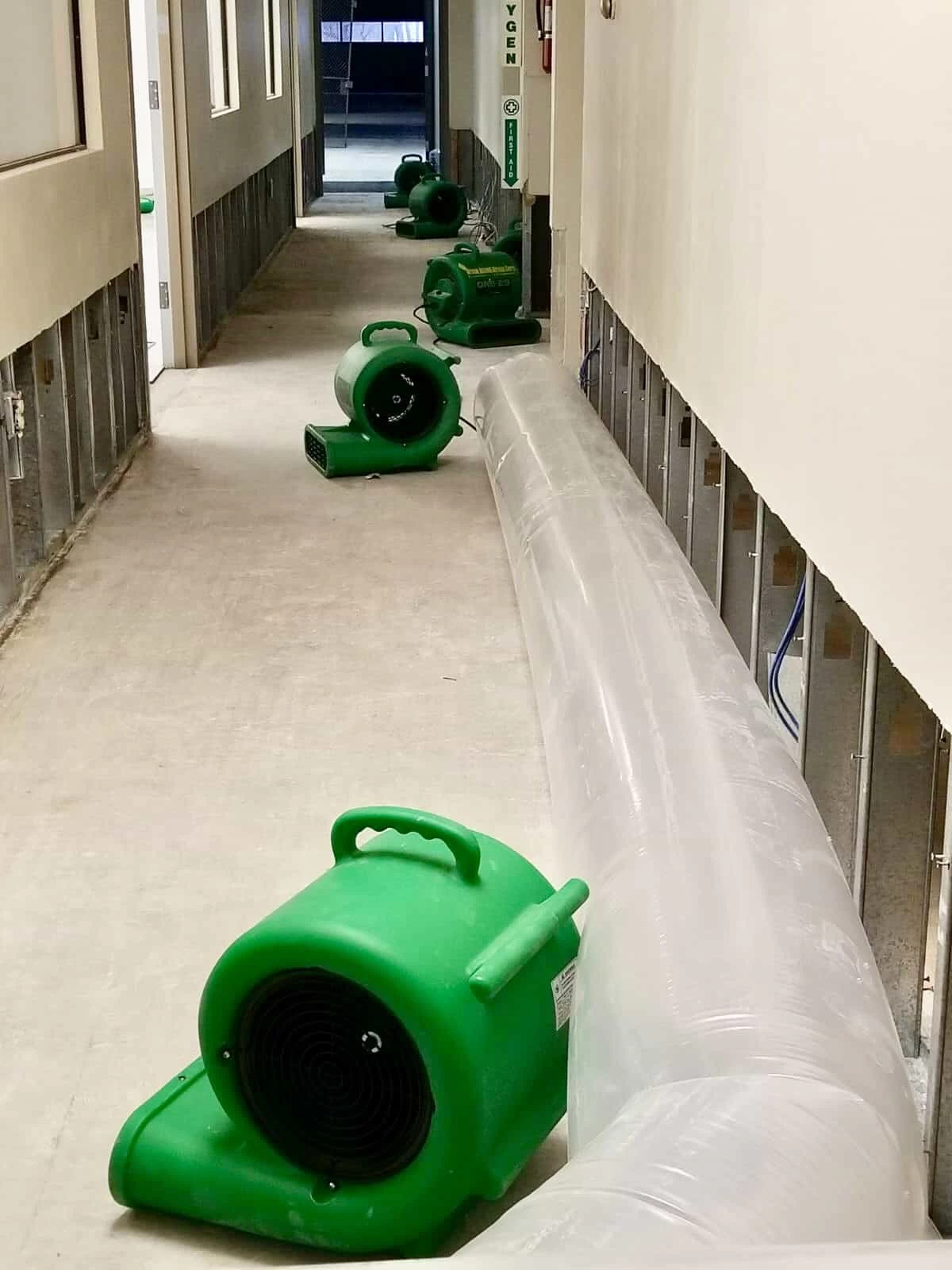
Crotonville’s location near the Croton River and the Hudson River estuary also means water intrusion events are a recurring part of life here. A basement flood or burst pipe in a 1955 Cape Cod doesn’t just mean water damage it often means disturbed floor tiles or pipe insulation that now requires licensed remediation before any restoration work can start. Getting both handled by one contractor, without coordinating two separate companies, is the kind of thing that makes a genuinely stressful situation manageable.
Green Island Group is a licensed environmental remediation contractor serving Westchester County, New York City, and Long Island. Asbestos abatement is one of our core services not a side offering and we’ve completed over 5,000 projects across the metro area, including throughout Crotonville, Ossining, and the broader Westchester County market.
We hold the NYS Department of Labor Asbestos Handling License, EPA certification, and NYS DEC disposal compliance. We’re also a certified M/WBE contractor through the NYS Office of General Services a formal state designation, not a self-applied label and an approved contractor for New York State agencies. That means before we ever showed up in Crotonville, we’d already been vetted at a level most contractors never reach.
Every project we complete includes post-abatement air clearance documentation as a standard deliverable. Not an add-on. Not something you have to ask for. It’s the written proof that the work was done correctly and that your home is safe to move forward in.
It starts with a free on-site inspection. A trained technician comes to your Crotonville property, walks the space, and assesses the suspect materials whether that’s 9×9 floor tiles in the basement, acoustic ceiling texture, pipe insulation in the utility room, or joint compound throughout. You get a clear, itemized estimate before anything moves forward. No pressure, no vague ballpark numbers.
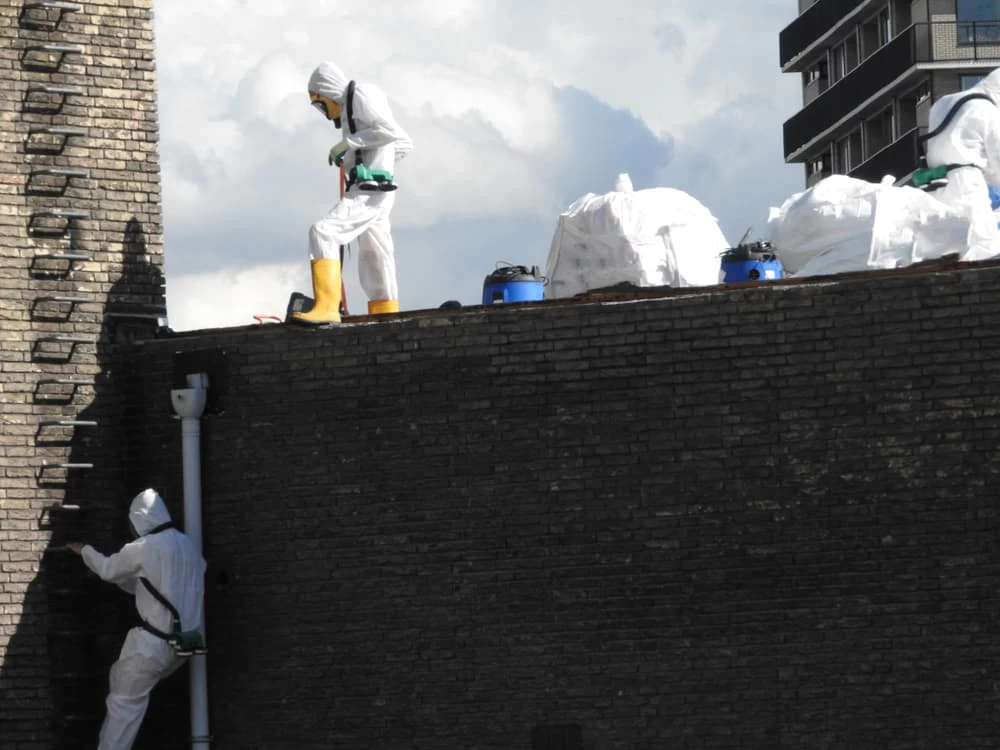
If abatement is needed, we establish a contained work area using negative air pressure and physical barriers to prevent fiber migration into the rest of your home. Air monitoring runs throughout the project. The materials are removed, properly packaged, and transported to a certified disposal facility in compliance with NYS DEC requirements. Nothing gets cut short on the back end because disposal is where a lot of unlicensed operators quietly skip steps.
Once the material is out and the containment is still in place, we conduct post-abatement air clearance testing. Samples are collected and analyzed to confirm fiber counts have returned to acceptable background levels. You receive the written clearance report as part of your project documentation which is exactly what your contractor, your real estate attorney, or your insurance carrier will ask for if the question ever comes up. In Westchester County, where the Town of Ossining building department and NYS DOL enforcement are both active, having that paperwork in order isn’t optional. It’s what protects you.
Every Material Type Found in Crotonville's Housing Stock
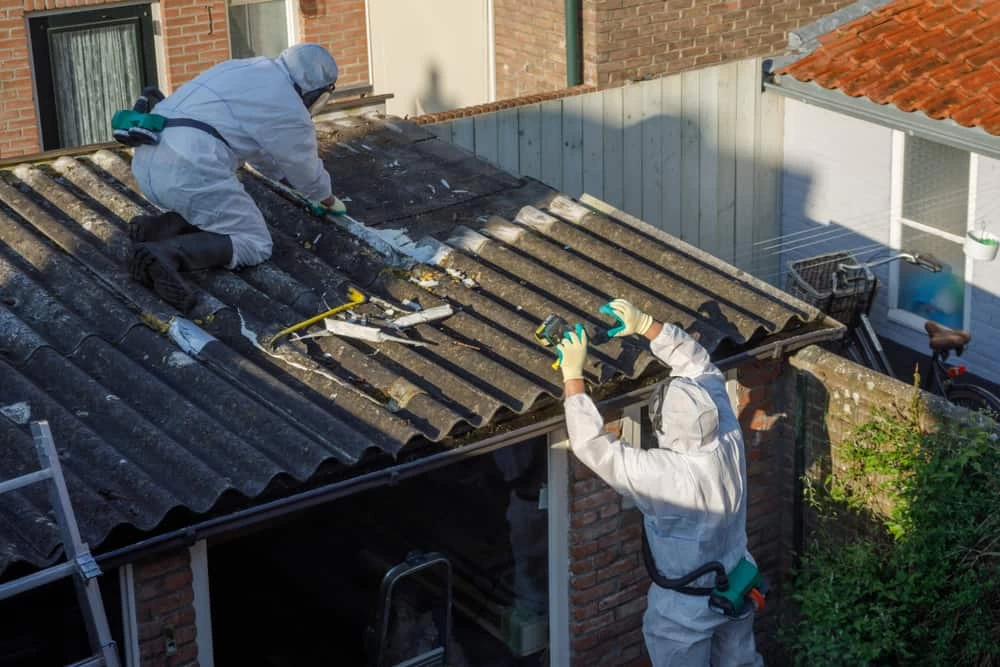
The postwar homes throughout Crotonville weren’t built with one type of asbestos-containing material they were built with several. Vinyl asbestos floor tiles were standard in the 1950s and 1960s, particularly the 9×9 format common in Cape Cods and split-levels. Acoustic popcorn ceiling texture was widely applied through the late 1970s. Pipe and boiler insulation in older heating systems, drywall joint compound, roofing materials, and transite siding are all common finds in homes of this era.
We handle all of these material types in-house. There’s no subcontracting out the floor tiles while we handle the ceilings it’s one scope, one project, one clearance report. For a Crotonville homeowner doing a whole-home renovation or a pre-sale abatement on a tight timeline, that matters. Coordinating multiple contractors on an asbestos project creates gaps in documentation and accountability that can come back to bite you.
We also work directly with insurance carriers when water damage is part of the picture which it often is in older homes near the Croton River. If a pipe burst or basement flood has disturbed suspect materials, we handle the abatement side and coordinate billing directly with your insurer so you’re not managing that interface on your own during an already difficult situation.
How do I know if my Crotonville home actually contains asbestos?
The honest answer is: you can’t know for certain without testing. Visual identification isn’t reliable asbestos-containing materials often look identical to non-asbestos versions of the same product. What you can do is use age as a starting point. If your home was built before 1980, the probability of finding asbestos in at least one material type is high. In Crotonville specifically, where most homes were built between 1940 and 1969, that means the majority of the neighborhood’s housing stock falls squarely in the risk window.
The materials most commonly found in homes of that era include vinyl floor tiles particularly the 9×9 format acoustic ceiling texture, pipe and boiler insulation, and drywall joint compound. If you’re planning a renovation that will disturb any of these materials, the right move is a professional assessment before work starts. We offer free on-site inspections, so there’s no cost to finding out what you’re actually dealing with.
What happens if asbestos is disturbed during a renovation before I knew it was there?
Stop work immediately. This is the most important step. Once asbestos-containing material is disturbed whether it’s a floor tile that got cracked, pipe insulation that was cut into, or ceiling texture that was sanded fibers can become airborne. The space should be vacated, ventilation to other areas of the home should be minimized, and a licensed abatement contractor needs to assess the situation before anyone re-enters the work area.
This scenario is more common than most people expect, and it’s not a reason to panic but it does need to be handled correctly. Under NYS Industrial Code Rule 56, any regulated asbestos project in New York requires a licensed contractor, proper containment, air monitoring, and certified disposal. A contractor who was already mid-renovation is not qualified to handle the abatement portion unless they hold the specific NYS DOL Asbestos Handling License. We can respond to these situations, assess what was disturbed, and get the remediation done so your renovation can move forward.
Does a water damage event in my Crotonville home require asbestos testing before repairs start?
If your home was built before 1980 and water damage has affected areas with suspect materials a flooded basement with old vinyl floor tiles, a pipe burst near insulated plumbing, or moisture intrusion into a ceiling with older texture then yes, asbestos assessment should happen before restoration work begins. Water damage in an older Crotonville home doesn’t just mean wet drywall. It can mean disturbed materials that now require licensed remediation before a restoration contractor can legally proceed.
Crotonville’s location near the Croton River and the Hudson River estuary makes water intrusion events a recurring reality for homeowners in this area. Nor’easters, heavy seasonal rain, and basement flooding are part of life here and older homes with original flooring and pipe insulation are the ones most likely to have asbestos present in the areas that get hit first. We handle both asbestos abatement and water damage restoration, which means you’re not trying to coordinate two separate contractors through an already stressful situation. We also work directly with insurance carriers on billing, so that piece is handled on our end.
How long does asbestos abatement take for a typical Crotonville home?
For a single-room or single-material project say, floor tile removal in a basement or popcorn ceiling removal in one room the abatement work itself typically takes one to two days. The timeline extends when you’re dealing with multiple material types across different areas of the home, which is common in the Cape Cods and split-levels that make up much of Crotonville’s housing stock. A whole-home abatement prior to a major renovation can take several days to a week depending on scope.
What people often don’t factor in is the clearance testing timeline. After the material is removed and the containment is still in place, air samples are collected and sent for analysis. Results typically come back within 24 to 48 hours. That clearance step can’t be skipped or rushed it’s the documentation that confirms the work was done correctly and that the space is safe to re-enter. If you’re working against a real estate closing deadline or a renovation schedule, it’s worth discussing timing upfront so there are no surprises on the back end.
Is asbestos abatement required before selling a home in Crotonville, NY?
New York State doesn’t have a blanket law requiring asbestos abatement before a home sale. But that doesn’t mean it’s not a real issue at the transaction table. Buyers, lenders, and home inspectors are increasingly aware of asbestos risk in pre-1980 homes, and an identified ACM can trigger renegotiation, delay a closing, or cause a deal to fall through entirely. In a market where Crotonville homes are selling in around 34 days on average, a late-stage asbestos discovery is the kind of thing that derails a timeline you’ve already built your plans around.
Sellers who proactively address asbestos before listing and have the clearance documentation to prove it are in a much stronger position. It removes the issue from the buyer’s inspection report, eliminates the negotiation leverage, and gives your real estate attorney something concrete to point to if the question comes up. We provide the full post-abatement clearance report as a standard deliverable, which is exactly what you’d need to put that conversation to rest.
What makes Green Island Group different from other asbestos contractors serving Crotonville?
A few things stand out, and they’re all verifiable. The license portfolio is one of them. We hold the NYS DOL Asbestos Handling License, EPA certification, and NYS DEC disposal compliance simultaneously. That combination covers every regulatory requirement for asbestos abatement work in Westchester County and it’s a public record you can check on the NYS DOL contractor database before you ever pick up the phone.
The M/WBE certification from the NYS Office of General Services is another. That’s a formal state designation issued after documentation review and vetting not a badge we put on our own website. We’re also an approved contractor for New York State agencies, which means insurance minimums, safety records, and compliance history have all been reviewed at a higher threshold than standard licensing alone. And with over 5,000 completed projects across the metro area, the scenarios that feel complicated a mid-renovation discovery in a 1958 Crotonville split-level, a water damage event near the Croton River, a pre-sale abatement with a 30-day closing window are ones we’ve worked through before. That experience shows up in how a project is managed, not just how it’s quoted.