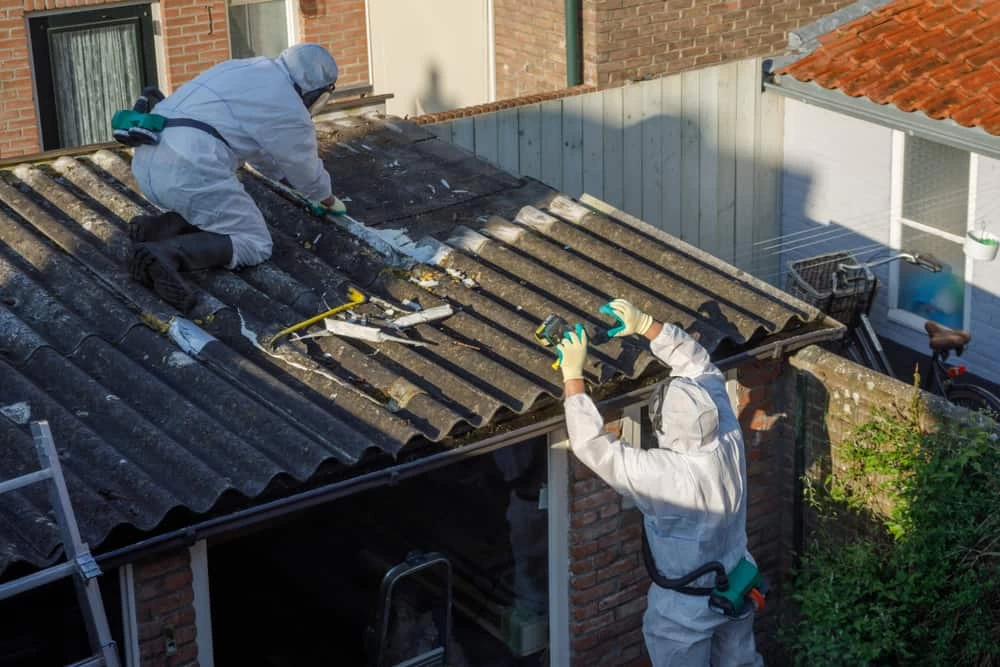
Most homes in Heritage Hills were built between the early 1970s and mid-1980s right when asbestos was standard in floors, ceilings, and pipes. We offer free on-site inspections so you know exactly what you’re dealing with before anything else.
I needed a professional consultation explanation of procedure for safe removal of Asbestos in my apartment complex. Without having an account yet, I was very impressed with the caring, knowledgeable and generous advice offered by Jessica, and will look forward to doing business in the future. Thank you so much! I feel much more informed about a sometimes scary endeavor. Peace. Nancy Silva Mineola, NY.
Mia Munoz
Used this company to clean up some water flood in my house. They were fast and easy to work with.very professional, Would recommend to anyone!
Nini Valle
Great company, had a flood and they responded quickly and efficiently. Billed my insurance company directly. I highly recommend this company!
joe colapietro, jr
I had pipe freeze in my basement right before a snow storm and they made to within an hour to help start the clean up process. They we by our side throughout the entire process and even helped with the insurance company. They did such a great job with the cleanup, repair, remidiation, I contracted them to perform the repairs and finishes in the basement. They came with enough manpower and material to get the job done. Leo and Jessica were nothing but a pleasure to deal with!!
Cristian Arredondo c
I had some water damage in my home and Green Island was able to take care of my issue quickly and effectively. I am very pleased with the work they did. They responded quickly and were very professional.
Michael M
Outstanding service! From the office to the field crew everyone was friendly, helpful and responsive. I highly recommend Green Island Group.
When you’ve lived in your Heritage Hills condo for 20 or 30 years, the last thing you want is to find out mid-renovation that the floor tiles or ceiling texture you’ve been walking under contain asbestos. That discovery doesn’t have to become a crisis. With the right contractor, it becomes a documented, manageable process with a clear end point and a home you can confidently call safe.
Heritage Hills is a 1970s-built condo community, and that construction timeline matters. Vinyl asbestos tile was the standard flooring choice in kitchens and bathrooms of that era. Acoustic ceiling texture the popcorn finish still found in many units was commonly mixed with asbestos fiber. Pipe insulation in mechanical spaces often contains it too. If you’re renovating, preparing to sell, or dealing with water damage from a burst pipe during one of northern Westchester’s hard winters, any of these materials could be disturbed. That’s when exposure risk becomes real.
What you get at the end of a properly managed abatement isn’t just a cleaner space. It’s signed clearance documentation showing that air testing passed, the work was done by a licensed contractor under NYS Industrial Code Rule 56, and your home is safe to occupy. For anyone preparing to list their Heritage Hills condo through a Somers-area broker, that paperwork can be the difference between a smooth closing and a deal that falls apart over an undisclosed environmental condition.
We hold a NYS Department of Labor Asbestos Handling License, EPA certification, and NYS DEC disposal compliance credentials the full stack of what’s legally required to perform asbestos abatement anywhere in New York State, including Heritage Hills in the Town of Somers. Every worker on-site carries an individual NYS DOL asbestos handler certificate. Not just the company every person who touches the material.
With more than 5,000 completed projects across the New York metro area, including Westchester County condo communities with the same 1970s construction profile as Heritage Hills, this isn’t unfamiliar territory. We also hold M/WBE certification from the NYS Office of General Services a formal state credential, not a self-designation. No other asbestos contractor appearing in Heritage Hills search results holds or mentions it.
The work is self-performed from start to finish. No subcontractors, no handoffs, no gaps in accountability. When you call us, the same licensed crew that does your inspection is the crew that handles containment, removal, disposal, and clearance testing.
Asbestos Remediation Process for Heritage Hills Condos
What the Process Actually Looks Like From Your Front Door
It starts with a free on-site inspection. A licensed inspector comes to your Heritage Hills unit, walks through the spaces in question, assesses the materials, and tells you plainly what we find. If testing is warranted, samples are collected and sent to an accredited lab. You get a clear picture of what’s present, where it is, and what if anything needs to happen next. No pressure, no inflated scope, no invoice for the visit.
If abatement is needed, the work area gets sealed with polyethylene sheeting and placed under negative air pressure. That means air flows into the containment zone, not out of it. Any fibers released during removal are captured by HEPA-filtered air scrubbers before they can reach the rest of your unit. Workers enter and exit through a decontamination chamber. For a Heritage Hills resident staying in a neighboring room or a unit in the same building, these aren’t optional precautions they’re the engineering controls required under NYS Industrial Code Rule 56 and the reason the rest of your home stays unaffected.
Once removal is complete and all material has been disposed of with a signed waste manifest under NYS DEC compliance, post-abatement air clearance testing is conducted. When the results come back clean, you receive formal written documentation confirming it. That’s your record for your own peace of mind, for your condo association if they need it, and for any future buyer or their lender who asks.
Asbestos Tile and Popcorn Ceiling Removal in Heritage Hills
Built for Every Material Type Found in a 1970s Condo
Heritage Hills units built between 1972 and the mid-1980s can contain asbestos in more than one place at a time. Vinyl asbestos tile in kitchens, bathrooms, and entryways. Acoustic ceiling texture in living areas and bedrooms. Pipe and duct insulation in mechanical spaces. Drywall joint compound behind walls. Some contractors handle one or two of these material types. We handle all of them which means a single inspection covers the full picture, and a single crew handles everything that needs to come out.
This matters especially in a condo setting. Heritage Hills has roughly 2,600 units across 30 condo clusters on East Hill and West Hill, and the line between what’s your responsibility and what belongs to the HOA isn’t always obvious. Pipe insulation in a shared mechanical room is typically a condo association matter. Vinyl tile in your kitchen is yours. We can help you understand that distinction before work begins, so there’s no confusion about scope, liability, or who’s paying for what.
If abatement is connected to a water damage event a burst pipe during a Westchester winter freeze, for example we work directly with insurance carriers and handle billing on your behalf. You don’t have to coordinate between the remediation contractor and your insurer on your own. The whole job, from the first call to the final clearance report, stays in one set of hands.
Do Heritage Hills condos built in the 1970s actually contain asbestos?
The honest answer is: many of them do, and the only way to know for sure is to test. Heritage Hills construction began in 1972, and the bulk of the community’s units were built through the early-to-mid 1980s a period when asbestos was a standard ingredient in multiple building materials. Vinyl floor tiles, particularly the 9×9 and 12×12 inch tiles common in condo kitchens and bathrooms from that era, frequently contain asbestos. So does the acoustic ceiling texture found in many units, as well as pipe insulation in mechanical spaces and drywall joint compound used throughout the building.
The important distinction is between intact materials and disturbed ones. Asbestos-containing materials that are in good condition and left undisturbed present a much lower risk than materials that are crumbling, damaged, or being cut and sanded during a renovation. If you’re planning any work in your Heritage Hills unit flooring replacement, ceiling updates, kitchen or bathroom renovation testing before you start is the right move, not an optional one.
What asbestos materials are most commonly found during Heritage Hills condo renovations?
Based on the construction timeline of Heritage Hills primarily 1972 through the mid-1980s the materials that come up most often during renovations are vinyl floor tiles, acoustic ceiling texture (popcorn ceilings), and pipe insulation. Floor tiles are especially common discoveries during kitchen and bathroom remodels, when old flooring is being pulled up or new tile is being laid over existing material. Acoustic ceiling texture is frequently encountered when homeowners want to update their ceilings or when water damage has compromised the existing finish.
Pipe insulation in mechanical spaces is another consistent finding in Heritage Hills buildings of this age, and it’s one that sometimes involves the condo association rather than just the individual unit owner depending on whether the pipes serve the unit exclusively or are part of shared building infrastructure. Drywall joint compound used in original construction can also contain asbestos, which becomes relevant during any wall demo or significant renovation. A thorough inspection covers all of these material categories, not just the most obvious ones.
Do I need to notify my Heritage Hills condo association before scheduling asbestos removal?
It depends on where the asbestos-containing materials are located. If the ACMs are entirely within your individual unit floor tiles, ceiling texture, materials inside your walls the work is generally your responsibility and your decision to coordinate. However, if the abatement involves shared building systems, common mechanical spaces, or anything that could affect neighboring units or common areas, the condo association will likely need to be involved, and may require advance notice or approval before work begins.
Heritage Hills has its own community governance structure, and individual condo groups within the East Hill and West Hill sections may have specific rules about contractor access, work hours, and notification requirements. Before scheduling any abatement work, it’s worth reviewing your condo documents or checking with your association directly. We’re familiar with the condo context and can help you understand how to frame the scope of work when you communicate with your HOA so the conversation goes smoothly rather than creating delays.
Will I need to leave my condo during asbestos abatement, and how long does it take?
Whether you need to vacate depends on the scope and location of the work. For a contained removal a single room, a section of flooring, or a portion of ceiling it’s often possible to remain in other parts of the unit while work is in progress, provided the containment is properly set up. For larger or more complex projects involving multiple material types or shared building systems, temporary displacement may be the safer and more practical choice.
As for timeline, a single-room or limited-scope abatement in a Heritage Hills condo can often be completed in one to two days. Larger projects take longer, and post-abatement air clearance testing adds time at the end samples need to be collected and analyzed before the space is released. You’ll get a realistic timeline estimate during the free inspection, based on what’s actually present in your unit and what the scope of work looks like. There are no vague timelines or open-ended commitments just a clear schedule before anything starts.
How much does asbestos removal cost for a Heritage Hills condo unit?
Cost varies based on what materials are present, how much of it needs to come out, and where it’s located. For a typical condo-scale project in Heritage Hills say, vinyl tile removal in a kitchen or bathroom, or popcorn ceiling removal in a single room you’re generally looking at a range of $2,000 to $8,000 depending on square footage and material type. More complex projects involving multiple material categories, mechanical spaces, or larger surface areas can run higher.
The average Heritage Hills condo is valued at roughly $614,000. In that context, the cost of a properly documented abatement is a reasonable investment especially for sellers who want to protect a transaction or buyers who want clearance documentation before closing. If the abatement is connected to a water damage event and you have a homeowner’s or condo insurance policy, it may be partially or fully covered. We work directly with insurance carriers and handle the billing coordination, so you’re not left managing that on your own.
Can a burst pipe in my Heritage Hills unit trigger mandatory asbestos abatement?
Yes and this is a scenario that comes up more often than most Heritage Hills residents expect. Northern Westchester gets real winters, and Heritage Hills’ aging building stock means that pipe freeze events are a genuine seasonal risk. When a pipe bursts in a unit built in the 1970s, the water damage can disturb pipe insulation, saturate flooring, or damage ceiling material any of which may contain asbestos in a building of that age. Once those materials are wet, damaged, or crumbling, they move from a low-risk condition to one that requires professional assessment and potentially mandatory abatement before restoration work can proceed.
The practical issue is that you’re now managing a water damage claim, a displacement situation, and an environmental remediation project simultaneously. We handle both asbestos abatement and water damage restoration, and work directly with insurance carriers on billing. That means one call covers the full scope you’re not trying to coordinate a separate abatement contractor, a separate restoration contractor, and your insurer at the same time. For a Heritage Hills resident dealing with this situation in the middle of winter, that kind of consolidated response is the difference between a manageable recovery and an overwhelming one.