If your home was built before 1980, there’s a real chance asbestos is somewhere inside it. We provide licensed asbestos abatement in Sayville, NY from the first inspection to final air clearance.
I needed a professional consultation explanation of procedure for safe removal of Asbestos in my apartment complex. Without having an account yet, I was very impressed with the caring, knowledgeable and generous advice offered by Jessica, and will look forward to doing business in the future. Thank you so much! I feel much more informed about a sometimes scary endeavor. Peace. Nancy Silva Mineola, NY.
Mia Munoz
Used this company to clean up some water flood in my house. They were fast and easy to work with.very professional, Would recommend to anyone!
Nini Valle
Great company, had a flood and they responded quickly and efficiently. Billed my insurance company directly. I highly recommend this company!
joe colapietro, jr
I had pipe freeze in my basement right before a snow storm and they made to within an hour to help start the clean up process. They we by our side throughout the entire process and even helped with the insurance company. They did such a great job with the cleanup, repair, remidiation, I contracted them to perform the repairs and finishes in the basement. They came with enough manpower and material to get the job done. Leo and Jessica were nothing but a pleasure to deal with!!
Cristian Arredondo c
I had some water damage in my home and Green Island was able to take care of my issue quickly and effectively. I am very pleased with the work they did. They responded quickly and were very professional.
Michael M
Outstanding service! From the office to the field crew everyone was friendly, helpful and responsive. I highly recommend Green Island Group.
You stop guessing. That’s the biggest shift. Once a certified inspection confirms what’s there and licensed abatement removes it properly you have documentation that holds up with your real estate attorney, your lender, and the Town of Islip’s building department. That peace of mind isn’t abstract. It’s a signed clearance certificate that moves your renovation or closing forward.
Sayville’s housing stock is dominated by single-family homes built in the post-war era through the 1970s the exact window when asbestos-containing materials were standard in American construction. Floor tiles, pipe insulation, textured ceilings, boiler wrap these materials are common in the mid-century Cape Cods and ranch homes that define neighborhoods throughout this hamlet. If you’re renovating, selling, or just dealing with something that’s been deteriorating in a basement or utility room, the age of your home alone is enough reason to get it checked.
Living on the South Shore adds another layer. The humidity and salt air coming off the Great South Bay accelerate the breakdown of older building materials. When pipe insulation or floor tiles start to deteriorate, they become friable meaning fibers can release into the air. That’s when a precautionary concern becomes an urgent one. Proper asbestos remediation stops that process and gives you back a home that’s genuinely safe to renovate, sell, or simply live in.
We Know Sayville's Homes and the Rules That Govern Them
We’re a Long Island–based environmental remediation contractor. Not a national franchise. Not a call center routing your job to whoever’s available. When you reach out to us, you’re talking to a team that operates specifically on Long Island and knows the regulatory environment here NYS Industrial Code Rule 56, the Town of Islip permitting process, and the approved disposal protocols at Brookhaven Landfill.
That local fluency matters more than it might seem. A contractor who doesn’t know Suffolk County’s specific requirements can create documentation gaps that delay your closing or stall your renovation permit. We already serve the Sayville area, including adjacent West Sayville, and have worked in the same style of mid-century South Shore homes that make up the bulk of this community’s housing stock.
Every crew member is individually certified. Every project we handle is properly notified, documented, and closed out with third-party air clearance. That’s not a selling point it’s the legal standard in New York, and it’s the baseline you should expect from any contractor you hire.
No Surprises Here's Exactly How We Handle the Work
It starts with an inspection. A certified inspector walks the property, identifies materials that may contain asbestos, and collects samples for lab analysis. In Sayville’s older homes, that typically means checking floor tiles, pipe insulation, textured ceilings, siding, and anything around the boiler or HVAC system. You’ll get a clear report of what was found, where it is, and what the recommended course of action is before any abatement work begins.
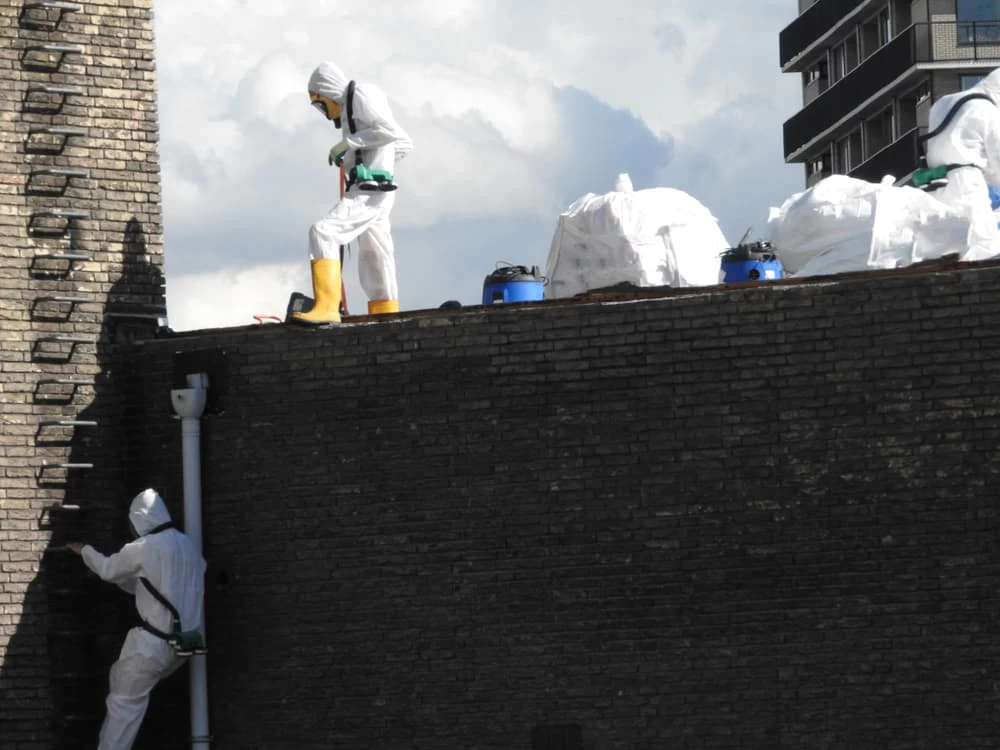
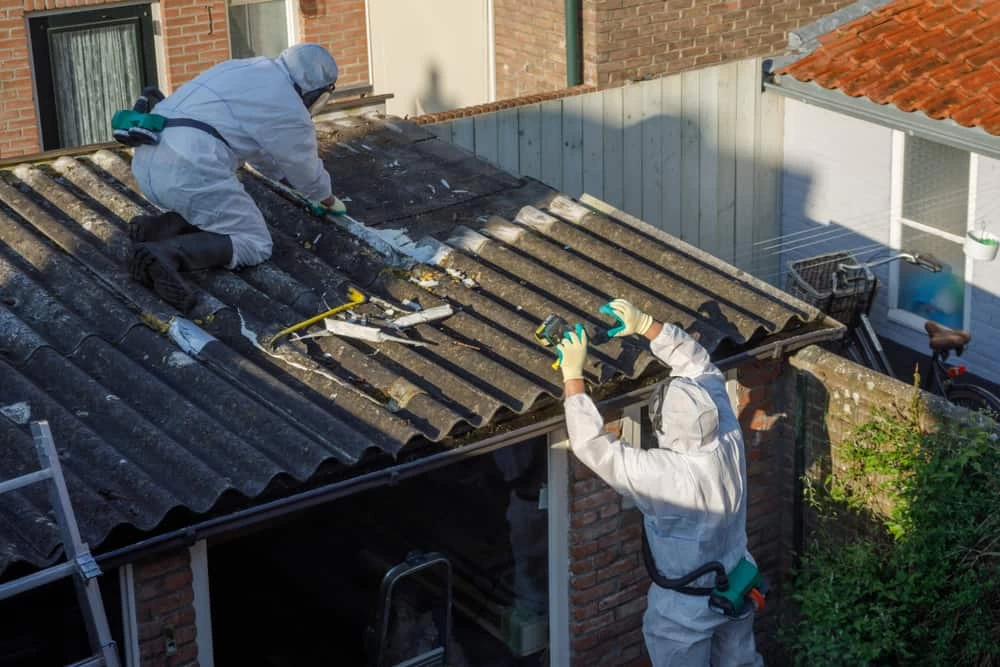
If removal is required, the project gets formally notified to the NYS Department of Labor as required under ICR 56. For projects in the Town of Islip, we pull the appropriate building permits before work starts. On-site, the affected area is fully contained plastic sheeting, negative air pressure, and HEPA filtration equipment keep fibers from migrating into the rest of your home during the removal process. Our workers are suited up and following certified protocols, not improvising.
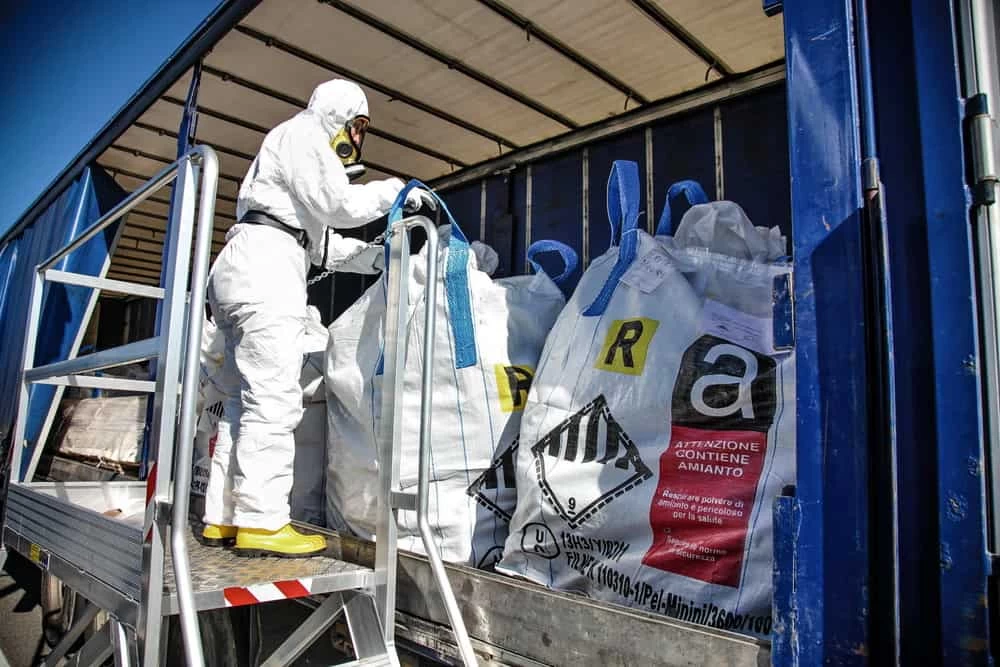
Once the material is removed, waste is packaged and transported to an approved disposal facility Brookhaven Landfill handles Long Island asbestos waste under proper manifests. Then a third-party air monitoring professional conducts clearance testing. When the space passes, you receive a documented clearance certificate. That’s the piece of paper your contractor, your lender, or your buyer’s attorney needs to move forward.
Every Material, Every Room We Handle It the Right Way
We handle the full range of asbestos-containing materials common in Sayville’s residential housing stock. Asbestos tile removal is one of the most frequent requests the 9×9 vinyl floor tiles found in thousands of Sayville kitchens, basements, and utility rooms built between the 1950s and 1970s are among the most common sources of asbestos exposure during renovation. These tiles can’t just be pulled up and tossed. They require proper containment, certified removal, and compliant disposal to keep the rest of your home clean.
Asbestos popcorn ceiling removal is another common service for Sayville homeowners. Textured acoustic ceilings were standard in homes built through the late 1970s, and they have to be tested before any drywall work, repainting, or renovation begins. If the test comes back positive, removal requires a licensed contractor not a general contractor with a scraper. We handle testing, abatement, and clearance so your renovation crew can start their work on a compliant job site.
Beyond tiles and ceilings, we also handle pipe and boiler insulation, transite siding, attic insulation, and drywall joint compound all materials that appear regularly in the pre-1980 homes throughout Sayville and surrounding communities like Bayport, Blue Point, West Sayville, and Oakdale. Whatever the material, the process is the same: certified inspection, licensed removal, documented clearance.
Does my Sayville home actually need an asbestos inspection before renovating?
In New York State, if your renovation will disturb more than 25 linear feet or 10 square feet of material that may contain asbestos, a licensed abatement contractor is legally required and that work must be preceded by a certified inspection. That’s not a suggestion. It’s the law under NYS Industrial Code Rule 56, and the Town of Islip’s building department enforces it.
For most Sayville homeowners, this comes up during kitchen renovations, bathroom gut-outs, basement finishing, or HVAC replacements. If your home was built before 1980 which describes a significant portion of Sayville’s housing stock the materials being disturbed almost certainly fall within the window when asbestos was routinely used. Getting an inspection before your general contractor starts work protects you legally, keeps your renovation on schedule, and prevents a job site shutdown that costs far more than the inspection itself.
How much does asbestos removal typically cost in Sayville, NY?
On Long Island, asbestos removal generally runs between $20 and $65 per square foot, depending on the material type, the extent of the affected area, and the complexity of the containment required. A small floor tile removal in a utility room will cost significantly less than a full pipe insulation abatement or a whole-house popcorn ceiling removal. The range is wide because no two projects are the same.
What affects cost in Sayville specifically is the age and condition of the materials. Homes near the Great South Bay have dealt with higher humidity for decades, which can cause materials to deteriorate more than you’d expect and friable, crumbling materials require more intensive containment protocols than intact ones. The safest way to get an accurate number is a site inspection. That gives you a real scope of work, not a ballpark that shifts once the job starts.
What types of materials in older Sayville homes are most likely to contain asbestos?
The most common materials found in Sayville’s mid-century homes are 9×9 vinyl floor tiles, pipe and boiler insulation, textured acoustic ceilings, transite siding, attic insulation, and drywall joint compound. These were all standard building materials from the post-war era through the late 1970s, and Sayville’s housing stock which is heavily concentrated in that construction window reflects exactly that.
Floor tiles are probably the most frequently encountered issue during renovations. Homeowners pull up carpet or old flooring and find the original 9×9 tiles underneath, often still intact but containing chrysotile asbestos. Pipe insulation around boilers and in basement utility areas is another common find, especially in homes that haven’t had major mechanical updates. The key thing to know is that intact, undisturbed asbestos isn’t necessarily an emergency but the moment you’re planning to renovate or disturb those materials, testing and proper abatement become mandatory.
Will asbestos abatement disrupt my family's daily routine while work is being done?
It depends on the scope and location of the work. For a contained area like a basement utility room or a single bathroom, the rest of the house is typically unaffected the work area is sealed off with plastic sheeting and negative air pressure, which prevents any fibers from migrating into adjacent spaces. Most families don’t need to leave the home for smaller, well-contained projects.
For larger projects full popcorn ceiling removal across multiple rooms, or extensive pipe insulation abatement temporary relocation for the duration of the active work is sometimes the more practical choice, especially in households with young children. Sayville families tend to ask about this specifically because of the school schedule. The honest answer is that the timeline and disruption level depend entirely on what’s being removed and where. A site assessment will give you a realistic picture of what to expect before any work begins, so you can plan accordingly.
Do I need asbestos clearance documentation to sell my home in Sayville?
Not always required by law, but almost always required in practice. If asbestos abatement was performed on the property, buyers’ attorneys and lenders will want to see the clearance documentation before closing. In a market where Sayville homes are selling at a median value over $667,000, no buyer’s attorney is going to let an unresolved asbestos issue slide through and no lender is going to fund a mortgage on a property with an open abatement question.
The clearance certificate produced after a properly completed abatement project including third-party air monitoring is the document that closes that loop. It demonstrates that the work was done by a licensed contractor, that the material was properly removed and disposed of, and that post-abatement air testing confirmed the space is safe. If you’re preparing to list your home, having that documentation ready before you go to market is the cleaner approach. It removes a potential negotiating point and keeps the transaction on track.
Can I hire any contractor for asbestos removal, or does it have to be a licensed abatement company?
It has to be a licensed abatement contractor full stop. In New York State, performing asbestos abatement without a valid NYS Department of Labor license is illegal. The contractor must be licensed, and every worker on the job must hold individual certification under ICR 56. This isn’t a gray area, and it’s not something that varies by municipality. Suffolk County and the Town of Islip both operate under this state framework, and the building department will not sign off on renovation or demolition work where asbestos was handled outside of those requirements.
The practical risk of hiring an unlicensed contractor goes beyond the legal exposure. If the work isn’t done to code, you won’t receive valid clearance documentation which means you can’t satisfy a lender, a buyer’s attorney, or a building inspector. You’d essentially be paying twice: once for the non-compliant work and again for a licensed contractor to do it correctly. Verifying a contractor’s NYS DOL license before signing anything is the single most important step in this process, and it takes about two minutes on the state’s public license lookup database.