If your home went up in the 1950s, ’60s, or ’70s, there’s a real chance asbestos is somewhere inside it and we help West Islip homeowners find out exactly what they’re dealing with.
I needed a professional consultation explanation of procedure for safe removal of Asbestos in my apartment complex. Without having an account yet, I was very impressed with the caring, knowledgeable and generous advice offered by Jessica, and will look forward to doing business in the future. Thank you so much! I feel much more informed about a sometimes scary endeavor. Peace. Nancy Silva Mineola, NY.
Mia Munoz
Used this company to clean up some water flood in my house. They were fast and easy to work with.very professional, Would recommend to anyone!
Nini Valle
Great company, had a flood and they responded quickly and efficiently. Billed my insurance company directly. I highly recommend this company!
joe colapietro, jr
I had pipe freeze in my basement right before a snow storm and they made to within an hour to help start the clean up process. They we by our side throughout the entire process and even helped with the insurance company. They did such a great job with the cleanup, repair, remidiation, I contracted them to perform the repairs and finishes in the basement. They came with enough manpower and material to get the job done. Leo and Jessica were nothing but a pleasure to deal with!!
Cristian Arredondo c
I had some water damage in my home and Green Island was able to take care of my issue quickly and effectively. I am very pleased with the work they did. They responded quickly and were very professional.
Michael M
Outstanding service! From the office to the field crew everyone was friendly, helpful and responsive. I highly recommend Green Island Group.
Undisturbed Asbestos Is Stable Until Your Renovation Starts
Most West Islip homeowners don’t find out about asbestos because they went looking for it. They find out when a contractor stops mid-job, or a home inspector flags something during a pre-sale walkthrough, or a general contractor won’t pull a permit until the material gets tested. That’s a stressful place to be especially when you’re already mid-renovation or two weeks from a closing date.
The homes throughout West Islip were built almost entirely during the post-WWII suburban boom, when asbestos was standard in floor tiles, pipe insulation, ceiling texture, joint compound, and roofing materials. A Cape Cod or Colonial built in West Islip in 1962 almost certainly has at least one of those materials somewhere. That doesn’t mean your home is dangerous right now undisturbed asbestos is generally stable. But the moment a renovation disturbs it, the rules change completely.
For homeowners in West Islip’s canal-zone neighborhoods near the Great South Bay, there’s an added layer: humidity, salt air, and any history of water intrusion can degrade asbestos-containing materials over time, making them more likely to release fibers even without active renovation work. If your home has ever had a flooding event and South Shore homeowners know exactly what that can mean a professional assessment before any repair work is not optional, it’s the right call.
Local Knowledge, State Certification, West Islip Results
We’re a Long Island-based asbestos abatement company serving homeowners throughout Suffolk County, including West Islip and the surrounding South Shore communities. Every technician on every job site is certified under New York State Department of Labor requirements not a subcontractor, not a generalist. This is all we do, and we do it to the letter of New York State law.
We’ve worked on the same kinds of homes you live in the ranch houses, Cape Cods, and Colonials that line the streets between Sunrise Highway and the bay in West Islip. We know what these homes typically contain, where to look, and how to handle it correctly so the documentation holds up whether you’re renovating, selling, or just trying to make sure your family is safe.
When you call us, you’re not routed to a national call center. You reach a local team that knows West Islip, knows Suffolk County’s permit and disposal requirements, and can give you a straight answer about what comes next.
It starts with an inspection. A certified inspector comes to your West Islip home, identifies any materials that may contain asbestos, and collects samples for laboratory analysis. You get a clear written report not a vague verbal assessment, but actual documentation that tells you what’s there, where it is, and what condition it’s in. If you’re working with a general contractor or a real estate attorney, this report is exactly what they need.
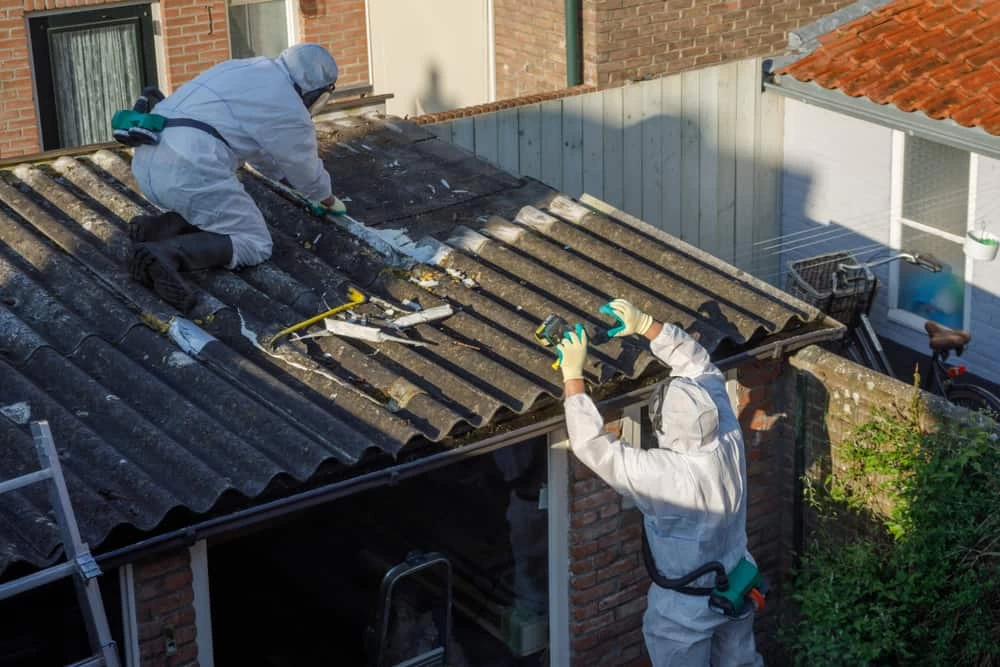
If abatement is required, we set up full containment around the work area before anything gets touched. That means plastic sheeting, negative air pressure systems, and HEPA filtration to make sure fibers stay contained and don’t migrate into the rest of your home. New York State law governs every step of this process, and we handle all required notifications to the NYSDOL before work begins that’s not something your general contractor can do on your behalf.
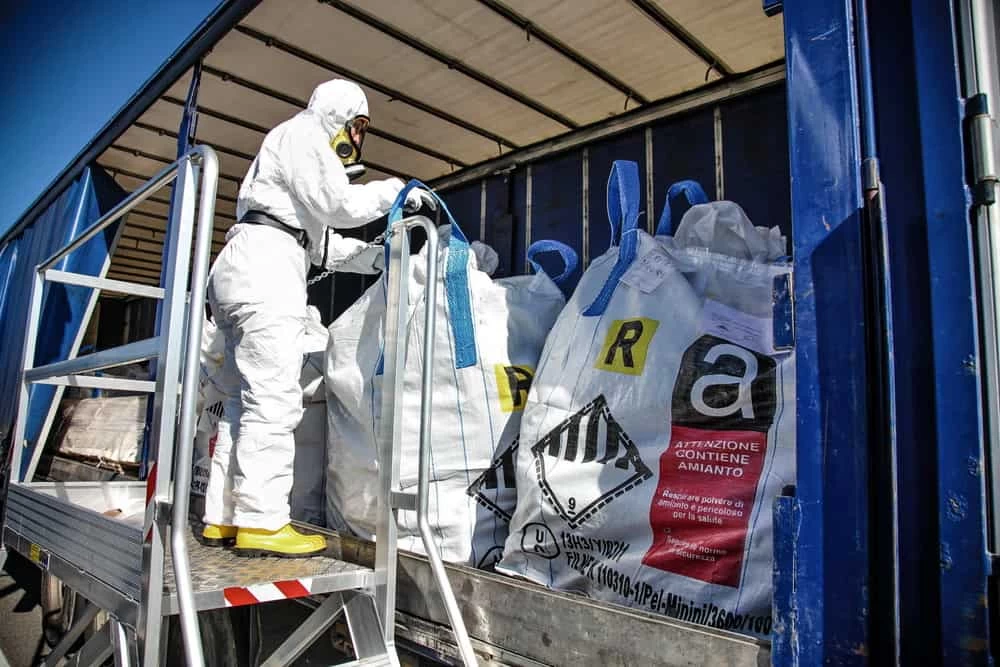
Once removal is complete, all asbestos-containing waste is double-bagged, labeled, and transported to a NYSDEC-approved disposal facility. Then we conduct post-abatement air clearance testing to confirm the space is clean. You receive a full documentation package at the end inspection report, removal records, disposal manifests, and clearance certification. That paperwork protects your home’s value and your legal standing, and in a market where West Islip homes are valued well above $600,000, that’s not a small thing.
Every Common Material in West Islip Homes, Covered
The asbestos-containing materials we encounter most often in West Islip’s housing stock are the ones that were standard in residential construction from the late 1940s through the late 1970s. The 9×12 vinyl floor tiles in basements and kitchens and the black mastic adhesive used to install them are among the most common. Popcorn acoustic ceiling texture, used heavily in bedrooms and living rooms throughout the 1960s and early ’70s, is another. Pipe and boiler insulation in basement mechanical rooms, drywall joint compound, and exterior roofing shingles round out the list of materials we regularly test and remove in homes throughout West Islip and the surrounding area.
Beyond standard renovation scenarios, we also handle asbestos abatement triggered by water damage and storm events. South Shore Long Island homeowners know that coastal exposure comes with real risk a burst pipe, a flooded basement, or roof damage from a nor’easter can compromise materials that were previously stable. When that happens, the abatement process has to happen before restoration work can begin, and it has to be done by a licensed contractor with proper containment and disposal procedures.
Whether you’re updating a kitchen, finishing a basement, replacing an old boiler, or preparing a home for sale in the West Islip market, we handle the full scope: inspection, licensed removal, regulated disposal, and complete documentation. One company, start to finish, with no handoffs.
Does my West Islip home actually need an asbestos inspection before renovating?
In many cases, yes and it’s not just a precaution. New York State requires that renovation or demolition work that may disturb asbestos-containing materials be preceded by a proper inspection conducted by a certified asbestos inspector. This applies to residential properties, not just commercial ones. If your West Islip home was built before 1980, the materials in scope for your renovation floor tiles, ceiling texture, pipe insulation, drywall compound have a real probability of containing asbestos.
Beyond the legal requirement, there’s a practical reason: most general contractors won’t proceed with work that might disturb suspected ACMs without clearance, and the Town of Islip building department requires compliance with state asbestos regulations as a condition of permit issuance. Getting an inspection done before your renovation starts isn’t a delay it’s what keeps your project on schedule and your contractor legally protected.
How much does asbestos removal typically cost in West Islip, NY?
Cost depends on what materials are involved, how much of it there is, and where it’s located in your home. A straightforward asbestos tile removal in a West Islip basement say, 200 square feet of 9×12 vinyl tile and the mastic beneath it will run differently than a full popcorn ceiling removal across multiple rooms, or pipe insulation removal from a basement boiler system. There’s no honest way to give a single number without seeing the job.
What you should expect from any legitimate asbestos contractor is a written scope of work and a clear quote before anything starts. Be cautious of very low bids licensed asbestos abatement in New York State involves real costs: certified labor, containment materials, NYSDOL notifications, HEPA air filtration, and regulated disposal at approved facilities. Cutting corners on any of those steps isn’t just dangerous, it’s illegal, and it can create liability that follows your home through every future sale.
What happens if asbestos is found during a home sale in West Islip?
It depends on when it’s found and how it’s handled. If asbestos-containing materials are identified during a pre-sale inspection or a buyer’s due diligence process, the transaction doesn’t have to fall apart but the issue does need to be addressed. In most cases, buyers and their attorneys will require either professional abatement with full documentation, or a price adjustment that accounts for the remediation cost. Given that West Islip home values are well above $600,000, neither side wants to lose the deal over a solvable problem.
The key is moving quickly and doing it right. We can get an inspection scheduled, complete the abatement, and provide the full documentation package clearance certification, disposal manifests, and removal records that satisfies buyers’ attorneys and lenders. That paperwork is what closes the gap between a flagged inspection and a completed sale. If you’re already under contract, let us know the timeline and we’ll work to meet it.
Is asbestos in popcorn ceilings really a concern in older West Islip homes?
Yes, and it’s one of the most commonly overlooked sources in West Islip. Acoustic spray texture the “popcorn” finish applied to ceilings throughout the 1960s and into the mid-1970s frequently contained chrysotile asbestos as a binder and fire-retardant. In West Islip homes built during that period, it’s one of the first materials we check. The problem is that many homeowners try to scrape popcorn ceilings themselves as a DIY project, not realizing that scraping is exactly the kind of disturbance that releases fibers.
If your West Islip home has original popcorn ceilings and you’re planning any kind of ceiling work scraping, skim-coating, or drywall replacement get it tested first. The test itself is straightforward: a certified inspector takes a small sample and sends it to a lab. If it comes back positive, the removal has to be done under containment by a licensed contractor. If it comes back negative, you’re clear to proceed. Either way, you know exactly where you stand before the work starts.
Can flooding or water damage make asbestos more dangerous in my West Islip home?
It can, and this is something South Shore homeowners in West Islip should take seriously. Asbestos-containing materials that are in good condition and left undisturbed are generally considered non-friable meaning they’re not actively releasing fibers. But water damage changes that equation. When floor tiles are lifted by flooding, when pipe insulation gets saturated, or when ceiling materials are compromised by a roof leak, those materials can become friable crumbling and releasing fibers into the air even without any intentional demolition or renovation work.
For West Islip homeowners in the canal-zone neighborhoods near the Great South Bay, or anyone whose home has experienced flooding from a storm event or a plumbing failure, a post-damage asbestos assessment should happen before any restoration or repair work begins. Restoration contractors are required to follow NYSDOL protocols when working in areas with suspected ACMs, and a pre-remediation inspection protects everyone involved you, your contractor, and your family.
Why should I hire a licensed asbestos contractor instead of a general contractor?
Because in New York State, asbestos abatement above regulatory thresholds is legally required to be performed by a contractor licensed by the NYSDOL a general contractor without that certification cannot legally do the work, regardless of how experienced they are in other areas. It’s not a formality. The licensing requirement exists because improper asbestos removal is a genuine public health risk: disturbing ACMs without proper containment, negative air pressure, and HEPA filtration can spread fibers throughout a home and into neighboring spaces.
Beyond legality, there’s the documentation issue. A licensed abatement contractor provides a paper trail inspection reports, removal records, disposal manifests, and post-abatement clearance certification that a general contractor simply cannot produce. In West Islip’s real estate market, where homes regularly sell above $600,000, that documentation is a material part of your property’s record. Future buyers, their attorneys, and their lenders will ask for it. If it doesn’t exist, or if it was produced by an unlicensed operator, it creates a liability that sits with the property and with you.