When Your White Plains Home Floods, We Respond Tonight
Water doesn’t wait and neither do we. Green Island Group responds 24/7 to water damage emergencies across White Plains, from Gedney Farms to North White Plains, with a full crew and the equipment to stop the damage before it gets worse.
I needed a professional consultation explanation of procedure for safe removal of Asbestos in my apartment complex. Without having an account yet, I was very impressed with the caring, knowledgeable and generous advice offered by Jessica, and will look forward to doing business in the future. Thank you so much! I feel much more informed about a sometimes scary endeavor. Peace. Nancy Silva Mineola, NY.
Mia Munoz
Used this company to clean up some water flood in my house. They were fast and easy to work with.very professional, Would recommend to anyone!
Nini Valle
Great company, had a flood and they responded quickly and efficiently. Billed my insurance company directly. I highly recommend this company!
joe colapietro, jr
I had pipe freeze in my basement right before a snow storm and they made to within an hour to help start the clean up process. They we by our side throughout the entire process and even helped with the insurance company. They did such a great job with the cleanup, repair, remidiation, I contracted them to perform the repairs and finishes in the basement. They came with enough manpower and material to get the job done. Leo and Jessica were nothing but a pleasure to deal with!!
Cristian Arredondo c
I had some water damage in my home and Green Island was able to take care of my issue quickly and effectively. I am very pleased with the work they did. They responded quickly and were very professional.
Michael M
Outstanding service! From the office to the field crew everyone was friendly, helpful and responsive. I highly recommend Green Island Group.
Dry Walls, No Mold, and Your White Plains Home Back
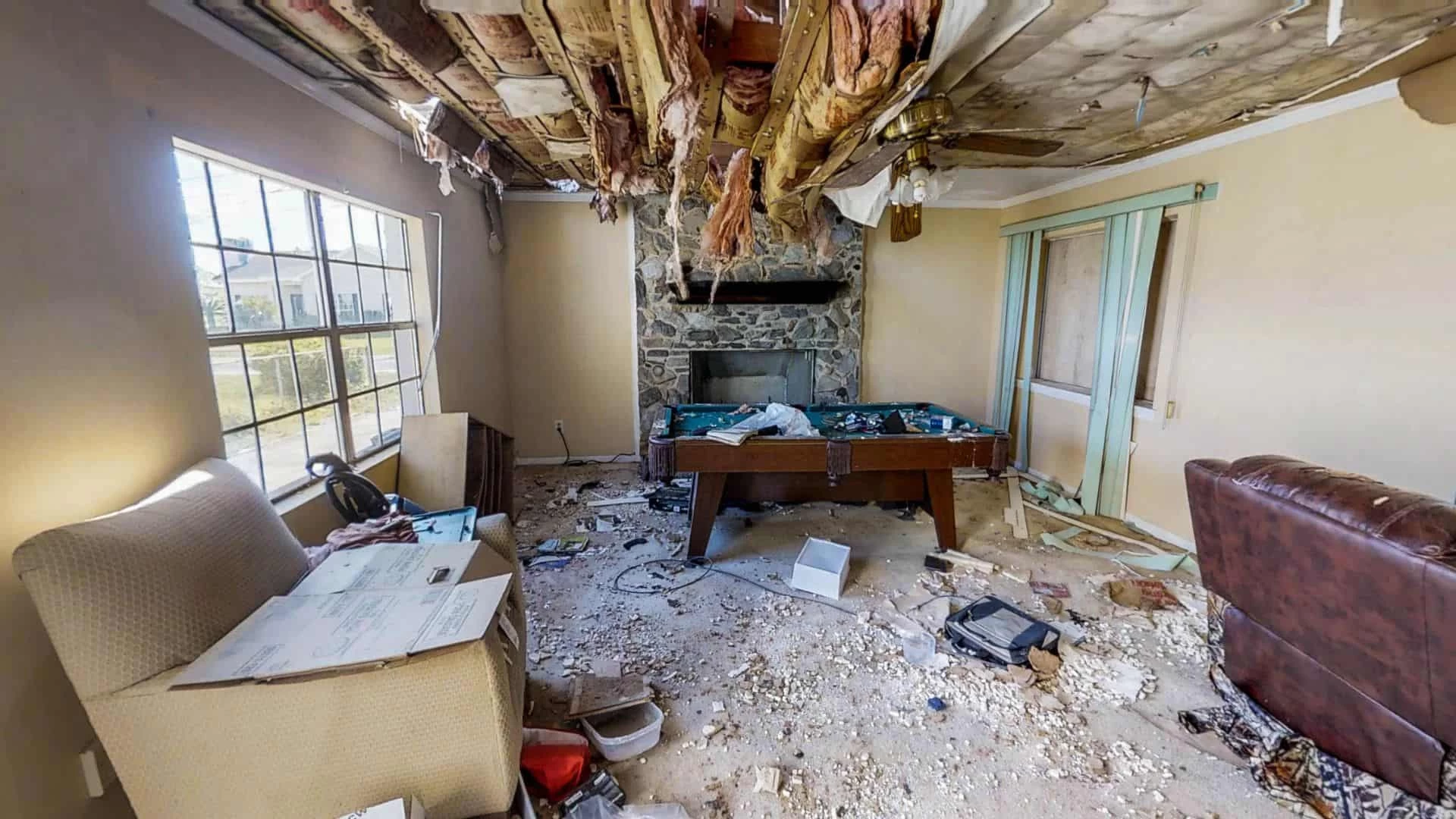
When water gets into your home, the clock starts immediately. Mold can begin growing within 24 to 48 hours of exposure and in the older homes throughout Gedney Farms and Fisher Hill, that timeline is even more unforgiving. Aging plumbing, original drainage systems, and basements built decades before modern waterproofing standards all give water more places to hide and more time to cause damage before you even realize the full scope of what you’re dealing with.
What you actually need after a flood or burst pipe isn’t just someone to pull the water out. You need someone who can dry the structure properly, check for mold, and handle whatever comes next whether that’s rebuilding a wall or identifying asbestos-containing materials before they become a health risk. White Plains has a significant stock of pre-war and mid-century homes where that last part isn’t hypothetical. It’s a real consideration that most restoration companies aren’t equipped to handle in-house.
We manage the entire process from extraction through reconstruction. No handoffs. No coordinating a second or third contractor. One team sees it through, and you’re not left managing the chaos while your home sits wet.
12 Years Serving White Plains and Westchester County
We’ve been operating in the New York metro region for over 12 years, with deep roots in White Plains and Westchester County. That means we’ve worked through the local regulatory environment, know what the White Plains Building Department requires for restoration permits, and understand the specific challenges that come with restoring homes in this area from the stately Colonials near Westchester Hills to the apartment buildings and co-ops closer to downtown.
We’re NYS and NYC M/WBE Certified, fully insured for both liability and workers’ compensation, and have been approved for work with the NYS Office of General Services a level of vetting that goes well beyond what most homeowners would ever think to ask for. That institutional trust translates directly to residential jobs. You’re getting a company that operates at a professional standard because we’ve had to prove it, not just claim it.
Our 100% Satisfaction Guarantee isn’t a marketing line. It means the job isn’t done until it’s right.
Emergency Water Restoration Process near White Plains
What Happens From Your First Call to Final Walkthrough
The moment you call, we dispatch a crew. Whether it’s 2 AM after a thunderstorm flooded your basement near Holland Avenue, or a frozen pipe that let go during a January cold snap in the Highlands, the response is the same immediate. There’s no answering service routing your call to a voicemail. Someone picks up, and someone heads your way.
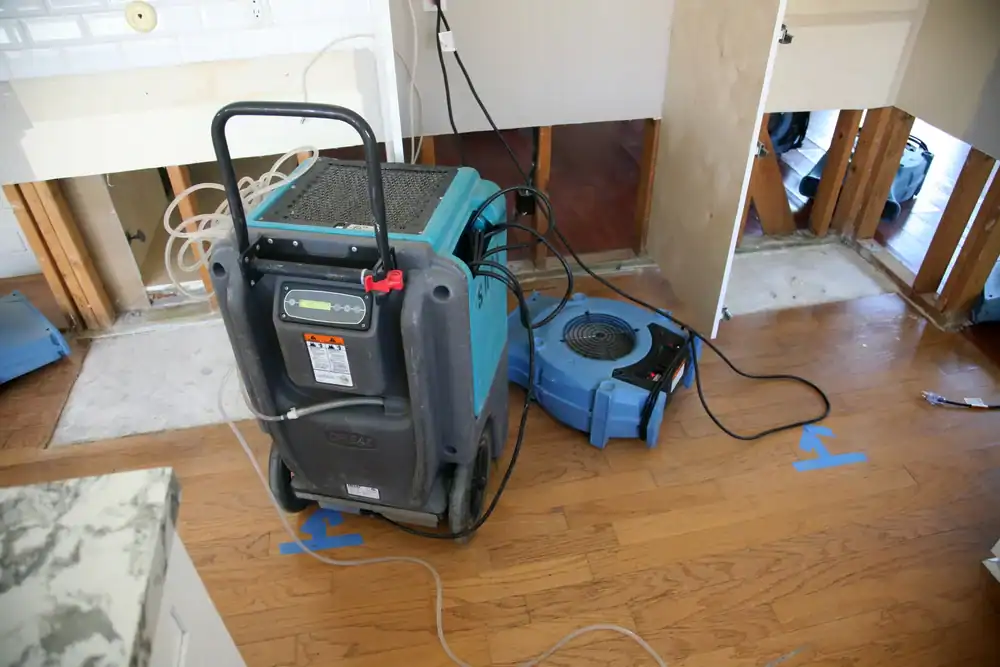
Once on-site, we assess the full scope of the damage not just what’s visible, but what’s behind walls, under flooring, and inside cavities where moisture collects and hides. Industrial extraction equipment removes standing water, and commercial-grade drying equipment is set up to pull moisture from the structure itself. This step takes time, and it matters. Rushing it is how mold problems start.
From there, the process moves into remediation and, where needed, reconstruction. In White Plains, that often includes navigating permit requirements through the City’s Building Department at 255 Main Street, and particularly in older homes assessing whether any disturbed materials require asbestos abatement before work continues. We handle that in-house, which keeps the project moving without the delays that come from bringing in a separate abatement contractor. At the end, you get a walkthrough, documentation for your insurance claim, and a home that’s actually been restored not just dried out and handed back.
Water Damage Restoration Services near White Plains, NY
Everything Covered, From the Water to the Rebuilt Wall
Water damage restoration in White Plains isn’t one-size-fits-all and the service you receive from us reflects that. A flooded basement in a 1940s Tudor in Gedney Farms has different considerations than a burst pipe in a downtown high-rise or a sewage backup in a Rosedale co-op. We adapt to what’s actually in front of us.
Every job includes water extraction, structural drying, moisture mapping, and a full assessment for mold risk because New York State law requires mold assessment and remediation to be handled by licensed parties, and that’s a standard we meet. If mold is present, it’s addressed as part of the same project, not referred out. If the damage requires structural repairs, those are handled through full reconstruction, including permit coordination with the White Plains Building Department when required.
For homes built before the 1980s a category that covers a large portion of White Plains’s most valued residential neighborhoods we’re also equipped to identify and abate asbestos-containing materials before they’re disturbed. That capability is rare among restoration contractors in this market, and it matters when you’re opening walls in a home that was built when asbestos was standard. We offer financing up to $200,000 at 0% APR, and we work directly with insurance carriers so the billing process doesn’t fall on you.
How quickly can you respond to a water damage emergency in White Plains?
We operate 24 hours a day, seven days a week, and dispatch crews immediately upon contact not the next morning, not after a scheduling window. White Plains has documented flooding patterns that don’t follow business hours. The Bronx River Parkway corridor has flooded repeatedly during heavy storms, and residents in North White Plains near Holland Avenue have experienced basement water rising in a matter of minutes during severe rain events. Speed is the difference between a manageable restoration and a full structural remediation.
Once our crew is on-site, we move quickly through assessment and extraction. The goal in the first hours is to stop the damage from spreading to neighboring rooms, to the floor system above, to adjacent walls. The faster water is extracted and drying equipment is in place, the lower the overall cost of the job tends to be, and the lower the risk that mold becomes part of the conversation.
Does homeowner's insurance typically cover water damage restoration costs?
In most cases, yes but the specifics depend on how the damage occurred. Sudden and accidental water damage, like a burst pipe or an appliance failure, is generally covered under standard homeowner’s insurance policies. Flooding from an external source, like a storm or rising groundwater, typically requires separate flood insurance. If you’re in a lower-lying area of White Plains near the Bronx River corridor, that distinction is worth knowing before you need it.
We work directly with insurance carriers and handle billing on your behalf, which removes a significant burden during an already stressful situation. We document the damage thoroughly photos, moisture readings, scope of work in a format that supports the claims process. That documentation matters. Adjusters want specifics, and having a restoration company that speaks their language makes a real difference in how smoothly a claim moves forward.
What's the risk of mold after water damage in a White Plains home?
Mold can begin colonizing within 24 to 48 hours of water exposure. In White Plains’s older housing stock the pre-war and mid-century homes throughout Gedney Farms, Fisher Hill, and the Highlands that risk is compounded by original construction methods that didn’t account for modern moisture management. Older plaster walls, wood subfloors, and basement walls without modern waterproofing barriers give mold more surface area and more organic material to establish in.
The bigger issue is that mold often grows where you can’t see it inside wall cavities, beneath flooring, in crawl spaces. A home that looks dry on the surface after a flood event may have active mold growth hidden inside the structure. That’s why we use moisture mapping equipment to identify wet areas beyond what’s visible, and why mold remediation is part of the restoration process rather than a separate engagement. Under New York State law, mold assessment and remediation must be handled by separately licensed parties a requirement we’re fully compliant with.
Do I need a permit for water damage restoration work in White Plains, NY?
It depends on the scope of the work. Water extraction and drying typically don’t require permits that’s mitigation work, not structural work. But if the restoration involves repairing or replacing structural elements like framing, flooring systems, or drywall, a permit from the White Plains Department of Building is generally required. The department operates out of City Hall at 255 Main Street and enforces all applicable city ordinances and state building codes.
We’re familiar with the White Plains permitting process and handle permit coordination as part of full-scope restoration projects. For homeowners, this matters because unpermitted structural work can create complications when you sell the property or file a future insurance claim. Getting it done right the first time with proper documentation and permit sign-off protects you well beyond the immediate repair.
What happens if my White Plains home has asbestos and needs water damage restoration?
This is a real concern for a significant portion of White Plains homeowners, particularly those in Gedney Farms, Rosedale, and other neighborhoods with homes built before 1980. Asbestos was commonly used in floor tiles, pipe insulation, ceiling materials, and joint compounds during the mid-20th century. When water damage requires opening walls, removing flooring, or disturbing older pipe systems, there’s a genuine risk of exposing asbestos-containing materials and at that point, the work has to stop until abatement is handled.
Most restoration companies don’t have in-house asbestos abatement capability, which means they either halt the project and refer you to a separate contractor or worse proceed without addressing it. We handle abatement in-house, which keeps the project on a single timeline with a single point of accountability. All abatement work follows NYS Department of Labor regulations for licensed asbestos contractors, so there’s no regulatory exposure for the homeowner either.
How does financing work for water damage restoration, and is it available in White Plains?
Yes, financing is available to White Plains homeowners through us, with options up to $200,000 at 0% APR. That’s a meaningful number when you consider that significant water damage restoration jobs especially in the higher-value homes throughout White Plains, where median detached home prices exceed $1,000,000 can run anywhere from $15,000 to $50,000 or more depending on scope. Waiting on a job because of cash flow is one of the most common reasons damage gets worse than it had to be.
No other restoration company currently serving the White Plains market advertises this level of financing. The application process is straightforward, and we can walk you through it as part of the initial consultation. If you’re also filing an insurance claim, the financing can bridge the gap between when the work needs to happen and when the claim is settled so the restoration doesn’t stall while paperwork moves through the system.