When Your Scarsdale Home Floods, Every Hour Counts
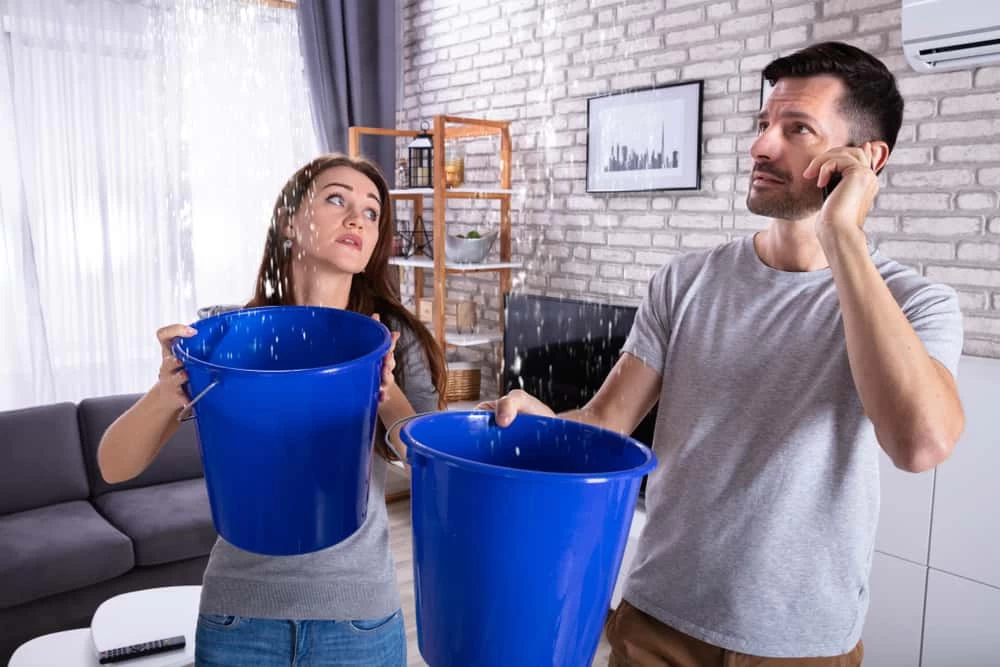
A burst pipe doesn’t wait for convenient timing. It happens while you’re on the Harlem Line heading into the city, while the house sits quiet, while no one’s watching. By the time you get home, what started as a single leak has already soaked into your subfloor, your walls, and your finished basement. That’s when you need us. Green Island Group delivers certified water damage restoration near Scarsdale fast, thorough, and built for homes that are worth protecting.
I needed a professional consultation explanation of procedure for safe removal of Asbestos in my apartment complex. Without having an account yet, I was very impressed with the caring, knowledgeable and generous advice offered by Jessica, and will look forward to doing business in the future. Thank you so much! I feel much more informed about a sometimes scary endeavor. Peace. Nancy Silva Mineola, NY.
Mia Munoz
Used this company to clean up some water flood in my house. They were fast and easy to work with.very professional, Would recommend to anyone!
Nini Valle
Great company, had a flood and they responded quickly and efficiently. Billed my insurance company directly. I highly recommend this company!
joe colapietro, jr
I had pipe freeze in my basement right before a snow storm and they made to within an hour to help start the clean up process. They we by our side throughout the entire process and even helped with the insurance company. They did such a great job with the cleanup, repair, remidiation, I contracted them to perform the repairs and finishes in the basement. They came with enough manpower and material to get the job done. Leo and Jessica were nothing but a pleasure to deal with!!
Cristian Arredondo c
I had some water damage in my home and Green Island was able to take care of my issue quickly and effectively. I am very pleased with the work they did. They responded quickly and were very professional.
Michael M
Outstanding service! From the office to the field crew everyone was friendly, helpful and responsive. I highly recommend Green Island Group.
Your Scarsdale Home Back to Normal Without the Guesswork
Water damage doesn’t announce itself at a convenient time. It happens while you’re commuting into the city, while the house is quiet, while no one’s watching. By the time you get home, what started as a burst pipe or a backed-up drain has already soaked into your subfloor, your walls, and your finished basement. That’s not a cleanup job anymore that’s a restoration.
When the work is done right, you’re not just dry. You’re protected. No hidden moisture behind plaster walls. No mold quietly developing in a corner of your Fox Meadow Colonial where the drywall meets the original lath. No structural damage that surfaces six months from now when you’re trying to sell. The goal is to get your home back to exactly where it was or better with documentation that satisfies your insurance adjuster and gives you real peace of mind.
Scarsdale’s housing stock makes this harder than it sounds. Nearly half of all homes here were built before 1940, and older construction absorbs and hides water differently than modern materials. Plaster walls, wooden subfloors, and aging pipe systems don’t give up moisture easily or quickly. Getting a home like yours truly dry takes the right equipment, the right process, and technicians who understand what they’re working with not a franchise crew running a standard checklist on a century-old house.
Credentials Built for Scarsdale's Older Homes and Discerning Homeowners
Green Island Group has been operating in the New York region for over 12 years, with deep experience throughout Westchester County and the communities surrounding Scarsdale. We’re NYS and NYC M/WBE Certified, IICRC-certified, fully insured including liability and workers’ compensation and we have a documented working relationship with the NYS Office of General Services. Those aren’t marketing claims. They’re verifiable credentials, and in a town like Scarsdale, where homeowners are accustomed to vetting professionals carefully, that distinction matters.
We’ve worked throughout the area long enough to understand what restoration actually looks like in Scarsdale and its neighboring communities. The pre-war construction in Heathcote and Greenacres. The finished basement entertainment spaces in Quaker Ridge. The older plumbing systems that run through homes built decades before modern pipe materials existed. We don’t show up with a generic plan we assess what’s actually in front of us and work from there.
We also work directly with your insurance provider, handling the documentation and communication so you don’t have to manage that on top of everything else. And if the scope of the project runs ahead of your insurance timeline, our financing program up to $200,000 at 0% APR means you don’t have to wait to get started.
Emergency Water Damage Restoration near Scarsdale, NY
What Happens From Your First Call to Full Restoration
The first call triggers an emergency response 24 hours a day, seven days a week. A certified team is dispatched to your property as quickly as possible. When we arrive, the first priority is stopping any active water source and doing a full moisture assessment. That means thermal imaging, moisture meters, and a thorough inspection of the areas most likely to trap water in older Scarsdale homes behind plaster, under hardwood floors, inside wall cavities near original plumbing runs.
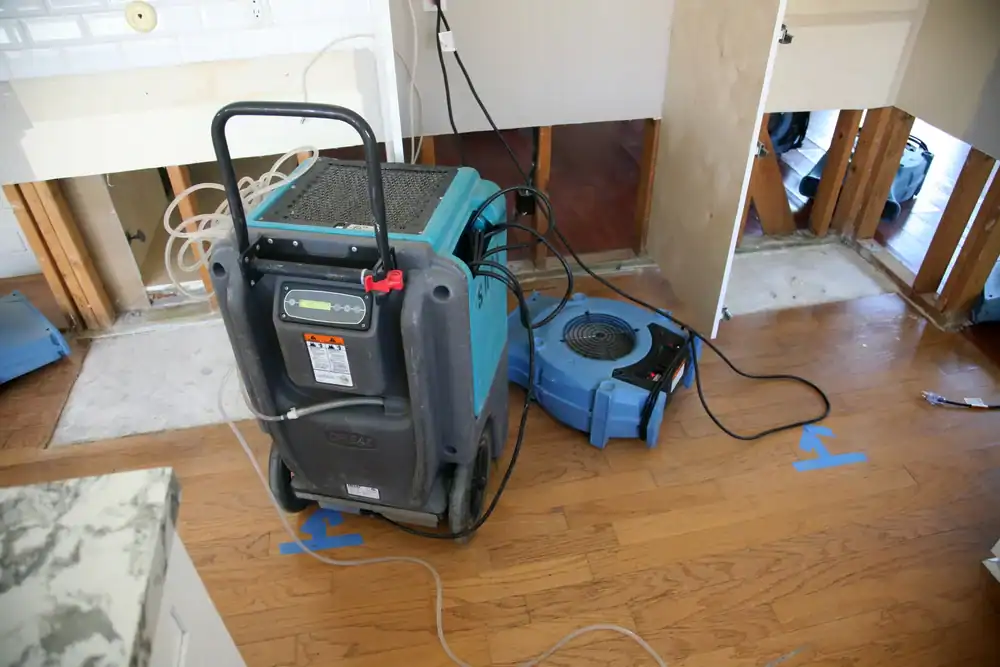
Once the assessment is complete, extraction begins. Industrial-grade equipment removes standing water, and the drying process is set up using commercial air movers and dehumidifiers calibrated to the specific conditions of your home. This phase takes time usually several days and it’s monitored closely. Rushing it is how you end up with mold two weeks later.
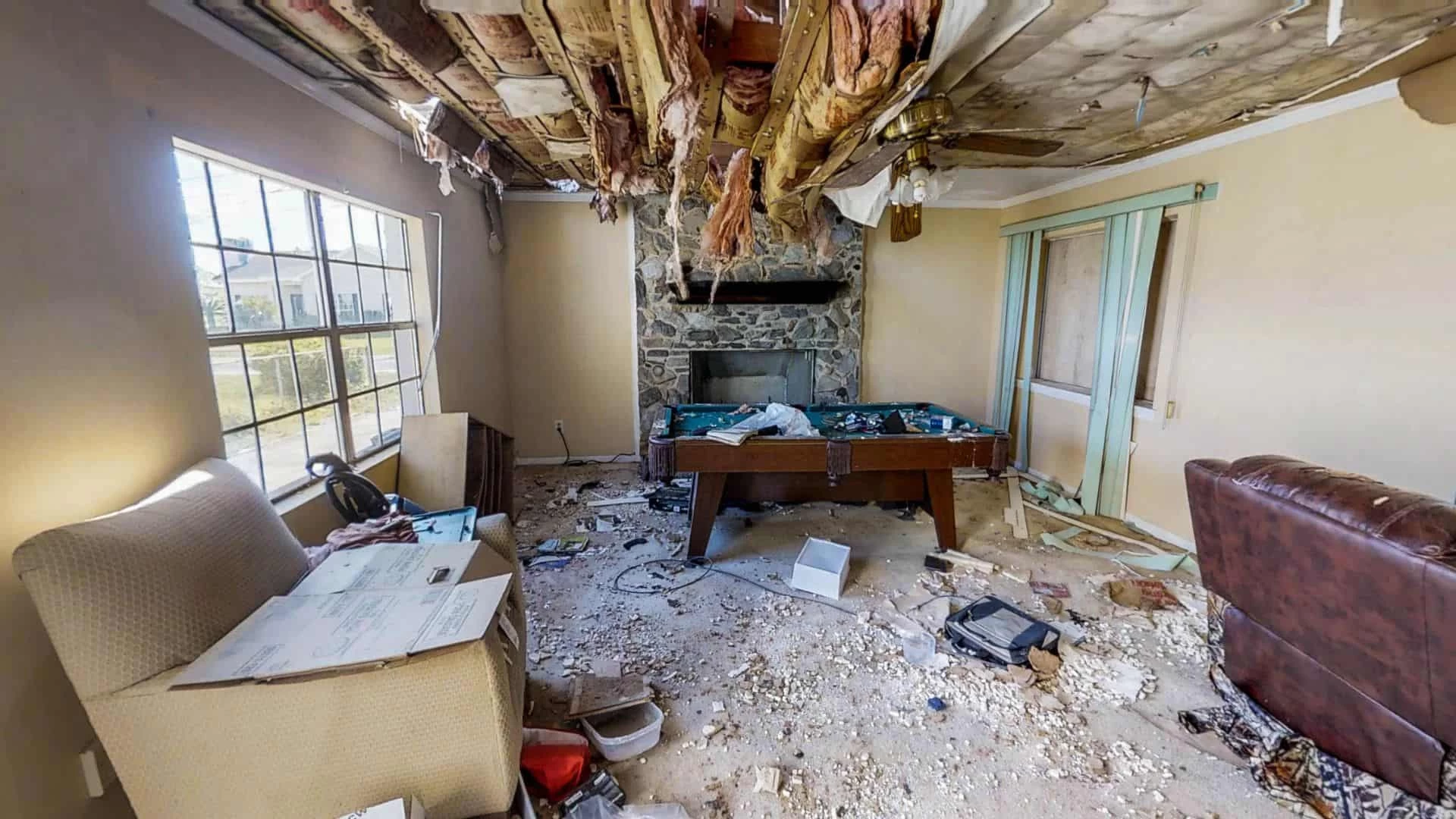
From there, the scope of the restoration becomes clear. If there’s mold, we remediate it. If the damage involves pre-1980 materials which is likely in most Scarsdale homes we test for asbestos before anything gets disturbed, and we handle abatement in-house if it’s needed. You don’t have to find a separate contractor and coordinate a separate timeline. The Village of Scarsdale’s building department requires permits for structural repairs following water damage, and we’re familiar with that process. Once the remediation is complete, reconstruction brings your home back to pre-loss condition the same finishes, the same function, done properly.
Water Damage Restoration Services near Scarsdale, NY
Full-Scope Restoration Built for Scarsdale's Older Homes
Most of what makes water damage complicated in Scarsdale comes down to the age of the housing stock. When a home was built in the 1920s or 1930s which describes a large portion of properties in Fox Meadow, Edgewood, and Heathcote the materials, the construction methods, and the plumbing systems all create specific challenges that a standard restoration approach doesn’t fully account for. Our service is built to handle the full picture: water extraction, structural drying, mold remediation, asbestos testing and abatement where applicable, and complete reconstruction.
The asbestos piece is worth understanding clearly. Pre-1980 construction commonly contains asbestos in pipe insulation, floor tiles, joint compound, and ceiling materials. Opening walls or ceilings during a water damage restoration in a home of this age isn’t optional it’s necessary. But it can’t be done safely without testing first. We handle that in-house, which means no delays waiting on a separate abatement contractor and no gaps in accountability between the remediation and the rebuild.
Scarsdale’s documented flooding history the village has commissioned formal stormwater management engineering studies and maintains an active Floodplain Information program through the Village Engineering Department means this isn’t a once-in-a-decade risk for many residents. If your property sits near the Bronx River watershed or in one of the lower-lying sections of town, recurrent water intrusion is a real pattern. We restore what’s damaged, and we document everything in a way that supports your insurance claim and protects you if it happens again.
How quickly can you respond to a water damage emergency in Scarsdale?
We offer 24/7 emergency response, which means a team can be dispatched any time including overnight and on weekends. Response time depends on your location and current call volume, but the goal is always to get to your property as fast as possible because the damage compounds quickly. Mold can begin developing within 24 to 48 hours of water intrusion, and in a home with plaster walls and wooden structural elements which describes most of Scarsdale’s pre-war housing stock moisture travels and hides in ways that make early intervention critical.
If you’re commuting into the city when the event happens, you don’t need to be home for us to get started. A neighbor, a property manager, or a family member with access can let us in. We’ll assess the situation, document everything thoroughly, and have extraction and drying equipment running before you’re back at Scarsdale Station. The sooner the process starts, the smaller the final scope of damage and the lower the overall cost.
Does homeowners insurance typically cover water damage restoration near Scarsdale?
It depends on the cause of the damage. Most standard homeowners insurance policies cover sudden and accidental water damage a burst pipe, an appliance failure, or a roof leak from a storm. What they typically don’t cover is flooding from an external source, like a river overflowing or stormwater backing up through a drain. For that, you’d need a separate flood insurance policy, which is available through FEMA’s National Flood Insurance Program. The Village of Scarsdale Engineering Department can confirm whether your specific property falls within a mapped Special Flood Hazard Area.
We work directly with insurance providers and handle the documentation process on your behalf inspection reports, moisture readings, photo documentation, and the line-item scope of work that adjusters need to process a claim. This matters more than most homeowners realize. A poorly documented claim can result in partial reimbursement or denial. Our team knows what adjusters look for and how to present the damage accurately so your claim reflects the full scope of what needs to be repaired.
My Scarsdale home was built in the 1930s does that affect the restoration process?
Yes, significantly. Homes built before 1940 which accounts for nearly half of Scarsdale’s housing stock present specific challenges that newer construction doesn’t. Plaster walls absorb and retain moisture differently than modern drywall, and they can hide water damage for extended periods without showing obvious surface signs. Wooden subfloors and lath framing hold moisture longer and are more susceptible to structural deterioration if drying isn’t done thoroughly. Older plumbing systems, including galvanized steel pipes and cast iron drain lines, are more likely to fail during freeze-thaw cycles and harder to access without disturbing surrounding materials.
There’s also the asbestos question. Most homes built before 1980 contain asbestos somewhere pipe insulation, floor tiles, joint compound, ceiling texture. In a home from the 1930s, the presence of asbestos-containing materials is highly likely, and any restoration work that requires opening walls, ceilings, or disturbing flooring needs to include testing before work proceeds. We handle asbestos testing and abatement in-house, so there’s no separate contractor to coordinate and no gap in the project timeline.
What's the difference between water damage restoration and just drying things out?
Drying is one step in a much longer process and doing only that step is one of the most common reasons water damage turns into a much bigger problem down the road. Extraction removes standing water, but moisture has already migrated into walls, floors, and structural cavities by the time visible water appears. Without professional drying equipment commercial dehumidifiers, air movers, and thermal imaging to track moisture levels behind surfaces that hidden moisture stays put and becomes the foundation for mold growth, wood rot, and structural deterioration.
True restoration means addressing the full scope: extraction, structural drying monitored over several days, mold inspection and remediation if needed, repair or replacement of damaged materials, and reconstruction back to pre-loss condition. In Scarsdale, where homes often have finished basements with hardwood floors, built-in cabinetry, and plaster walls, “drying things out” and calling it done is not an adequate response. The goal is to return your home to exactly what it was not just to make it look dry on the surface.
How do I know if there's mold after a water damage event in my Scarsdale home?
Sometimes you can see it discoloration on walls, dark spots near baseboards, visible growth in corners or behind furniture that was against a wet wall. More often in older Scarsdale homes, you can’t see it at all. Mold grows inside wall cavities, under flooring, and behind plaster in areas that never fully dried. The first sign is frequently a musty smell that persists even after the visible damage appears to be resolved. By that point, the colony is already established and the remediation scope is larger than it would have been with earlier intervention.
The only reliable way to know is a professional moisture assessment using thermal imaging and moisture meters, followed by air quality or surface testing if readings indicate a problem. We include a thorough inspection as part of every restoration job not as an add-on, but as a standard part of the process. In Scarsdale’s climate, where humid summers follow wet springs and homes regularly experience basement flooding from stormwater events near the Bronx River watershed, the conditions for mold growth are present more often than most homeowners realize. Catching it early is always the better outcome.
How much does water damage restoration typically cost, and do you offer financing?
The cost depends heavily on the scope how much water, how long it was present, what materials were affected, and whether mold or asbestos abatement is part of the picture. A straightforward extraction and drying job in a single room might run a few thousand dollars. A full restoration involving a finished basement, mold remediation, and reconstruction in a large Scarsdale home can reach $30,000 to $100,000 or more, particularly when pre-war materials and asbestos abatement are involved. Most of the work is at least partially covered by homeowners insurance, and we handle the claims process directly with your provider.
For the portion that isn’t covered or for situations where you need work to start before the insurance check clears we offer financing up to $200,000 at 0% APR. This exists because the cost of delay is real. Every day a home sits with residual moisture is another day closer to a mold problem that costs more to fix than the original damage. The financing option means you can authorize a complete, thorough restoration immediately, without waiting on a reimbursement timeline or drawing down liquid assets.