When Wickers Creek Rises, You Need Someone There Now
Water damage in Dobbs Ferry moves fast and in a town full of century-old homes, it hides even faster. We respond 24/7 so the damage stops before it becomes a disaster.
I needed a professional consultation explanation of procedure for safe removal of Asbestos in my apartment complex. Without having an account yet, I was very impressed with the caring, knowledgeable and generous advice offered by Jessica, and will look forward to doing business in the future. Thank you so much! I feel much more informed about a sometimes scary endeavor. Peace. Nancy Silva Mineola, NY.
Mia Munoz
Used this company to clean up some water flood in my house. They were fast and easy to work with.very professional, Would recommend to anyone!
Nini Valle
Great company, had a flood and they responded quickly and efficiently. Billed my insurance company directly. I highly recommend this company!
joe colapietro, jr
I had pipe freeze in my basement right before a snow storm and they made to within an hour to help start the clean up process. They we by our side throughout the entire process and even helped with the insurance company. They did such a great job with the cleanup, repair, remidiation, I contracted them to perform the repairs and finishes in the basement. They came with enough manpower and material to get the job done. Leo and Jessica were nothing but a pleasure to deal with!!
Cristian Arredondo c
I had some water damage in my home and Green Island was able to take care of my issue quickly and effectively. I am very pleased with the work they did. They responded quickly and were very professional.
Michael M
Outstanding service! From the office to the field crew everyone was friendly, helpful and responsive. I highly recommend Green Island Group.
A lot of restoration companies will pull the water, drop some equipment, and call it done. What they leave behind is the part that costs you moisture trapped inside old plaster walls, mold starting behind baseboards within 24 hours, and a repair bill six months later that nobody warned you about. That’s not restoration. That’s a delay.
Dobbs Ferry’s housing stock is older than most people realize. The village has a well-documented concentration of Victorian, Colonial Revival, and Craftsman-era homes wood-framed structures that absorb and hold moisture differently than newer construction. When water gets in, it doesn’t just sit on the surface. It moves into the framing, the subfloor, the wall cavities. Getting it out requires more than a shop vac and a fan.
Then there’s the reality of where you live. Wickers Creek runs through the center of the village. The Hudson River is at your back. New York State’s own climate projections specifically name Dobbs Ferry as a location expected to see more days with heavy rainfall in the coming decades. The risk here isn’t theoretical it’s geographic. What you need after a water event isn’t just a dry floor. You need someone who actually checked the walls, documented everything for your insurance company, and made sure nothing was left behind.
We’ve been doing environmental restoration work for over 12 years. We’re NYS and NYC M/WBE certified, fully insured for both liability and workers’ compensation, and we work directly with the NYS Office of General Services which means we’ve been vetted at a level most contractors never reach. When you’re protecting a home worth $700,000 or more in Dobbs Ferry, that kind of track record matters.
We serve Dobbs Ferry and the surrounding Westchester communities including Ardsley, Irvington, Hastings-on-Hudson, and the broader Rivertowns corridor along the Hudson. We know the area, we know the building stock, and we know what water damage looks like in homes that were built before your grandparents were born.
You also get a 100% satisfaction guarantee and access to financing up to $200,000 at 0% APR because a job this important shouldn’t be cut short because of cash flow timing.
When you call, someone picks up day or night. A lot of Dobbs Ferry residents are on the Metro-North commuting into the city when something goes wrong at home. You shouldn’t have to wait until you’re back on the platform at Grand Central to get the process started. One call dispatches a crew. You don’t have to be there.
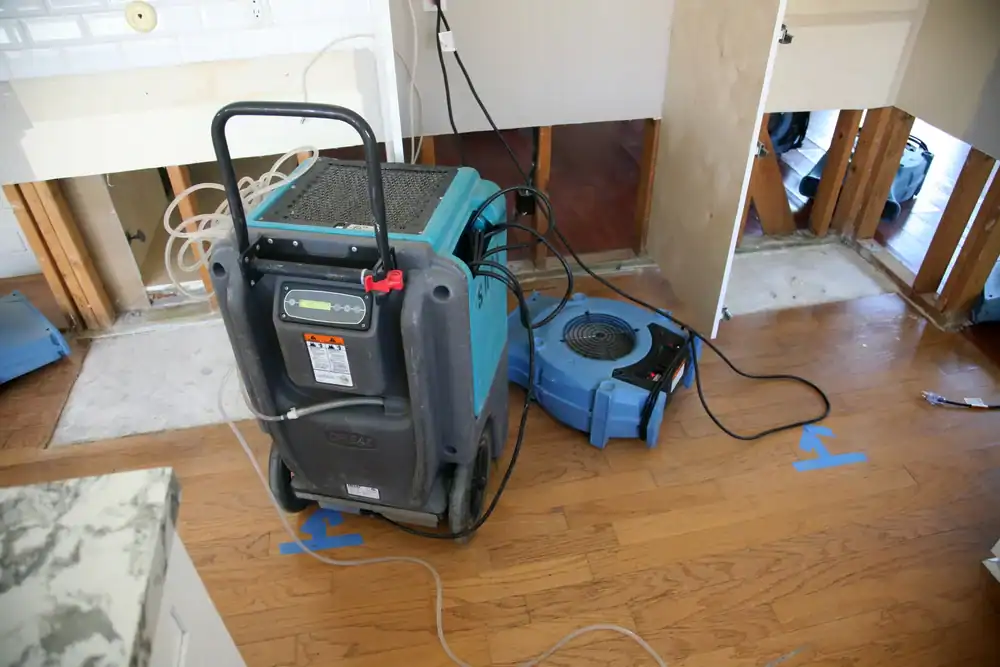
When our team arrives, the first priority is stopping the source and assessing the full scope not just what’s visible. In older Dobbs Ferry homes, that means checking inside wall cavities, under flooring, and around original pipe systems that weren’t built with modern insulation standards. Moisture mapping tells us what the eye can’t see. From there, extraction and structural drying begin, with equipment calibrated to the specific materials in your home.
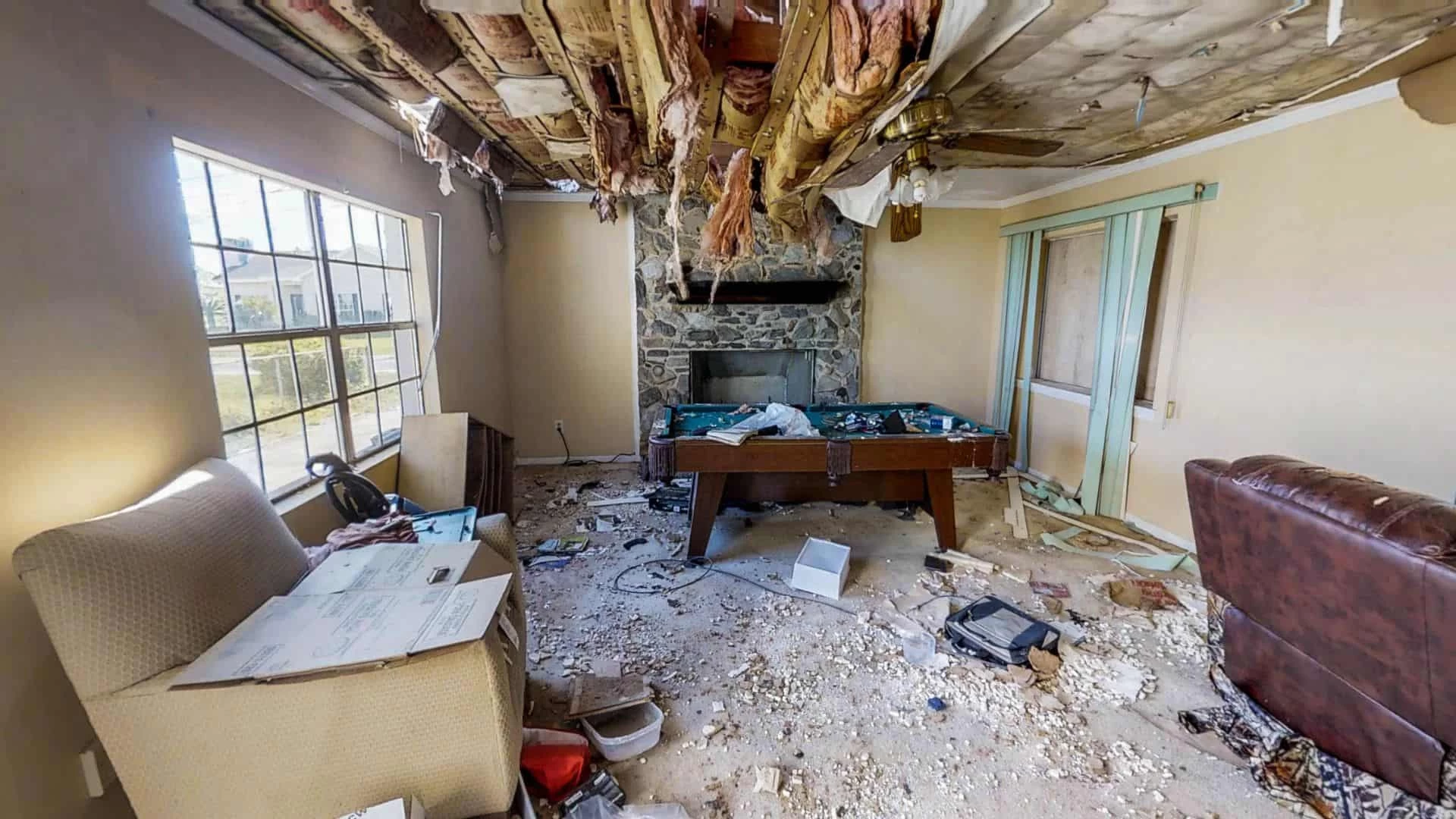
If the work uncovers asbestos-containing materials which is a real possibility in homes built before 1980, and Dobbs Ferry has many of them we handle abatement in-house. No stopping work to find a second contractor. No handoff gaps. We also manage the insurance documentation throughout the entire process, so when the adjuster calls, everything is already in order. The job isn’t done until the moisture readings confirm it’s done.
Water damage restoration isn’t one thing it’s a sequence. Extraction, drying, moisture mapping, mold remediation, structural repair, and in older homes, sometimes asbestos abatement before any of the above can safely continue. We handle all of it. You’re not managing a relay race between four different contractors while your home sits open.
For Dobbs Ferry specifically, a few things come up regularly. Homes near Wickers Creek and the Hudson River waterfront see basement flooding and ground-level water intrusion more often than properties further inland. Homes in the Belden Avenue Historic District and other older sections of the village many of which feature the Vermont slate roofs the village is known for can develop water intrusion at the roofline as slate and underlayment age. And every winter, the freeze-thaw cycle puts pressure on pipe systems in exterior walls and uninsulated crawl spaces, particularly in homes that haven’t been updated since original construction.
Whatever the source, the process is the same: find it, dry it, document it, fix it. We work directly with your insurance company so the claim is handled properly from the start. And if cost is a concern before the claim settles, the 0% APR financing option up to $200,000 means the job doesn’t have to wait.
How quickly can you respond to a water emergency in Dobbs Ferry, NY?
We offer 24/7 emergency response, which means a crew can be dispatched to your Dobbs Ferry address any time nights, weekends, and holidays included. A lot of homeowners in this area are commuting into Manhattan when something goes wrong at home, and waiting until you’re back isn’t an option when water is actively spreading.
The reason speed matters so much with water damage is that mold can begin developing within 24 to 48 hours of a moisture event. In Dobbs Ferry’s older wood-framed homes, that timeline is especially unforgiving original framing and plaster absorb moisture quickly and release it slowly. The faster extraction and drying begin, the smaller the total scope of the damage, and the lower your overall restoration cost.
Does water damage restoration in Dobbs Ferry typically uncover asbestos?
It depends on the age of the home, but it’s a legitimate concern in Dobbs Ferry. The village has a well-documented concentration of homes built in the late 19th and early 20th centuries and homes built before 1980 may contain asbestos in pipe insulation, floor tiles, ceiling tiles, or drywall joint compound. When water damage opens up wall cavities or exposes original materials, there’s a real chance of encountering asbestos-containing materials.
We handle asbestos abatement in-house, which matters more than it might sound. If a restoration company discovers ACMs and can’t handle abatement themselves, work stops while you find a separate contractor adding days or weeks to the process and creating accountability gaps between vendors. We test, abate, and continue restoration as one coordinated job. For a Dobbs Ferry homeowner dealing with damage to a historic home, that continuity is the difference between a manageable situation and a prolonged one.
Will my homeowner's insurance cover water damage restoration in Dobbs Ferry?
Most standard homeowner’s insurance policies cover sudden and accidental water damage a burst pipe, an appliance failure, storm-related intrusion. What they typically don’t cover is damage from long-term neglect or gradual leaks that went unaddressed. The distinction matters, and it’s worth understanding before you file a claim.
We work directly with insurance companies throughout the restoration process. We document the damage, communicate with adjusters, and make sure the scope of work is properly captured so nothing falls through the cracks. For Dobbs Ferry homeowners with properties valued at $700,000 or more, having that documentation handled correctly from the start can make a significant difference in what the claim actually covers. If there’s a gap between what insurance pays and what the job costs, our 0% APR financing up to $200,000 is available to bridge it.
What makes water damage in older Dobbs Ferry homes harder to remediate?
The main challenge is that historic construction materials behave differently under moisture than modern ones. Original wood framing, old-growth lumber, plaster walls, and period-era subfloor materials all absorb water more readily and dry more slowly than the materials used in homes built in the last 30 years. Standard drying timelines don’t always apply, and standard moisture readings can be misleading if the technician isn’t accounting for the density and composition of the materials involved.
There’s also the layout factor. Many of Dobbs Ferry’s older homes have irregular wall cavities, finished basements with original stone foundations, and pipe systems routed through exterior walls without adequate insulation all of which create pathways for moisture to travel in unexpected directions. Thorough moisture mapping is essential in these structures. A surface reading that looks dry can mask active moisture two inches into the wall. We approach every Dobbs Ferry job with the building’s age and construction type in mind, not a one-size-fits-all protocol.
How does the freeze-thaw cycle in Dobbs Ferry affect the risk of burst pipes?
The Hudson Valley’s winter climate creates repeated freeze-thaw cycles temperatures cross back and forth over the freezing threshold multiple times throughout the season, which puts ongoing stress on pipes that aren’t adequately insulated. In Dobbs Ferry, where a significant share of the housing stock dates to the late 1800s and early 1900s, many pipe systems run through exterior walls or uninsulated crawl spaces in configurations that were never designed to meet modern insulation standards.
When a pipe bursts, the water release can be significant and fast especially if no one is home to catch it early. The damage typically spreads through subfloor materials, into wall cavities, and down into basements before it’s discovered. March is historically Dobbs Ferry’s highest snowfall month, which means the snowmelt-into-rain transition in early spring adds another layer of risk on top of the freeze-thaw cycle. If you’ve had a pipe issue this winter or noticed unusual moisture in a basement or wall, getting it assessed before the spring thaw is worth doing sooner rather than later.
Does Green Island Group handle water damage restoration for Dobbs Ferry's historic district properties?
Yes, and it’s worth knowing that restoration work on properties within Dobbs Ferry’s designated historic areas including the Belden Avenue Historic District may be subject to review under the village’s Historic District Guidelines. The guidelines govern alterations to historic structures, which means the materials and methods used in a restoration can affect whether the work is compliant with the village’s preservation standards.
This is something a general contractor or out-of-area restoration company might not flag until it becomes a problem. Our experience working with the NYS Office of General Services which manages contracts for state government facilities, including historic properties means we’re familiar with regulatory compliance at a level most restoration companies aren’t. If your home falls within a protected area of the village, we factor that into the scope of work from the beginning, not as an afterthought when the permit review comes back.