When the Pocantico Backs Up, You Need More Than a Shop Vac
We respond 24/7 to flooded basements in Briarcliff Manor with the equipment, certifications, and experience to handle what river flooding actually leaves behind.
I needed a professional consultation explanation of procedure for safe removal of Asbestos in my apartment complex. Without having an account yet, I was very impressed with the caring, knowledgeable and generous advice offered by Jessica, and will look forward to doing business in the future. Thank you so much! I feel much more informed about a sometimes scary endeavor. Peace. Nancy Silva Mineola, NY.
Mia Munoz
Used this company to clean up some water flood in my house. They were fast and easy to work with.very professional, Would recommend to anyone!
Nini Valle
Great company, had a flood and they responded quickly and efficiently. Billed my insurance company directly. I highly recommend this company!
joe colapietro, jr
I had pipe freeze in my basement right before a snow storm and they made to within an hour to help start the clean up process. They we by our side throughout the entire process and even helped with the insurance company. They did such a great job with the cleanup, repair, remidiation, I contracted them to perform the repairs and finishes in the basement. They came with enough manpower and material to get the job done. Leo and Jessica were nothing but a pleasure to deal with!!
Cristian Arredondo c
I had some water damage in my home and Green Island was able to take care of my issue quickly and effectively. I am very pleased with the work they did. They responded quickly and were very professional.
Michael M
Outstanding service! From the office to the field crew everyone was friendly, helpful and responsive. I highly recommend Green Island Group.
Basement Water Damage Restoration Briarcliff Manor
Your Basement Dry, Safe, and Documented for Your Insurer
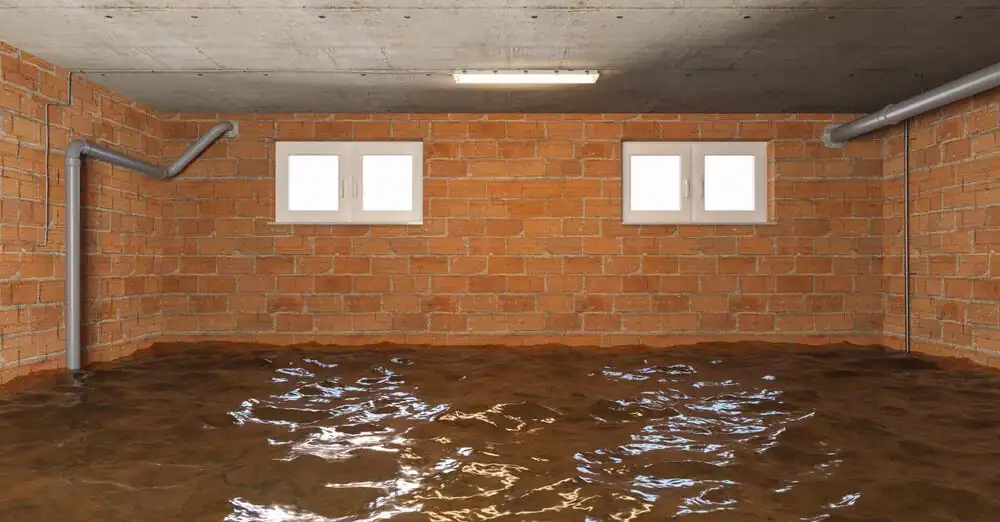
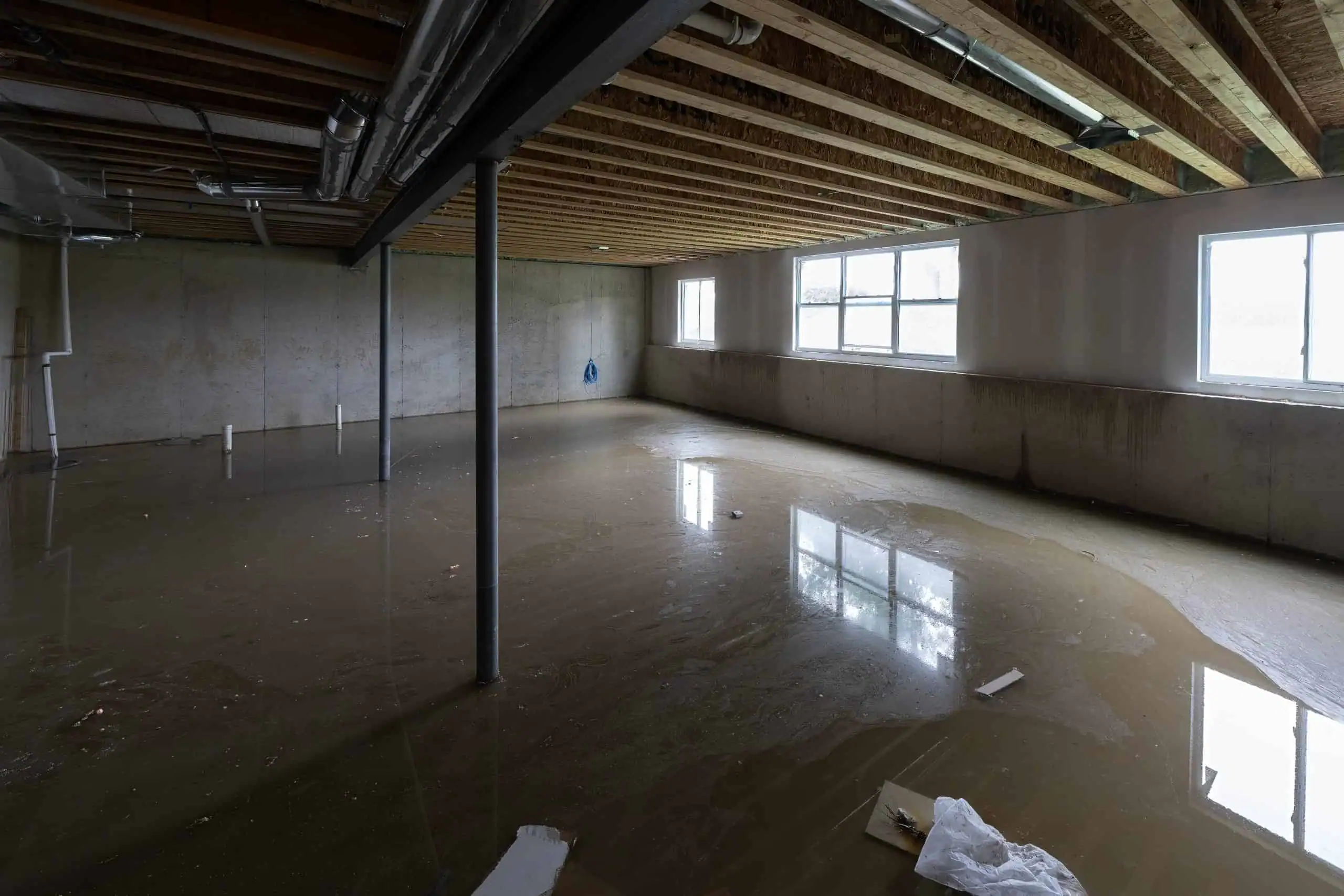
When the water recedes, what’s left behind is the real problem. Moisture hides inside wall cavities, under flooring, and within the insulation of homes that were built decades before modern moisture barriers existed. In Briarcliff Manor, where the median construction year is 1968 and more than one in eight homes predate 1940, that’s not a hypothetical it’s the baseline condition of most basements on these streets.
The flooding that hits Briarcliff Manor isn’t the slow-seep kind. When the Pocantico River backs up behind the Route 9A bridge a 90-year-old structure the NYS DOT has acknowledged gets fully submerged during 10-year storm events the water that enters homes along Ash Road, Oak Road, and Todd Lane is exterior floodwater. That’s Category 3 contamination. It carries bacteria, sediment, and whatever the river picked up on its way in. A fan and a dehumidifier from a hardware store won’t touch it.
What you actually need is industrial extraction, commercial drying equipment calibrated to the moisture load in your specific space, and a team that documents everything properly so your insurance claim doesn’t fall apart. That’s the outcome: a basement that’s genuinely dry, tested, and cleared not just one that looks dry on the surface.
Water Damage Restoration Company Briarcliff Manor NY
12 Years, 5,000 Projects, and We Know This County
We’ve been doing environmental restoration work across New York State for over 12 years, with more than 5,000 completed projects. That’s not a marketing number it means we’ve worked through every variation of water damage this region produces, from burst pipes in finished basements to Category 3 sewage and river water extractions in homes with stone foundations.
We hold NYS and NYC M/WBE Certification and work directly with the NYS Office of General Services. We’re fully insured liability and workers’ compensation and we bill insurance carriers directly, which is something our actual customers consistently mention in reviews. We also offer financing up to $200,000 at 0% APR, because emergencies don’t wait for insurance settlements.
Briarcliff Manor sits within Westchester County’s most flood-documented corridors. We know the Pocantico River watershed, we understand the village’s pre-1980 housing stock, and we’re familiar with the drainage constraints that make the Tree Streets a recurring problem after every major storm. This isn’t new territory for us.
Emergency Basement Flood Cleanup Process Briarcliff Manor
What Actually Happens From the First Call to the Final Clearance
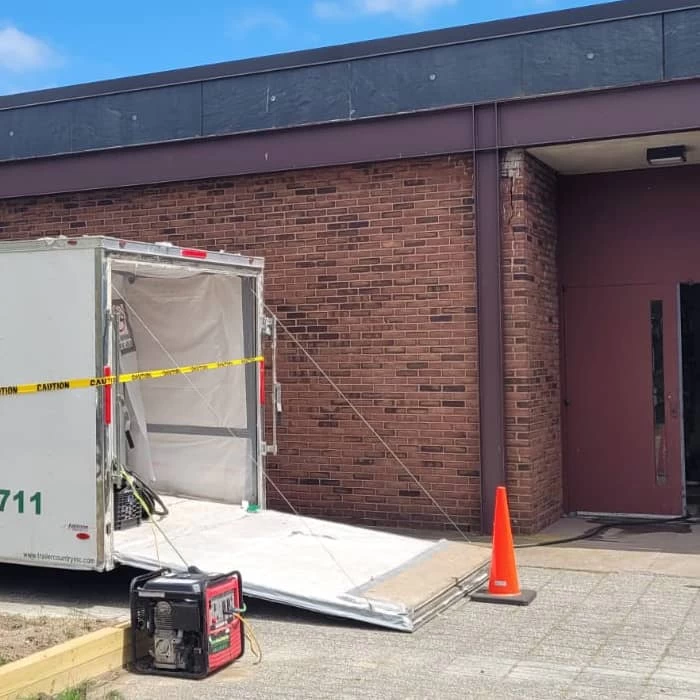
When you call, we mobilize. Our 24/7 emergency response means we’re not routing you through a national call center we’re dispatching to Briarcliff Manor. The first thing we do on-site is assess the water category. If the Pocantico has backed up into your basement, that’s exterior floodwater and it requires biohazard protocols from the start. If it’s a burst pipe or sump pump failure, the approach is different. That distinction matters for both the cleanup method and your insurance documentation.
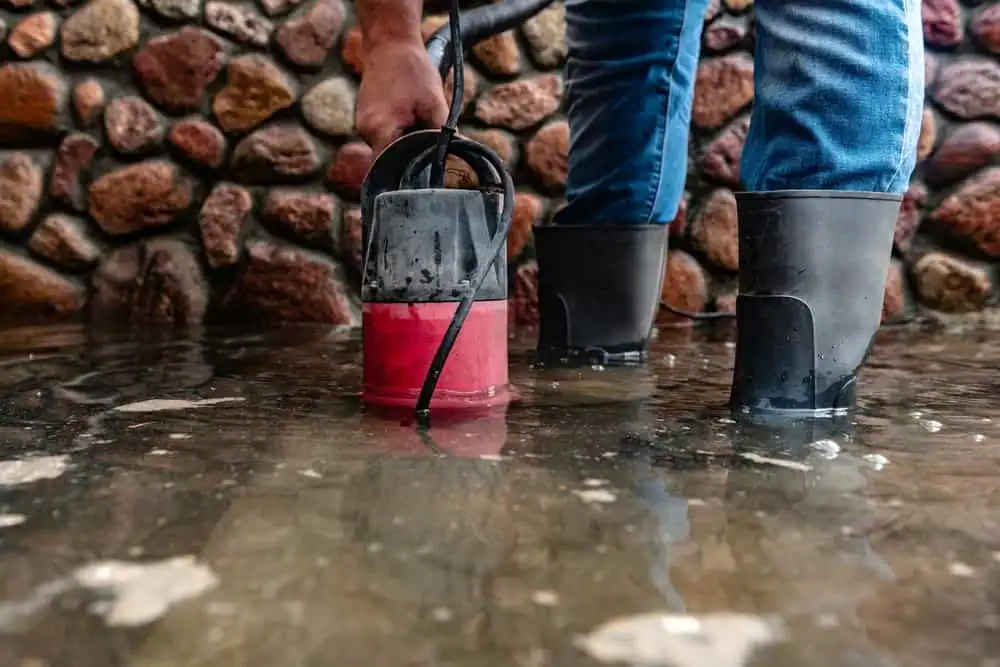
Once we’ve assessed, we extract. Industrial pumps and wet-vac systems pull standing water out fast. Then comes the part most homeowners don’t see moisture mapping. We use thermal imaging and commercial moisture meters to find water that has migrated behind walls, under subfloors, and into structural cavities. In a Briarcliff Manor home built in the 1950s or 1960s, that water can travel further than you’d expect through plaster-and-lath construction.
After extraction and mapping, we deploy commercial air movers and dehumidifiers sized to your specific space and moisture load. We monitor daily until readings confirm the structure is dry not just the floor, but the walls, the framing, and the subfloor. If your home was built before 1978 and we identify materials that may contain asbestos floor tiles, pipe insulation, ceiling materials we handle that in the same engagement. No second contractor, no coordination gap. When everything clears, we provide full documentation for your insurance carrier.
Mold Remediation and Asbestos Abatement Briarcliff Manor NY
One Call Covers Water, Mold, Asbestos, and Full Reconstruction
Most restoration companies stop at water removal. What they leave behind hidden moisture, disturbed building materials, incomplete drying becomes your problem six months later when a home inspector flags active mold growth or a contractor discovers asbestos debris in a wall cavity. In Briarcliff Manor, where a significant share of homes were built during the period when asbestos was standard in floor tiles, pipe insulation, and joint compound, that’s a real and documented risk, not a theoretical one.
We handle the full scope under one engagement. That means water extraction and structural drying, mold testing and remediation if growth is found, asbestos assessment and abatement if pre-1978 materials are disturbed, and complete reconstruction of any structural elements that need to be removed and replaced. For homeowners in Scarborough, along the Tree Streets near the Pocantico, or anywhere else in the village with older construction, that comprehensive capability is what actually protects a home worth $860,000 or more.
We also manage the insurance process directly. We document the damage, photograph the affected areas, and submit the claim information to your carrier in the format adjusters need. If coverage is delayed or disputed, the 0% APR financing up to $200,000 means the work doesn’t have to wait. Your home gets protected on your timeline, not the insurance company’s.
Does homeowners insurance cover flooded basement cleanup in Briarcliff Manor, NY?
It depends on the source of the water, and this is where most homeowners get caught off guard. Standard homeowners insurance typically covers sudden and accidental water damage a burst pipe, an appliance overflow, a sump pump failure but it generally excludes gradual seepage and exterior flood damage. If the Pocantico River backed up into your basement during a storm like Ida or Irene, that’s exterior floodwater, and it typically falls under a separate flood insurance policy through FEMA’s National Flood Insurance Program, not your standard homeowners policy.
That said, the documentation matters enormously. Insurance adjusters need clear evidence of the water source, the extent of damage, and the remediation steps taken. We handle that documentation process directly photographs, moisture readings, written reports and submit it to your carrier in the format they require. If you’re unsure what your policy covers, we can help you understand what’s in front of you before the claim is filed.
How quickly does mold start growing after a basement floods?
The EPA puts it at 24 to 48 hours. That’s the window between a flooded basement and the start of active mold growth assuming the right moisture and temperature conditions, which a Briarcliff Manor basement in summer absolutely provides. What makes it worse is that mold doesn’t need visible standing water to get started. It needs moisture in the material, and in a home built in the 1960s with plaster walls and wood framing, that moisture can persist for weeks inside wall cavities even after the floor looks dry.
This is why the response timeline matters more than almost anything else. Getting industrial drying equipment into the space within the first day dramatically changes the outcome. A cleanup that starts 72 hours after the flood instead of 12 hours after isn’t just slower it’s a fundamentally different scope of work, often requiring mold remediation on top of water removal. If you’re on one of the streets near the Pocantico that has flooded before, you already know how fast the water comes in. The response needs to match that speed.
What is Category 3 water and why does it matter for cleanup?
Water damage is classified on a scale from Category 1 to Category 3 based on contamination level. Category 1 is clean water a burst supply line or appliance overflow. Category 2 is gray water sump pump discharge, washing machine overflow, or similar sources that carry mild contaminants. Category 3 is black water sewage backup, or exterior floodwater that has contacted the ground, a river, or drainage systems. It carries bacteria, pathogens, and whatever the water source picked up along the way.
When the Pocantico River overflows and enters a basement on Ash Road or Oak Road in Briarcliff Manor, that is Category 3 water by definition. It cannot be treated like a burst pipe cleanup. It requires personal protective equipment, biohazard disposal protocols for saturated materials, and antimicrobial treatment of all affected surfaces. Attempting to clean up Category 3 water without proper protocols doesn’t just leave the job incomplete it can create ongoing health risks for anyone in the home, including children and elderly residents. This is exactly why the classification matters before any work begins.
My Briarcliff Manor home was built in the 1960s should I be worried about asbestos during a flood cleanup?
It’s a legitimate concern and one worth taking seriously. Homes built before 1978 commonly contain asbestos in floor tiles, ceiling tiles, pipe insulation, and joint compound all materials that are frequently found in basements. Briarcliff Manor’s median construction year is 1968, and more than 13% of homes in the village were built before 1940, so a significant portion of the housing stock falls into this category.
The risk isn’t the asbestos itself sitting undisturbed it’s when floodwater saturates and loosens those materials. Wet floor tiles can release fibers. Soaked pipe insulation can crumble. A restoration crew that isn’t licensed for asbestos abatement may unknowingly disturb these materials during water removal and leave a secondary hazard behind. We handle asbestos assessment and abatement as part of the same restoration engagement, so if we identify a concern during cleanup, we address it properly rather than flagging it as someone else’s problem. You don’t need to coordinate a separate contractor or delay the restoration while you figure out next steps.
How long does flooded basement cleanup typically take from start to finish?
The honest answer is that it varies based on three things: how much water came in, what category it is, and how much moisture migrated into the structure before drying began. A straightforward Category 1 burst pipe in a smaller unfinished basement can be fully dried and cleared in three to five days. A Category 3 flood event the kind that hits homes along the Pocantico River corridor during a major storm involving a finished basement with drywall, flooring, and stored contents can run seven to fourteen days or longer, especially if mold remediation or asbestos abatement becomes part of the scope.
The drying phase is where most of the time goes, and it can’t be rushed without risking incomplete results. We monitor moisture readings daily and don’t declare the job done until the numbers confirm it not just the floor, but the walls, framing, and subfloor. If reconstruction is needed after structural materials are removed, that adds additional time but is managed within the same project. We’ll give you a realistic timeline at the assessment stage, not an optimistic one designed to get you to sign.
Can Green Island Group handle the full restoration, including rebuilding, after a major flood?
Yes, and for most homeowners in Briarcliff Manor dealing with a serious flood event, that full-scope capability matters more than it might seem upfront. When Category 3 water enters a finished basement, drywall typically has to come out. Flooring often has to be removed. Insulation gets pulled. What’s left is a gutted space that needs to be rebuilt before it’s livable again. If your restoration company only handles the water removal and drying, you’re left managing a reconstruction project on your own finding a separate contractor, coordinating schedules, and bridging a gap in accountability when something doesn’t line up.
We cover the full scope: extraction, drying, mold remediation, asbestos abatement if needed, and complete reconstruction. One company, one point of contact, one project from the day we arrive to the day you have a finished basement again. For a home in Westchester County valued above $860,000, that continuity isn’t just convenient it’s how you protect the investment you’ve made in the property. There’s no handoff point where something falls through the cracks, and there’s no question about who’s accountable for the finished result.