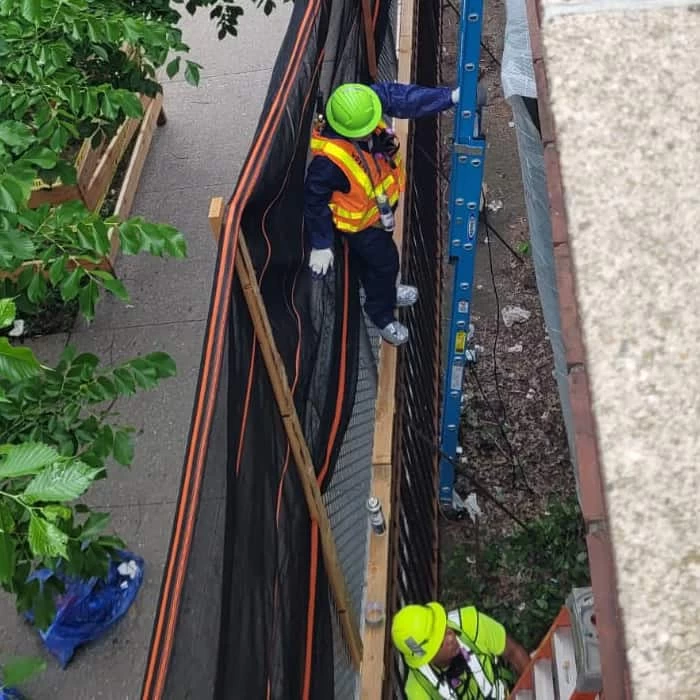
I needed a professional consultation explanation of procedure for safe removal of Asbestos in my apartment complex. Without having an account yet, I was very impressed with the caring, knowledgeable and generous advice offered by Jessica, and will look forward to doing business in the future. Thank you so much! I feel much more informed about a sometimes scary endeavor. Peace. Nancy Silva Mineola, NY.
Mia Munoz
Used this company to clean up some water flood in my house. They were fast and easy to work with.very professional, Would recommend to anyone!
Nini Valle
Great company, had a flood and they responded quickly and efficiently. Billed my insurance company directly. I highly recommend this company!
joe colapietro, jr
I had pipe freeze in my basement right before a snow storm and they made to within an hour to help start the clean up process. They we by our side throughout the entire process and even helped with the insurance company. They did such a great job with the cleanup, repair, remidiation, I contracted them to perform the repairs and finishes in the basement. They came with enough manpower and material to get the job done. Leo and Jessica were nothing but a pleasure to deal with!!
Cristian Arredondo c
I had some water damage in my home and Green Island was able to take care of my issue quickly and effectively. I am very pleased with the work they did. They responded quickly and were very professional.
Michael M
Outstanding service! From the office to the field crew everyone was friendly, helpful and responsive. I highly recommend Green Island Group.
What Getting It Right Actually Looks Like in Croton-on-Hudson
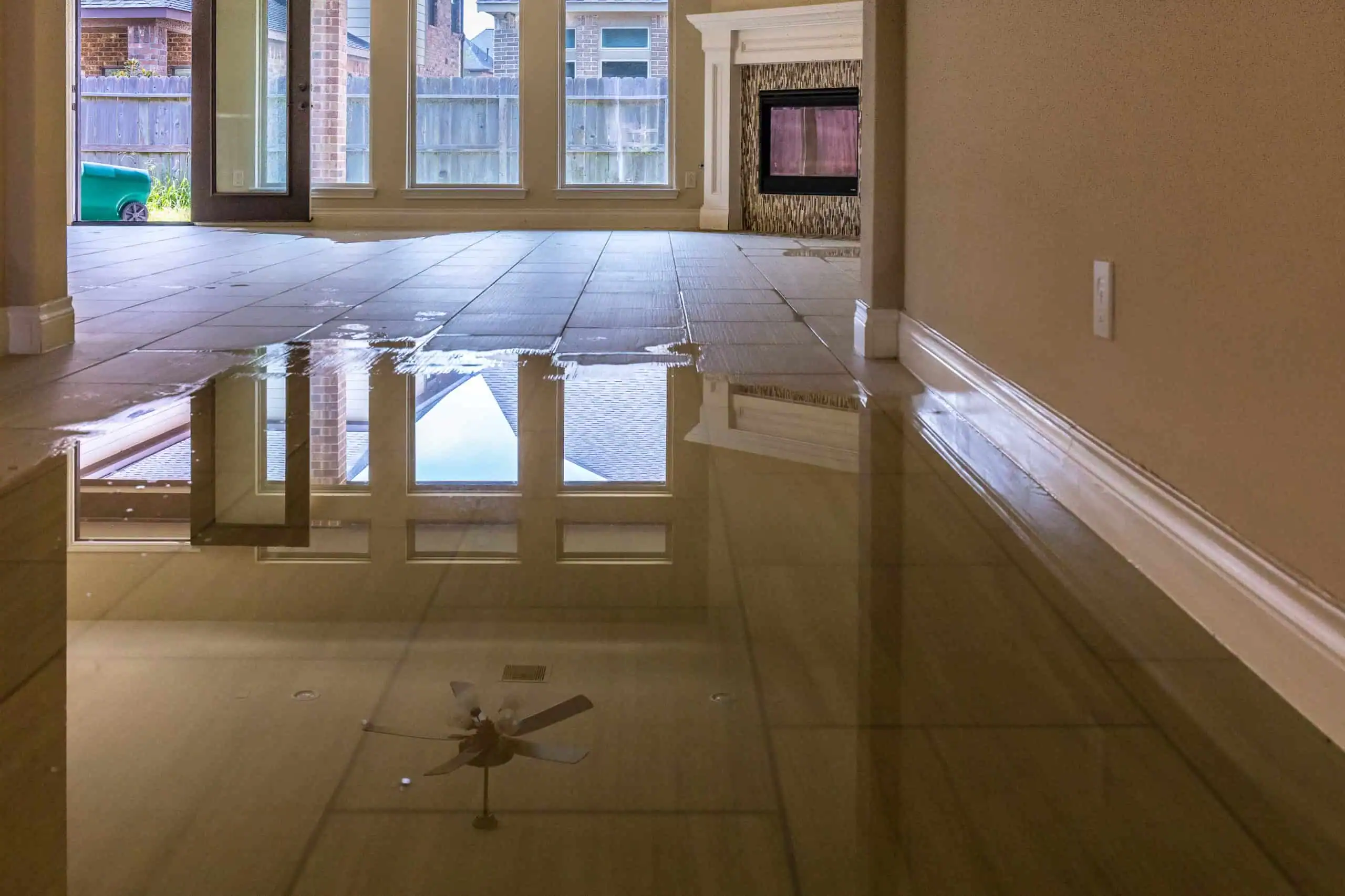
When flood water enters your home, the clock starts immediately. Mold can begin growing in as little as 24 hours — and in a house built in the 1950s or 1960s, which describes a huge portion of Croton-on-Hudson’s housing stock, moisture doesn’t just sit on the surface. It moves into plaster walls, behind original hardwood floors, and deep into stone foundation basements where no consumer fan will ever reach it. Getting it right means finding all of it, not just the part you can see.
Croton-on-Hudson sits at the confluence of two independent flood systems — the Hudson River tidal surge from the west and the Croton River freshwater corridor from the north. When the New Croton Reservoir releases water after a heavy rain event, the river rises fast and unpredictably. When a nor’easter pushes tidal water into Croton Landing and Senasqua Park, riverside streets and low-lying basements feel it within hours. This isn’t a once-a-decade risk. It’s a recurring reality for homeowners throughout this village.
What the outcome looks like when restoration is done properly: your home is structurally dry — not surface dry — with moisture readings confirmed by thermal imaging inside the walls. Mold has no foothold. If your home is one of the many in Croton-on-Hudson built before 1978, any asbestos or lead-containing materials disturbed during the process have been handled by licensed professionals, not guessed at. Your insurance claim is fully documented. And you’re back in your home without the six-months-later discovery that something was missed.
12 Years, 5,000 Projects, and the Credentials to Back It Up
We’ve been doing environmental restoration work in New York for over 12 years. More than 5,000 completed projects across the state — including throughout Westchester County and Croton-on-Hudson — and a licensing stack that no local competitor comes close to matching. IICRC Water Damage Restoration. NYS DOL Mold. NYS DOL Asbestos. USEPA Lead/RRP. NYS and NYC M/WBE Certified. Verified contractor for the NYS Office of General Services. These aren’t marketing badges — they’re state-audited credentials that insurance adjusters, real estate attorneys, and municipal inspectors recognize.
That last part matters more in Croton-on-Hudson than people realize. The village has its own Flood Damage Prevention code — Chapter 129 — which requires floodplain development permits for structural restoration work in FEMA AE flood zones along the Croton and Hudson Rivers. Working with a contractor who doesn’t understand that requirement can delay your project and create real legal exposure. We’ve navigated these regulatory environments before. That experience is part of what you’re hiring.
The work is backed by a 100% Satisfaction Guarantee, full liability insurance, and Workers’ Compensation coverage. You’re not taking a risk by calling — you’re removing one.
From the First Call to a Fully Dry, Documented Home
The process starts the moment you call. We target a 60-minute on-site response — not a callback window, not a next-day appointment. When you’re dealing with water in a Croton-on-Hudson home, that distinction matters. Our team arrives with industrial extraction equipment, air movers, and commercial-grade dehumidifiers. Standing water comes out first. Then the real assessment begins.
This is where older homes require a different level of attention. Using thermal imaging cameras and professional moisture meters, we map the full extent of saturation — inside wall cavities, under subfloors, behind baseboards, and in any area where water traveled before you noticed it. In homes built before 1980, this inspection also includes evaluating whether any disturbed materials — pipe insulation, floor tiles, joint compound — may contain asbestos. If they do, we’re already licensed to handle it. You don’t need a second contractor.
Once the structure is confirmed dry and any environmental hazards are addressed, the rebuild phase begins. Drywall, flooring, trim, structural repairs — we handle it all under one roof. Throughout the entire process, every step is documented for your insurance claim. If your loss is covered, billing goes directly to your insurer. If you’re uninsured or underinsured, we offer financing up to $200,000 at 0% APR. The goal is simple: get your home back to where it was, with nothing left to discover later.
Mold Remediation and Water Damage Repair Croton-on-Hudson
One Call Covers Water, Mold, Asbestos, and the Rebuild
Flood restoration in Croton-on-Hudson isn’t a one-size situation. A sewage backup on Grand Street after a heavy rain event — which has happened, documented by the Croton Police Department — is a Category 3 black water contamination scenario. That requires a completely different protocol than a burst pipe in a finished basement. A tidal surge that pushes water under the slab at Croton Landing is different from a Croton River overflow that soaks a crawl space for 48 hours before the homeowner discovers it. We cover all of it.
Water extraction and structural drying are the foundation. Industrial air movers and dehumidifiers run until moisture readings confirm the structure is genuinely dry — not just visually dry. Mold remediation follows if colonization has begun or if conditions created a high-risk environment. For homes along the Croton River corridor or in the FEMA AE flood zones near Kaplan’s Pond and the Bessemer Wetland, this step is rarely optional after a significant water event.
Asbestos abatement and lead-safe work practices are integrated into the process for pre-1978 homes — not subcontracted out, not skipped. HVAC cleaning through NADCA-certified protocols is available when ductwork has been compromised by moisture or contamination. And when the remediation is complete, the reconstruction phase brings your home back to pre-loss condition. Drywall, flooring, cabinetry, structural framing — handled by the same licensed team that managed the cleanup. No handoff, no coordination headache, no gap in accountability.
Does homeowners insurance cover flood damage in Croton-on-Hudson, NY?
This is one of the most common sources of confusion after a water event, and the answer depends heavily on what caused the damage. Standard homeowners insurance typically covers sudden, accidental water damage — a burst pipe, a washing machine overflow, a roof leak during a storm. It does not cover flooding from an external source, which is what happens when the Hudson River pushes tidal surge into Croton Landing or when the Croton River rises after a dam release and water enters your home from the ground up.
For that type of flooding, you need a separate flood insurance policy, typically through the National Flood Insurance Program (NFIP). If your property sits in Croton-on-Hudson’s FEMA AE flood zone along the Croton or Hudson Rivers, your lender likely required you to carry it. If you’re outside the mapped flood zone and don’t have it, you may be facing an out-of-pocket loss. We work directly with both homeowners insurance and flood insurance carriers, handle the billing on your behalf, and can also arrange 0% APR financing up to $200,000 for situations where coverage falls short or doesn’t apply.
How quickly does mold start growing after a basement floods?
Mold can begin to colonize in as little as 24 hours after a water event — and in some conditions, visible growth can appear within 24 to 48 hours. The timeline accelerates in older homes, which is a real concern in Croton-on-Hudson where the median construction year is 1961 and a significant share of homes predate 1950. Older construction — plaster walls, original wood framing, stone foundation basements, minimal vapor barriers — holds moisture longer and dries slower than modern builds.
The practical implication is that waiting to start mitigation is one of the most expensive decisions a homeowner can make. Every hour of delay is another hour of moisture penetrating deeper into materials that are harder to dry and easier for mold to colonize. Most insurance policies also have a duty-to-mitigate clause, meaning if you delay action and the damage worsens, the insurer may dispute a portion of the claim. We mobilize immediately — within 60 minutes of your call — and begin the drying process the same day, which is the only way to stay ahead of the mold timeline.
My Croton-on-Hudson home was built in the 1950s — does that affect the restoration process?
It does, and significantly. Homes built before 1978 may contain lead paint, and homes built before 1980 frequently contain asbestos in materials like pipe insulation, floor tiles, ceiling tiles, HVAC duct tape, and joint compound. In Croton-on-Hudson, where more than 22% of homes were built before 1940 and the median construction year is 1961, this is not a rare edge case — it’s a common reality.
When flood restoration work disturbs these materials — cutting into a water-damaged wall, removing a wet tile floor, pulling out saturated insulation — you can create a hazardous exposure situation if the contractor isn’t licensed to handle it. We hold both the NYS DOL Asbestos license and the USEPA Lead/RRP certification, which means we can identify, contain, and properly remediate these materials as part of the restoration process. You don’t need to hire a separate abatement contractor and coordinate the timing between two companies. It’s handled by the same team, under the same project, with full documentation.
What is a Category 3 water loss, and why does it matter for cleanup?
Water damage is classified by contamination level. Category 1 is clean water — a supply line break or a clean appliance overflow. Category 2 is gray water — some contamination, like a dishwasher discharge or a washing machine drain. Category 3 is black water — sewage, river water, or any water that has contacted biological or chemical contaminants. It’s the most hazardous classification and requires a completely different remediation protocol.
This matters specifically in Croton-on-Hudson because the village has documented sewage backup events during heavy rain, where overwhelmed storm drains have pushed partially treated sewage into residential basements. The Croton Police Department has received calls about exactly this scenario — basements flooded by sewage, manhole covers displaced by water pressure. A Category 3 loss cannot be treated like a simple wet carpet situation. It requires full containment, proper disposal of contaminated materials, professional-grade sanitization, and air quality verification before the space is safe to reoccupy. Our IICRC certification covers Category 3 black water remediation protocols, and our team is equipped to handle it from initial extraction through final clearance.
Does the Village of Croton-on-Hudson require permits for flood restoration work?
Yes, depending on the scope of the work and where your property is located. The Village of Croton-on-Hudson has an active Flood Damage Prevention code — Chapter 129 of the municipal code — that governs development and construction in areas of special flood hazard. If your property is in the FEMA AE flood zone along the Croton or Hudson Rivers, structural restoration work may require a floodplain development permit from the village before work can begin or before walls are closed up.
This is not a bureaucratic technicality — it’s a real compliance requirement that can affect your insurance claim, your ability to sell the property later, and the legal standing of the completed work. A contractor who doesn’t know this requirement exists, or who skips the permit to move faster, is creating a problem you’ll discover at the worst possible moment. We’re a licensed NYS general contractor with experience navigating municipal permitting requirements across Westchester County, including flood zone compliance in Croton-on-Hudson. The permit process is factored into the project timeline from day one.
How does Green Island Group handle the insurance claim process for flood restoration?
We bill your insurance carrier directly — whether that’s your standard homeowners policy, a separate NFIP flood insurance policy, or both. You don’t pay upfront and then wait for reimbursement. Our team documents every step of the restoration process — moisture readings, thermal imaging results, material removal, drying logs, and completed repairs — in a format that insurance adjusters recognize and accept. This documentation is not an afterthought; it’s built into how the work is done from the first hour on-site.
For Croton-on-Hudson homeowners in the FEMA AE flood zone, having thorough documentation is especially important. Flood insurance claims go through a specific adjustment process, and gaps in the remediation record can create disputes over coverage amounts. If your coverage has limits that don’t fully address the loss — or if you’re dealing with a situation that isn’t covered at all — we offer financing up to $200,000 at 0% APR so the work can start immediately without the financial uncertainty delaying the process. The goal is to remove every barrier between you and a fully restored home.