When the Hackensack Rises, We Show Up in 60 Minutes
We respond with the full crew, the right equipment, and every license required to restore your West Nyack home completely — water out, walls back, done. No subcontractors. No callbacks. Just a complete restoration that gets your family back inside safely.
I needed a professional consultation explanation of procedure for safe removal of Asbestos in my apartment complex. Without having an account yet, I was very impressed with the caring, knowledgeable and generous advice offered by Jessica, and will look forward to doing business in the future. Thank you so much! I feel much more informed about a sometimes scary endeavor. Peace. Nancy Silva Mineola, NY.
Mia Munoz
Used this company to clean up some water flood in my house. They were fast and easy to work with.very professional, Would recommend to anyone!
Nini Valle
Great company, had a flood and they responded quickly and efficiently. Billed my insurance company directly. I highly recommend this company!
joe colapietro, jr
I had pipe freeze in my basement right before a snow storm and they made to within an hour to help start the clean up process. They we by our side throughout the entire process and even helped with the insurance company. They did such a great job with the cleanup, repair, remidiation, I contracted them to perform the repairs and finishes in the basement. They came with enough manpower and material to get the job done. Leo and Jessica were nothing but a pleasure to deal with!!
Cristian Arredondo c
I had some water damage in my home and Green Island was able to take care of my issue quickly and effectively. I am very pleased with the work they did. They responded quickly and were very professional.
Michael M
Outstanding service! From the office to the field crew everyone was friendly, helpful and responsive. I highly recommend Green Island Group.
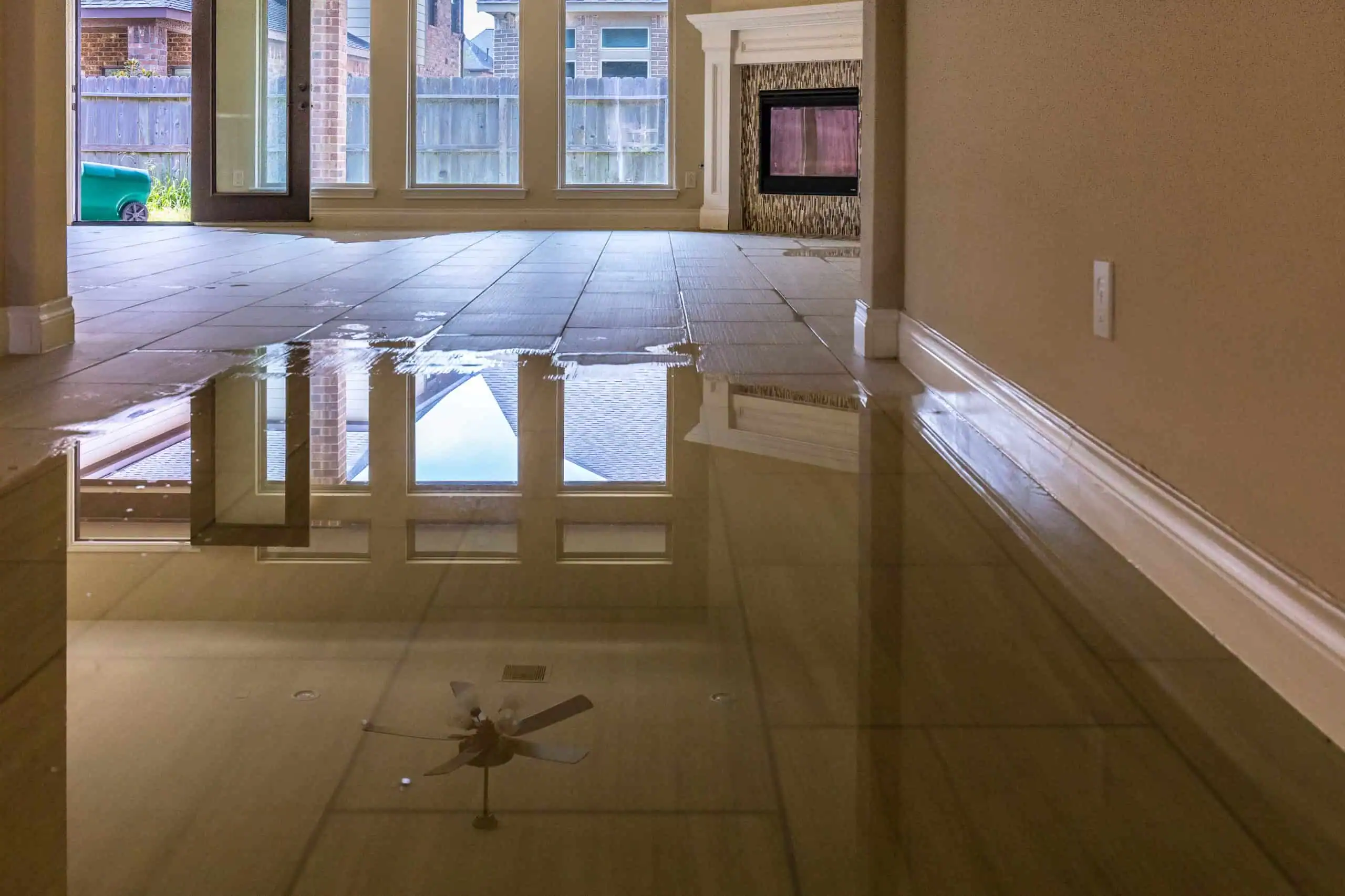
West Nyack flooding isn’t a freak event — it’s a recurring reality. If you’re near Jeffrey Court, Lake Lodico, or anywhere in the Hackensack River basin, you already know what two inches of rain can do. The water comes up fast, the sewer backs up, and suddenly you’re standing in a basement that looks like a pond. What happens in the next 24 hours determines whether you’re dealing with a cleanup or a mold crisis six months from now.
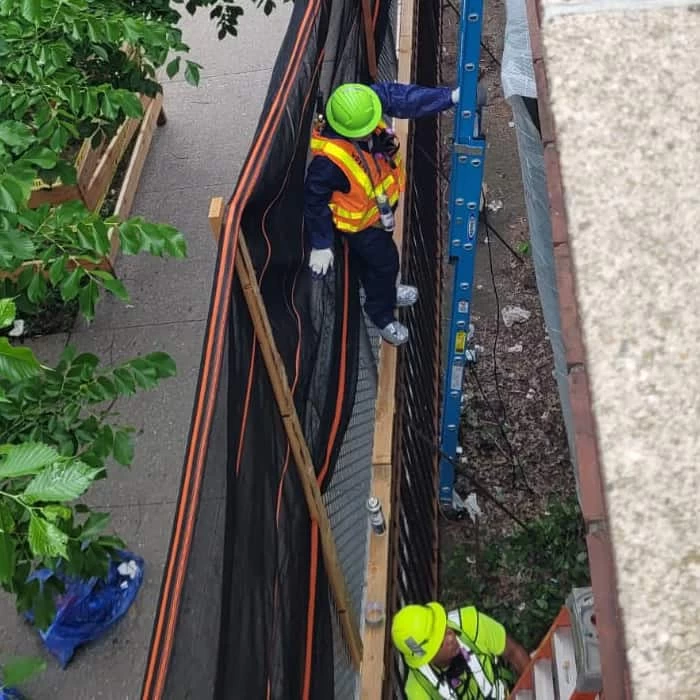
The homes in West Nyack were mostly built between the 1950s and 1970s. That means when floodwater forces us to tear out drywall, flooring, or insulation, there’s a real chance we’re dealing with asbestos or lead paint — materials that require licensed abatement under New York State law, not just a contractor with a truck and a dehumidifier. Getting that wrong doesn’t just cost more money. It creates a health risk your family lives with long after the walls are back up.
When the work is done right — moisture fully extracted, structure dried to IICRC standards, hidden wall cavities cleared, and every regulated material handled by a licensed crew — you get your home back. Not a patched version of it. The actual thing, rebuilt, safe, and documented for your insurance file.
We’ve been doing environmental restoration work in New York for over 12 years. That includes flood damage, mold remediation, asbestos abatement, and full structural reconstruction — all under one company, all covered by one set of credentials. NYS DOL Mold, NYS DOL Asbestos, USEPA Lead, USEPA RRP, IICRC Water Damage certification, and active contractor status with the NYS Office of General Services. These aren’t marketing badges. They’re legal requirements for the work, and most companies operating in Rockland County don’t hold all of them.
Serving West Nyack means understanding the specific conditions here — the Hackensack River basin, the older housing stock throughout Clarkstown, the FEMA flood zone designations that affect what your insurance covers and what your restoration has to include. We’re NYS and NYC M/WBE certified, fully insured for both liability and workers’ compensation, and back every job with a 100% satisfaction guarantee. One call gets you a complete team, not a subcontractor chain.
What a Complete Flood Response Actually Looks Like in West Nyack
The first thing that happens when you call is a 60-minute on-site response. No estimate over the phone, no scheduling window — we show up at your West Nyack address with industrial extraction equipment and moisture detection tools ready to work. The immediate priority is stopping active water intrusion and pulling standing water before it migrates further into your subfloor, wall cavities, and structural framing.
Once extraction is complete, the drying phase begins. This is where a lot of contractors cut corners — they pull the visible water and leave. We use thermal imaging and calibrated moisture meters to find saturation behind walls and under floors that you can’t see. In West Nyack’s post-WWII housing stock, that hidden moisture is what becomes a mold problem in 30 days. Industrial air movers and dehumidifiers run continuously until every reading hits the IICRC-standard dry threshold, not just until things feel dry.
If the flood involved sewage backup — which is common in West Nyack when rainfall exceeds two inches and the stormwater system overflows — the job is classified as Category 3 Black Water, and full decontamination protocols apply. From there, any required mold remediation, asbestos testing, or structural reconstruction is handled in sequence by our licensed crew. Because West Nyack falls under Town of Clarkstown jurisdiction, any structural work requiring a building permit gets coordinated as part of the project — you don’t manage that separately.
The Full Scope West Nyack Flood Damage Actually Demands
Flood restoration in West Nyack isn’t a single-trade job. The Hackensack River flooding, Lake Lodico overflow events, and Route 59 stormwater surges that affect this hamlet regularly produce damage that layers on top of itself — water intrusion, structural saturation, mold risk, and in older homes, regulated materials that require separate licensed handling before reconstruction can begin. We cover the entire scope: emergency water extraction, structural drying, moisture mapping, mold remediation under NYS DOL Mold license, asbestos abatement under NYS DOL Asbestos license, lead-safe work practices under USEPA RRP certification, and complete interior reconstruction.
For homeowners in FEMA-designated flood zones along the Hackensack River basin — which includes portions of West Nyack — there are specific documentation requirements tied to NFIP flood insurance claims that affect how restoration work is reported and billed. We bill insurance directly, handle the documentation for both standard homeowners policies and NFIP claims, and require zero out-of-pocket payment while the claim is active. For situations where insurance coverage falls short, we offer financing up to $200,000 at 0% APR — a real option for homeowners facing the full cost of a serious flood event without a coverage gap becoming a construction gap.
How quickly does mold actually start growing after a flood in my West Nyack home?
Mold can begin developing in as little as 24 to 48 hours after a flood event — and that timeline is not a worst-case scenario. It’s the standard. In West Nyack, where flooding events tied to the Hackensack River basin often involve sewage overflow in addition to stormwater, the conditions for mold growth are accelerated. Category 3 Black Water — which is what you have when the sewer backs up — introduces organic material that feeds mold faster than clean water does.
The other factor that makes this worse in older West Nyack homes is insulation. Fiberglass batt insulation inside wall cavities absorbs moisture and holds it long after the surface feels dry. That retained moisture is invisible without thermal imaging, and it’s exactly where mold colonies establish before you ever see a spot on the wall. By the time there’s visible mold, it’s already been growing for weeks. The only way to prevent it is complete moisture extraction and drying within that initial 24-to-48-hour window — which is why response time matters as much as the quality of the equipment.
Does my homeowners insurance actually cover flood damage in West Nyack, NY?
Standard homeowners insurance policies do not cover flooding caused by external water — meaning if the Hackensack River overflows and water enters your home, your standard policy won’t pay for it. Flood coverage in West Nyack typically requires a separate National Flood Insurance Program policy, which is mandatory for homeowners with federally backed mortgages in FEMA-designated Special Flood Hazard Areas. Portions of West Nyack along the Hackensack River basin fall into these designated zones.
What standard homeowners insurance does typically cover is sudden and accidental water damage from internal sources — a burst pipe, a failed sump pump, or an appliance leak. The distinction matters because NFIP claims and standard homeowners claims have different documentation requirements, different coverage caps, and different adjuster processes. We work directly with both types of insurers, handle the documentation on your behalf, and bill the insurer directly so you’re not writing checks while your home is still wet. If you’re not sure which policy applies to your situation, that’s something you can clarify before any work begins.
What makes sewage backup flooding more serious than regular water damage?
Sewage backup is classified as Category 3 Black Water — the highest contamination level in water damage restoration. It contains bacteria, pathogens, and organic waste that make the affected area genuinely hazardous, not just wet. In West Nyack, this type of flooding is a documented reality: residents near Jeffrey Court and other low-lying areas describe the sewer overflowing when rainfall exceeds two inches, which happens multiple times a year. That’s not a rare edge case — it’s a known pattern tied to the hamlet’s stormwater infrastructure limitations.
Category 3 events require a fundamentally different response than clean water flooding. Affected materials — drywall, insulation, flooring, personal contents — often cannot be dried and saved. They have to be removed, bagged, and disposed of under specific protocols. The space itself requires antimicrobial treatment before any reconstruction begins. Skipping or shortcutting any part of that process leaves contamination behind that isn’t visible but is still present. A crew that treats sewage backup the same way they treat a burst pipe is not doing the job correctly, regardless of what their invoice says.
My West Nyack home was built in the 1960s — does that change what flood restoration involves?
Yes, significantly. Homes built before 1980 — which describes the majority of West Nyack’s residential neighborhoods — frequently contain asbestos in floor tiles, pipe insulation, drywall joint compound, and roofing materials. Homes built before 1978 may also contain lead paint. When flood damage requires removal of any of these materials, New York State law requires the work to be performed by a contractor holding a NYS DOL Asbestos license, and lead-safe work practices must follow USEPA RRP standards. These are not optional precautions — they are legal requirements.
The practical issue is that most water damage companies operating in Rockland County don’t hold these licenses. They’ll pull out your flooded drywall and flooring without testing, without notification to the DEP, and without the protective protocols required by law. That exposes your family to contamination and exposes you to regulatory liability. Before any contractor starts demo work in a pre-1980 West Nyack home, you should ask directly whether they hold the NYS DOL Asbestos license and USEPA RRP certification. If they can’t produce those credentials, the conversation should end there.
How long does flood restoration typically take from start to finish?
The timeline depends on the severity of the damage and what the restoration uncovers along the way. For a straightforward basement flood with clean water — a sump pump failure during a spring storm, for example — the extraction and drying phase typically takes three to five days before the space is ready for any reconstruction. Reconstruction itself, depending on what was damaged, can add another one to three weeks.
For more complex events — Category 3 sewage backup, flooding that saturated multiple floors, or situations where asbestos or lead materials are discovered and require abatement — the timeline extends accordingly. Asbestos abatement in New York State requires advance notification to the DEP at least seven days before work begins, which is a regulatory requirement that affects scheduling regardless of how quickly everything else moves. The honest answer is that a job done correctly takes as long as it takes, and cutting the timeline by skipping steps — particularly the drying phase — is the single most common reason homeowners end up with a mold problem months after a restoration they thought was complete.
Can we help if you've already had flooding before and still have mold or moisture issues?
Yes, and this situation is more common in West Nyack than most people realize. The hamlet’s recurring flood history — particularly for homes near Lake Lodico, Jeffrey Court, and the Route 59 corridor — means many homeowners have been through a previous restoration that didn’t fully resolve the problem. The most frequent cause is incomplete drying: a contractor pulled the standing water, ran a dehumidifier for a few days, and called it done without verifying that wall cavities and subfloor assemblies had actually reached dry standard.
If you’re noticing musty odors, visible mold spots, or persistent humidity in a space that was previously “restored,” hidden moisture is almost certainly still present. We can come in, run a full moisture assessment using thermal imaging and calibrated meters, identify exactly where the problem is, and remediate it correctly under the NYS DOL Mold license. If the previous work disturbed asbestos-containing materials without proper abatement, that’s also something we can assess and address. Repeat flooding in Rockland County homes is a real and documented problem — and so is incomplete restoration. Both are solvable, but only if the assessment starts with the right tools and the right credentials.