When Back Brook Rises, Your Cold Spring Home Needs More Than a Wet Vac
Cold Spring floods fast — and the damage goes deeper than what you can see. We’re on-site within 60 minutes, fully licensed to handle everything your historic home actually contains.
I needed a professional consultation explanation of procedure for safe removal of Asbestos in my apartment complex. Without having an account yet, I was very impressed with the caring, knowledgeable and generous advice offered by Jessica, and will look forward to doing business in the future. Thank you so much! I feel much more informed about a sometimes scary endeavor. Peace. Nancy Silva Mineola, NY.
Mia Munoz
Used this company to clean up some water flood in my house. They were fast and easy to work with.very professional, Would recommend to anyone!
Nini Valle
Great company, had a flood and they responded quickly and efficiently. Billed my insurance company directly. I highly recommend this company!
joe colapietro, jr
I had pipe freeze in my basement right before a snow storm and they made to within an hour to help start the clean up process. They we by our side throughout the entire process and even helped with the insurance company. They did such a great job with the cleanup, repair, remidiation, I contracted them to perform the repairs and finishes in the basement. They came with enough manpower and material to get the job done. Leo and Jessica were nothing but a pleasure to deal with!!
Cristian Arredondo c
I had some water damage in my home and Green Island was able to take care of my issue quickly and effectively. I am very pleased with the work they did. They responded quickly and were very professional.
Michael M
Outstanding service! From the office to the field crew everyone was friendly, helpful and responsive. I highly recommend Green Island Group.
Your Cold Spring Home Dried, Safe, and Rebuilt — No Loose Ends
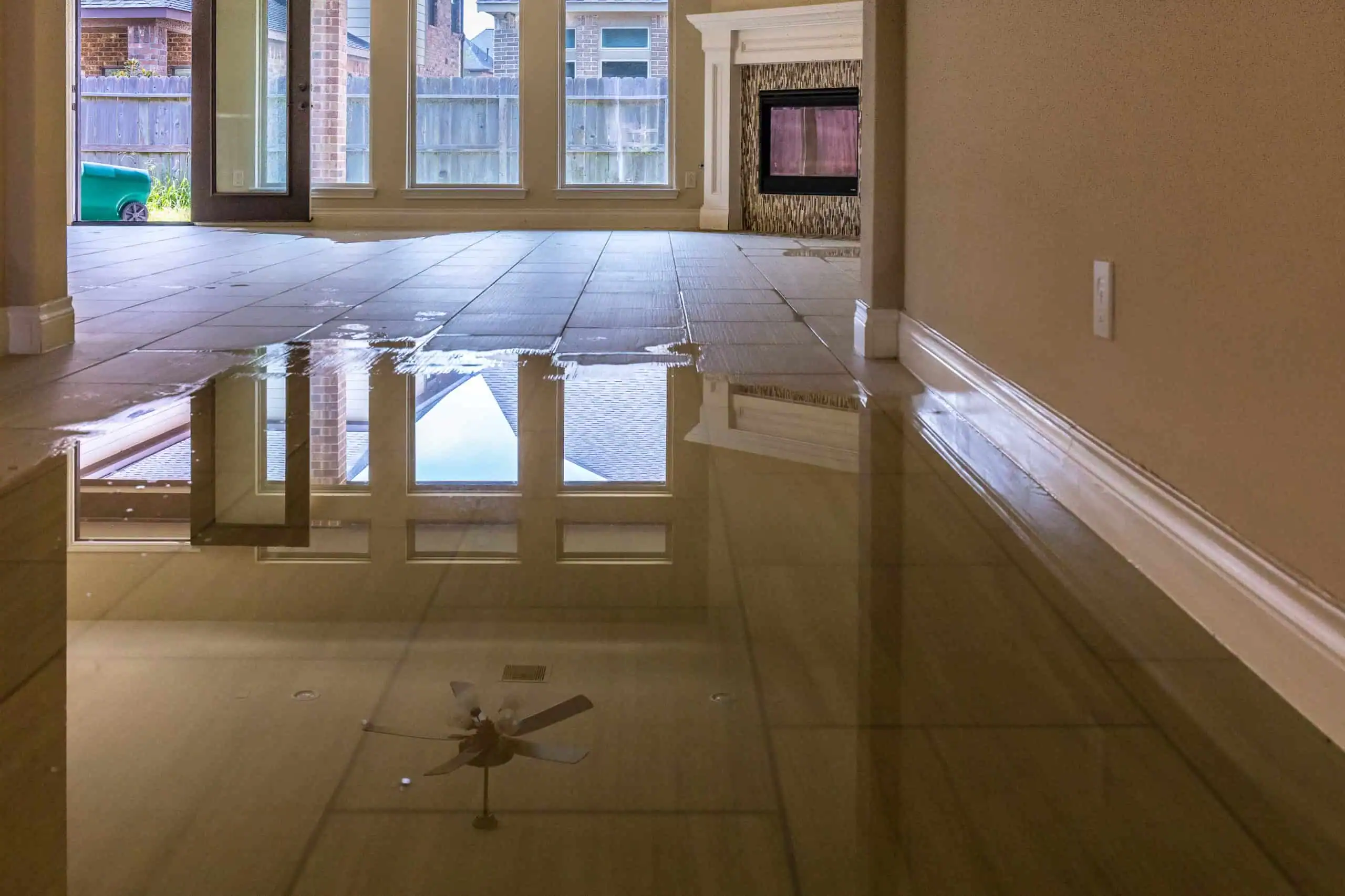
When floodwater moves through a Cold Spring home, it doesn’t stop at the surface. It gets into original plaster walls, under wide-plank hardwood floors, behind stone foundation gaps — places a shop vac and a couple of box fans will never reach. What you’re left with isn’t just a wet basement. It’s a slow-building mold problem hiding inside materials that took 150 years to get here.
That’s the real risk in this village. Homes along Garden Street, Church Street, and throughout the historic district were built in an era before vapor barriers and engineered lumber. They’re beautiful, and they’re porous. Moisture that isn’t fully extracted and professionally dried within the first 24 to 48 hours will find somewhere to live — and it won’t announce itself until the smell starts or the wall starts to bubble.
After a proper restoration, what changes isn’t just the absence of water. It’s the absence of doubt. You know the walls are dry. You know the mold clock has been stopped. You know the original materials were handled correctly — not torn out unnecessarily, not left saturated. That’s what this process is actually for.
The Credentials Cold Spring's Older Homes Actually Require
We’ve been doing this work across New York State for over 12 years and have completed more than 5,000 restoration projects. That’s not a number we mention to impress you — it’s context for why we don’t get caught off guard by what we find inside a pre-1900 home in Putnam County.
Cold Spring is different from most towns we serve. The housing stock here is genuinely old, and old homes in the Hudson Highlands carry risks that standard restoration companies aren’t licensed to touch. We hold the NYS DOL Mold License, the NYS DOL Asbestos License, and the USEPA Lead/RRP Certification — because when floodwater saturates original floor tiles, pipe insulation, or painted plaster in a home built before 1940, those materials require licensed handling. Full stop.
We’re also NYS and NYC M/WBE Certified, fully insured including liability and workers’ compensation, and we work directly with the NYS Office of General Services. When you call us, you’re getting a company that the State of New York trusts with its own infrastructure — not just a restoration van with a logo on the side.
What Actually Happens From Your First Call to a Dry Home
The call comes in, and we move. Within 60 minutes, a crew is on-site — which matters in Cold Spring, where Route 9D and Route 301 are the roads in and out, and there’s no interstate shortcut. We’re not dispatching from three counties away.
When we arrive, the first thing we do is assess — not just what’s visible, but what isn’t. We use thermal imaging and calibrated moisture meters to map saturation inside wall cavities, under subfloors, and in stone foundation gaps. In a village where homes date back to the 1800s and plaster walls are standard, this step isn’t optional. It’s how we find the water that would have become your mold problem in six months.
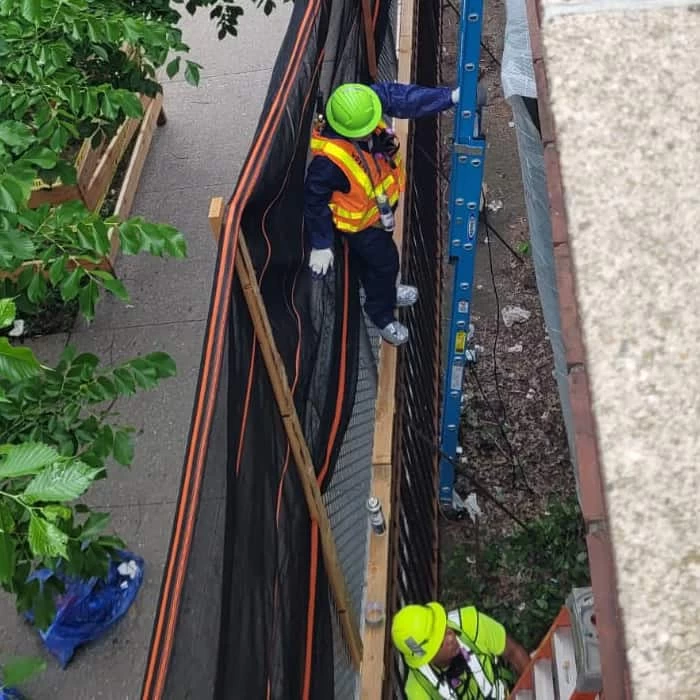
From there, we move into extraction and industrial-grade structural drying. The equipment we use isn’t available at a hardware store — it pulls moisture from materials at a depth that consumer-grade fans can’t touch. If asbestos-containing materials or lead paint are involved — which is common in Cold Spring’s pre-1940 housing stock — we handle abatement in-house under our NYS DOL licenses before any demolition begins. No subcontracting, no coordination gaps. Once the structure is dry and safe, we handle full reconstruction through final paint. One company, start to finish.
Full Restoration Built for Cold Spring's Historic Homes
Flood restoration in Cold Spring isn’t a single-trade job. The homes here demand a contractor who can handle the full scope — and who understands the regulatory and environmental layers that come with working in a Hudson River floodplain community with a National Register Historic District.
Every project starts with emergency water extraction and moisture mapping, followed by industrial structural drying and mold prevention treatment. For homes in Cold Spring’s pre-1978 — and in many cases pre-1920 — building stock, we conduct asbestos testing before any material disturbance and perform full NYS DOL-licensed abatement where required. Lead paint is handled under USEPA Lead/RRP protocols. These aren’t add-ons. In this village, they’re part of doing the job correctly.
We also handle the insurance side directly. We document everything — water category, moisture readings, affected materials, abatement scope — in a format that insurance adjusters recognize and that supports your claim. If your standard homeowners policy doesn’t cover the storm-driven flooding that hit Cold Spring in July 2023 and you’re facing an uninsured loss, we offer financing up to $200,000 at 0% APR. Reconstruction through final paint is included when needed, so you’re not left managing three separate contractors to get your home back to what it was.
Does homeowners insurance actually cover flood damage in Cold Spring, NY?
This is one of the most important questions to get straight before anything else, because the answer affects your entire financial picture. Standard homeowners insurance policies typically do not cover flooding caused by external storm events — meaning water that enters your home from outside due to heavy rain, surface runoff, or an overflowing waterway. That’s a separate flood insurance policy, usually through the National Flood Insurance Program, which the Village of Cold Spring participates in.
The July 2023 storm that dropped over six inches of rain on Cold Spring in a single day is exactly the type of event that standard homeowners policies exclude. If you have a separate NFIP flood policy, that coverage applies. If you don’t, you’re likely looking at an out-of-pocket loss — which is why our financing option up to $200,000 at 0% APR exists. The first call you should make after calling us is to your insurance agent to clarify exactly what you have. We can help you document the damage in a format that supports whatever claim you’re able to file.
How quickly does mold start growing after a basement floods?
Mold can begin growing within 24 hours of a water event under the right conditions — and in Cold Spring’s older homes, the conditions are almost always right. Original plaster walls, stone foundations, and original wood framing retain moisture far longer than modern drywall and engineered lumber. That means the window for stopping mold growth isn’t just the first day. It’s every hour that hidden moisture stays trapped inside original materials.
What makes this especially tricky is that the moisture you can’t see is the moisture that causes the problem. A basement that looks dry after pumping may still have saturated wall cavities, wet insulation behind original plaster, and standing moisture in stone foundation gaps. That’s why thermal imaging and professional moisture mapping matter so much in this type of home. By the time mold is visible or the smell starts, it’s already been growing for a while. The goal is to stop it before it ever gets there.
What makes Cold Spring homes more complicated to restore after flooding?
A few things, and they’re all connected to the age and character of the housing stock. Most homes in and around Cold Spring’s historic district were built before 1940, and many date to the 19th century. That means original plaster walls instead of drywall, stone foundations instead of poured concrete, and original building materials that commonly contain asbestos and lead paint. When floodwater saturates those materials, you can’t just extract the water and start drying. You have to test and handle the hazardous materials correctly before any demolition or disturbance begins.
New York State requires a specific DOL Mold License for mold remediation and a separate DOL Asbestos License for any asbestos abatement. The USEPA requires Lead/RRP Certification for any work disturbing lead paint in pre-1978 homes. We hold all three. Most restoration companies — including franchise operators in Putnam County — do not hold the full licensing stack required to work legally and safely in a pre-1900 Cold Spring home. That gap matters, and it matters most when the damage is serious.
Why does Cold Spring flood so badly during heavy rainstorms?
It comes down to topography, and Cold Spring’s mayor has said it directly: “Topography is the biggest challenge we have.” The Back Brook watershed covers 160 acres of steep Hudson Highlands terrain starting at Bull Hill, roughly 1,300 feet above the village. When it rains hard, that elevation difference concentrates enormous volumes of fast-moving water into Cold Spring within minutes — faster than the aging culvert infrastructure can handle.
The 30-inch culvert on Fair Street failed completely during the July 2023 storm. Multiple other culverts were overwhelmed. Back Brook, which flows beneath Cedar Street and behind homes along Garden Street, overflowed into residential properties. The village is working on infrastructure improvements — FEMA is funding a replacement culvert on Fair Street, and Governor Hochul announced a $1.85 million flood resiliency project at Dockside Park — but the underlying topography isn’t changing. Intense storms are also becoming more frequent. Heavy precipitation in the Northeast rose more than 70% between 1958 and 2010. Cold Spring’s flood risk is real, it’s documented, and it’s not going away.
What's the difference between black water flooding and a burst pipe — does it change the restoration?
Yes, significantly. Water damage is classified into three categories based on contamination level, and the category determines the entire remediation protocol. Category 1 is clean water — a supply line break or a clean pipe burst. Category 2 is gray water, which contains some contaminants — an overflowing appliance or a backed-up sink drain. Category 3 is black water, and it’s the most serious. It includes sewage, biological contaminants, and debris, and it requires licensed handling throughout the entire remediation process.
Storm-driven flooding — the kind Cold Spring experienced in July 2023, where Back Brook overflow and surface runoff entered homes — is classified as Category 3 black water. That means every material it contacted needs to be treated as contaminated. Drywall, insulation, and flooring that absorbed black water typically can’t be dried and saved — they need to be removed. Structural elements that can be dried need to be treated and documented. This is a very different scope than a burst pipe, and it’s one of the reasons the cost of storm flood restoration is often significantly higher than people expect going in.
Do I need permits for flood restoration work in Cold Spring?
For most interior restoration work — water extraction, drying, mold remediation, and rebuilding finished spaces — you’re typically working under standard building permits from the Village of Cold Spring. We handle that as part of the process. Where it gets more layered is if the damage involves your foundation, any structural elements, or if your property sits within the Hudson River floodplain — which includes areas near Fair Street and the waterfront. Work in the floodplain can require approvals from both the U.S. Army Corps of Engineers and the NYS Department of Environmental Conservation before construction begins.
The Town of Philipstown also has a dedicated Flood Damage Prevention ordinance — Chapter 90 of the Town Code — and a Floodplain Overlay District that governs what can be rebuilt and how in flood-prone areas. If your property is in a regulated zone and the work is done without the right permits, you can face fines and complications with future insurance coverage or property sales. We’re familiar with these requirements in Putnam County and can help you understand what applies to your specific property before work begins, so nothing gets done in a way that creates a problem down the road.