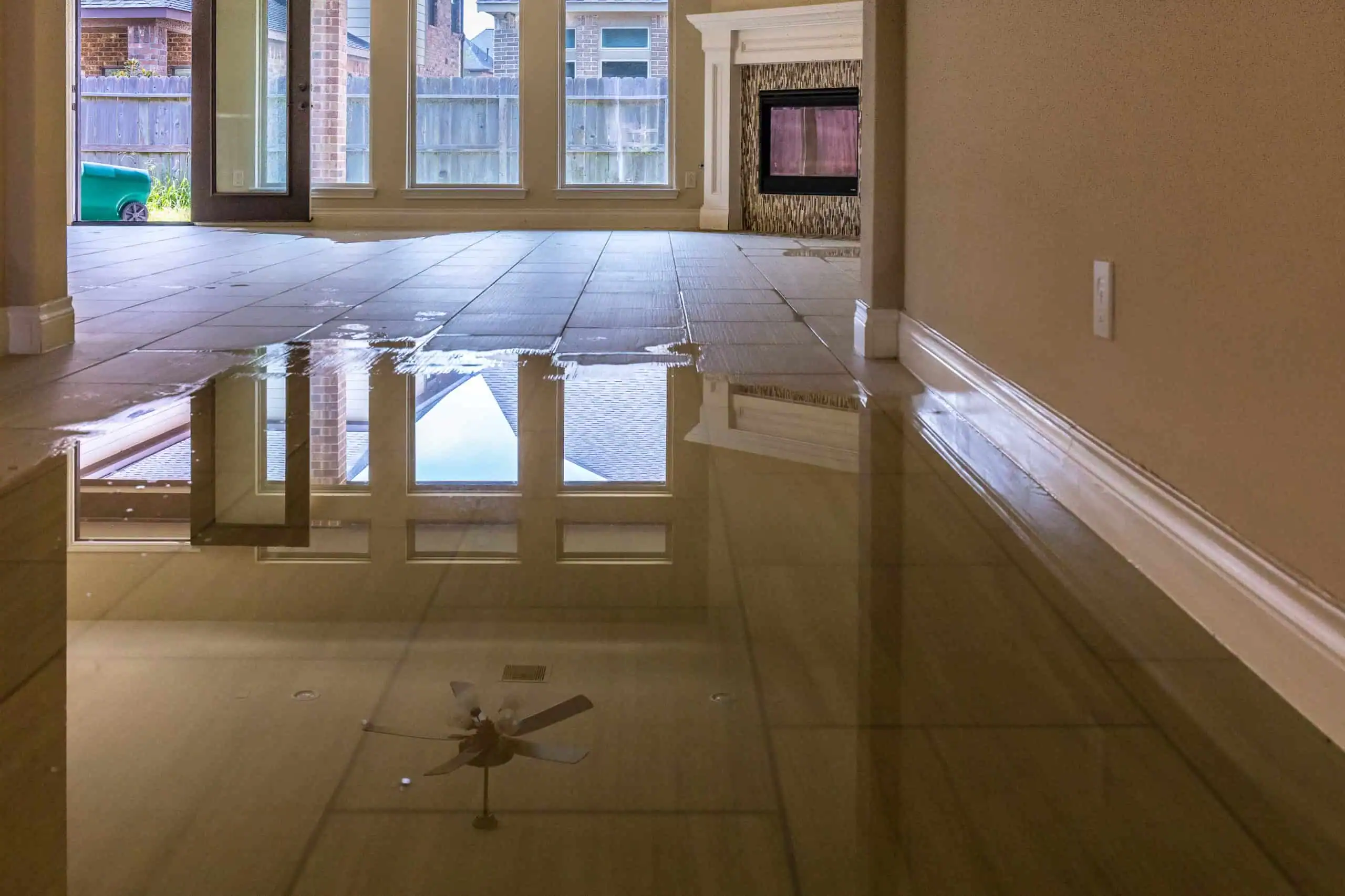
Dutchess County Basements Don't Wait — Neither Do We
When your basement floods off Route 55 or out in Clove Valley, every hour matters. We reach Beekman homeowners in 60 minutes — and handle your flood restoration from water extraction to finished walls, with zero upfront cost to you.
I needed a professional consultation explanation of procedure for safe removal of Asbestos in my apartment complex. Without having an account yet, I was very impressed with the caring, knowledgeable and generous advice offered by Jessica, and will look forward to doing business in the future. Thank you so much! I feel much more informed about a sometimes scary endeavor. Peace. Nancy Silva Mineola, NY.
Mia Munoz
Used this company to clean up some water flood in my house. They were fast and easy to work with.very professional, Would recommend to anyone!
Nini Valle
Great company, had a flood and they responded quickly and efficiently. Billed my insurance company directly. I highly recommend this company!
joe colapietro, jr
I had pipe freeze in my basement right before a snow storm and they made to within an hour to help start the clean up process. They we by our side throughout the entire process and even helped with the insurance company. They did such a great job with the cleanup, repair, remidiation, I contracted them to perform the repairs and finishes in the basement. They came with enough manpower and material to get the job done. Leo and Jessica were nothing but a pleasure to deal with!!
Cristian Arredondo c
I had some water damage in my home and Green Island was able to take care of my issue quickly and effectively. I am very pleased with the work they did. They responded quickly and were very professional.
Michael M
Outstanding service! From the office to the field crew everyone was friendly, helpful and responsive. I highly recommend Green Island Group.
There’s a difference between a basement that looks dry and a basement that is dry. Fans and shop vacs move surface water. They don’t pull moisture out of the wood framing behind your drywall, the insulation under your subfloor, or the concrete block foundation walls common in Beekman’s older homes. That hidden moisture is what turns a flood event into a mold problem — and mold can start growing within 24 hours of a flood.
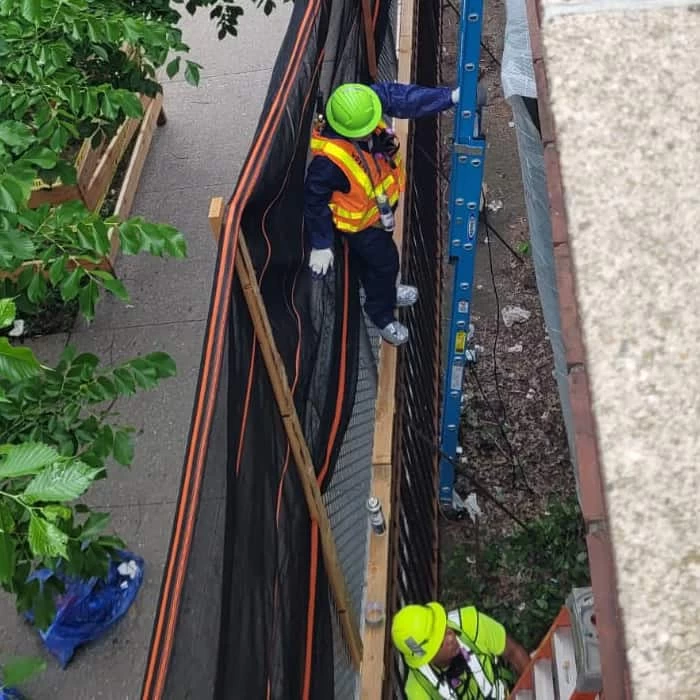
Beekman’s housing stock adds another layer that most restoration companies aren’t equipped to handle. A significant portion of homes here were built before 1980, when asbestos floor tiles, pipe insulation, and lead paint were standard. When flood water saturates those materials, they become a health hazard — not just a cleanup job. We hold both the NYS DOL Asbestos License and USEPA Lead Certification, so you’re not left wondering whether the company you hired can legally and safely handle what’s inside your walls.
And if your home runs on a private septic system — which many Beekman properties do — flood water in your basement may carry sewage contamination, classifying it as Category 3 black water. That changes the entire remediation approach. Getting this wrong isn’t just expensive. It’s a health risk. Getting it right means your home is genuinely restored, not just surface-cleaned and handed back to you.
Licensed for What Beekman's Older Homes Actually Need
We’ve been doing environmental restoration work across New York for over 12 years and more than 5,000 completed projects. That volume means we’ve seen every variation of what a flooded basement in Beekman actually looks like — from sump pump failures during spring snowmelt off the Taconic hills to storm-driven flooding like what Beekman experienced during the remnants of Hurricane Ida in 2021.
What sets us apart in this market isn’t just experience — it’s the credential stack. IICRC Water Damage Certification. NYS DOL Mold License. NYS DOL Asbestos License. USEPA Lead and RRP Certification. NYS and NYC M/WBE Certification. These aren’t optional add-ons. In New York, some of them are legal requirements — and most restoration companies operating in Dutchess County don’t hold all of them. We do, and we’re fully insured with both liability and workers’ compensation coverage. You’re not taking a risk hiring us. You’re removing one.
From the First Call to a Dry, Finished Home — Here's the Process
When you call, the clock starts. Our 60-minute response commitment applies to Beekman — whether you’re near Poughquag, out by Sylvan Lake, or further into Clove Valley. The first thing our team does on arrival isn’t start pulling up carpet. It’s assess. We use industrial moisture detection equipment and thermal imaging to map exactly where the water has traveled — inside walls, under flooring, behind mechanicals — before a single piece of equipment is placed.
Once the full scope is confirmed, extraction and structural drying begin. This phase uses commercial-grade dehumidifiers and air movers, not the kind of equipment you can rent at a hardware store. For homes with older construction — the kind of poured concrete or concrete block basements typical in Beekman — this stage is especially important, because water wicks into masonry slowly and releases slowly. Rushing past it leaves moisture behind.
If the assessment finds mold, asbestos-containing materials, or lead paint disturbed by the flood — all real possibilities in pre-1980 Beekman homes — that work is handled in the same project by our licensed team, not handed off to a separate subcontractor. After remediation, we complete the structural repairs and full reconstruction, including drywall, flooring, and paint. One company, start to finish. No gaps, no juggling, no waiting on someone else’s schedule.
Flood restoration in Beekman isn’t a single service — it’s a sequence of them, and the order matters. We cover the full sequence: emergency water extraction, structural drying, moisture testing, mold prevention and remediation, asbestos abatement, lead paint remediation, structural repairs, and complete reconstruction. Every phase is handled in-house by our licensed team, which means no delays waiting on a subcontractor and no risk of work being done by someone without the right credentials for New York State.
The insurance side is handled in-house too. We bill your insurance company directly — standard homeowners policies and NFIP flood insurance both. You pay nothing upfront while the work is being done. For homeowners who discover their policy has coverage gaps — a real possibility in Beekman, where not every property carries separate flood insurance despite sitting in areas affected by local stream flooding and surface water runoff — financing up to $200,000 at 0% APR is available so restoration can start immediately regardless of where the claim stands.
For Beekman residents specifically, the asbestos and lead capabilities aren’t a niche add-on — they’re often a necessity. Homes in Poughquag and throughout the town built before 1980 frequently contain these materials. Any restoration company that isn’t licensed to handle them legally cannot complete your job safely. We can, and do, on every project where it’s needed.
How quickly can a flood restoration company actually reach Beekman, NY?
Our 60-minute on-site response guarantee applies to Beekman. That’s not “we’ll try to get there within the hour” — it’s a specific commitment. When you call, someone is dispatched immediately, and the clock runs from your call to boots on the ground at your property, whether you’re off Route 55 near Poughquag or further out toward Clove Valley.
This matters more in Beekman than it does in denser suburban markets. You’re not surrounded by a dozen restoration companies competing for your call. Your options are more limited, and wait times with the wrong company can stretch into hours — during which water is migrating further into your walls, subfloors, and insulation. Every hour of delay increases both the scope of damage and the cost of the job. A 60-minute response isn’t a marketing line here. It’s the difference between a manageable restoration and a major reconstruction.
Does homeowners insurance cover basement flooding from a sump pump failure?
It depends on your specific policy, and the answer matters a lot for Beekman homeowners. Standard homeowners insurance typically does not cover flooding caused by surface water — meaning if water entered your basement because the ground was saturated during a heavy storm and overwhelmed your drainage system, your standard policy may not pay. However, many policies do cover sudden and accidental discharge from a sump pump failure, particularly if you carry a sewer and water backup rider.
The distinction is important because sump pump failure is one of the most common causes of basement flooding in Beekman, especially during spring snowmelt season when the ground is saturated and power outages during storms knock out the pump. Separate NFIP flood insurance — available through FEMA’s National Flood Insurance Program — covers surface water flooding but has its own coverage limits and exclusions. We work with both types of policies and bill your insurance directly, so you’re not navigating the claims process alone while your basement is still wet. If there are coverage gaps, financing up to $200,000 at 0% APR is available to bridge them.
My Beekman basement flooded before — could there already be mold I can't see?
Yes, and this is one of the most common situations we encounter in older Dutchess County homes. If your basement has had water intrusion before — even a minor event, even years ago — and it was dried with fans or a shop vac rather than commercial drying equipment, there is a real possibility that moisture remained inside the wall assembly, under the flooring, or in the insulation. Mold doesn’t need much. It needs organic material, moisture, and time — and finished basements in Beekman’s older housing stock give it all three.
The problem is that mold growing inside a wall cavity or beneath a subfloor is invisible from the surface. A wall can look and feel perfectly normal while mold is actively colonizing the framing behind it. The only way to know for certain is moisture testing and, where warranted, invasive inspection. We use thermal imaging and calibrated moisture meters to find what’s hidden — not just what’s visible. If mold is present, it’s remediated by our NYS DOL licensed team, not just sprayed with a surface treatment.
My home was built in the 1960s — do I need to worry about asbestos during flood restoration?
If your Beekman home was built before 1980, asbestos is a real consideration and should be treated as one before any restoration work begins. Asbestos was commonly used in floor tiles, pipe insulation, ceiling tiles, joint compound, and exterior siding in homes built during the 1950s through the late 1970s. Flood water that saturates these materials can disturb them, making them friable — which means fibers can become airborne and pose a serious inhalation risk.
In New York State, asbestos abatement must be performed by a contractor holding a NYS DOL Asbestos License. This is a legal requirement, not a suggestion. A restoration company without this license cannot legally remove or disturb asbestos-containing materials, which means they either skip the abatement entirely — leaving a hazard in your home — or stop the job and bring in a separate subcontractor, adding weeks to your timeline. We hold the NYS DOL Asbestos License and handle abatement in-house as part of the complete restoration, so there’s no gap in the work and no legal exposure for you as the homeowner.
How much does flood restoration typically cost, and what drives the price up or down?
The national average for water damage restoration runs around $3,864, with a typical range of roughly $1,400 to $6,400 for standard residential jobs. But that range can move significantly depending on a few key factors — and several of them are particularly relevant to Beekman homes.
The biggest cost drivers are the category of water involved, the square footage affected, and what the water touched. Category 1 water — a clean burst pipe — is the least expensive to remediate. Category 3 black water, which can occur in Beekman homes on private septic systems when flood water carries sewage contamination, requires a much more rigorous remediation protocol and costs more. The presence of mold, asbestos, or lead paint — all more common in Beekman’s older housing stock — adds to the scope. Structural repairs and reconstruction are priced separately from the mitigation work. We provide a full assessment before any work begins so you know what you’re looking at before the bill does. And because we bill insurance directly, the out-of-pocket portion is often significantly lower than homeowners expect.
What's the difference between water mitigation and full flood restoration — and does it matter?
It matters more than most homeowners realize, and the distinction is worth understanding before you hire anyone. Water mitigation is the emergency phase — extraction, drying, and preventing further damage. It’s what happens in the first 24 to 72 hours after a flood event. Full restoration picks up where mitigation ends: repairing or replacing the structural elements that were damaged, rebuilding finished spaces, and returning the home to its pre-loss condition.
Many companies in the Dutchess County market handle mitigation but not restoration — meaning they dry your basement, hand you a report, and leave you to find a general contractor for the rebuild. That gap creates real problems: scheduling delays, inconsistent workmanship between the mitigation crew and the rebuild crew, and insurance documentation that doesn’t connect cleanly from one phase to the next. For Beekman homeowners dealing with a finished basement, damaged mechanicals, or structural repairs on top of the water damage itself, having one company handle both phases is not a convenience — it’s what actually gets the job done. We cover the complete scope, from the first extraction to the final coat of paint, under one project and one point of contact.