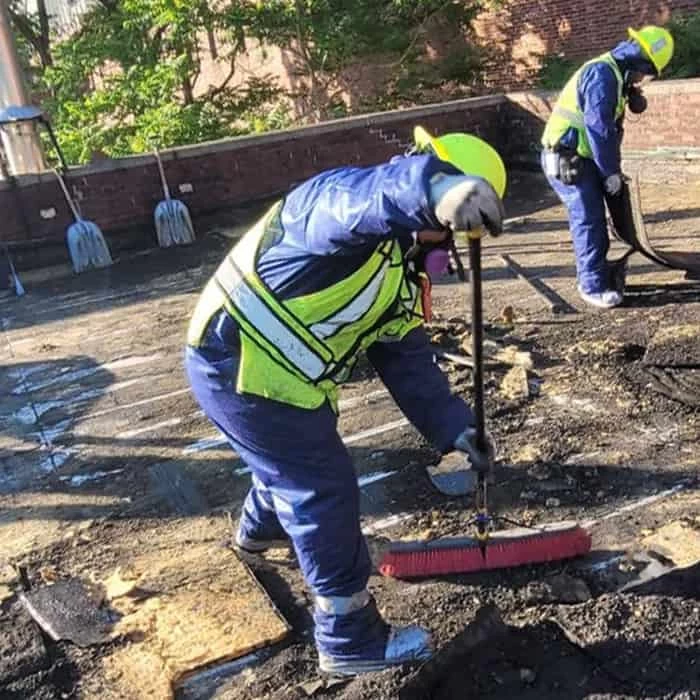
I needed a professional consultation explanation of procedure for safe removal of Asbestos in my apartment complex. Without having an account yet, I was very impressed with the caring, knowledgeable and generous advice offered by Jessica, and will look forward to doing business in the future. Thank you so much! I feel much more informed about a sometimes scary endeavor. Peace. Nancy Silva Mineola, NY.
Mia Munoz
Used this company to clean up some water flood in my house. They were fast and easy to work with.very professional, Would recommend to anyone!
Nini Valle
Great company, had a flood and they responded quickly and efficiently. Billed my insurance company directly. I highly recommend this company!
joe colapietro, jr
I had pipe freeze in my basement right before a snow storm and they made to within an hour to help start the clean up process. They we by our side throughout the entire process and even helped with the insurance company. They did such a great job with the cleanup, repair, remidiation, I contracted them to perform the repairs and finishes in the basement. They came with enough manpower and material to get the job done. Leo and Jessica were nothing but a pleasure to deal with!!
Cristian Arredondo c
I had some water damage in my home and Green Island was able to take care of my issue quickly and effectively. I am very pleased with the work they did. They responded quickly and were very professional.
Michael M
Outstanding service! From the office to the field crew everyone was friendly, helpful and responsive. I highly recommend Green Island Group.
Most demolition projects on Cove Neck don’t go sideways because of the demolition itself. They stall because something unexpected shows up behind the walls — asbestos in the pipe insulation, lead paint under three layers of finish, mold that’s been sitting in a basement since the last big storm — and the contractor on-site isn’t licensed to handle any of it. That’s when the calls start, the scheduling gaps open up, and a project that should have taken weeks turns into months.
When you’re working with a contractor who holds the licensing for abatement and demolition under one roof, discovery doesn’t mean delay. The same team that’s managing the structural scope can legally assess and remove whatever surfaces during the project. For an estate home on this peninsula — many of which were built in the early-to-mid 20th century and haven’t had a major renovation since — that’s not a hypothetical scenario. It’s the standard expectation.
There’s also the matter of documentation. Cove Neck properties transact at prices where a missing disposal manifest or an unpermitted abatement scope can become a real problem at closing. Proper chain-of-custody records, post-project clearance testing, and a clean permit file through the village building department aren’t extras here — they’re what protects the value of what you own.
We are a full-service environmental contracting and demolition firm based on Long Island, serving Nassau County’s North Shore communities including Cove Neck and the broader Oyster Bay area. We hold NYS Department of Labor licensing for asbestos abatement alongside our demolition capabilities — meaning you’re not managing two separate contractors, two separate schedules, and two separate sets of paperwork on the same project.
That integrated approach matters more in a community like Cove Neck than almost anywhere else in Nassau County. The estate properties on this peninsula — large, older homes on 2-to-4-acre lots with outbuildings, carriage houses, and decades of layered construction history — are exactly the kind of projects where a single point of accountability makes the difference between a project that moves and one that doesn’t.
We carry a 4.7-star rating, with reviews that consistently name specific team members by name. That’s not a coincidence — it reflects how we actually operate on a job site.
No Surprises — Here's Exactly How the Process Runs
It starts with a site assessment. Before anything is touched, our team evaluates the structure — its age, its materials, its condition — and identifies any hazardous materials that need to be addressed before demolition begins. For homes built before 1980, which describes a significant portion of Cove Neck’s housing stock, that assessment almost always turns up something. Asbestos in floor tiles or pipe wrap, lead paint in older finishes, mold from water intrusion after a nor’easter. Knowing what’s there before the work starts is what keeps the project on schedule.
From there, the permitting process runs through the Village of Cove Neck’s own building department — not Nassau County, not the Town of Oyster Bay, but the village’s own office. That includes the Rodent Free Certification that the village requires before demolition can legally proceed, a step that catches contractors unfamiliar with Cove Neck’s permit process off guard. We build this into the workflow from day one.
Once permits are in hand, abatement and demolition run in the correct sequence — hazardous materials removed and documented first, structural work following. When the job is done, you receive disposal manifests, clearance testing results, and a complete record of what was done and how. That file matters when you’re dealing with the village, with future contractors, or with a buyer’s attorney down the road.
Commercial and Residential Demolition Contractors NY
Full-Scope Demolition Built for Cove Neck Properties
The scope of a typical Cove Neck demolition engagement looks different from a standard Nassau County project. You’re not dealing with a 1,400-square-foot Cape Cod on a quarter-acre lot. You’re dealing with multi-story estate homes, detached garages, pool structures, guest cottages, and outbuildings — all on heavily wooded lots with limited road access through a peninsula with one primary entry point. The logistics require more planning, and the structural complexity requires more experience.
We handle the full range of what Cove Neck property owners typically need: interior selective demolition for gut renovations, full structural demolition of outbuildings and secondary structures, asbestos and lead abatement integrated into the demolition scope, mold remediation following water intrusion or storm damage, and post-project environmental testing to confirm the space is clean before reoccupancy. Everything is handled under one contract, with one project manager accountable for the entire scope.
For waterfront properties on the harbor side of the peninsula, post-storm structural assessment and demolition of compromised structures is also part of what we handle. Cove Neck’s exposure to Oyster Bay Harbor and Cold Spring Harbor means storm damage isn’t a rare event — it’s a recurring reality, and having a licensed contractor who can respond quickly and document the work properly matters when insurance and future permits are involved.
Does Cove Neck have its own demolition permit process separate from Nassau County?
Yes — and this is one of the most common points of confusion for contractors who haven’t worked in incorporated Nassau County villages before. Cove Neck is an incorporated village with its own building department, located at 147 Forest Avenue in Locust Valley. Permits for demolition work run through that office, not through Nassau County or the Town of Oyster Bay directly.
Beyond the standard building permit, the village also requires a Rodent Free Application and a Rodent Free Certification before demolition can legally proceed. This is a documented requirement on the village’s official building department forms, and it’s a step that needs to be completed and approved before any structural work begins. A contractor who isn’t familiar with this requirement will either skip it — creating a compliance problem — or discover it mid-project and cause a delay. We build the Cove Neck village permit process, including the rodent certification step, into the project timeline from the start.
Do I need asbestos testing before starting a demolition or renovation project in Cove Neck?
For most properties in Cove Neck, the honest answer is yes — and the testing should happen before demolition begins, not after something is disturbed. Homes built before 1980 are considered high-risk for asbestos-containing materials, and many of the estate properties on Cove Neck’s peninsula predate World War II entirely. Asbestos shows up in places people don’t expect: floor tile adhesive, pipe insulation, textured ceilings, joint compound, roofing materials, and window caulking.
Under New York State law and federal EPA NESHAP regulations, asbestos above threshold quantities must be abated by a licensed contractor before demolition proceeds, and the EPA requires a minimum of 10 working days’ advance notice for qualifying projects. Skipping the testing phase doesn’t eliminate the liability — it just means you find out about the problem after it’s already been disturbed, which is a more expensive and more legally complicated situation. A pre-demolition assessment protects your timeline, your budget, and your compliance standing with the village building department.
What licenses should a demolition contractor actually hold to work legally in New York?
In New York State, a general contractor license does not authorize asbestos abatement work. That requires a separate NYS Department of Labor Asbestos Handling Contractor License — a specific credential that requires documented training, compliance history, and proper insurance. Individual workers on an asbestos abatement job must also hold NYS DOL asbestos handler certifications. These are not optional credentials — they are legal requirements, and work performed without them creates liability for the property owner, not just the contractor.
Beyond asbestos licensing, a qualified demolition contractor in Nassau County should carry comprehensive general liability insurance, workers’ compensation coverage, and the bonding capacity appropriate for the project scope. For Cove Neck projects that involve multi-structure estate properties, you want a contractor whose insurance limits and bonding reflect the actual value of what’s on the site. Before any contract is signed, ask to see the NYS DOL asbestos license number and verify it directly with the state — it takes about two minutes and tells you a lot about who you’re dealing with.
How long does a demolition project typically take on a Cove Neck estate property?
It depends heavily on the scope, but the permitting phase is usually what determines the overall timeline more than the physical work itself. For a project in Cove Neck, you’re looking at the village building permit process, the Rodent Free Certification requirement, and — if asbestos above threshold quantities is present — the mandatory 10-working-day EPA NESHAP notification period before demolition can begin. That regulatory sequence alone can take two to four weeks if it isn’t planned for in advance.
The physical demolition work on a standard outbuilding or interior gut renovation typically runs one to two weeks once permits are cleared and abatement is complete. Full structural demolition of a larger estate building takes longer, particularly when site logistics on Cove Neck’s peninsula require careful planning around equipment access and debris removal on private roads with limited throughput. The most important thing you can do to protect your timeline is start the permit and assessment process early — ideally before you’ve committed to a construction start date with your architect or general contractor.
What happens if asbestos or mold is discovered after demolition has already started?
Work stops — legally, it has to. If asbestos-containing materials are disturbed without a licensed abatement contractor on-site, that’s a federal violation under EPA NESHAP regulations and a New York State DOL violation. The area needs to be contained, air monitoring may be required, and a licensed abatement contractor needs to be brought in before anything else moves. If that contractor is different from your demolition contractor, you’re now coordinating two separate schedules, two separate scopes, and two separate insurance situations — and your project timeline has just expanded significantly.
This is the scenario that our integrated licensing eliminates. Because we hold both the demolition and the NYS DOL asbestos abatement credentials, discovery mid-project doesn’t require bringing in an outside firm. Our team pivots, the abatement is handled under the same contract, and the demolition continues once the affected area is cleared. For older estate properties in Cove Neck where mid-project discovery is genuinely common, this isn’t a minor operational detail — it’s the difference between a project that recovers quickly and one that drags on for months.
Does Green Island Group handle demolition on waterfront or storm-damaged structures in Cove Neck?
Yes. Cove Neck’s peninsula geography — bordered by Oyster Bay Harbor to the west and Cold Spring Harbor to the east — creates real exposure to nor’easters, storm surge, and wind events that can compromise structures in ways that aren’t always visible from the outside. After a significant storm, the question isn’t just whether a structure looks damaged. It’s whether the structural integrity has been compromised, whether water intrusion has created a mold situation behind finished surfaces, and whether the demolition of a damaged structure requires asbestos or lead abatement before it can come down safely.
We handle all of that under one engagement — structural assessment, hazardous materials evaluation, abatement if required, and demolition of the compromised structure. The documentation that comes with that process also matters for insurance claims and for subsequent permit applications with the Cove Neck village building department. If you’re dealing with storm damage on a waterfront property and you need a contractor who can move quickly and document everything properly, that’s exactly the kind of project we’re equipped to handle.