When Snowmelt Wins, Here's How You Take Your Basement Back
Eighty-one inches of snow a year has a way of finding every crack in a foundation. When it starts melting in March and the water has nowhere to go, flooded basement cleanup in Northampton isn’t a maybe it’s a matter of when.
I needed a professional consultation explanation of procedure for safe removal of Asbestos in my apartment complex. Without having an account yet, I was very impressed with the caring, knowledgeable and generous advice offered by Jessica, and will look forward to doing business in the future. Thank you so much! I feel much more informed about a sometimes scary endeavor. Peace. Nancy Silva Mineola, NY.
Mia Munoz
Used this company to clean up some water flood in my house. They were fast and easy to work with.very professional, Would recommend to anyone!
Nini Valle
Great company, had a flood and they responded quickly and efficiently. Billed my insurance company directly. I highly recommend this company!
joe colapietro, jr
I had pipe freeze in my basement right before a snow storm and they made to within an hour to help start the clean up process. They we by our side throughout the entire process and even helped with the insurance company. They did such a great job with the cleanup, repair, remidiation, I contracted them to perform the repairs and finishes in the basement. They came with enough manpower and material to get the job done. Leo and Jessica were nothing but a pleasure to deal with!!
Cristian Arredondo c
I had some water damage in my home and Green Island was able to take care of my issue quickly and effectively. I am very pleased with the work they did. They responded quickly and were very professional.
Michael M
Outstanding service! From the office to the field crew everyone was friendly, helpful and responsive. I highly recommend Green Island Group.
Mold starts growing within 24 to 48 hours of a flooding event. That’s just how moisture works, especially in older Adirondack homes where stone foundations and limited airflow give mold exactly the environment it wants. Waiting to see if things dry on their own almost always costs more in the end. Delaying past 72 hours can add anywhere from $2,000 to $8,000 in mold remediation on top of whatever the water damage already cost you.
What you actually get when this is handled right is a basement that’s structurally dry, tested for hidden moisture, and cleared of anything that could turn into a bigger problem down the road. For homeowners near Great Sacandaga Lake where the water table sits high and spring groundwater presses against foundation walls for weeks that depth of drying matters more than it does almost anywhere else in New York.
If you own a seasonal camp or cottage in Sacandaga Park that’s been closed since October, the situation can be even more serious. Water damage that sat undetected through an Adirondack winter doesn’t announce itself it hides behind walls and under floors until someone finally opens the door in May. The outcome you’re looking for isn’t just “dry.” It’s fully assessed, fully remediated, and ready for the season.
Licensed Basement Flooding Remediation, Northampton NY
New York State Already Vetted Us You Can Too
We’re an approved emergency response contractor for the NYS Office of General Services. That’s not a self-declared badge it’s a public record, and it means New York State has independently evaluated our qualifications and decided we meet the standard required to respond to real emergencies. Over 5,000 completed restoration projects across New York State back that up.
We hold NYS DOL Mold and Asbestos licenses, USEPA Lead and RRP certifications, and General Contractor licenses across New York. For a Northampton homeowner with a pre-1980 home and most homes in and around Northville fall into that category those licenses aren’t optional. When flooding disturbs older insulation, floor tiles, or wall materials, you need someone who’s legally authorized to handle what they find, not just the water on the floor.
CEO Jessica Dussan and VP Leo Torres are named by real customers in verified reviews. When you call, you’re reaching people who own the outcome of your job not a franchise dispatch line routing you to whoever’s available.
What Actually Happens From the First Call to a Dry Basement
The first call gets a real person. From there, the response is immediate we operate 24 hours a day, 365 days a year, and have documented response times under an hour, including during winter storms. In a rural community like Northampton where Route 30 is your main artery and the nearest interstate is 25 miles south, that kind of commitment to showing up matters.
Once on-site, we do a full assessment before anything else. That means moisture readings behind walls, not just what’s visible on the floor. In older homes throughout Northville and the surrounding area, water travels it wicks into wood framing, soaks into subfloors, and hides in places a basic walkthrough won’t catch. If there’s any indication of asbestos-containing materials or lead paint disturbed by the flooding, that gets flagged and handled under the appropriate license before remediation continues.
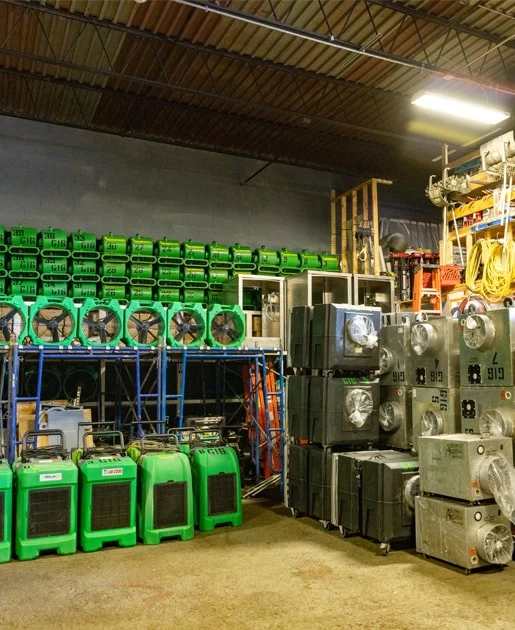
Water extraction comes next, followed by industrial drying equipment dehumidifiers and air movers positioned to pull moisture out of the structure, not just the surface. Depending on the scope, this phase can take several days, and we monitor moisture levels throughout. If mold is already present, we remediate it under our NYS DOL Mold license as part of the same job. When structural repairs are needed, we hold the General Contractor licenses to handle reconstruction without bringing in a separate crew. Insurance documentation is handled directly we bill carriers and help you navigate the claims process from start to finish.
Flooded Basement Cleaning Services, Fulton County NY
One Contractor, Every Hazard an Older Northampton Home Can Hide
Flooded basement cleanup in Northampton isn’t a one-size situation. A lakefront camp in Sacandaga Park that’s been closed since fall has a completely different set of problems than a year-round home in Northville that took on water during a March melt event. We handle both and everything in between.
Our full service includes emergency water extraction, structural drying, moisture mapping, mold assessment and remediation, sewage backup decontamination, asbestos and lead evaluation in older structures, and complete reconstruction when needed. That last part matters more here than in most places. Fulton County’s housing stock is old. Stone foundations, original plaster walls, mid-century insulation these materials require a contractor who knows what they’re dealing with and holds the licenses to handle it legally. We do, under one contract, without subcontracting the complicated parts out to someone else.
Properties inside the Adirondack Park which includes all of Northampton can also be subject to Adirondack Park Agency oversight for certain types of remediation and reconstruction work, particularly near shorelines or where significant land disturbance is involved. Our experience navigating New York State regulatory environments means that compliance doesn’t fall on you to figure out alone. From the first extraction pump to the final inspection, you’re working with one accountable team.
Does homeowners insurance actually cover basement flooding in Northampton, NY?
It depends on what caused the flooding, and that distinction matters a lot. Standard homeowners insurance typically covers sudden and accidental water damage like a burst pipe or a washing machine overflow but it usually does not cover flooding caused by surface water, groundwater seeping through foundation walls, or rising lake levels. For Northampton homeowners near Great Sacandaga Lake, that’s an important line to understand, because spring groundwater intrusion from snowmelt is generally considered a gradual seepage issue rather than a covered sudden event.
That said, many policies do cover water damage from internal failures sump pump backups, for example, are sometimes covered under a separate rider. The fastest way to know what you have is to call your carrier and ask specifically about water damage and flooding coverage. We bill insurance carriers directly and help homeowners document damage for claims. If coverage exists, we’ll work within that process so you’re not managing the paperwork while your basement is still wet.
How much does flooded basement cleanup typically cost in Fulton County?
For a small to medium basement, the range most homeowners deal with is $2,000 to $8,000, with the average landing around $5,000. That range moves based on how much water there was, how long it sat before cleanup started, whether mold has already developed, and whether any hazardous materials were disturbed which is a real consideration in Fulton County’s older housing stock.
The biggest cost driver is time. A basement that gets addressed within 24 hours is a very different job than one that sat for three days while someone waited to see if it would dry on its own. Every day of delay in an Adirondack spring where humidity is high and temperatures are still cold enough to slow natural drying gives mold more opportunity to establish. That can easily add $2,000 to $8,000 to the total. The cost of acting fast is almost always less than the cost of waiting.
Can mold really develop that quickly after my basement floods in spring?
Yes mold can begin growing within 24 to 48 hours of a flooding event, and Northampton’s spring conditions are about as favorable for mold growth as it gets. When snowmelt saturates the ground and water enters a basement gradually over days, the moisture doesn’t just sit on the floor it absorbs into wood framing, insulation, drywall, and subfloor materials. Those materials stay damp long after the standing water is gone, and in an older home with limited ventilation, that’s exactly the environment mold needs.
The harder part is that mold in a basement often isn’t visible right away. It grows behind walls, under flooring, and in cavities that a basic visual check won’t catch. By the time you can see it or smell it, it’s already well established. Professional moisture mapping not just a visual walkthrough is what catches the hidden growth early, before it spreads to the structural materials that are expensive to replace.
My seasonal camp near Sacandaga Park has been closed all winter what should I expect when I open it?
Honestly, you should expect to find something. A property that’s been unoccupied through an Adirondack winter with no heat monitoring, no one checking on pipes, and months of snowmelt pressing against the foundation has had a lot of time for problems to develop quietly. The most common discoveries when seasonal properties in the Sacandaga Park area are opened in spring include standing water or dried water stains in the basement, burst or cracked pipes from freeze-thaw cycles, mold on walls and framing from moisture that accumulated over winter, and in older camps, disturbed insulation or other materials that may contain asbestos.
The smart move is to get a professional assessment before you start cleaning anything yourself. Disturbing mold without proper containment spreads spores. Disturbing older insulation without testing it first creates a different kind of hazard entirely. We can assess the full scope of what’s there, handle whatever we find under the appropriate licenses, and get the property into usable condition before your season starts without you having to coordinate multiple contractors for different pieces of the job.
What actually causes basement flooding in Northampton homes during spring?
The main driver is snowmelt volume. Fulton County averages 81 inches of snow per year, and when that snowpack starts melting in March and April especially when warm rain accelerates it the ground becomes completely saturated. Water that can’t absorb into frozen or already-soaked soil runs toward the lowest point it can find, which is usually the foundation. From there it enters through cracks, through the joint where the floor meets the wall, through window wells, or simply by raising the water table high enough that moisture wicks through the foundation itself.
Homes near Great Sacandaga Lake face an additional layer of risk. The lake’s water levels are actively managed by the Hudson River–Black River Regulating District, and during high-precipitation springs, lake levels rise which raises the surrounding water table and increases hydrostatic pressure against foundation walls in the Sacandaga Park and Northville areas. Sump pump failures during power outages, which are more common in rural Adirondack communities than in suburban areas, compound the problem. If your sump pump loses power during a heavy melt event and there’s no battery backup, a dry basement can become a flooded one in a matter of hours.
Do I need any permits for basement water damage repairs inside the Adirondack Park?
For interior work water extraction, drying, mold remediation, replacing drywall or flooring you typically don’t need an Adirondack Park Agency permit. That work is contained inside the structure and doesn’t trigger APA jurisdiction. Where it gets more complicated is when repairs involve anything outside the building’s footprint: excavating around the foundation to address waterproofing, disturbing land near a shoreline, or making structural changes that affect the building’s exterior in a regulated area.
The APA classifies land within the park and regulates development activity based on that classification. If your property is near the lake or in a shoreline area, the threshold for what requires a permit is lower than it would be for an inland residential lot. The safest approach is to have a contractor who’s familiar with how New York State regulatory requirements work not one who’s never operated inside the Adirondack Park before and leaves the compliance questions for you to sort out. Our experience with NYS regulatory environments means those questions get answered as part of the job, not after the fact.