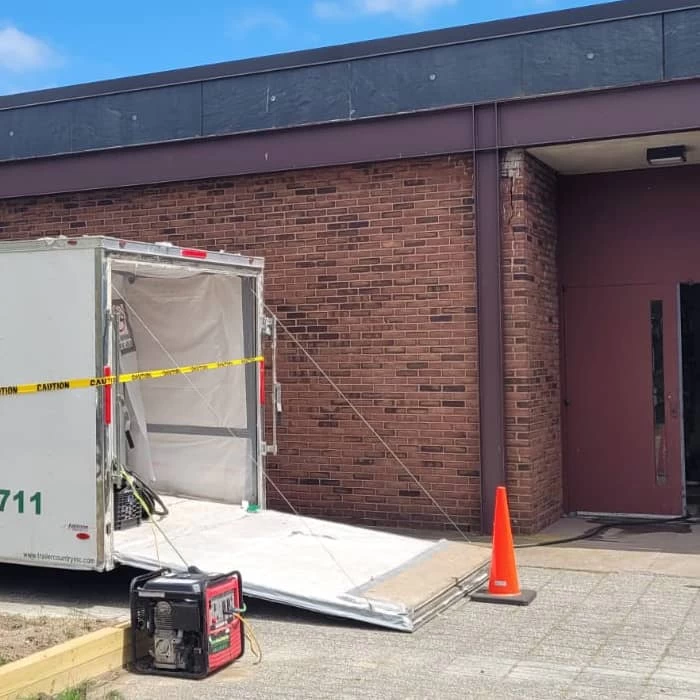
Bay-adjacent flooding, a high water table, and older homes that hide what water leaves behind we handle flooded basement cleanup in Noyack before the damage compounds.
I needed a professional consultation explanation of procedure for safe removal of Asbestos in my apartment complex. Without having an account yet, I was very impressed with the caring, knowledgeable and generous advice offered by Jessica, and will look forward to doing business in the future. Thank you so much! I feel much more informed about a sometimes scary endeavor. Peace. Nancy Silva Mineola, NY.
Mia Munoz
Used this company to clean up some water flood in my house. They were fast and easy to work with.very professional, Would recommend to anyone!
Nini Valle
Great company, had a flood and they responded quickly and efficiently. Billed my insurance company directly. I highly recommend this company!
joe colapietro, jr
I had pipe freeze in my basement right before a snow storm and they made to within an hour to help start the clean up process. They we by our side throughout the entire process and even helped with the insurance company. They did such a great job with the cleanup, repair, remidiation, I contracted them to perform the repairs and finishes in the basement. They came with enough manpower and material to get the job done. Leo and Jessica were nothing but a pleasure to deal with!!
Cristian Arredondo c
I had some water damage in my home and Green Island was able to take care of my issue quickly and effectively. I am very pleased with the work they did. They responded quickly and were very professional.
Michael M
Outstanding service! From the office to the field crew everyone was friendly, helpful and responsive. I highly recommend Green Island Group.
When a basement floods in Noyack, the visible water is rarely the whole story. Behind the drywall, under the flooring, inside the insulation that’s where the real damage hides. And in a home sitting close to Noyac Bay with a water table that barely needs an excuse to rise, what looks like a minor flood at first glance can turn into a significant structural and air quality problem within days.
The 24-to-48-hour mold window is real. Once moisture gets into walls and framing, mold doesn’t wait for you to schedule someone. If your Noyack property sits vacant part of the year as many do and a pipe bursts in January while you’re not there, that window closes fast. By the time you find out, you’re not dealing with a wet floor anymore.
What you get after we complete a proper cleanup isn’t just a dry basement. It’s documented dryness moisture readings, photos, a clear record for your insurance claim and the confidence that nothing was left to fester. For a property in the Town of Southampton, where values run high and the regulatory environment is detailed, that documentation matters more than most homeowners realize.
Licensed for Everything a Noyack Flood Can Uncover
We’re led by CEO Jessica Dussan and VP Leo Torres two people who are personally involved in every project and show up by name in client reviews. That’s not a marketing angle. It’s just how we run things.
What sets us apart in a market like Noyack is the licensing depth. Most water damage companies can extract water and run dehumidifiers. We hold NYS DOL Mold, NYS DOL Asbestos, USEPA Lead, and USEPA RRP certifications on top of a Suffolk County General Contractor license that covers every property in the Town of Southampton. That matters here because older homes in Noyack, some with histories going back generations, can hide asbestos pipe insulation and lead paint behind the walls flooding disturbs.
From the cottages near Pine Neck to the bay-facing properties along Towd Point, we’ve handled the full range of what South Fork flooding looks like. One licensed team, one contract, start to finish.
What Actually Happens From First Call to Finished Basement
The first call matters. When you reach us, you’re not routed through a dispatch center you’re talking to someone who can make decisions. From there, our team mobilizes and gets to your Noyack property as fast as possible. Given that Noyack Road can back up significantly in summer and Route 27 has its own reputation, our familiarity with the South Fork’s access routes means we’re not losing time figuring out how to get there.
On arrival, the assessment goes beyond what’s visible. Thermal imaging cameras identify moisture behind walls. Moisture meters confirm what the eye can’t see. If there’s any indication of asbestos-containing materials common in pre-1978 homes throughout Noyack that gets flagged immediately before any demolition begins. This is a step most water damage companies skip because they’re not licensed to handle it. We don’t skip it.
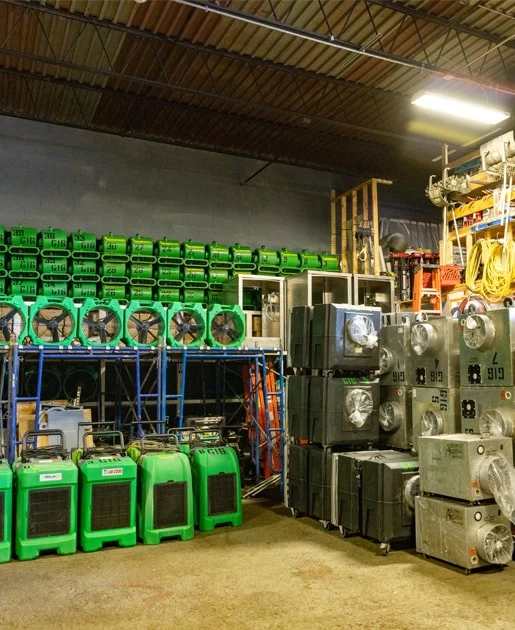
Water extraction and structural drying come next, followed by air quality monitoring if mold is present or suspected. Every step is documented with photos and moisture readings the kind of paper trail that Southampton Town’s insurance adjusters and NFIP flood claim processors need. If permits are required for structural repair work, we pull them directly as a licensed Suffolk County GC. Nothing gets handed off. Nothing falls through the gap between one contractor and the next.
A flooded basement in Noyack rarely stops at water removal. Depending on the source bay surge through foundation walls, hydrostatic pressure from a saturated water table near Trout Pond or Scallop Pond Preserve, or a pipe that burst in an unoccupied seasonal home the scope of work can range from extraction and drying to full mold remediation, asbestos abatement, structural repair, and reconstruction.
We handle all of it. Water extraction, industrial drying, mold testing and remediation, asbestos and lead abatement if required, drywall and flooring removal and replacement, and final clearance testing. Every service is delivered under our own licenses no subcontractors, no coordination gaps, no situations where one company’s work ends and another’s begins with no one owning the outcome.
For properties in or near Southampton Town’s designated flood zones, we also manage the permit and documentation requirements that come with structural restoration work. If your property is near a wetland buffer and in Noyack, many are that adds a layer of regulatory awareness that an out-of-area contractor simply won’t have. We bill insurance carriers directly, understand how to document damage for both standard homeowners policies and NFIP flood claims, and keep the process as straightforward as a flooded basement situation can be.
Does homeowners insurance actually cover basement flooding in Noyack, NY?
It depends entirely on where the water came from. Standard homeowners insurance typically covers sudden, internal water damage a burst pipe, a failed water heater, an appliance leak. What it generally does not cover is external floodwater: storm surge from Noyac Bay pushing through your foundation, groundwater rising through your basement floor after a nor’easter saturates the soil, or surface flooding from a heavy rain event.
For that kind of damage, you’d need a separate NFIP flood insurance policy through FEMA’s National Flood Insurance Program. Many Noyack homeowners carry both especially those in properties close to the bay or near wetland areas but the two policies have different deductibles, different coverage triggers, and different documentation requirements. We bill insurance carriers directly and understand how to document damage correctly for both types of claims. Getting the documentation wrong at the start can complicate or delay your payout significantly.
How quickly does mold start growing after a basement floods?
Mold can begin colonizing within 24 to 48 hours of a flood event and it doesn’t start where you can see it. It starts inside wall cavities, under subfloor material, and within insulation where moisture sits undisturbed. By 72 hours, you’re often looking at active growth that requires remediation, not just drying.
This timeline is especially relevant for Noyack’s seasonal homeowners. If your property sits vacant from October through May and a pipe freezes and bursts in February, the flooding may go undetected for days or even weeks. By the time a neighbor notices or a smart home sensor alerts you, the mold clock has already run well past the critical window. That’s when cleanup costs climb not because the water damage itself was worse, but because the biological damage that followed had time to spread. Getting someone there fast, with the right equipment to confirm complete dryness, is the only way to stop that progression.
What causes basement flooding in Noyack specifically is it different from other towns?
Yes, and it’s worth understanding why. Noyack sits on the edge of Noyac Bay with Little Peconic Bay to the east and a network of freshwater ponds including Trout Pond and Scallop Pond woven throughout the hamlet. That geography keeps the water table near the surface year-round. When heavy rain or snowmelt hits, the table doesn’t have far to rise before it starts pushing through basement floors and walls via hydrostatic pressure even without any visible surface flooding.
Add to that the north-facing bay exposure, which makes Noyack particularly vulnerable to nor’easter-driven surge events. Unlike ocean-facing communities where wave action is the obvious threat, bay surge here can flood low-lying properties quietly and quickly. Properties near Pine Neck and Towd Point are especially exposed. The combination of a high water table, tidal wetlands, and direct bay exposure creates flooding conditions that are more complex than what you’d find in an inland Suffolk County community and they require a contractor who actually understands the local geography, not just the generic water damage playbook.
Can a flooded basement in an older Noyack home expose asbestos or lead?
It can, and it’s more common than most homeowners expect. Homes built before 1978 and Noyack has a meaningful number of them, including historic properties that have been in families for decades were often built with asbestos pipe insulation, asbestos floor tiles, and lead-based paint. When flooding disturbs these materials, either through water damage itself or through the demolition work that follows, it can release hazardous fibers and particles that require licensed environmental handling.
Most water damage companies are not licensed to test for or remediate asbestos and lead. They’ll either miss it entirely or stop work and hand you off to a separate environmental contractor adding time, cost, and coordination headaches to an already stressful situation. We hold NYS DOL Asbestos and USEPA Lead certifications, which means if hazardous materials are identified during your basement cleanup, we can handle it legally and safely under the same contract. No handoffs, no delays, no gaps in who’s responsible for what.
Do I need a permit to repair my basement after flooding in Southampton Town?
In many cases, yes. The Town of Southampton has a detailed regulatory framework that applies to flood-damaged properties including a flood damage prevention code that governs how repairs are made in designated flood zones. If your basement restoration involves structural work, electrical, or mechanical systems, a building permit is typically required. And if your property sits near a wetland buffer which applies to a significant number of Noyack parcels given the hamlet’s tidal wetlands, pond systems, and coastal erosion areas there may be additional review required through the Town’s Conservation Board.
As a licensed Suffolk County General Contractor, we can pull permits directly. That’s not a minor detail. Unlicensed contractors cannot legally pull permits in Southampton Town, which means work done without proper permitting can create compliance problems that affect your homeowners insurance coverage, your NFIP claim, and your property’s resale value. Doing it right the first time costs less than fixing a compliance issue after the fact.
How do I find a trustworthy water damage contractor this far out on the East End?
The honest challenge with Noyack is the distance. Most water damage companies are based in central or western Suffolk County, and when you’re calling from a property near Noyac Bay at the eastern end of the South Fork, you’re often looking at 90-minute arrival windows longer in summer when Route 27 is backed up and Noyack Road is carrying the overflow traffic. That’s 90 minutes of water sitting in your walls, your framing, and your flooring.
Beyond response time, the licensing question matters more here than in most areas. The Town of Southampton’s regulatory environment, the prevalence of older homes with environmental hazards, the dual-insurance reality of bay-adjacent properties, and the wetland buffers that affect what restoration work requires review these are details that a contractor unfamiliar with the East End won’t know to account for. We’re an NYS OGS-approved emergency contractor with a Suffolk County GC license and the full stack of environmental certifications. That combination speed, licensing, and genuine local familiarity is what you’re actually looking for, and it’s not as common in this market as the search results might suggest.