When the North Fork Floods, the End of the Road Can't Wait
Orient sits at the tip of Long Island with water on three sides and one road in. When your basement floods, every hour counts and we’re the licensed team that actually comes out here.
I needed a professional consultation explanation of procedure for safe removal of Asbestos in my apartment complex. Without having an account yet, I was very impressed with the caring, knowledgeable and generous advice offered by Jessica, and will look forward to doing business in the future. Thank you so much! I feel much more informed about a sometimes scary endeavor. Peace. Nancy Silva Mineola, NY.
Mia Munoz
Used this company to clean up some water flood in my house. They were fast and easy to work with.very professional, Would recommend to anyone!
Nini Valle
Great company, had a flood and they responded quickly and efficiently. Billed my insurance company directly. I highly recommend this company!
joe colapietro, jr
I had pipe freeze in my basement right before a snow storm and they made to within an hour to help start the clean up process. They we by our side throughout the entire process and even helped with the insurance company. They did such a great job with the cleanup, repair, remidiation, I contracted them to perform the repairs and finishes in the basement. They came with enough manpower and material to get the job done. Leo and Jessica were nothing but a pleasure to deal with!!
Cristian Arredondo c
I had some water damage in my home and Green Island was able to take care of my issue quickly and effectively. I am very pleased with the work they did. They responded quickly and were very professional.
Michael M
Outstanding service! From the office to the field crew everyone was friendly, helpful and responsive. I highly recommend Green Island Group.
A Dry Basement Isn't the Only Thing You Walk Away With
When water gets into a basement in Orient, it rarely stops at inconvenient. The homes here are old many of them genuinely old, with stone foundations, plaster walls, and framing that’s been standing since before modern waterproofing existed. Water finds its way in through walls, up through floors, and deep into materials that don’t dry the way modern construction does. What you’re left with, if it isn’t handled correctly and completely, isn’t just a damp basement. It’s a mold problem that started within 24 hours and a structure that’s been quietly absorbing damage ever since.
Getting the water out is step one. But what matters more is what happens after whether the moisture hiding in century-old timber and behind plaster walls gets found and addressed before it turns into something worse. That’s the difference between a cleanup and a real remediation.
For seasonal homeowners in Orient who come back to find a basement that’s been wet for weeks, that window has already closed. Mold is almost certainly present. The good news is that a licensed team can assess, remediate, and restore in one engagement no handing you off, no second contractor to track down, no coordination nightmare at the end of the North Fork.
Full Licensing Where It Actually Matters in Orient
We’ve been handling water damage, mold remediation, and environmental restoration across New York State for over 12 years and more than 5,000 completed projects. That includes the full length of Long Island not just the parts that are easy to get to.
What makes this relevant in Orient specifically is the housing stock. The Historic District along Village Lane contains homes dating back to the 1670s. When water floods a basement in a house that old, you’re not just dealing with standing water you’re potentially dealing with asbestos pipe insulation, lead paint, and historic materials that require a licensed hand. We hold NYS DOL Asbestos, NYS DOL Mold, USEPA Lead, and USEPA RRP certifications, plus General Contractor licenses in Suffolk County. That combination is rare. In this market, it’s essentially unique.
CEO Jessica Dussan and VP Leo Torres are reachable by name not a call center, not a franchise dispatcher somewhere off-island. When you call, you’re talking to people who own the outcome.
What Happens From Your First Call to a Dry, Cleared Basement in Orient
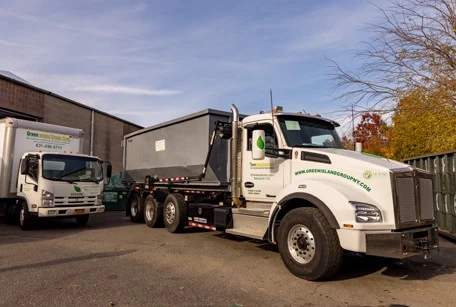
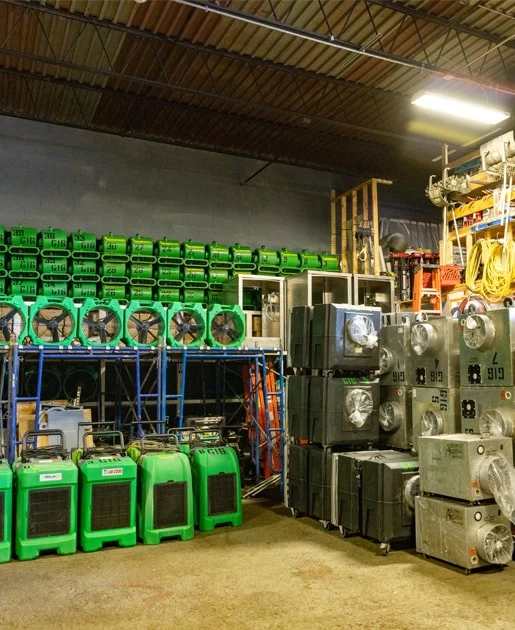
The first call triggers a 24/7 emergency response. Orient is at the end of Route 25 there’s no other road in, and we know that. Response time matters here more than almost anywhere else on Long Island, and it’s something we take seriously. A licensed crew mobilizes with extraction equipment, moisture detection tools, and the environmental certifications required to handle whatever is found once the water is out.
On arrival, the first priority is stopping any active water source and assessing the full scope of the damage. In Orient’s older homes, that assessment goes deeper than a standard water damage inspection. Stone and rubble foundations absorb water differently than poured concrete. Plaster walls hold moisture in ways that drywall doesn’t. We use thermal imaging and moisture meters to find what isn’t visible because in a house this old, what you can’t see is often the bigger problem.
Once the scope is clear, extraction begins, followed by industrial drying, and then targeted treatment for any mold or contamination present. If the damage extends to structural materials and in a nor’easter-flooded historic home, it often does we can handle reconstruction under the same contract. Southold Town building permit requirements apply to significant repairs, and we’re familiar with that process. You don’t have to figure it out alone.
Every License Needed for Orient's Oldest and Most Exposed Homes
Flooded basement cleanup in Orient isn’t a single-scope job. The combination of coastal storm surge exposure, a shallow water table, and housing stock that predates modern waterproofing means that most flooding events here involve more than one layer of damage and more than one type of licensed work.
Our scope covers emergency water extraction, industrial drying and dehumidification, mold assessment and remediation under NYS DOL Mold licensing, asbestos and lead evaluation and abatement where required by the age of the structure, and full reconstruction through Suffolk County General Contractor licensing. For properties in FEMA-designated flood zones which cover substantial portions of Orient’s waterfront and low-lying areas we handle the documentation and adjuster communication for both standard homeowners insurance and NFIP flood insurance claims. That dual-policy situation is common here, and it’s genuinely complex. We’ve navigated it before.
For seasonal homeowners along Soundview Road, Stephensons Road, or anywhere near the water in Orient, the process also includes a thorough mold assessment even when visible flooding appears minimal. Water that sat for weeks in a closed-up house doesn’t announce itself. It hides in walls, under flooring, and in the substructure and finding it early is the only way to keep a remediation from becoming a full restoration. We’re also NYS OGS approved for emergency response, which means the state has independently vetted our capability to handle exactly these situations.
My Orient basement flooded after a nor'easter where do I even start?
The first thing to do is avoid the water if there’s any chance your electrical panel, outlets, or appliances were submerged water and live current in a basement is a real hazard, and it’s worth confirming power is off before you go down there. Once it’s safe to enter, document everything with photos or video before anything is moved or touched. That documentation matters for your insurance claim.
Then call a licensed water damage company immediately. Orient’s nor’easters can saturate a basement fast, and mold begins growing within 24 to 48 hours of initial flooding. The longer water sits in an older home with a stone foundation and plaster walls, the deeper it penetrates into materials that are genuinely difficult to dry. Starting the extraction and drying process within the first few hours makes a measurable difference in both the scope of damage and the final cost of remediation.
Does homeowners insurance cover flooded basement cleanup in Orient, NY?
It depends on what caused the flooding, and this is where Orient homeowners often run into confusion. Standard homeowners insurance typically covers sudden, accidental water damage like a pipe that bursts or a water heater that fails. It generally does not cover flooding from an external source, which is what a nor’easter storm surge or rising groundwater would be classified as.
For that type of flooding which is the most common cause in Orient given the hamlet’s three-sided coastal exposure you’d be looking at your NFIP flood insurance policy if you carry one. Properties in FEMA-designated Special Flood Hazard Areas in Orient are often required to carry flood insurance as a condition of their mortgage, so many homeowners here have both policies. The challenge is that each policy covers different things, has different documentation requirements, and communicates with adjusters differently. We handle that process directly we document the damage, work with your adjusters, and bill your insurance carriers so you’re not stuck managing two simultaneous claims on top of an active flood situation.
How do I know if there's mold after basement flooding in an older Orient home?
You often can’t tell by looking and in Orient’s historic homes, that’s the real problem. Mold grows inside walls, under flooring, and behind the plaster that covers original lath in pre-1900 construction. By the time it’s visible, it’s been there long enough to have spread into the structural materials behind it. The musty smell that many homeowners notice is usually a sign that mold is already well-established.
After any flooding event in an older Orient home, a proper mold assessment uses moisture meters and thermal imaging to find elevated moisture levels in areas that appear dry to the naked eye. If moisture is present in wall cavities or beneath flooring, mold is a near-certainty within 48 to 72 hours of the flooding event. For seasonal homeowners returning after time away, the assumption should be that mold is already present not that it might develop. We hold NYS DOL Mold licensing for both assessment and remediation, which means the same team that handles your water extraction can also evaluate and address mold in one continuous engagement rather than requiring you to bring in a separate company.
Can a water damage company work on a historic home in Orient's Historic District?
Yes, but it requires a different level of care and licensing than a standard water damage job. The approximately 175 period homes in Orient’s Historic District many dating back to the 1670s and 1800s contain materials that don’t exist in modern construction. Asbestos pipe insulation, lead-based paint, and original plaster over lath are common in homes of this age, and disturbing those materials during a flood remediation without the proper licensing is both illegal and genuinely dangerous.
We hold NYS DOL Asbestos Contractor certification, USEPA Lead and RRP certifications, and NYS DOL Mold licensing the full stack required to legally and safely handle a flooding event in Orient’s oldest homes. That means if the remediation uncovers asbestos pipe wrap or lead paint behind a water-damaged wall, the work doesn’t stop while you track down a separate licensed abatement contractor. It continues under the same team, the same contract, and the same supervision. For homeowners in or near the Historic District, that matters both for the safety of the work and for the integrity of the materials being handled.
How long does flooded basement cleanup actually take in Orient?
The honest answer is that it depends on the scope, and in Orient, the scope is often larger than it first appears. A straightforward water extraction and dry-out in a modern basement with poured concrete walls and no hazardous materials can be substantially complete within three to five days. But that’s not the typical scenario in Orient.
In a home with a stone or rubble foundation, plaster walls, and original timber framing, drying takes longer because those materials hold moisture differently than modern construction. Thermal imaging may reveal moisture in wall cavities that extends the drying timeline. If mold is present which is likely in any flooding event that wasn’t addressed within 48 hours remediation adds additional time. If structural materials need to be removed and reconstructed, that’s another phase. For seasonal homeowners who discovered flooding after returning from time away, it’s realistic to plan for a two-to-four-week process from initial extraction through final reconstruction, depending on what the full assessment reveals. We’ll give you a clear scope and timeline after the initial assessment not a vague estimate designed to get in the door.
Is Green Island Group able to respond quickly to Orient given how far east it is?
This is the right question to ask, and Orient homeowners are right to be skeptical of contractors who claim to serve “all of Long Island” but treat the North Fork as an afterthought. Orient is at the end of Route 25 the only road in or out and it’s a real distance from where most Suffolk County contractors are based. That geographic reality affects response time, and it affects how much priority a distant franchise operation gives to a call from Orient Point versus a call from somewhere closer to their home base.
We serve the full length of Long Island, including the North Fork, as part of our active service territory not as an overflow area. The 24/7 emergency response is real, not a marketing line. Independent customer reviews have confirmed sub-one-hour arrival times during active emergencies, including during winter storm conditions when Route 25 is the only option. If your basement is flooding at 2 AM after a January nor’easter, that’s exactly when the response matters most and it’s exactly when you need a company that treats Orient as a place we actually serve, not a place we’ll get to when it’s convenient.